
Japan’s watch industry has long drawn admiration for its craftsmanship and technical innovation. But now it’s pulling in serious investor attention in ways that would have seemed far-fetched a decade ago.
Swiss brands keep commanding premium prices and dominating auction headlines, no question. But Japanese watchmaking is carving out its own territory where precision engineering, aesthetic restraint, and compelling value come together to create real opportunities for investors willing to look beyond the traditional European hierarchy.
The market fundamentals support this emerging interest, with IMARC Group data showing Japan’s luxury watch market valued at $3.3 billion in 2024 and projected to reach $6.1 billion by 2033, representing roughly 4.4% annual growth.
This near-doubling of market size over nine years tells a story of both domestic strength and growing international recognition. The world is waking up to the fact that Japanese horology deserves serious consideration alongside Swiss alternatives.
If you’re evaluating where watch market growth will actually happen over the next decade, Japan stands out as one of the few major markets with meaningful expansion runway rather than simply cycling through existing collector bases.
Table of Contents
Key Takeaways
Navigate between overview and detailed analysisKey Takeaways
- Japan’s luxury watch industry is entering a new growth phase, valued at $3.3 billion in 2024 and projected to reach $6.1 billion by 2033, marking an 8.25% CAGR that signals strong long-term potential.
- The country’s watchmaking reputation—rooted in Seiko’s quartz revolution and Grand Seiko’s mechanical artistry—has evolved into a serious alternative to Swiss horology, emphasizing innovation, precision, and cultural authenticity.
- Secondary market data shows short-term depreciation challenges, with Grand Seiko watches trading around 40% below retail, but limited editions and vintage models demonstrate strong resilience and occasional appreciation.
- Auction results highlight investor interest, with rare Grand Seiko and Seiko references—such as the Kodo Constant Force Tourbillon ($478,800)—proving that Japanese craftsmanship can now command six-figure valuations.
- For investors, the opportunity lies in selectivity: focusing on limited editions, discontinued references, and vintage pieces, as the broader market catches up to Japan’s growing global recognition and collector credibility.
The Five Ws Analysis
- Who:
- Watch investors, collectors, and enthusiasts seeking undervalued alternatives to traditional Swiss brands.
- What:
- Japan’s emerging luxury watch market, driven by Grand Seiko, Seiko, and other high-end domestic brands combining innovation with cultural craftsmanship.
- When:
- Momentum accelerating between 2024 and 2033, as both domestic sales and global collector interest expand.
- Where:
- Primarily in Japan but increasingly global, with strong demand across Asia, Europe, and North America via auctions and boutique exclusives.
- Why:
- Because Japanese watches offer authentic design, advanced technology, and growing collector recognition—creating asymmetric upside for investors willing to buy selectively and hold long term.
The Evolution of Japanese Watchmaking Excellence
To understand where Japan stands today, you need to appreciate its revolutionary role in global horology. Seiko’s quartz revolution in the late 1960s and 1970s upended Swiss watchmaking by delivering accuracy at price points mechanical movements simply couldn’t match, forcing the entire industry to adapt or disappear.
That wasn’t just a technological achievement. It was an existential challenge to Swiss dominance that reshaped competitive dynamics for generations.
Building on that foundation, Grand Seiko’s evolution toward mechanical artistry proved that Japanese manufacturers could compete not just on technology and value, but on finishing, design, and horological complications that had long been Swiss specialties. The development of Spring Drive technology, which uniquely blends mechanical and electronic regulation, showed a willingness to innovate well beyond traditional Swiss approaches rather than simply copying European methods.
The steady expansion of the Japanese Watch market happens while Switzerland faces maturity and saturation in many traditional markets, suggesting Japanese brands are capturing share through genuine appeal rather than just benefiting from rising tides.
Export growth and luxury segment expansion over the past decade tell a clear story of Japanese brands successfully moving upmarket. Luxury assets as a whole are gaining traction with serious investors, and the watch segment is no exception. Industry projections suggest the Japan Premium Watch Market reached around $4.20 billion in 2022 and is on track to hit roughly $5.80 billion by 2033, reflecting about 3.8% annual expansion.
Market Share of Japan’s Top 10 Watch Brands
A comprehensive market share breakdown by sales revenue shows how Seiko (30%), Citizen (25%), and Casio (25%) control over 90% of Japan’s watch industry, with a detailed look at Orient, Grand Seiko, and other Japanese watchmakers rounding out the picture.
Big Three Combined
90%+
Market dominance
Market Leader
Seiko
30% market share
Growth Rate
+36%
Seiko YoY sales
Other Brands
<10%
Combined share
Key Market Insights
- Oligopoly Structure: Seiko, Citizen, and Casio form an effective oligopoly controlling over 90% of Japan’s watch market by value
- Seiko’s Leadership: Seiko reclaimed the top position with 36% YoY growth driven by Grand Seiko and premium lines
- Premium Strategy Shift: All major Japanese brands are moving upmarket to compete with Swiss luxury and smartwatches
- Minimal Competition: No other Japanese brand exceeds 5% market share – Orient is the only notable fourth player
- International Paradox: While Japanese brands dominate production, foreign brands capture 80% of domestic sales value due to Swiss luxury pricing
- Market Growth: Japan’s watch market surged 26% to ¥1.10 trillion driven by luxury watch boom and tourism
Those growth rates may look modest compared to some emerging luxury categories. But they translate into substantial absolute dollar increases inside a mature, competitive industry where sustaining any growth at all is genuinely hard.
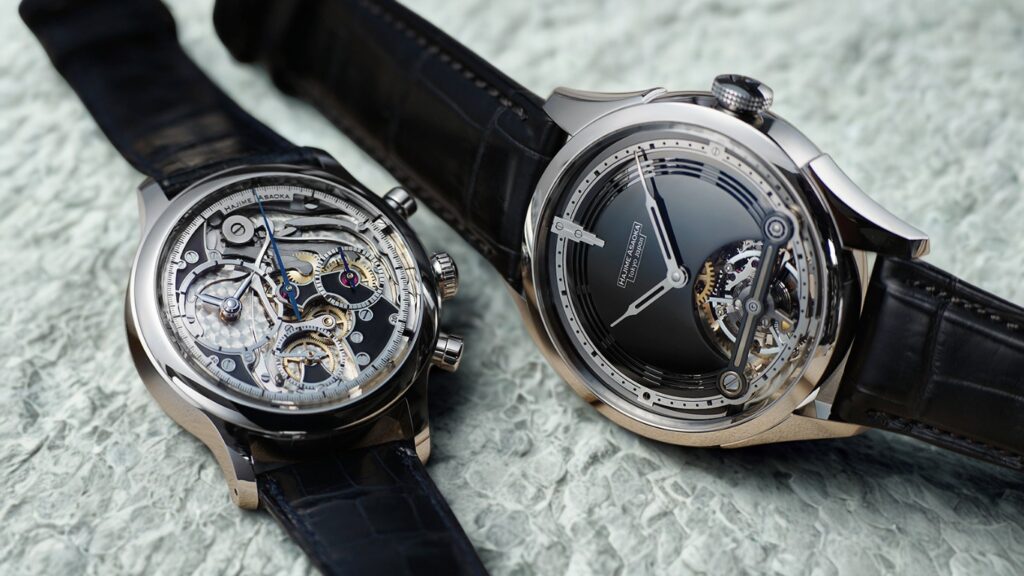
The Cultural Foundation of Japanese Watchmaking
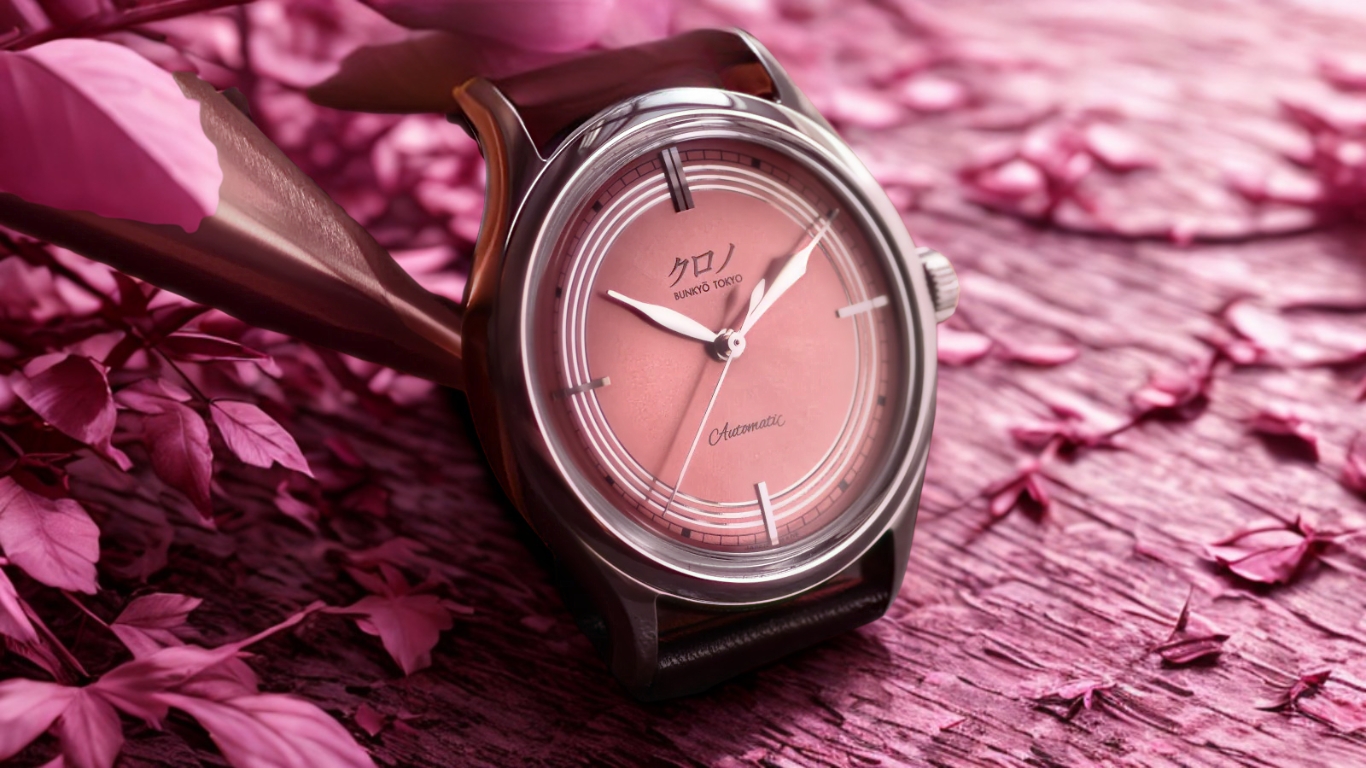
The cultural foundation of Japanese design gives these watches advantages that go well beyond technical specs. Wabi-sabi, the aesthetic philosophy that embraces imperfection and impermanence, shows up in watch design through textured dials, natural finishing techniques, and a restraint that cuts against the Swiss tendency toward opulence and decoration.
That design integrity speaks directly to a new generation of collectors who are increasingly skeptical of over-marketed luxury products. They’re seeking authenticity rooted in cultural tradition, not brand storytelling cooked up by a marketing department.
Precision as a cultural value goes beyond accuracy measurements. It extends to fit, finish, and attention to detail that rivals or exceeds Swiss standards at lower price points. The discipline embedded in Japanese manufacturing culture translates into quality control and consistency that builds real trust, especially among collectors who’ve experienced disappointing quality from Swiss brands coasting on heritage rather than maintaining their own standards.
Japanese brands have historically underinvested in promotion and brand building, putting their resources into product development and manufacturing excellence instead. That creates both a challenge and an opportunity. The challenge is that brand awareness lags well behind quality. The opportunity is that as awareness catches up, pricing power should follow without requiring any actual improvement to the product itself.
Why Collectors and Investors Are Looking East
The growing recognition of Japanese brands as undervalued alternatives to Swiss icons reflects a pretty rational assessment of value. When you can get Grand Seiko finishing quality, movement decoration, and unique technologies like Spring Drive at 30% to 50% of comparable Swiss pricing, it forces a real question about what exactly justifies those Swiss premiums beyond heritage and marketing spend. If you’ve been following how Swiss icon pricing actually works, the contrast becomes even sharper.
But the investment reality demands a careful look at secondary market performance, not just a comparison of retail price tags.
WatchCharts data shows the Grand Seiko Market Index, which tracks 30 models, sitting at $4,707 as of October 2026. Over the prior year, that index moved up just 0.9%, a modest gain that falls well short of the double-digit appreciation some Swiss sports models delivered during their peak years.
The value retention picture reveals the core challenge for Japanese watch investors. WatchCharts analysis indicates Grand Seiko watches trade on average at roughly 39.8% below retail on the secondary market, meaning you’re absorbing close to a 40% loss the moment you walk out of the boutique.
Specific examples make this pattern concrete. The Grand Seiko SLGH005 “White Birch” lists at $9,800 retail but trades around $5,552 on the secondary market. The beloved Snowflake SBGA211 carries a $6,900 retail price but resells around $4,014.
Forum commentary from actual collectors reinforces these depreciation concerns. WatchUseek and RolexForums users report losing 10% to 30% on resale of non-limited Grand Seiko models, with one owner noting “lost 25-30% on each GS I sold … everyone in very good condition … exactly same experience.”
One seasoned collector puts it plainly: “GS easily lose 30% of their value… Limited Editions not so much,” which tells you that standard production models face the steepest depreciation of all.
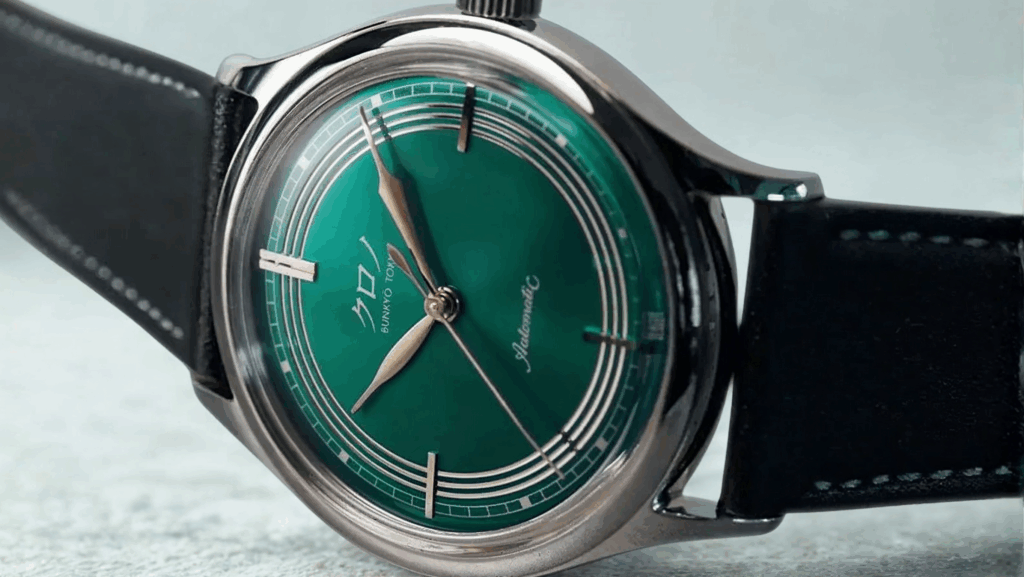
ROI and Market Demand for Japanese Watches
Looking at the investment numbers honestly, the current reality for most Japanese luxury watches involves depreciation rather than appreciation. Broad market data shows standard production Grand Seiko models losing value in ways that put them firmly in consumer purchase territory rather than investment asset territory. That’s a sharp contrast to the limited production Swiss sports models that trade above retail and deliver positive returns from day one.
That said, several factors suggest this dynamic could shift meaningfully over the next five to ten years.
First, the business growth metrics point to surging brand-level demand even if secondary markets haven’t caught up yet. Seiko Group reported that for the 12 months from April 2024 to March 2025, global watch sales rose 11.7%, reaching approximately ¥175.9 billion or roughly $1.22 billion. That kind of primary market momentum often eventually translates into secondary market support.
Second, auction results for rare and special Japanese pieces show what’s possible when scarcity and desirability align. Phillips Hong Kong’s “TOKI” sale in November 2024 saw a Seiko Astronomical Observatory Chronometer fetch approximately $57,000, while a Grand Seiko Ref. SBGW039 limited edition sold for HK$139,700 within its estimate band. Most dramatically, a Grand Seiko “Masterpiece White Birch” platinum boutique exclusive estimated at HK$230,000 to 470,000 sold for HK$444,500, landing near the high end of expectations.
Vintage Japanese pieces show even stronger performance when rarity and historical significance combine. A 1967 Grand Seiko 44GS reference sold at Phillips Geneva for CHF 59,220, well above its CHF 8,000 to 12,000 estimate, proving that rare vintage Japanese pieces can dramatically outrun projections.
The standout result came in December 2022, when a unique Grand Seiko “Kodo Constant Force Tourbillon” sold for $478,800 at Phillips New York, setting a Grand Seiko record and proving that Japanese haute horlogerie can command serious six-figure prices.
Building on those auction signals, another Phillips sale saw a Grand Seiko Ref. 61GS VFA, estimated at HK$65,000 to 130,000, sell for HK$228,600, landing well above the high estimate.
These results aren’t isolated anomalies but pattern suggesting that collectors are willing to pay substantial premiums for the right Japanese pieces, even if the broader secondary market hasn’t yet supported current-production models.
The “2026 Vintage Seiko Index” from Jamais Vulgaire finds that certain older Seiko models among 30 selected references are outperforming many modern watches on the secondary market, suggesting the vintage and rare segments are already building the kind of momentum that could eventually lift broader sentiment toward Japanese horology. And this mirrors a broader trend you can see playing out across alternative investment categories where cultural cachet is finally catching up to underlying quality.
Looking forward, several forecasts support a degree of optimism. Fortune Business Insights estimates the worldwide luxury watch market at $53.69 billion in 2024, projected to reach $59.97 billion in 2026 and $134.53 billion by 2032, representing roughly 12.23% annual growth. That’s a powerful tailwind for any brand with the quality to capture even a small slice.
Japanese brands capturing even a modest share of that expansion would drive substantial value growth across the board.
Japan-specific projections show steady rather than explosive growth, but the base is large enough that absolute gains matter. The movement from $3.3 billion in 2024 toward $6.1 billion by 2033 puts roughly $2.8 billion in new market value on the table, leaving real room for both volume growth and premiumization that could eventually support secondary market prices.
For investors willing to be selective, the current environment offers asymmetric opportunity. Standard production Grand Seiko models will likely keep depreciating 20% to 40% in the first few years of ownership, making them poor short-term investments regardless of their intrinsic quality. But limited editions, discontinued references, and boutique exclusives follow different rules, with some holding value better or even appreciating modestly over time.
The vintage segment offers the clearest path to positive returns, as the auction data makes plain. Rare Seiko and Grand Seiko pieces from the 1960s through the 1990s, especially those with unusual complications, observatory chronometer certifications, or genuine historical significance, are increasingly commanding strong prices as collectors recognize Japanese horological achievements that went underappreciated for decades.
The investment thesis for Japanese watches ultimately rests on a belief that today’s secondary market weakness reflects temporary brand awareness and distribution gaps rather than any fundamental problem with quality or desirability. The 11.7% sales growth, the strong auction results for special pieces, and the projected market expansion all point to growing interest that should eventually translate into secondary market support.