Buying a Rolex in 2026 is about more than owning a luxury timepiece. It's about understanding the precision engineering, the design discipline, and the structural collecting market that the brand sits at the centre of. Rolex has been the benchmark for modern Swiss watchmaking for over a century, and demand across the catalogue runs at sustained levels driven by allocation discipline and consistent secondary-market depth.
- Buying Rolex in 2026 requires understanding waitlist dynamics, pre-owned market depth, and authorised dealer relationships that shape access at every price tier.
- Authorised dealer purchases still require patience for the most-coveted references, with waits that can still run to years for the steel Daytona, GMT-Master II and other sought-after sports models.
- Pre-owned purchases offer immediate access and meaningful condition variety, with WatchCharts, Chrono24 and auction results providing transparent pricing data across references.
- We urge buyers to anchor decisions on condition, service history, and bracelet originality rather than reference colour or current waitlist desirability.
- Secondary prices have firmed only slowly in 2026, with Rolex up 0.5% in the third quarter on Morgan Stanley and WatchCharts data, while the steel Pepsi GMT-Master II left the catalogue.
- Rolex's Certified Pre-Owned programme, sold by participating official retailers with a two-year Rolex guarantee, has professionalised the pre-owned market, at a clear premium over private-sale alternatives.
- Who is this for?
- First-time Rolex buyers, established collectors planning their next acquisition, and gift buyers planning a serious Rolex purchase.
- What is happening?
- A complete Rolex buying guide for 2026, covering waitlist dynamics, pre-owned market depth, condition standards, dealer relationships, and authentication.
- When did this emerge?
- The guidance reflects the market as of October 2026, after Rolex price rises in January and, for gold models, June, the Watches and Wonders 2026 launches and the retirement of the steel Pepsi.
- Where is this happening?
- Authorised Rolex dealers globally maintain waitlists, while Chrono24, specialist dealers and auction houses handle the broader pre-owned and vintage market.
- Why does it matter?
- Buying Rolex well requires understanding the structural dynamics across access channels, and the right approach saves money while building a coherent collection.
Whether you're a first-time buyer or a seasoned collector, choosing the right Rolex takes real thought. The catalogue spans numerous collections, material options, and movement technologies; the purchase journey can feel dense at first. This Rolex buying guide for 2026 covers the key features, model variations, pricing structures, and authentication discipline.
The goal is to give you the working knowledge to make a decision that aligns with how you actually plan to wear the watch.
Key features and innovations
Rolex built its reputation on continuous innovation, precision engineering, and superior craftsmanship. Every timepiece reflects decades of refinement, blending advanced technology with disciplined design. If you're serious about buying, understanding the innovations matters because they're what define the brand's reliability and lasting value.
One of Rolex's most defining advances is the Oyster Case, introduced in 1926 as the world's first waterproof wristwatch case, a centenary the brand marked in 2026. A screw-down bezel, case back, and winding crown create a hermetically sealed structure that protects against water, dust, and external elements. Every Oyster model is waterproof to at least 100 metres and the Submariner to 300 metres, while the Deepsea handles depths of 3,900 metres.
Equally important is the Perpetual Movement, the self-winding mechanism that draws energy from wrist movement to power the watch automatically. The Calibre 3230, 3235 and 3255 movement families introduced from 2015 onward all run on the Chronergy escapement with 70-hour power reserves.
Rolex's proprietary 904L Oystersteel, the Cerachrom ceramic bezels, and the brand's own gold alloys (Everose, the various yellow-gold and white-gold formulations) are the materials story that separates the brand from the broader Swiss field.
Rolex nicknames and how to recognise them
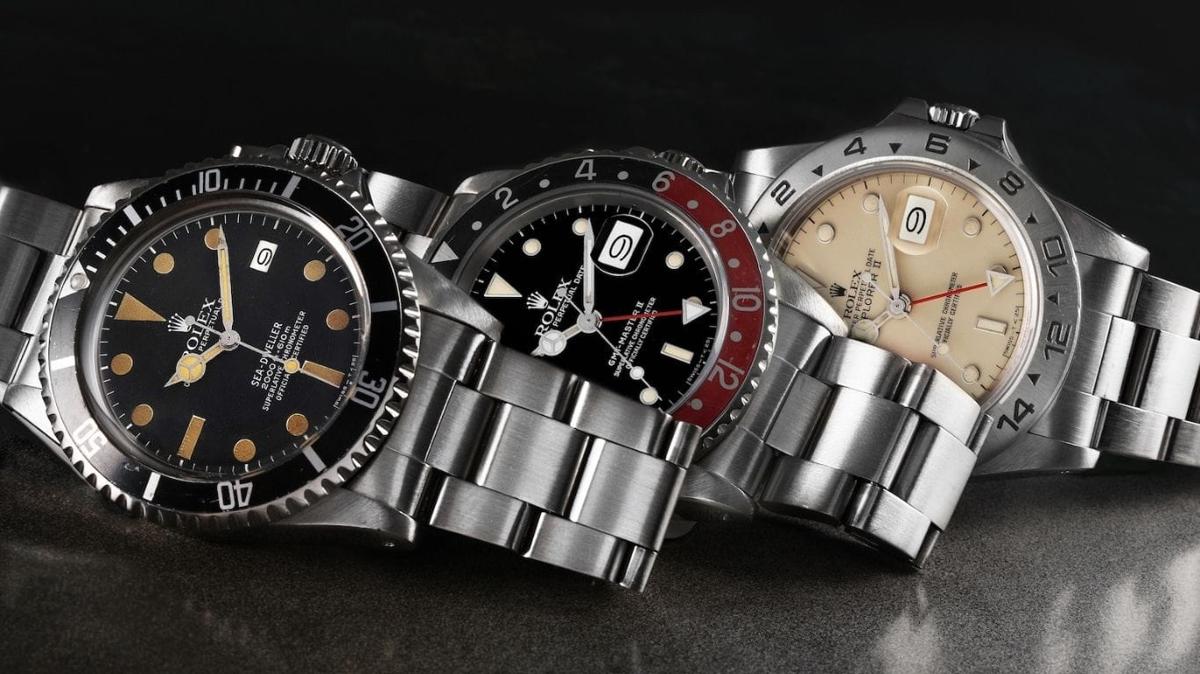
Rolex collecting comes with a vocabulary of nicknames the broader collecting community has built up over decades. Most reference specific dial-and-bezel configurations or particular colour combinations. Understanding the nicknames helps when reading auction catalogues, specialist dealer listings, and the broader collector conversation.
The "Pepsi" is the GMT-Master II with the red-and-blue Cerachrom bezel; the steel 126710BLRO left the catalogue in 2026. The "Batman" is the GMT-Master II with the black-and-blue bezel. The "Sprite" is the newer GMT-Master II with the green-and-black bezel.
The "Hulk" is the discontinued Submariner Date with the green dial and green bezel; the "Kermit" is the Submariner with the green bezel and black dial.
The "John Mayer" is the Daytona reference 116508 in yellow gold with the green dial. The "Wimbledon" Datejust has the slate-grey dial with green Roman numerals. The "Coke" was the historical GMT-Master with the red-and-black bezel.
Knowing these references is the entry to the broader collector conversation; auction catalogues and specialist dealers use them as shorthand.
Rolex terminology every buyer should know
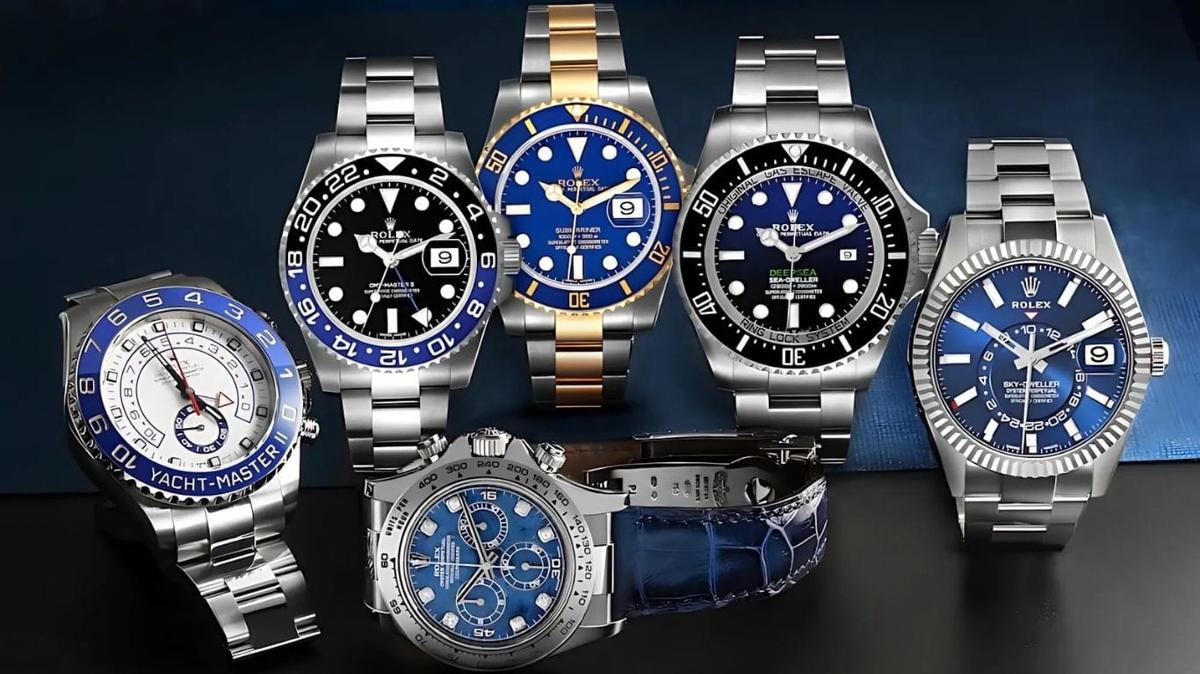
The vocabulary of Rolex collecting goes beyond nicknames. Reference number is the model's catalogue identifier; the 126710BLNR is the steel "Batman" GMT-Master II reference. Movement calibre is the specific in-house mechanism powering the watch (3230, 3235, 3255, 4131 for the Daytona).
"Box and papers" refers to the original presentation box, warranty card, and documentation that establishes provenance and matters for resale value. "Pre-owned" means the watch has had a prior owner; "vintage" refers to references from prior production generations. "Allocation" describes the boutique-level relationship-based purchase access for the most-sought references; "waitlist" is the practical mechanism for entering allocation queues.
The "Cerachrom" bezel is Rolex's proprietary ceramic bezel material. The "Cyclops" lens is the magnifier over the date window. The "Glidelock" is the bracelet micro-adjustment system on the Submariner and Sea-Dweller; the "Easylink" is the simpler extension system on the Datejust.
The terms recur across catalogue listings; learning them shortens the time it takes to read a specification with confidence.
Rolex price range across the catalogue
Pricing on the modern Rolex catalogue runs from around $6,000 for the Oyster Perpetual 28, the entry point, to well into six figures for the gem-set precious-metal references. US prices rose by around 7% on average in January 2026, more on gold than on steel, and Rolex raised gold prices again in June. The price categories below give the working framework for the contemporary catalogue.
| Category | Examples | Price Range (USD) |
|---|---|---|
| Entry-Level | Oyster Perpetual, Air-King | $6,000-$10,000 |
| Mid-Range | Datejust, Submariner (No Date) | $8,000-$20,000 |
| Premium | Submariner Date, GMT-Master II | $10,000-$50,000+ |
| Luxury | Daytona, Day-Date, Sky-Dweller | $16,000-$100,000+ |
| Collector / Vintage | Paul Newman Daytona, vintage Submariner 6538, Day-Date Stella | $100,000-$17M+ |
The retail and secondary-market figures sit at different points on the curve. The steel Daytona 126500LN lists at $16,900, and Morgan Stanley and WatchCharts data put the Daytona collection about a third above retail on the secondary market in the second quarter of 2026, with the GMT-Master II about a quarter above. The retired steel Pepsi shows how discontinuation moves prices: UK dealer prices tracked by EveryWatch rose from about £17,500 in February to £22,500 in April before easing to around £19,000 by August.
The structural premium reflects allocation discipline at the boutique level, but it is not universal: the Explorer, Day-Date, Yacht-Master and Sea-Dweller collections traded below retail in the same period, and across the brand secondary prices rose just 0.5% in the third quarter, the smallest gain in seven quarters.
The Rolex buying process: new versus pre-owned
Buying new through an Authorised Dealer (AD) is the standard route for current-production references. The relationship-building with a credible boutique is the practical mechanism for accessing the most-sought references; allocation discipline rewards collectors who build a purchase history with a single AD over years. The entry-tier and mid-range references are more readily available; the upper sport references require the boutique relationship to develop over time.
Buying pre-owned opens up the entire catalogue including discontinued references, vintage pieces, and the recently-discontinued tier where production-window discipline has consolidated meaningful collector premiums.
The credible pre-owned channels include the specialist dealers (Bob's Watches, Watchfinder, the European dealers like Lunar Oyster and Davidoff Brothers), Rolex's own Certified Pre-Owned programme, and the major auction houses (Phillips, Christie's, Sotheby's) for the upper end of vintage. The Rolex programme covers watches at least two years old, sold only by participating official retailers, among them the Rolex-owned Bucherer and Watches of Switzerland, with a two-year international guarantee. WatchCharts estimated the programme's sales at about $330 million in the first half of 2026, though it is still offered at fewer than a quarter of Rolex retail locations.
Rolex materials and case construction
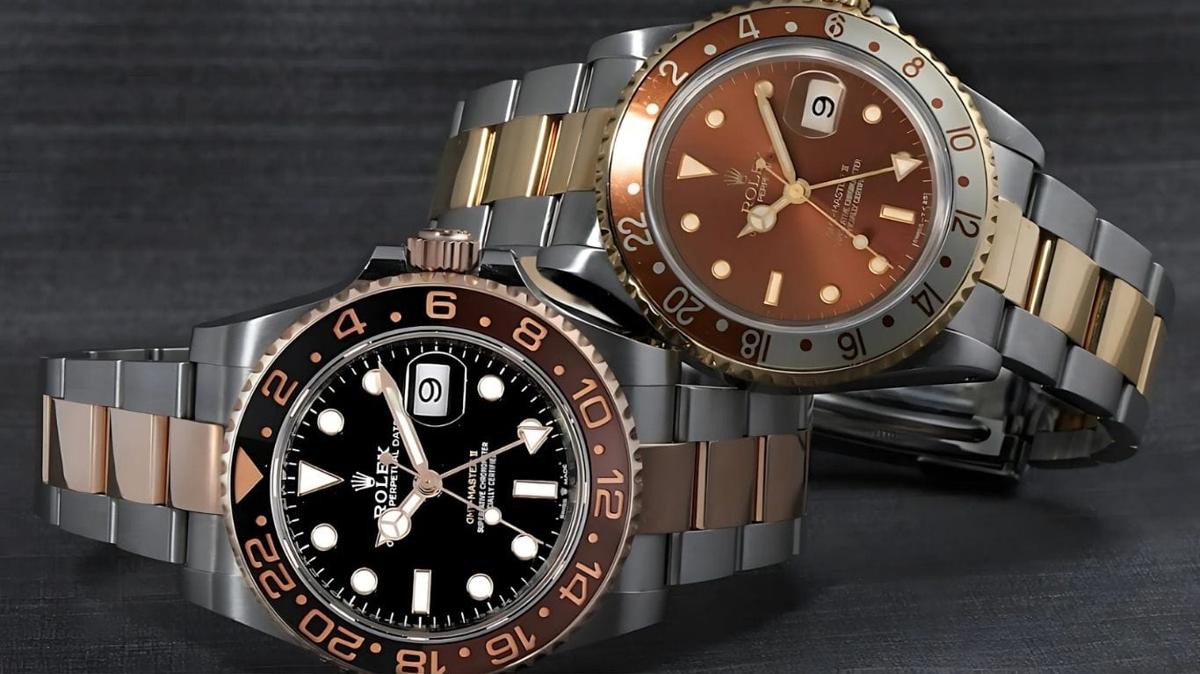
Rolex's materials discipline is one of the structural differentiators in modern Swiss watchmaking. The brand uses 904L Oystersteel, a corrosion-resistant alloy chosen for its ability to take a polished finish and retain it across decades. Cerachrom ceramic bezels resist scratching and UV-induced fading, which means the watch reads the same after years of regular wear as it did at purchase.
Precious-metal references run in Rolex's proprietary alloys. Everose is the brand's pink-gold formulation engineered to resist tarnishing across decades. The yellow-gold and white-gold alloys are similarly proprietary, and in 2026 Rolex added a new 18-carat Jubilee gold alloy on an off-catalogue Day-Date.
Precious-metal references push the upper catalogue into bespoke territory; platinum references sit at the top of the dress-watch and Day-Date catalogues.
Bezels: how to read the catalogue
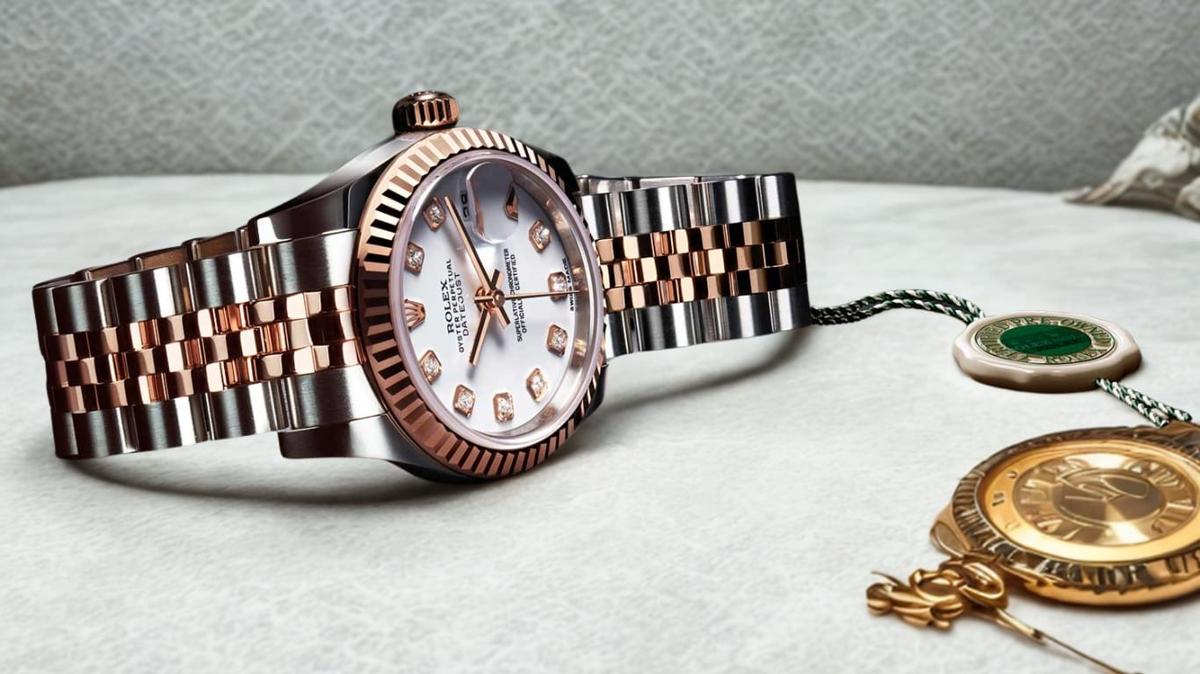
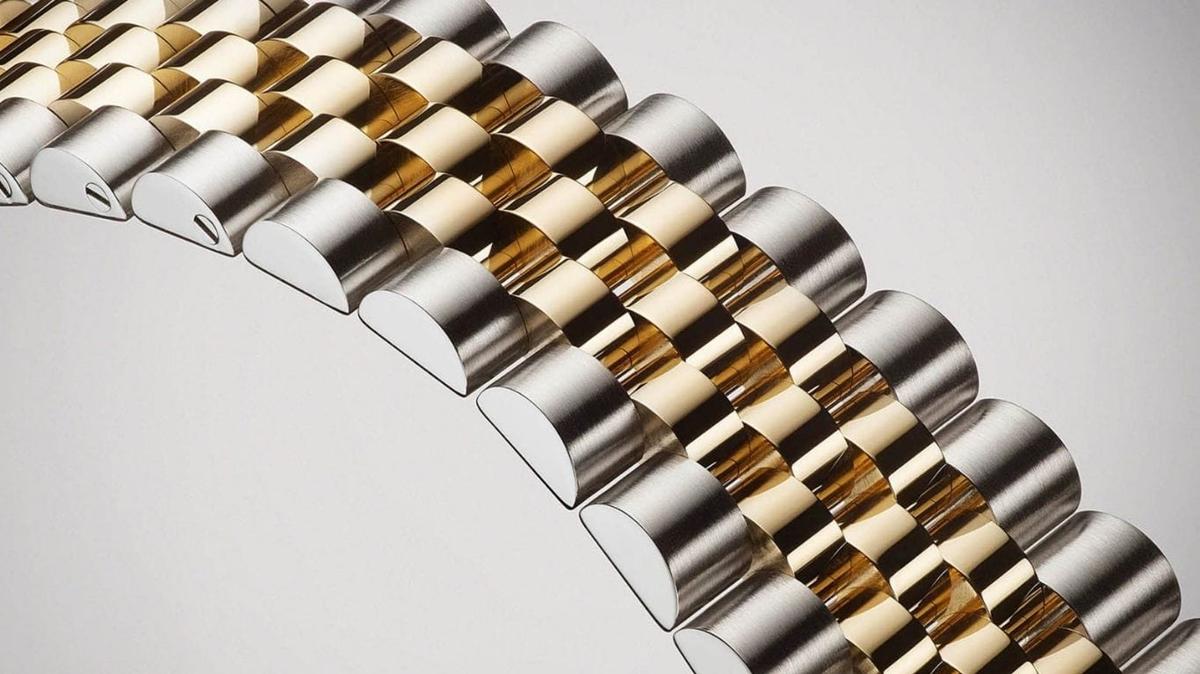
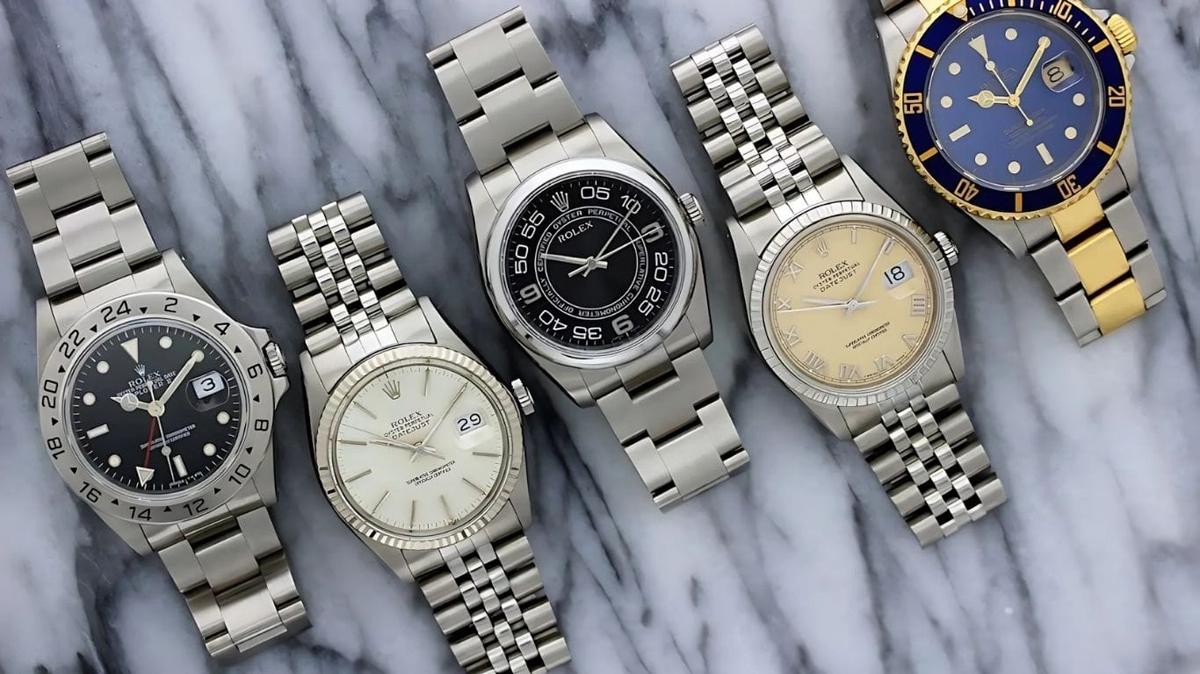
The bezel is one of the most defining elements on most Rolex sport references. Fluted bezels (the segmented design originally used to screw the bezel tightly onto the case to seal it) anchor the Datejust and Day-Date catalogues. Smooth bezels read more contemporary; gem-set bezels run into the precious-metal upper tier.
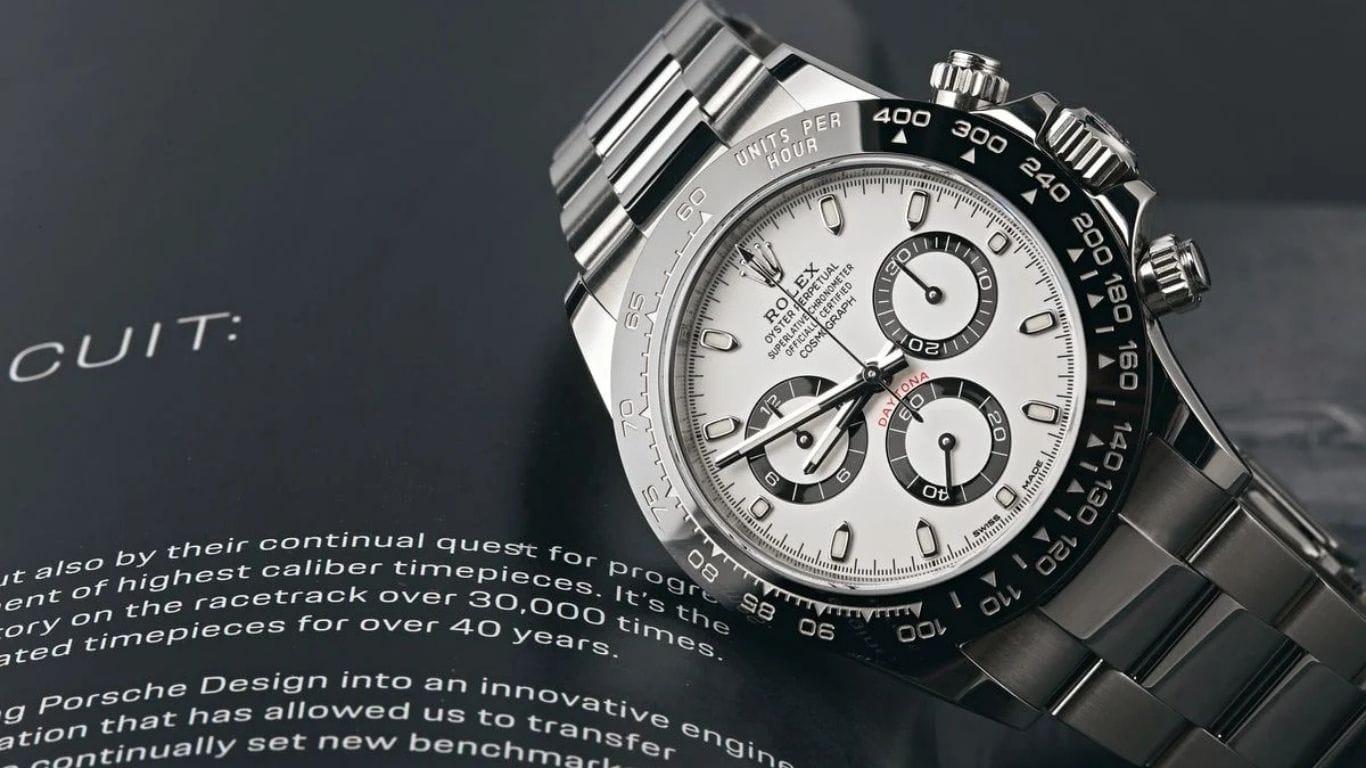
The Cerachrom unidirectional rotating bezel on the Submariner and the bidirectional bezel on the GMT-Master II are the sport-reference defining bezels. The Sea-Dweller and Deepsea diving bezels are similar in construction. The Daytona's fixed tachymetric bezel (in Cerachrom on the current ceramic-bezel reference 126500LN) is the chronograph-derived bezel that anchors the line.
Movements: in-house calibres across the catalogue
Rolex movements all run in-house. The current generation includes the Calibre 3230 (time-only, in the larger Oyster Perpetuals and the Air-King), the Calibre 3235 (date, in the Datejust and Submariner Date), the Calibre 3255 (day-date, in the Day-Date), the Calibre 4131 (the chronograph in the Daytona), the Calibre 3285 in the GMT-Master II and the Calibre 9002 in the Sky-Dweller. Most run on the Chronergy escapement with power reserves of 70 to 72 hours. The Land-Dweller, launched in 2025, introduced calibre 7135 and the new Dynapulse escapement, beating at 5Hz with about 66 hours of reserve.
The Superlative Chronometer certification tests every Rolex after casing to a -2/+2 seconds per day accuracy standard, more demanding than COSC alone, and in 2026 Rolex added criteria for magnetism, reliability and durability. The certification is one of the structural reasons modern Rolex production reads as the most reliable Swiss watchmaking at any price. Rolex recommends a service roughly every ten years, depending on the model and how it is worn; the global service network maintains the brand's reputation for long-term mechanical reliability.
Most popular Rolex collections in 2026
The Submariner is the brand's most-recognised sport reference. The current 124060 (no-date) and 126610LN (date) anchor the contemporary catalogue at US prices of $10,050 and about $10,250 respectively. The Daytona, GMT-Master II, Datejust and Day-Date round out the main pillars of the brand's working catalogue, and Watches and Wonders 2026 added centenary Oyster Perpetuals and a redesigned Yacht-Master II.
The Explorer (the field-watch reference tracing back to the 1953 Edmund Hillary Everest expedition heritage) is the lower-profile sport reference that experienced collectors increasingly weight. The Sea-Dweller (the deeper-rated Submariner sibling) and the Deepsea (the 3,900-metre rated reference) anchor the technical end of the diving catalogue. The Sky-Dweller (with annual calendar and dual time-zone functionality) sits at the complicated end of the catalogue at the steel tier.
The vintage catalogue is broader still. The reference numbers across the various generations matter; the design and movement updates that mark each generation affect collector value materially. Phillips, Christie's and the dedicated specialist dealers all handle the upper end of vintage with the kind of discipline that makes the broader vintage Rolex framework readable.
Should you buy a Rolex online: authentication and best practices
Buying a Rolex online is increasingly common but requires the same authentication discipline as any pre-owned purchase. The credible online channels include the specialist dealer websites with authentication guarantees (Bob's Watches, Watchfinder, the European specialists), the Certified Pre-Owned programmes from authorised retailers, and the major auction houses' online sales platforms.
Avoid any online seller that can't provide original documentation, independent authentication verification, or a credible return policy.
Key authentication checks before buying online
- Verify the seller: Check independent reviews, established reputation, and presence in the credible specialist dealer network.
- Authentication: Insist on independent authentication from a watchmaker or established authentication service before completing the purchase.
- Documentation: Require original box, warranty card, service receipts, and any provenance documentation that establishes the chain of ownership.
- Photo verification: Examine high-resolution photos of the case, dial, bezel, movement (where available), and any reference-specific details.
- Payment security: Use secure payment methods like credit cards or trusted platforms with buyer protection policies. Avoid wire transfers to unverified accounts.
- Research market prices: Check Chrono24, WatchCharts and the specialist dealer listings to understand the typical price range for the reference and condition.
New versus pre-owned online
- New Rolex watches online: New Rolex watches are sold exclusively through official retailers, and Rolex has long barred them from selling online; the website is for research and finding a retailer. The relationship-building with the AD is still the practical mechanism for accessing the most-sought references.
- Pre-owned Rolex watches online: Available through specialist dealers, Certified Pre-Owned programmes, and the major auction houses. Vintage and discontinued references are almost exclusively available through these channels.
When to walk away from an online Rolex purchase
Walk away if any of the following apply. The seller cannot provide original documentation or a credible chain of ownership.
The price looks substantially below the market range without a clear explanation. You can't verify the serial and reference numbers independently. The seller refuses an independent authentication check; the seller lacks reviews or verifiable credentials; the seller offers no return policy or guarantee of authenticity.
If you're spending serious money, learning how to spot a counterfeit before you buy is time well spent.
What this means for buyers in 2026
The longer story new Rolex buyers come to recognise is that the brand rewards patience and discipline. The boutique-relationship work, the reference-specific reading, the authentication discipline on pre-owned, the box-and-papers documentation across both channels all matter. Collectors who navigate the catalogue with patience and a willingness to build the working knowledge tend to end up with watches that hold up across decades.
Our pick for the first-time buyer: the Oyster Perpetual 36mm or 41mm in steel with the standard dial. Allocation is more achievable than for the steel sports models, the reference reads cleanly across registers, and the watch anchors the broader catalogue's design discipline. Subsequent acquisitions build naturally from that foundation.
We last reviewed this analysis on 17 October 2026.