
US buyers have become the fine wine market’s center of gravity in ways that weren’t true even five years ago. Their behavior now determines whether prices rise or fall across entire regions, and if you’re active in fine wine as an investor or collector, that shift changes everything about how you read the market.
Liv-ex’s 2024 data showed that US merchants accounted for 35.5% of all purchases on the exchange for the year, jumping to an even higher 42.6% in December alone. That marked the first year US buyers captured the lion’s share of activity, cementing their role as the single most influential force in the market. If you want to understand where fine wine prices are heading, you start by watching what Americans are doing.
Major Countries by Total Wine Consumption 2024 to 2026
A look at the world’s top wine-consuming nations for 2024 with 2026 forecasts tells a revealing story. The United States leads global wine consumption at 33.5 million hectoliters, followed by traditional wine markets France at 23.2 million hectoliters and Italy at 22.6 million hectoliters. Germany holds strong at 19 million hectoliters, while emerging markets show varied trends. Data compiled from Forbes, Market.us, OIV, and leading industry publications.
Wine Consumption by Country measured in Million Hectoliters
That dominance became painfully clear in 2026 when the Trump administration threatened tariffs of up to 200% on European wine, Champagne, and spirits. US buyers pulled back sharply from the secondary market, and the impact rippled globally. Left Bank versus Right Bank Bordeaux dynamics shifted almost overnight as American capital dried up from entire categories.
The numbers tell the story bluntly. The purchase share of top Piedmont wines by US buyers halved from 44% in Q1 2026 to just 22% in Q2, helping push prices lower across an already fragile market. That’s not a minor fluctuation. That’s a market signal you need to pay attention to.
By mid-November 2025, Liv-ex stated bluntly that “US buyers’ departure following tariff threats resulted in accelerated declines” and raised questions about whether a market that had “quietly come to rely on them” could recover without their full participation.
And yet the picture isn’t simple withdrawal and collapse. Since tariffs on EU wine and spirits were set at 15% from August 2026, up from 10% previously but far below the threatened 30% to 200% scenarios, US merchants began buying again. This cautious return lifted trade volumes back to roughly 2018 levels, even though activity sits well below the highs of 2024.
Table of Contents
Key Takeaways
Navigate panels- The U.S. has become the fine wine market’s global anchor, accounting for over 40% of Liv-ex trade by value at its 2024 peak, making American demand the single most important price determinant.
- Tariff volatility reshaped buying behavior permanently — uncertainty in early 2025 halved U.S. purchases of top Piedmont wines, while the final 15% rate triggered a cautious but structured return.
- U.S. buyers are now leaner, faster, and more diversified, focusing on Champagne, Italy, and select California labels rather than concentrating heavily on Bordeaux and Burgundy.
- The Champagne and Italy segments remain structural winners, with Italy’s share of Liv-ex trade hitting 19.4% and Champagne’s liquidity recovering rapidly after tariff stabilization.
- Even as volumes normalize below 2024 highs, the U.S. continues to set global pricing tone and portfolio trends, reinforcing its role as the market’s central force.
- Who:
- U.S. fine wine merchants, collectors, and importers now driving global trade flows.
- What:
- A structural power shift where U.S. buyers define price trends and liquidity across major wine regions.
- When:
- Emerging from the 2024–2025 tariff cycle, with stabilization after August 2025’s 15% U.S.–EU tariff settlement.
- Where:
- Predominantly across Bordeaux, Burgundy, Champagne, Italy, and California, all influenced by U.S. participation on Liv-ex.
- Why:
- Because U.S. demand concentration and strategic diversification have turned America into the fine wine market’s primary stabilizer — and its biggest vulnerability when sentiment shifts.

How Tariff Uncertainty Changed US Wine Buying Behavior Forever
When the new US-EU trade framework was finally announced in summer 2026, it confirmed a 15% tariff on EU wine and spirits from August 1st, replacing the previous 10% rate. French group Rémy Cointreau calculated that this 15% rate, down from an initially proposed 30%, would cut the tariff hit to its operating profit in the US from €35 million to €20 million in fiscal 2026 to 2027.
The European wine lobby warned nonetheless that even the 15% tariff was already “damaging the sector” and depressing export volumes, reinforcing pressure on margins along the supply chain.
For US secondary market buyers, the bigger problem was the months of uncertainty that came before the 15% settlement. Liv-ex summarized it starkly. Tariff uncertainty prevented US actors from planning their buying strategies, and that uncertainty proved more damaging than the tariffs themselves. You can price in a known cost. You cannot price in chaos.
During the height of the threats, US participation in certain segments collapsed. Piedmont’s top wines became the clearest example, with the US share of purchasing dropping from 44% to 22% in a single quarter. That shows you exactly how quickly American buyers can evacuate entire categories when policy turns unpredictable. Understanding the investment case for Sangiovese matters here, because these are the wines that got caught in the crossfire.
Once the dust settled around the 15% rate, the shape of US buying had changed in ways that won’t simply unwind. This isn’t a temporary reset. Your strategy for buying or selling fine wine needs to account for a structurally different American buyer.
The return of US buyers lifted trade volumes back to roughly 2018 levels, but as Liv-ex’s November 2026 report made clear, a return to 2024 levels in the near future is highly unlikely. US merchants are deliberately taking less stock per purchase, maintaining lean inventories and faster rotation, but buying with more confidence now that the tariff rate is known and they can model costs accurately.
To understand why this behavioral shift matters, you need to look back at the first major tariff shock in October 2019. Back then, the US imposed 25% tariffs on a range of European goods, including many still wines, as part of the Airbus-Boeing dispute. The data showed how dramatically US buying patterns shifted in response, and the echoes of that episode are playing out again now with important differences.
Bordeaux’s share of US trade by value fell from 48% before the tariffs to 33% afterward. Burgundy’s share dropped from 13% to 8%. Meanwhile, Champagne’s share rose from 10% to 14%, Italy’s climbed from 18% to 25%, and “Rest of World” increased from 4% to 10%.
The 2026 tariff round had a different, more nuanced effect that revealed just how much more sophisticated US buying had become over those intervening years.
This time Champagne and Californian wine saw the most pronounced hit to their share of US buying during the tariff scare, but both recovered to their pre-tariff share levels much faster than in 2019. That points to quicker rebalancing and more tactical portfolio management by US merchants who’d learned from the previous cycle. Experience matters in this market.
The shocks of 2019 and 2026 haven’t simply reduced volumes. They’ve permanently reshaped how and where US capital gets deployed in the fine wine market, and you’re now operating in that reshaped world whether you planned for it or not.
What US Buyers Are Purchasing Now and Why It Matters
Today’s US purchasing patterns look far more diversified than the Bordeaux-dominated mix of the late 2010s. Liv-ex compared US behavior with the UK, noting that both have broadened beyond a narrow focus on Bordeaux and Burgundy. But the US pivot was catalyzed by tariffs rather than purely by changing tastes, which means the diversification is stickier and more structurally embedded.
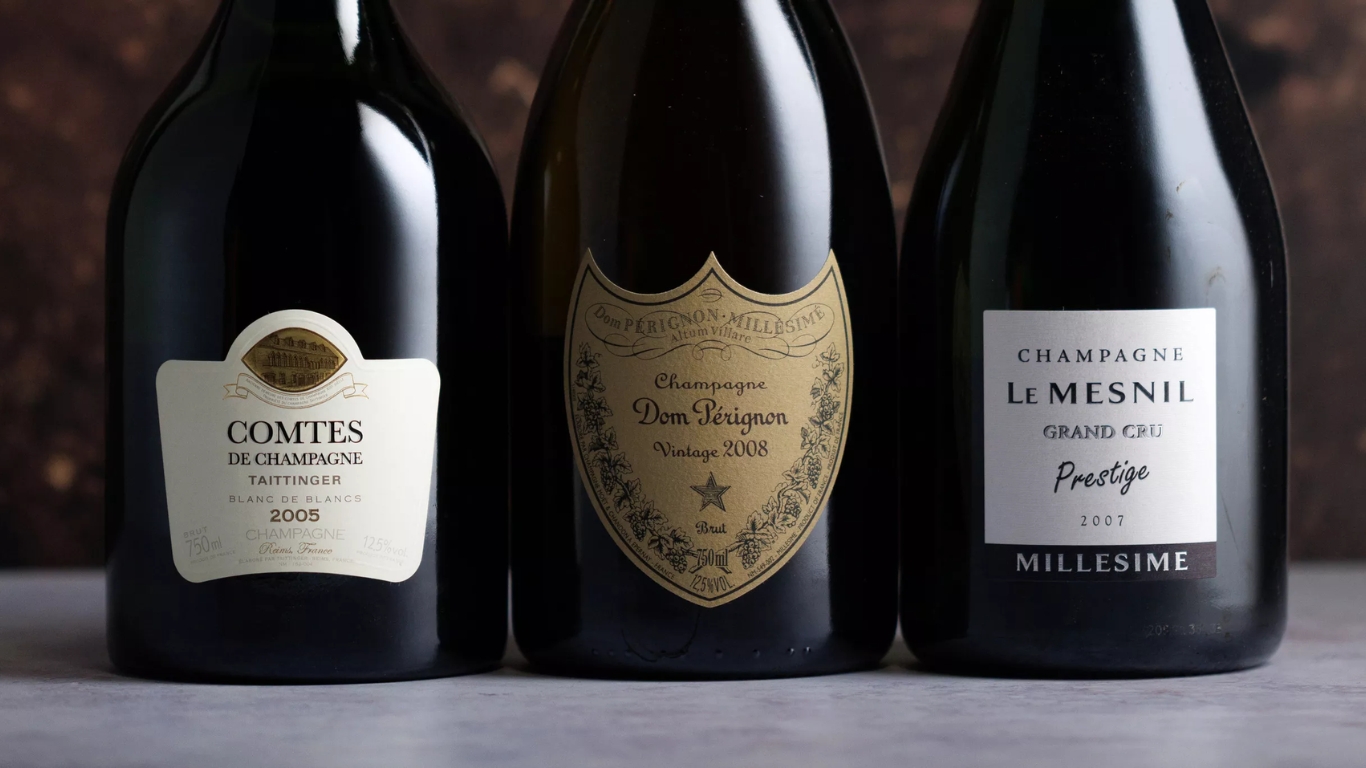
Champagne has been the biggest winner from this structural reallocation. The long-term data shows Champagne’s share of overall exchange trade by value rising from roughly 1.2% in 2010 to about 8.2% by 2021. During that period, US buyers accounted for 47% of Champagne purchases by value, underlining how central America became to the category’s liquidity. Performance tracked that demand closely, and the relationship between American appetite and Champagne pricing became essentially inseparable.
In 2020, the Champagne 50 was the single strongest-performing sub-index in the Liv-ex 1000, up 8.27% when most other regions were flat or negative.
Even after the subsequent market correction that hit all categories, recent data showed stabilization in Champagne that suggested the category’s elevated role wasn’t just momentum. A trading update from August 2026 noted that Champagne’s main index ticked up 0.7% month-over-month, supported by over £2 million in live bids and a marked improvement in the overall bid-to-offer ratio on the exchange.
The 2026 tariffs did temporarily dent Champagne’s share of traded value. But Liv-ex reported that its share of US buying recovered to pre-tariff levels, confirming that the category’s place in US portfolios is structural rather than tactical. If you’re building a fine wine portfolio, that’s the kind of signal worth paying attention to.
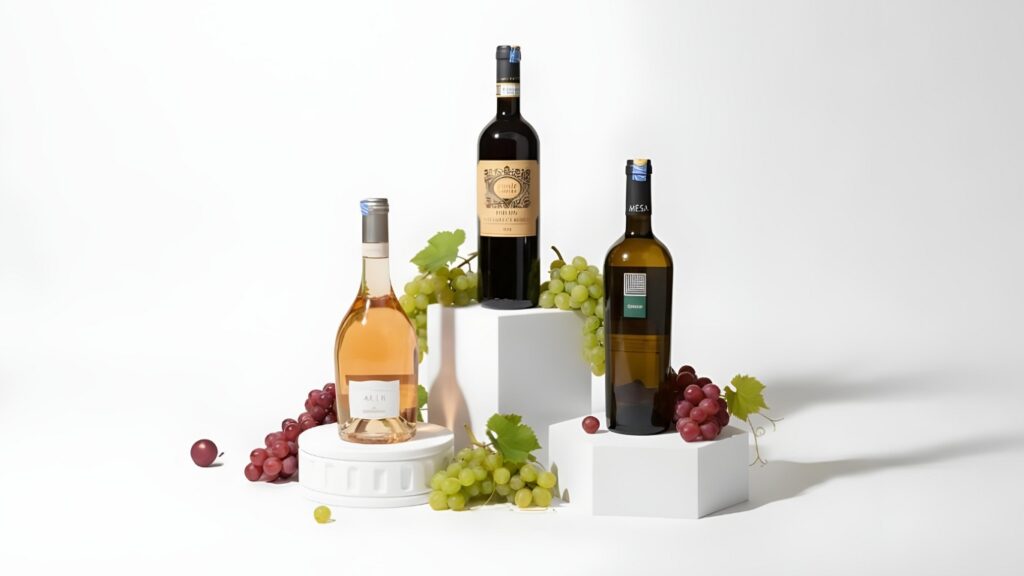
Italy has moved from being a diversification play to a core allocation for many US buyers, mirroring Champagne’s trajectory. Liv-ex attributed Italy’s growth partly to its exemption from the 2019 to 2021 US tariffs, which helped push its share of total Liv-ex trade from 8.8% in 2019 to 15.1% in 2020 and 15.4% in 2021. That share stayed structurally higher even as market conditions normalized in subsequent years. The investment case for Super Tuscan wines reflects exactly this shift in buyer appetite.
Recent data confirmed Italy’s continued strength. A November 2025 report noted that in October 2025, Italian wines accounted for 19.4% of all Liv-ex trade by value, the highest share since August 2020.
The Italy 100 index led all major regional indices that month with a 1.3% gain, helped by steady demand for names like Masseto and Ornellaia. For US buyers, the story is that Barolo, Brunello, and the top Super Tuscans have moved from interesting add-ons to strategic building blocks. Partly for tariff reasons, yes, but also because their risk-return profile looks attractive compared with overpriced young Bordeaux.
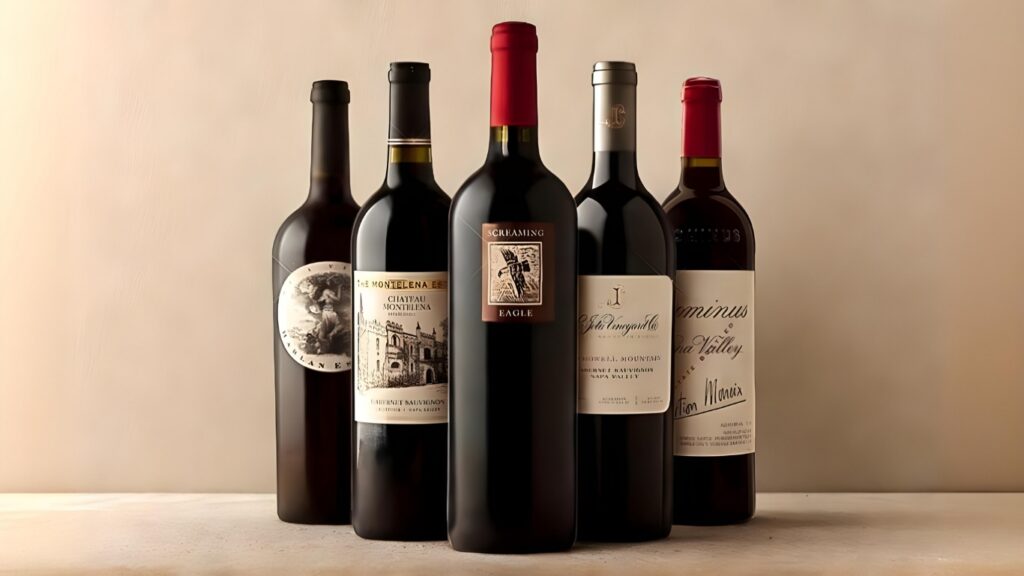
Perhaps the most counterintuitive finding is California’s strength in US portfolios during a time of higher tariffs on imported wine. You’d expect tariffs to push buyers toward domestic product, but Liv-ex pointed out that dollar strength has actually allowed US buyers to purchase Californian wines from international markets at a discount, exploiting price discrepancies between US and overseas listings.
In practice, some US merchants are buying back iconic Californian labels that were previously exported, often at lower all-in costs than sourcing the same wines domestically. It’s the kind of arbitrage play that only works when you have scale and speed, which is exactly what the largest US operators now have.
What to Expect From US Wine Buyers in the Coming Years
The near-term outlook for US demand is best described as gradually expanding but structurally leaner than the peak years. Liv-ex’s report stated plainly that the cautious return of buyers has brought trade volumes back up to 2018 levels, and that as existing stocks get run down, purchased volumes are expected to increase. The direction is up. The pace is measured.
At the same time, Liv-ex stressed that a return to 2024 volumes in the near future is highly unlikely. The market needs to reset expectations about what normal looks like, and if you’re benchmarking performance against 2024, you’re setting yourself up for disappointment.
Recent monthly data backs up this gradual recovery thesis. An August 2026 update showed that overall trade volume on Liv-ex was up 3.8% versus July and 10% year-over-year, even though trade value sat about 9.7% lower than August 2024. More activity at lower prices is the defining pattern of this moment.
That combination of higher volume at lower value is a classic sign of a market finding its floor, which typically precedes broader recovery as buyers gain confidence and sellers accept new pricing reality. September figures showed the Liv-ex 100 index rising 1.17%, its best monthly gain since October 2022, as tariffs settled at 15% and US buyers began to gradually return to the market.
The picture that emerges is clear. Volumes will likely grind higher from today’s 2018-style levels as merchants restock and exploit pockets of value that the correction created. Portfolios will stay structurally more diversified than they were before 2019, with Champagne, Italy, and select California labels entrenched alongside blue-chip Bordeaux and Burgundy rather than as temporary alternatives. And US buyers’ margin sensitivity combined with their tactical agility, rather than sheer volume alone, will keep them at the center of global fine wine price discovery.
The market has fundamentally adjusted to a reality where American buying patterns matter more than any other single factor. That dependence isn’t reversing even as volumes normalize at levels below the 2024 peak. If you’re serious about fine wine as an investment or a collection, understanding what US buyers are doing next isn’t optional. It’s the whole game.