Bordeaux wines sit at the very top of the fine wine world. Exceptional quality, centuries of heritage, and a track record as a serious investment asset — few categories come close.
One of the most fascinating debates among collectors and investors centers on the distinction between Left Bank Bordeaux and Right Bank Bordeaux.
These two regions, separated by the Gironde Estuary and its tributaries, each deliver their own terroir, grape varieties, and winemaking philosophy. The result is two very different expressions of Bordeaux that appeal to different palates and different investment strategies.
If you’re thinking about wine as an asset class, understanding what sets Left Bank apart from Right Bank is essential. Both sides produce some of the most coveted bottles on the planet, but the price points, timelines, and ROI potential tell very different stories.
This guide breaks down everything you need to know, from terroir and grape varieties through to pricing and historical returns, so you can decide where your money is best placed heading into 2026.
Table of Contents
Left Bank vs Right Bank Bordeaux: Terroir
Terroir shapes everything. The environmental factors at play in any given vineyard, including soil composition, drainage, sunlight exposure, and microclimate, define the personality of the wine before a single grape is harvested. Nowhere is this truer than in Bordeaux, where the geographical divide between Left Bank and Right Bank creates two fundamentally distinct growing environments.
Left Bank Bordeaux Terroir
- Location: The Left Bank is west of the Gironde Estuary and includes famous sub-regions like Médoc, Haut-Médoc, and Graves.
- Soil Composition: Predominantly gravelly soils, which are excellent for drainage and heat retention. This allows for optimal ripening of Cabernet Sauvignon, the dominant grape variety.
- Climate: The Left Bank enjoys a slightly cooler maritime climate, benefiting from its proximity to the Atlantic Ocean. This results in a longer growing season, ideal for tannic and age-worthy wines.
- Elevation: Flat terrain with some gentle slopes, which helps maintain consistent drainage.
Right Bank Bordeaux Terroir
- Location: The Right Bank lies east of the Gironde and Dordogne rivers, encompassing renowned areas like Saint-Émilion and Pomerol.
- Soil Composition: Primarily clay and limestone soils, which retain moisture and are well-suited for Merlot, the dominant grape. Gravel and sandy patches are also found in specific areas.
- Climate: A slightly warmer continental climate compared to the Left Bank, leading to earlier ripening of grapes. This produces wines that are softer and more approachable in their youth.
- Elevation: More varied terrain, with rolling hills and plateaus, contributing to the diversity of wine styles.
The gravelly soils of the Left Bank were made for Cabernet Sauvignon. They drain exceptionally well, warm up quickly under the Bordeaux sun, and push the vine to produce grapes with dense tannins and remarkable aging potential. Wines from Pauillac or Margaux don’t reveal their best side young. They reward patience, which makes them a natural fit for long-term investors willing to think in decades rather than years.
Shift across to the Right Bank and the soil profile changes completely. Clay and limestone take over, holding moisture and producing Merlot grapes that are riper, softer, and more fruit-forward from the start. These wines reach their peak earlier, which opens the door to quicker returns for investors with a short to medium-term horizon.
Terroir is not just about flavor. It’s a direct driver of aging potential, and aging potential drives long-term value. When you’re building a wine investment portfolio, understanding these soil differences between the two banks gives you a meaningful edge in deciding which bottles to buy and how long to hold them.

Left Bank vs Right Bank Bordeaux: Wine Characteristics
The character of any Bordeaux wine starts in the ground, but it’s shaped further by the dominant grape and the winemaker’s hand. Left Bank and Right Bank have developed their own distinct identities over centuries, and those identities translate directly into different market profiles.
Those differences in style, flavor, and texture aren’t just a matter of taste. They influence which buyers are willing to pay, how long the wines need to be held, and ultimately what kind of return you can expect.
Left Bank Bordeaux Characteristics
- Structure: Left Bank wines are known for their bold, tannic structure, making them powerful and complex. These wines typically age for decades, developing nuanced flavors over time.
- Flavor Profile: Dominated by black fruit flavors such as blackcurrant, blackberry, and plum. Secondary notes include tobacco, cedar, and graphite, which are common in aged Cabernet Sauvignon.
- Alcohol and Acidity: Generally have slightly higher alcohol levels and pronounced acidity, which contribute to their aging potential.
- Age-Worthiness: Wines from the Left Bank are built to last, with some reaching their peak after 20–50 years as we can see in the graph below. This longevity enhances their desirability for collectors and investors.

Right Bank Bordeaux Characteristics
- Structure: Right Bank wines are softer and rounder in texture, with a more fruit-forward profile. They are approachable at a younger age compared to Left Bank wines.
- Flavor Profile: Predominantly red fruit flavors, including cherry, raspberry, and red plum. Secondary notes often include chocolate, spice, and floral hints like violet.
- Alcohol and Acidity: Slightly lower acidity and alcohol compared to Left Bank wines, creating a smoother, more velvety mouthfeel.
- Age-Worthiness: While Right Bank wines are more approachable when young, high-end examples from regions like Pomerol and Saint-Émilion can age for decades, offering a balance between early enjoyment and investment potential.
Think of the Left Bank as the long game and the Right Bank as the faster play. Left Bank wines build value slowly, rewarding investors who are prepared to hold. Right Bank wines move more quickly through secondary markets and attract a wider audience, which supports stronger short to medium-term performance. A well-constructed portfolio benefits from having both sides of the river working for you.
Left Bank vs Right Bank Bordeaux: Grape Varieties
The grape is where the story of Left Bank versus Right Bank really begins. Each side of the river is anchored by a dominant variety, and that single difference flows through into everything — flavor, structure, aging curve, and investment profile.
These grape choices didn’t happen by accident. They evolved over generations in response to the terroir, the climate, and the winemaking traditions of each region. And they shape not just what the wine tastes like, but what it’s worth and when it peaks.
Left Bank Bordeaux: Cabernet Sauvignon Dominance
- Primary Grape: Cabernet Sauvignon is the cornerstone of Left Bank wines, often comprising 60–80% of the blend in iconic regions like Médoc and Haut-Médoc.
- Supporting Grapes: Merlot, Cabernet Franc, and Petit Verdot are commonly blended to soften the tannins and add complexity.
- Key Characteristics of Cabernet Sauvignon:
- High tannins and acidity contribute to excellent aging potential.
- Bold flavors of blackcurrant, cedar, and tobacco develop into complex secondary and tertiary notes over time.
- High tannins and acidity contribute to excellent aging potential.
Right Bank Bordeaux: Merlot Dominance
- Primary Grape: Merlot takes center stage on the Right Bank, often making up 70–90% of the blend in renowned regions such as Pomerol and Saint-Émilion.
- Supporting Grapes: Cabernet Franc is the key secondary grape, adding structure and aromatic complexity, with occasional use of Malbec or Petit Verdot.
- Key Characteristics of Merlot:
- Softer tannins and lower acidity create a rounder, fruit-forward profile.
- Flavors of red plum, cherry, and chocolate make these wines approachable earlier in their life cycle.
The grape variety you’re buying into matters enormously as an investor.

Cabernet Sauvignon’s high tannins and pronounced acidity are what give Left Bank wines their extraordinary aging potential.
That slow development arc is precisely what drives long-term appreciation. You’re essentially buying time, and time rewards you generously.
First-growth estates like Château Margaux and Château Latour have historically doubled or tripled their release prices after 20 to 30 years of cellaring. Those are the kind of numbers that get serious collectors paying close attention.
The structured nature of Cabernet Sauvignon also keeps demand tight among the most sophisticated buyers in the market, which pushes values steadily upward over time.
Merlot, on the other hand, gives Right Bank wines a softness and accessibility that appeals far beyond the traditional collector base. Newer enthusiasts, casual buyers, and investors who don’t want to wait decades all gravitate toward these wines.
That broader demand drives faster secondary market activity, making Right Bank wines well suited to short and medium-term strategies. Names like Château Pétrus and Château Ausone consistently command premium prices, underpinned by their global reputation and tightly limited production volumes.
Some exceptional Right Bank wines reach their drinking window within 10 to 15 years, which means you can realise meaningful gains well before a Left Bank bottle has even opened up.
Neither approach is superior on its own. Left Bank offers stability and long-term compounding. Right Bank delivers faster liquidity and immediate premiums.
The smartest strategy is to hold both. A balanced portfolio that combines the aging power of Cabernet Sauvignon-dominant Left Bank wines with the quicker market movement of Merlot-led Right Bank bottles gives you exposure to two very different return profiles working in tandem.
Left Bank vs Right Bank Bordeaux: Winemaking Methods
Great terroir and exceptional grapes only go so far. What happens in the winery shapes the final expression of the wine, and the winemaking philosophies on each side of the Gironde are as distinct as the soils beneath the vines.
These practices determine how the wine ages, how it shows in its youth, and ultimately how it performs when it reaches the secondary market.
Left Bank Bordeaux Winemaking Methods
Left Bank winemakers build for the long haul. The emphasis is on structure and longevity, drawing out every dimension of Cabernet Sauvignon’s bold character and engineering wines that will evolve gracefully over decades rather than years.
- Fermentation and Maceration: Left Bank producers typically employ longer maceration periods to extract more tannins, color, and flavor from the Cabernet Sauvignon grapes. This technique contributes to the wine’s firm structure and age-worthiness.
- Oak Aging: Left Bank wines are often aged in French oak barrels, with top-tier producers using 70–100% new oak for their Grand Vin. This imparts flavors of vanilla, spice, and smoke, adding complexity to the wine as it matures.
- Blending Philosophy: Blending on the Left Bank often prioritizes Cabernet Sauvignon, supported by Merlot, Petit Verdot, and Cabernet Franc. This ensures consistency and balance while allowing the wine to express the terroir’s unique characteristics.
Right Bank Bordeaux Winemaking Methods
Right Bank producers take a different approach entirely. The goal is to enhance the natural softness and fruit-forward richness of Merlot, crafting wines that feel welcoming even in their youth without sacrificing elegance or complexity.
- Fermentation and Maceration: Shorter maceration periods are common, emphasizing fruit flavors and softer tannins. This technique enhances the accessibility of Right Bank wines, making them enjoyable within a few years of production.
- Oak Aging: Right Bank wines also use French oak barrels, but typically with a lower proportion of new oak compared to the Left Bank. This ensures the wines retain their fruit-forward character without becoming overly influenced by oak flavors.
- Blending Philosophy: The blends on the Right Bank are Merlot-dominant, often supplemented by Cabernet Franc for added structure and aromatics. This results in wines with velvety textures and balanced profiles.
The winemaking divergence between the two banks maps almost perfectly onto their investment profiles. Left Bank’s commitment to structure and extended aging is precisely what attracts long-term investors who are comfortable holding bottles for 20 years or more.
The meticulous blending and extended oak aging programs used by top Left Bank estates add layers of depth and complexity that only reveal themselves with time, which is exactly what serious collectors are willing to pay a premium for.
Château Lafite Rothschild and Château Latour are the clearest examples. Their extensive use of new oak and firm tannic profiles has driven consistent value appreciation over decades. These are not wines you open at five years. They are wines you hold, and holding them pays off.
The aging discipline baked into Left Bank winemaking ensures these bottles reach their peak maturity slowly and reliably, which is the kind of predictability that appeals to collectors who think about fine wine the way others think about blue-chip equities.
Right Bank winemaking tells a different story. The focus on early approachability, softer tannins, and lush fruit makes these wines accessible to a much wider pool of buyers.
That breadth of demand is a genuine investment advantage. Château Pétrus and Château Cheval Blanc have built loyal global followings precisely because their wines deliver pleasure without requiring a decade in the cellar first, and that demand drives consistent market performance.
The shorter aging window of Right Bank wines, typically 10 to 15 years for the best vintages, means investors can plan their exits with more certainty, making these bottles a strong fit for medium-term portfolios.

Left Bank vs Right Bank Bordeaux: Appearance, Aromas, and Tasting Notes
Before a drop touches your lips, Bordeaux tells its story. The color in the glass, the aromas rising from the bowl, and the texture on your palate all reflect the terroir, the grape, and the winemaker’s craft working together.
Left Bank and Right Bank wines are unmistakably different sensory experiences, and those differences help explain why each side of the river attracts its own devoted following.
Left Bank Bordeaux
Appearance: Young Left Bank wines pour a deep ruby or garnet that catches the light with real intensity. That deep color reflects the high concentration of tannins and phenolics that Cabernet Sauvignon brings. As the wine ages over decades, those hues soften gradually toward brick-red, signaling the transformation happening inside the bottle.
Aromas: The nose on a Left Bank wine is serious and complex, often needing time in the glass to fully open. Blackcurrant, blackberry, and plum dominate at first.
Then, with air and age, secondary notes of cedar, pencil shavings, and graphite emerge. These are the hallmarks of great Cabernet Sauvignon. Earthy and smoky elements develop further through oak aging and extended bottle maturation, adding an almost brooding depth.
Tasting Notes: Left Bank wines make an immediate impression on the palate. Bold structure, high tannins, and pronounced acidity announce themselves straight away.
The flavor core is built around black fruits like cassis and dark cherry, layered over savory notes of tobacco, leather, and truffle. The finish is long and dry, and it evolves as the wine ages, revealing new dimensions each time you revisit a bottle over the years.
Right Bank Bordeaux
Appearance: Right Bank wines pour a slightly lighter ruby than their Left Bank counterparts, reflecting the softer tannin structure that Merlot produces. With age, they drift toward a gentle brick-red with less visual intensity, though no less beauty.
Aromas: The nose on a Right Bank wine is more immediately inviting. Cherry, raspberry, and red plum are the dominant fruits, drawing you in from the first swirl. Hints of chocolate, vanilla, and warm spices reveal the influence of careful oak aging, while floral notes of violet and subtle herbal touches add an elegance that sets the best Right Bank wines apart.
Tasting Notes: Right Bank wines feel immediately different on the palate. Softer, more velvety, with rounder tannins and moderate acidity that never overwhelms.
The flavor profile centers on lush red fruits, enriched by cocoa, baking spices, and earthy undertones. The finish is smoother, the wine more immediately enjoyable, and that accessibility is a big part of what drives their appeal to a broader market.
These sensory distinctions matter beyond the dinner table. Wine Spectator and other leading critics consistently note that the contrasting profiles of Left Bank and Right Bank wines drive different buyer behaviors in secondary markets, which feeds directly into their respective investment performance.
Left Bank vs Right Bank Bordeaux: Appellations
Bordeaux is home to some of the most prestigious wine appellations on earth, and both banks of the Gironde contribute estates that wine collectors know by heart.
Each appellation carries its own identity, shaped by the terroir beneath it, the grapes that thrive there, and the winemaking traditions passed down through generations. Understanding which appellations matter most, and why, is essential knowledge for any serious Bordeaux investor.
Left Bank Bordeaux Appellations
The Left Bank is anchored by the great appellations of the Médoc and Graves. These names carry enormous weight in global markets, synonymous with structured, age-worthy wines that have delivered strong investment returns across generations.
- Pauillac: Home to three of the five First Growths—Château Lafite Rothschild, Château Latour, and Château Mouton Rothschild—Pauillac produces powerful, tannic wines dominated by Cabernet Sauvignon. These wines are known for their longevity and exceptional ROI, often appreciating by 10–15% annually.
- Margaux: Known for its elegant and aromatic wines, Margaux produces wines with softer tannins compared to Pauillac. Iconic estates like Château Margaux consistently deliver high returns, with rare vintages achieving auction premiums.
- Saint-Julien: Renowned for producing balanced and consistent wines, Saint-Julien offers excellent value for investors. Estates such as Château Léoville-Las Cases are popular for their stable appreciation.
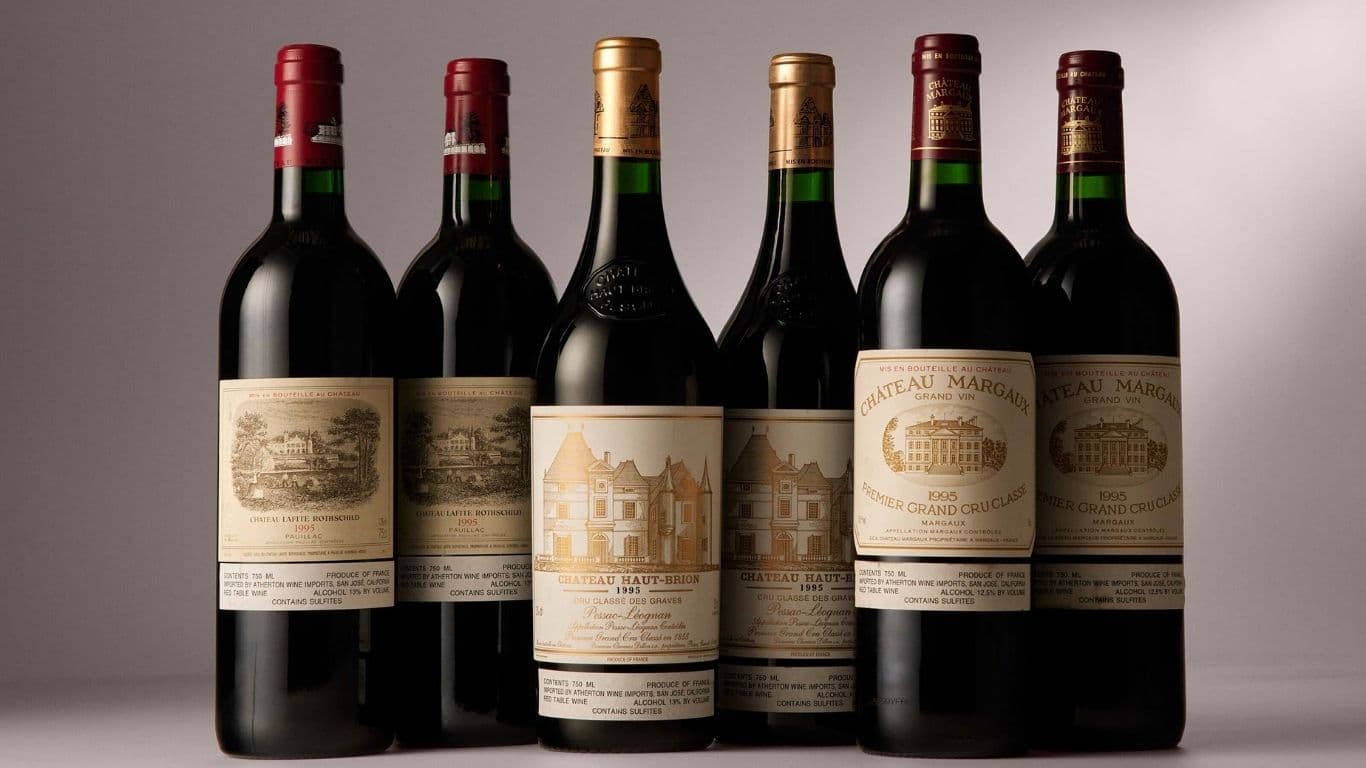
- Graves and Pessac-Léognan: These regions are known for their complex red wines and world-class dry whites. Estates like Château Haut-Brion, one of the First Growths, deliver significant long-term ROI.
Right Bank Bordeaux Appellations
The Right Bank trades in a different kind of prestige. Smaller, more boutique appellations that put quality ahead of volume. Merlot-dominant, softer, and often more immediately approachable, these wines have built passionate followings among collectors who value finesse over power.
- Saint-Émilion: A UNESCO World Heritage Site, Saint-Émilion is home to legendary estates like Château Ausone and Château Cheval Blanc. These wines are known for their opulence and balance, often achieving 8–12% annual ROI.
- Pomerol: Producing some of the most sought-after wines in the world, Pomerol is dominated by Merlot-based blends. Iconic estates such as Château Pétrus and Château Le Pin frequently command record-breaking prices, with rare vintages appreciating exponentially.
- Fronsac and Canon-Fronsac: Often considered hidden gems, these appellations produce high-quality wines at more accessible price points. Investors can find excellent value here, with consistent growth potential.
Left Bank vs Right Bank Bordeaux: Vintages
Vintage matters enormously in Bordeaux. A great year can transform a good wine into a legendary one, and a difficult year can humble even the most celebrated estates.
The weather during the growing season, covering rainfall levels, temperature swings, and hours of sunlight, shapes the flavor profile, the balance between fruit and structure, and the ultimate aging potential of every bottle produced.
Both Left Bank and Right Bank have delivered exceptional vintages that still command serious premiums in today’s secondary market. Knowing which years to target is one of the most valuable skills you can develop as a Bordeaux investor.
Key Left Bank Vintages
- 2010: This vintage is celebrated for its powerful structure, high tannins, and intense concentration. Left Bank wines from this year, such as Château Latour and Château Margaux, are projected to age for several decades, making them ideal for collectors seeking long-term appreciation.
- 2009: Known for its opulence and approachability, the 2009 vintage produced ripe, fruit-forward wines. While approachable earlier than the 2010 vintage, these wines have shown consistent appreciation.
- 2016: A modern classic, the 2016 vintage combines elegance with power. Wines like Château Lafite Rothschild showcase exceptional balance, with this vintage expected to deliver strong returns in both the short and long term.
Key Right Bank Vintages
- 2005: One of the finest vintages in Bordeaux history, the 2005 wines are characterized by their richness, structure, and longevity. Right Bank wines, such as Château Pétrus and Château Ausone, have already achieved substantial market appreciation.
- 2015: A warm and dry growing season led to wines with silky textures and ripe fruit. This vintage is particularly notable for its accessibility, offering strong short-term investment potential for Right Bank wines.
- 2018: Marked by a hot summer, the 2018 vintage produced rich, concentrated wines. Right Bank estates excelled, with Merlot-driven blends showcasing intense fruit and aging potential.
The vintage dynamic between the two banks reflects their broader investment personalities. Left Bank’s greatest years demand patience. The wines build and build in the bottle, revealing their full potential only after extended aging.
That suits investors who are building wealth across a long horizon. Right Bank’s top vintages move more quickly toward their peak, delivering returns on a timeline that feels far more accessible for those seeking ROI within a decade or so.
The strategy is straightforward. Acquire top-rated vintages at or near their release, then hold as secondary market demand pushes the value steadily higher. Liv-ex, the global marketplace for fine wine, tracks these price movements in real time and is an essential resource for anyone building a Bordeaux investment strategy.

Left Bank vs Right Bank Bordeaux: Pricing
The price tags attached to Bordeaux wines reflect a combination of production costs, historical reputation, rarity, and global demand. Neither bank has a monopoly on high prices, but the pricing dynamics play out differently, and understanding those differences shapes how you approach each side of the river as an investor.
Getting the pricing picture right is not just about knowing what a bottle costs today. It’s about understanding why it costs what it does and where it’s likely to go.
Left Bank Bordeaux Pricing
Left Bank wines from prestigious appellations like Pauillac, Margaux, and Saint-Julien command serious prices that reflect their association with some of the most celebrated estates in history and a structured aging potential that puts them in a class of their own.
- Entry-Level Wines: Left Bank wines from smaller estates or lesser-known appellations like Médoc or Haut-Médoc are available in the range of $25–$50 per bottle.
- Mid-Tier Wines: Well-regarded estates, including second-growths like Château Léoville-Barton, typically range from $100–$250 per bottle.
- First Growths: Iconic names like Château Lafite Rothschild and Château Margaux dominate the high-end market, with prices starting at $800 per bottle and surpassing $3,000 for rare vintages.
Right Bank Bordeaux Pricing
Right Bank wines carry their own premium, often amplified by the very limited quantities produced at the top estates. Pomerol and Saint-Émilion names benefit from a scarcity premium that pushes prices high, even by Bordeaux standards.
- Entry-Level Wines: Wines from lesser-known appellations like Fronsac or Castillon-Côtes de Bordeaux typically range from $20–$45 per bottle.
- Mid-Tier Wines: Estates like Château Figeac or Château La Gaffelière offer wines in the $100–$250 price range, with strong appeal to collectors seeking quality and value.
- Top Estates: Legendary Right Bank wines such as Château Pétrus or Château Ausone are among the most expensive globally, with prices starting at $3,000 per bottle and exceeding $10,000 for rare vintages.
The pricing dynamics across both banks offer genuinely different entry points and upside scenarios for investors. Understanding which lever is driving price on any given bottle, whether reputation, rarity, aging potential, or demand from new markets, determines how confidently you can project future value.
- Left Bank Wines: With a wide range of options, investors can start with affordable mid-tier wines that show consistent appreciation or focus on first-growths for substantial long-term gains. Historical data shows Left Bank first-growth wines appreciating by 8–12% annually, making them reliable blue-chip investments.
- Right Bank Wines: While entry-level wines are more accessible, the top-tier wines from estates like Château Pétrus often exhibit faster value growth due to limited production and intense demand. Right Bank wines typically offer ROI of 6–10% annually, with rare vintages achieving even higher premiums in auctions.
Left Bank wines tend to attract investors with a long-term mindset, drawn by the steady compounding of value that comes with great Cabernet Sauvignon-dominant aging. Right Bank wines appeal to buyers who want meaningful upside within a shorter window and are comfortable paying a scarcity premium to get it.
Balancing exposure across both banks is how the most sophisticated wine investors build portfolios that perform across different time horizons and market conditions. You can read more about how fine wine pricing compares across European regions to put these Bordeaux numbers in a wider context.
Left Bank vs Right Bank Bordeaux: Historical ROI
Fine wine’s track record as a financial asset is built on decades of real-world performance data. And Bordeaux sits at the heart of that story.
Both Left Bank and Right Bank wines have demonstrated consistent appreciation over time, but the nature of those returns, the timeline, the magnitude, and the underlying drivers, differs meaningfully between the two banks.
Left Bank Bordeaux ROI
Left Bank wines, especially from the Médoc and Haut-Médoc, have built their reputation on a simple but powerful proposition: great structure plus time equals serious value.
Estates like Château Lafite Rothschild, Château Latour, and Château Margaux are as close as fine wine gets to blue-chip investments. Their appreciation curves are gradual, reliable, and substantial over the long run.
- First-Growth ROI: First-growth wines from the Left Bank have shown historical appreciation rates of 8–12% annually, with rare vintages often commanding even higher returns. For example, Château Lafite Rothschild’s 2000 vintage, initially released at around $1,000 per bottle, now trades at over $4,000, representing a quadrupling of its value over two decades.
- Mid-Tier ROI: Second-growth wines, such as Château Léoville-Las Cases, also show steady value growth, with annual returns of 5–8%. These wines are accessible to a broader range of investors, making them ideal for mid-tier portfolios.
Right Bank Bordeaux ROI
Right Bank wines work on a different clock. Merlot and Cabernet Franc-dominant blends tend to hit their market peak earlier, and the small production volumes at top estates keep supply tight against consistently strong demand.
Château Pétrus, Château Cheval Blanc, and Château Ausone are the headline names here. Their secondary market performance is driven by global reputation and genuine scarcity, a powerful combination that pushes prices well beyond their release levels.
- Top Right-Bank ROI: Wines like Château Pétrus have historically appreciated at rates of 10–15% annually, particularly for exceptional vintages. For instance, the 2005 Château Pétrus, initially priced at $3,000 per bottle, now exceeds $10,000, demonstrating extraordinary ROI.
- Mid-Tier ROI: Estates such as Château Figeac and Château La Conseillante have delivered annual returns of 6–10%, offering investors more affordable entry points while maintaining strong potential for appreciation.
The ROI comparison between the two banks is really a comparison between two different investment philosophies.
Left Bank wines are built for investors who think in decades. The structured profiles and extended maturation periods mean these bottles often reach their peak value 20 to 30 years after vintage, but the patience is richly rewarded. According to the Financial Times, blue-chip Bordeaux has outpaced many traditional asset classes over multi-decade holding periods.
Right Bank wines suit investors who want meaningful appreciation without a generational time horizon. Earlier drinking windows and tighter production quantities mean faster liquidity and still very significant value growth.
Both sides of the river have proven themselves as genuine investment-grade assets. The question is not which bank is better. The question is which return profile fits your strategy.
Left Bank wines deliver stability and long-term compounding. Right Bank wines offer faster returns and premium valuations driven by scarcity and global demand. Each has a role to play in a serious portfolio.
The investors who get the most out of Bordeaux are the ones who understand these distinctions clearly and build across both regions rather than picking a side.
Best Right Bank Bordeaux Collections to Invest in 2026
Selecting the right Right Bank Bordeaux for investment is not simply a matter of buying the most famous labels. It requires matching the right estates and vintages to your specific goals around quality, rarity, and market timing.
The Right Bank’s Merlot-dominant blends, particularly from Saint-Émilion and Pomerol, have delivered outstanding demand and ROI consistency over time. That story is still very much alive heading into 2026.
These wines combine elegance and accessibility in a way that attracts both serious collectors and investors who want competitive returns without waiting a lifetime.
Château Pétrus, sitting in the heart of Pomerol, is the Right Bank’s defining name. Produced in tiny quantities from a vineyard barely large enough to fill a city block, every vintage is an event. Demand consistently outstrips supply, which is the fundamental engine of long-term value.
The 2005 and 2015 vintages have both shown exceptional secondary market performance, with annual ROI rates exceeding 15% in strong years. Boat International’s luxury asset tracking and specialist auction data both point to Pétrus as one of the most reliably appreciating collectibles in the alternative investment space. Scarcity at this level is irreplaceable in a portfolio.
Château Cheval Blanc, a Saint-Émilion Premier Grand Cru Classé (A), is another name that belongs in any serious Right Bank strategy. Its blend of Merlot and Cabernet Franc produces wines that age beautifully while delivering pleasure from a relatively young age, a rare combination that expands the buyer pool and supports strong market pricing.
The 2010 vintage from Cheval Blanc stands out as a particularly strong investment, showing consistent appreciation that makes it appealing for both stability-focused and growth-oriented investors.
Beyond the headline names, Château Ausone, Château Figeac, and Château La Conseillante each deserve a place on your watchlist.
Château Ausone is one of the oldest estates in Saint-Émilion. Its limestone terroir and meticulous approach to production yield wines with exceptional aging potential that reward long-term holders generously.
Château Figeac, a near-neighbor of Cheval Blanc, is steadily building recognition for quality that punches above its current price point, making it one of the more compelling value plays among top-tier Right Bank estates right now.
Château La Conseillante in Pomerol offers a refined, Merlot-driven profile at a price that still feels accessible relative to the very top names. The 2016 vintage has shown solid appreciation in recent years, making it a smart entry point for mid-tier investors looking to add Right Bank exposure without committing to the highest price brackets.
Why Invest in Right Bank Bordeaux Collections?
Right Bank Bordeaux has a structural advantage in the market that goes beyond prestige. Limited production, an approachable style that wins over buyers who might be intimidated by austere Left Bank bottles, and a broad consumer base across multiple global markets all combine to keep demand healthy.
That combination of supply constraint and wide demand is what keeps Right Bank wines performing even when broader economic conditions soften.
For 2026, the case for Right Bank investment is as strong as it has been in years. Mid-term return seekers and investors looking to diversify beyond traditional asset classes will find compelling opportunities across the best estates and vintages. You can explore how wine fits alongside other alternative investments in our deep dive on Pinot Noir versus Merlot as investment categories.
Best Right Bank Bordeaux Collections to Invest in 2025
Best Left Bank Bordeaux Collections to Invest in 2026
If the Right Bank is the faster play, the Left Bank is where the most prestigious long-term Bordeaux investment stories are written. The structured, Cabernet Sauvignon-dominant wines produced here have built their reputations over centuries, and that history translates directly into secondary market confidence.
Left Bank wines age like few other bottles on earth. Longevity, complexity, and a consistent track record of strong secondary market returns make them the bedrock of any serious wine investment portfolio.
Château Lafite Rothschild, one of the five original 1855 First Growths from Pauillac, is the most recognized Bordeaux name on the planet. Its vintages have a habit of appreciating far beyond their release prices. The 2000 vintage, originally priced around $1,000 per bottle, now trades above $4,000 in secondary markets. The 2016 has shown similarly strong upward momentum. These are genuinely blue-chip assets.
A bottle of Lafite’s 2000 vintage trading at four times its release price is not a one-off. It’s part of a pattern that has played out across multiple decades and multiple outstanding vintages, which is exactly the kind of consistency that long-term investors look for.
Château Margaux, the other great appellation that shares its name with its most famous estate, produces wines of extraordinary refinement. The aromatic elegance of Château Margaux sets it apart even within the First Growth category, attracting both collectors who drink and investors who hold.
The 2015 vintage from Château Margaux has been consistently praised for its balance and finesse, and its market trajectory over the past several years reflects that quality with steady appreciation. According to Bloomberg’s alternative assets coverage, structured Left Bank Bordeaux from standout vintages has been among the most resilient luxury investment categories through market volatility.
Château Latour from Pauillac and Château Haut-Brion from Graves round out the First Growth picture and both deserve serious consideration.
Château Latour produces some of the most powerful and tannic wines in all of Bordeaux, built to age for 40 years or more. Château Haut-Brion is the only First Growth estate located outside the Médoc, and its exceptional red and white wines both carry strong investment credentials.
For investors who want Left Bank exposure without committing First Growth prices, Château Léoville-Las Cases and Château Pichon Baron, both from Saint-Julien, offer a compelling entry point. These estates produce wines of genuine quality and consistent value appreciation at prices that are more accessible than the very top tier.
The 2010 vintage of Château Léoville-Las Cases has delivered strong annual growth and stands out as one of the most attractive medium-term investment plays in the Left Bank. Pairing that kind of mid-tier Left Bank holding with a deep understanding of how European fine wine is priced relative to its quality can sharpen your overall wine investment strategy considerably.
Why Invest in Left Bank Bordeaux Collections?
Left Bank Bordeaux wines are built for the patient investor. Their structured profiles and high aging potential mean they mature over 20 to 30 years, but the returns that come with that patience are among the most compelling in the alternative investment world.
The prestige surrounding the First Growths is unshakeable, and the consistent performance of mid-tier estates provides a solid foundation beneath the headline names. Whether you’re targeting the very top of the market or looking for quality at a lower entry point, the Left Bank offers a stable and proven path to long-term wine investment returns.
Best Left Bank Bordeaux Collections to Invest in 2025
FAQ
What are the main differences between Left Bank and Right Bank Bordeaux wines
The primary differences lie in grape composition, terroir, and wine profiles. Left Bank Bordeaux is dominated by Cabernet Sauvignon, resulting in bold, tannic wines with high aging potential. Right Bank Bordeaux features Merlot as the primary grape, producing softer, fruit-forward wines that are approachable earlier. These differences also influence their appeal to different types of investors
Which Right Bank wines offer the highest ROI?
Right Bank wines such as Château Pétrus, Château Cheval Blanc, and Château Ausone are known for their exceptional ROI. These wines often appreciate rapidly due to their limited production, global demand, and early-drinking appeal.
What is the average ROI for Bordeaux wines?
Left Bank Bordeaux wines typically deliver an ROI of 8–12% annually, with top-tier vintages achieving higher growth over the long term.
Right Bank Bordeaux wines generally offer 6–10% annual ROI, with certain rare vintages reaching even higher returns.