
The German wine industry is collapsing under pressures that have been building for years but hit crisis levels in 2026. You’re looking at an industry being squeezed from every direction at once — collapsing margins, shrinking domestic consumption, and climate volatility that has turned harvest planning into guesswork.
The broader European wine sector is dealing with declining consumption patterns that show no signs of reversing. Climate disruptions have become the norm. And consumer preferences are shifting toward everything except traditional wine.
According to Decanter, global wine consumption has fallen to a multi-decade low, driven by structural changes in how people drink and what they reach for when they do. Germany’s producers are getting hit by all of these macro forces at once, while carrying unique disadvantages that make their position far more precarious than their Mediterranean competitors.
The 2026 harvest numbers reveal just how severe the immediate crisis has become. The German Wine Institute estimated production at roughly 7.3 million hectoliters, about 16% below the 10-year average of 8.7 million hectoliters and the smallest harvest since 2010.
Table of Contents
Key Takeaways & The 5Ws
- German wine production in 2025 is economically upside down: bulk wine prices around €0.40–€0.60 per liter versus average production costs near €1.20 per liter imply structural losses of roughly €0.60–€0.80 per liter before selling costs.
- Climate volatility has become structural risk, with the 2025 harvest at about 7.3 million hectoliters (around 16% below the 10-year average and the smallest since 2010) and repeated damage from heat, drought, hail, frost, and extreme rain.
- The domestic market is squeezing producers from both sides: German market share has fallen to roughly 41%, imports are about €0.75 cheaper per liter, and per-capita consumption has dropped close to 20% over a decade as younger consumers shift preferences.
- Steep-slope Riesling sites—the prestige engine of German wine—are structurally unprofitable due to non-mechanizable labor intensity, high regulatory costs, worker shortages, and rising wages, putting even iconic vineyards at risk of abandonment.
- The likely outcome is a smaller, more premium-focused industry: abandonment and consolidation accelerate, only top estates with strong direct-to-consumer pricing and tourism income endure, and “undervaluation” often reflects deep structural problems rather than a temporary mispricing.
- Who is affected?
- German winegrowers and family estates (especially steep-slope Riesling producers), domestic consumers buying more imports, Mediterranean and New World producers competing on cost and branding, and investors/collectors assessing German wine and vineyard assets in a structurally challenged sector.
- What is happening?
- A systemic crisis in German wine production where unit economics are negative, domestic demand is shrinking, and global competition and trade frictions pressure export channels, pushing the sector toward contraction and consolidation.
- When did it crystallize?
- The stress has built for years but became unmistakable in 2025, marked by the smallest harvest since 2010, multi-year weakness in global wine demand, and a decade-long slide in German per-capita consumption and domestic market share.
- Where is the pressure strongest?
- Across Germany’s wine regions, with the harshest impact on labor-intensive steep-slope sites in classic Riesling areas, while competitive pressure is intensified by Mediterranean exporters and New World producers supplying both Germany and international markets.
- Why is the sector breaking?
- Because production costs persistently exceed achievable selling prices, climate volatility undermines yields, German wine has lost the value-and-lifestyle battle at home to cheaper, better-branded imports, and policy tools cannot easily repair economics that are structurally loss-making.

How Did German Wine Production Become Economically Unsustainable?
German wine production has become economically unsustainable because bulk wine often sells for only around €0.40 to €0.60 per liter while average production costs sit near €1.20 per liter. That locks in structural losses before the wine ever leaves the cellar. Steep-slope vineyards cannot be mechanised, so they rely on increasingly expensive and scarce labour. On top of that, high regulatory, energy, insurance, and infrastructure costs make it nearly impossible for small and mid-sized family estates to reach break-even, especially when export markets are also under pressure.
The numbers reveal an industry where making wine almost guarantees losing money. Bulk barrel wine reportedly trades around €0.40 to €0.60 per liter while average production costs run approximately €1.20 per liter, according to wein.plus.
That means producers are losing €0.60 to €0.80 on every single liter before you even factor in selling costs, distribution, or any other business expense.
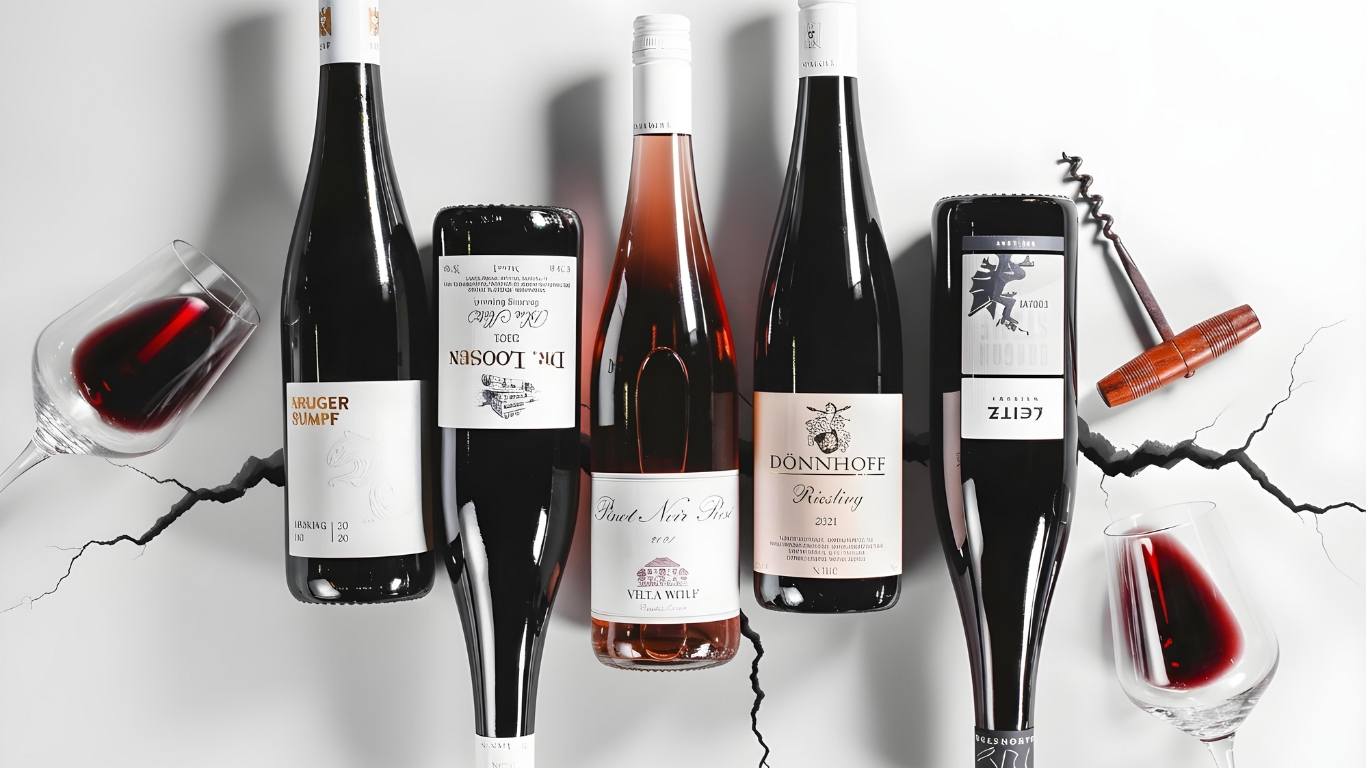
The steep-slope sites that produce the country’s most iconic Rieslings are expensive to farm and cannot be mechanised. That forces reliance on manual labour at precisely the moment when workers are both scarce and expensive.
Vinetur’s reporting on the 2025 season highlights seasonal worker shortages and rising labor costs, including minimum wage pressure, as direct stressors hitting these traditional sites hardest.
The slopes that make German wine special from a quality standpoint also create a permanent cost disadvantage that Spanish and Italian producers farming flat vineyards simply don’t face. That’s a structural problem with no easy fix.
Structural overhead layers on top of these labour challenges. Compliance requirements, documentation, and inspection obligations create administrative burdens that crush small producers before they even get to market.
Insurance, energy costs, and maintaining infrastructure on historic vineyard sites add expenses that large-scale operations can spread across higher volumes. For family estates, those same costs destroy margins entirely. And you can’t cut them without abandoning the sites altogether.
At the same time, export markets have stopped offering any kind of escape valve. Reuters reported that sweeping US tariffs were poised to raise prices for German products including Riesling, directly pressuring competitiveness in America.
For producers already losing €0.80 per liter at current prices, any additional friction in export markets turns challenging economics into completely untenable ones. International competition from New World producers and aggressive Mediterranean exporters has intensified in exactly the price segments where German wine traditionally found buyers.
Why Are German Consumers Abandoning Domestic Wine for Imports?
German consumers are shifting away from domestic wine because imports from France, Spain, and Italy are on average about €0.75 cheaper per liter, and they benefit from stronger lifestyle branding and better shelf presence. Per-capita wine consumption in Germany has fallen by roughly 20% over a decade, and younger drinkers are choosing beer, cocktails, low-alcohol options, or international varieties instead of classic German styles. Local producers are losing on both price and perception, in their own home market.
The collapse of domestic support cuts deepest because it signals cultural abandonment as much as economic pressure. German wine’s share of its home market fell to just 41% of sales volume, with imported wine averaging €3.72 per liter versus €4.47 for German wine, according to the German Wine Institute’s NielsenIQ-based analysis.
That €0.75 gap matters enormously when households are budgeting carefully. The majority of wine consumed in Germany now comes from France, Spain, and Italy rather than domestic producers.
Germany’s Federal Statistical Office reported 255.3 million liters sold in 2024, down 19.5% from a decade earlier, with per capita consumption dropping from 6.1 bottles in 2014 to just 4.8 bottles in 2024 among people aged 16 and older. The occasions that used to pull Germans toward sparkling wine are disappearing. Celebrations are smaller, social gatherings look different, and younger consumers are reaching for beer, cocktails, or nothing alcoholic at all.
French, Spanish, and Italian wines win on perceived value because decades of marketing investment positioned Mediterranean wine as synonymous with quality and lifestyle. German producers are fighting that branding gap while also facing price competition they simply cannot match.
Walk down any supermarket wine aisle and you’ll find Rioja, Côtes du Rhône, or Chianti priced well below comparable German bottles. Consumers are increasingly choosing the imports, and the trend is accelerating.
Younger Germans show especially weak attachment to traditional domestic styles. They prefer international varieties like Sauvignon Blanc and Pinot Grigio that German vineyards don’t produce in volume, and they respond to lifestyle branding that favours large exporters with sophisticated marketing budgets. If you’re thinking about alternative passion assets that hold cultural cachet, this generational shift matters.
This generational shift means the problem isn’t simply about winning back current market share. The real question is whether a domestic market for traditional German wine at scale will even exist in twenty years.

Can German Wine Producers Survive, and What Does This Mean for Investors?
Many German producers will not survive unless they can charge premium direct-to-consumer prices, monetise tourism, or dramatically scale up. So the vineyard area is likely to shrink and consolidate around top estates. For you as an investor, this is not a classic undervalued asset story. You’re looking at a sector with negative unit economics, shrinking domestic demand, and climate risk baked into the cost structure. The realistic opportunity is selective exposure to a small number of strong brands and terroirs, treating them as passion assets rather than expecting broad-based financial outperformance from German wine as a whole.
Sustained losses of €0.60 to €0.80 per liter are not survivable without exceptional direct-to-consumer pricing power, strong tourism income that subsidises production, or outside capital willing to fund ongoing deficits indefinitely.
The German Farmers’ Association expects a meaningful decline in vineyard area. In practice, that translates to abandoned marginal sites, consolidation among larger producers who can achieve some economies of scale, and fewer independent growers as families decide they cannot keep operating at a loss.
Steep-slope traditional sites face the highest abandonment risk because mechanisation is impossible and per-bottle costs are structurally high. These vineyards produce Germany’s most distinctive wines, but that quality advantage means nothing if the market won’t pay enough to cover the cost disadvantage. The Financial Times has documented similar structural contractions in other premium agricultural sectors facing the same cost-price squeeze.
Some estates with strong reputations and direct customer relationships may survive by charging premium prices. Most will not. And the vineyard terrain that has defined German wine regions for generations will contract sharply. Much like Switzerland’s real estate market pricing out its own investors, German wine is discovering that prestige alone can’t override broken economics.
From an investment standpoint, German wine shows negative unit economics at the production level, declining domestic demand that looks structural rather than cyclical, export headwinds from tariffs and competition, and cost disadvantages rooted in geography and regulation that cannot simply be engineered away.
Collectors evaluating German Riesling as potentially undervalued should recognize that undervaluation can persist indefinitely when it reflects genuine economic problems rather than temporary market inefficiency.
Unlike Champagne scarcity or Burgundy terroir advantages that support premium pricing, German wine faces oversupply into a shrinking market while production costs make profitability impossible at current price levels.
Policy interventions could theoretically help. The industry has called for bureaucratic relief, subsidies, and tariff negotiations. But successful government rescues of wine sectors facing this combination of structural problems are rare, as Bloomberg’s agriculture coverage has tracked across multiple European markets.
Subsidies delay consolidation but rarely restore competitiveness when the fundamental economics don’t work. Bureaucratic relief helps on the margin but doesn’t solve an €0.80 per liter loss. And tariff negotiations take years, with no guarantee of success given broader trade tensions.
The realistic scenario is a smaller German wine industry, focused on premium segments where pricing can actually cover costs, with significant vineyard area either abandoned or converted to other agricultural uses. If you’re building a portfolio that includes passion assets or alternative investments, understanding how to manage risk in volatile sectors matters more here than almost anywhere else.
FAQ
Why are German consumers buying more imported wine?
Imports from Mediterranean countries are cheaper on average and benefit from decades of strong branding around lifestyle and food culture. At the same time, German per-capita wine consumption is falling, and younger drinkers are gravitating toward beer, cocktails, alcohol-free drinks, and international grape varieties.
Which German producers are most likely to survive?
Top estates with strong brands, direct-to-consumer mailing lists, export partners, and wine tourism income have the best chances. They can charge higher prices that better reflect their true costs, unlike purely bulk-focused producers.