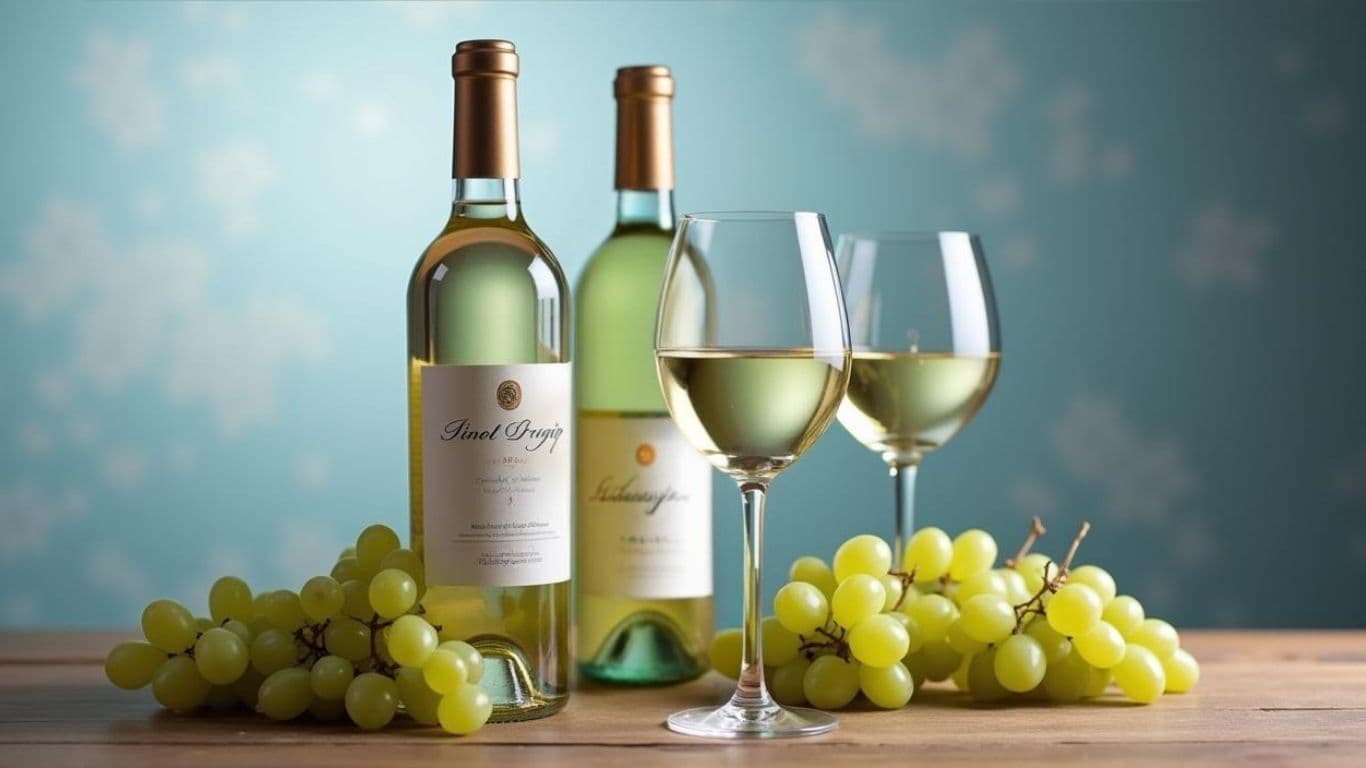
Pinot Grigio versus Sauvignon Blanc is the cellar comparison that sets the relative positioning of two of the most-produced international white grapes. Both occupy structurally different positions in serious collecting cellars. Pinot Grigio sits predominantly in the early-drinking category, while Sauvignon Blanc anchors the Loire's apex tier and the named Bordeaux dry whites that carry meaningful long-term value.
- Pinot Grigio versus Sauvignon Blanc is the cellar comparison that sets the relative positioning of two of the most-produced international white grapes.
- Pinot Grigio sits predominantly in the early-drinking commercial category, with limited apex-tier collectibility outside a small Friuli cluster.
- Sauvignon Blanc reaches apex collectibility in the Loire's Sancerre and Pouilly-Fume tier, with Didier Dagueneau as the structural reference producer.
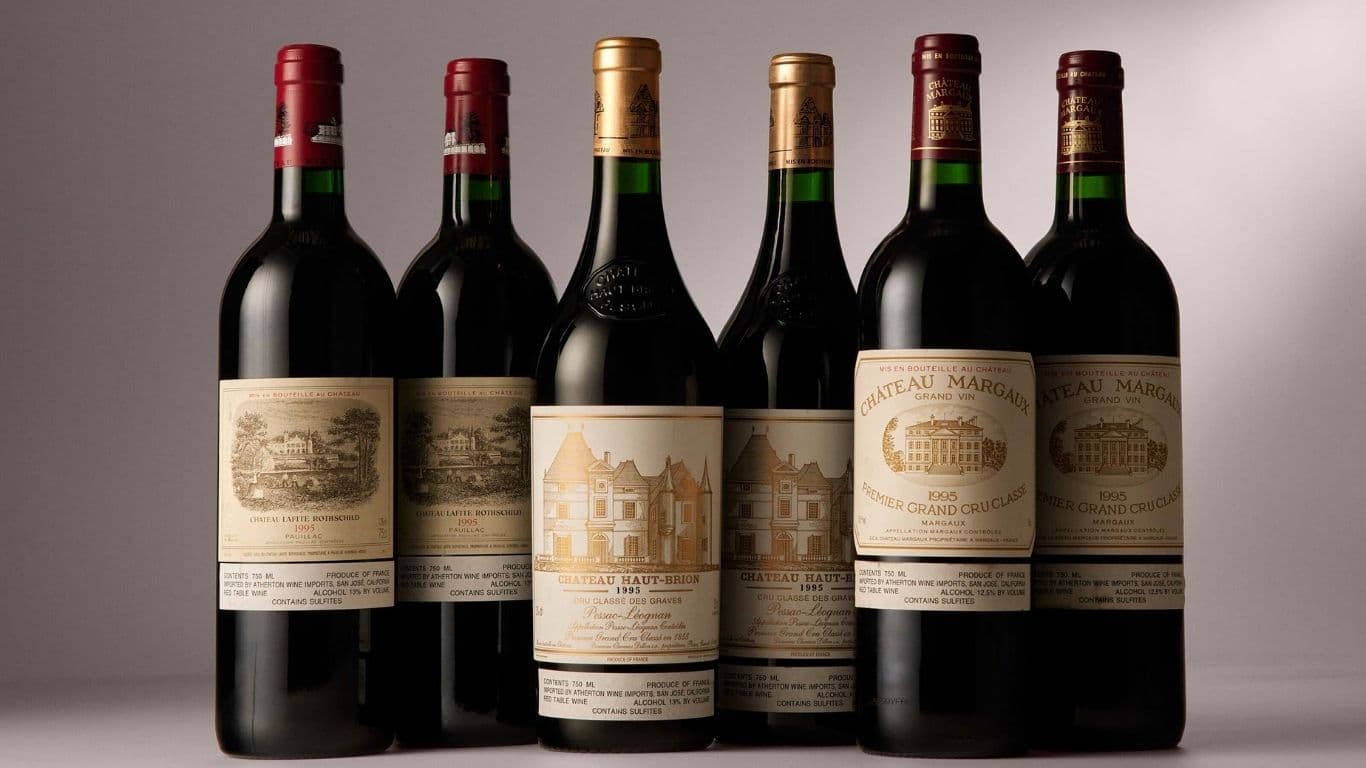
- Bordeaux's white Graves, particularly Domaine de Chevalier and Pavillon Blanc de Chateau Margaux, anchor the structural Sauvignon-led white-Bordeaux apex.
- New Zealand Sauvignon Blanc, particularly Marlborough, has built broad commercial presence but limited structural collector positions.
- For collectors neither grape carries the apex weight of Chardonnay or apex Riesling, with selective positioning the only structural cellar case.
- Who is this for?
- Cellar builders evaluating Italian Pinot Grigio and international Sauvignon Blanc as supporting white-wine positions in a broader cellar architecture.
- What is happening?
- We compare Pinot Grigio and Sauvignon Blanc as cellar positions, with the regional, producer, and structural variables that distinguish each in serious collecting.
- When did this emerge?
- The piece reads the contemporary post-2020 market, with the modern Loire and white-Bordeaux apex tiers as live context.
- Where is this happening?
- Friuli and broader Italy for Pinot Grigio, the Loire's Sancerre and Pouilly-Fume plus Bordeaux's white Graves for Sauvignon Blanc.
- Why does it matter?
- Both grapes carry limited apex weight in serious cellars, but understanding their structural positioning matters for collectors building white-wine breadth correctly.
The structural comparison reveals more about how cellars get built than the headline production volumes suggest. Both grapes have apex categories that earn serious collecting attention, and the apex categories are what serious cellars actually engage with.
This is our editorial read on how Pinot Grigio and Sauvignon Blanc compare as cellar holdings.
The varietal character: what each grape actually does
Pinot Grigio produces wines of relative lightness, citrus and stone-fruit character, and limited ageing capacity in most expressions. The Italian Pinot Grigio category, anchored by Alto Adige, Friuli, and the Veneto, runs at large volumes for the early-drinking market.
The apex Alsace Pinot Gris tier produces wines of more substantial structure, ageing capacity, and critical pedigree. Producers including Trimbach, Hugel, Zind-Humbrecht, and Albert Boxler anchor the category, with the Vendanges Tardives and Sélection de Grains Nobles bottlings carrying the deepest collecting interest.
Sauvignon Blanc produces wines of high acidity, distinctive aromatic profiles (citrus, grassy, sometimes flinty), and variable ageing capacity depending on origin and producer technique. The Loire's Sancerre and Pouilly-Fumé, the Bordeaux dry whites, and the New Zealand Marlborough category anchor the international category.
Ageing curves and drinking windows
Standard Pinot Grigio is built for consumption within two to four years of release. The apex Alsace Pinot Gris tier ages on longer arcs, with the Vendanges Tardives bottlings showing beautifully at 15 to 30 years in great vintages.
Standard Sauvignon Blanc tracks a similar early-drinking profile to standard Pinot Grigio. The apex Loire tier (Dagueneau's Silex and Pur Sang, Edmond Vatan's Clos La Néore from Sancerre, and the named Pouilly-Fumé producers) ages on substantially longer arcs.
The Bordeaux dry whites occupy the apex of Sauvignon Blanc-led ageing. Pavillon Blanc du Château Margaux, Château Haut-Brion Blanc, and Domaine de Chevalier Blanc are the canonical references, and the wines routinely show beautifully at 20 to 30 years.
The Loire apex: where Sauvignon Blanc earns serious collecting attention
Didier Dagueneau, the late Pouilly-Fumé producer who died in 2008, anchored the modern Loire Sauvignon Blanc collecting category. His Silex and Pur Sang bottlings continue to clear at structural premiums at major auction, and the contemporary domaine (run by his son Louis-Benjamin) has maintained the trajectory.
Edmond Vatan's Clos La Néore from Sancerre operates at tiny volumes (typically under 100 cases per vintage) and has built credible secondary-market depth. François Cotat and Pascal Cotat in Sancerre, alongside named Pouilly-Fumé producers including Alphonse Mellot, anchor the broader apex tier.
The structural argument for the category is tiny production and serious critical pedigree from Decanter, Vinous, and Jancis Robinson.
Bordeaux dry whites and the structural top of Sauvignon Blanc
The Bordeaux dry whites occupy the structural top of Sauvignon Blanc-led ageability. Château Haut-Brion Blanc, produced from a tiny portion of the famous Pessac-Léognan estate, runs at roughly 700 cases per vintage and clears at structural premiums against most Burgundy white grand crus.
Pavillon Blanc du Château Margaux, Domaine de Chevalier Blanc, and the apex Pessac-Léognan producers (Smith Haut Lafitte Blanc, La Mission Haut-Brion Blanc) all anchor the category. The wines are blends rather than 100 percent Sauvignon Blanc, but Sauvignon Blanc is the structural lead in most of the named producers.
This is the most underweighted white-wine category in serious international cellars relative to its long-term performance, in our view.
Production volumes and structural positioning
Both grapes operate at substantially larger production volumes globally than the apex Burgundy white tier. The structural positioning at the apex is what matters for serious collecting.
The apex Alsace Pinot Gris tier operates at small volumes. The apex Loire Sauvignon Blanc tier operates at similarly small volumes. The apex Bordeaux Sauvignon Blanc-led whites operate at the smallest volumes of all.
The structural difference is that the apex Loire and Bordeaux Sauvignon Blanc tiers earn more consistent critical attention and have built deeper secondary-market activity than the apex Alsace Pinot Gris category.
Critical pedigree and the named-producer effect
The apex Loire Sauvignon Blanc tier carries credible critical attention from Decanter, Vinous, and Jancis Robinson. The apex Bordeaux dry whites carry the deepest critical attention of any Sauvignon Blanc-led category, with the Wine Advocate, Vinous, and Decanter all covering them in depth.
The apex Alsace Pinot Gris tier carries narrower critical attention, with Decanter and Vinous as the primary references. The named producers in Alsace are well-known to specialist collectors but less prominent in the broader international collecting conversation.
The implications for cellar construction are real. Sauvignon Blanc-led depth is structurally easier to evidence to other collectors than Pinot Gris-led depth.
Terroir transparency and regional differences
Sauvignon Blanc is terroir-transparent in the Loire and in Bordeaux, with the Sancerre and Pouilly-Fumé sites producing structurally different wines from the same producers, and the Bordeaux dry whites showing clear estate-level character. The New Zealand Marlborough category produces more uniform wines that reflect winemaking choices alongside terroir.
Pinot Gris in Alsace shows credible terroir expression in the Grand Cru sites. Standard Italian Pinot Grigio shows minimal terroir character.
The collecting categories that reward terroir-driven depth concentrate in the apex Loire, the apex Bordeaux, and the apex Alsace tiers.
What collectors actually build with each grape
Pinot Grigio enters serious cellars through the Alsace Pinot Gris tier. A meaningful allocation looks like measured depth in Trimbach, Hugel, Zind-Humbrecht, and Albert Boxler at the named-cuvée and late-harvest levels.
Sauvignon Blanc enters serious cellars through two channels. The apex Loire tier (Dagueneau, Vatan, Cotat) anchors the producer-driven depth. The apex Bordeaux dry whites (Haut-Brion Blanc, Pavillon Blanc, Domaine de Chevalier Blanc) anchor the long-term ageing depth.
Our coverage of the most coveted Sauvignon Blanc producers of 2026 and our Sauvignon Blanc collector's field guide walk these categories in detail.
Authentication considerations
Both categories carry lower counterfeit risk than the apex red-wine categories. The apex Bordeaux dry whites have appeared in occasional fraud incidents, particularly at the Haut-Brion Blanc level.
For collectors building serious depth in the Bordeaux dry-white tier, the structural provenance discipline of the broader Bordeaux market applies (direct-from-château channels, named-merchant provenance, major-auction-house authentication).
The apex Loire and Alsace tiers carry minimal authentication concerns at the structural level.
What this means for collectors
Pinot Grigio and Sauvignon Blanc serve different roles in serious cellars. The apex Pinot Gris tier from Alsace enters as a complement to the broader white-wine cellar. The apex Sauvignon Blanc tier, particularly from Bordeaux and the named Loire producers, anchors a meaningful portion of the long-term white-wine collecting picture.
The collector building serious white-wine depth in 2026 should weight Sauvignon Blanc-led holdings more heavily than Pinot Grigio-led holdings on structural grounds. Our coverage of white wines that hold their value over decades sets the broader context.
What we'll watch next
Three signals will tell us how the Pinot Grigio versus Sauvignon Blanc landscape evolves. First, whether the apex Bordeaux dry-white tier earns broader collector recognition. Second, whether the apex Loire Sauvignon Blanc tier (particularly Dagueneau's library releases) continues to clear at structural premiums.
Third, whether the apex Alsace Pinot Gris tier earns deeper critical attention.
The structural variables we've described above will continue to shape the comparison across the next decade.
We last reviewed this analysis in May 2026.

Frequently Asked Questions
- Do Pinot Grigio and Sauvignon Blanc age well?
- <strong>Pinot Grigio:</strong> Most wines are consumed young, but premium styles from Alsace or late-harvest versions can age for up to <strong>8–10 years</strong>.<br><br><br><strong>Sauvignon Blanc:</strong> While most are enjoyed within 5 years, barrel-aged Fumé Blanc and high-quality Sancerre can mature for <strong>10–15 years</strong>, enhancing their value.

Stefanos Moschopoulos
Stefanos Moschopoulos founded The Luxury Playbook in Athens and has spent the better part of a decade following the auction calendar, the en primeur releases, and the watchmakers, gallerists, and shipyards the magazine covers. He writes the field guides and listicles that anchor the Connoisseur section — pieces built on Phillips and Christie's results, Liv-ex movements, and conversations with collectors he has met across Geneva, Bordeaux, Basel, and Monaco. His own collecting habits sit closer to watches and wine than art, and it shows in the level of detail in the magazine's coverage of those categories. Under his direction, The Luxury Playbook now publishes long-form field guides, market-defining year-end listicles, and the Voices interview series with the founders behind the houses and the brands.