The white wines that hold their value over decades cluster more tightly than the reds. Burgundy's grand cru whites, the apex Champagne tier, the great German Rieslings, Yquem and the sweet Sauternes, and a small set of icon producers from the Loire and beyond together account for the structural top of collectible whites. The Liv-ex Burgundy 150 and the Liv-ex Champagne 50 give the public benchmarks.
- The white wines that hold their value over decades cluster more tightly than the reds, with Burgundy grand cru whites, apex Champagne, and great German Riesling at the structural top.
- Burgundy's grand cru whites, particularly Le Montrachet and the Chevalier-Montrachet tier, anchor the international long-haul white market.
- The apex Champagne tier, led by Krug Clos du Mesnil, Salon Le Mesnil, and Cristal, has built a credible long-haul value-retention record.
- The great German Rieslings, particularly the Trockenbeerenauslese and Eiswein tier, occupy a parallel apex with documented drinking windows beyond fifty years.
- Chateau d'Yquem and the apex Sauternes round out the long-haul white-wine category, with structural drinking windows beyond a century in great vintages.
- For collectors the structural white-wine architecture is narrower than the reds, but the long-haul retention rates are genuinely competitive.
- Who is this for?
- Cellar builders weighting their white-wine architecture toward the long haul, and serious collectors evaluating apex Burgundy, Champagne, and Riesling positions.
- What is happening?
- We work through the white wines that actually hold value across decades, with the structural categories, producers, and vintages that anchor long-haul performance.
- When did this emerge?
- The piece reads the contemporary post-2020 market, with the modern Liv-ex Burgundy 150 white-wine component and the Champagne 50 trajectory as live context.
- Where is this happening?
- Burgundy's Cote d'Or, the Champagne apex tier, the Mosel and Rheingau, Sauternes, and the broader cluster of long-haul white-wine producers.
- Why does it matter?
- The white-wine category is structurally narrower than the reds but no less important for serious cellars, and missing it entirely concedes some of the longest-living positions in collecting.
The structural arguments for long-term white-wine value tend to be stronger than the broader collecting market acknowledges. Tiny production, acid-driven ageability, and a smaller pool of named producers concentrate the value in a recognizable set of names.
This is our editorial read on the white wines serious collectors anchor their long-term holdings around.
Burgundy grand cru whites
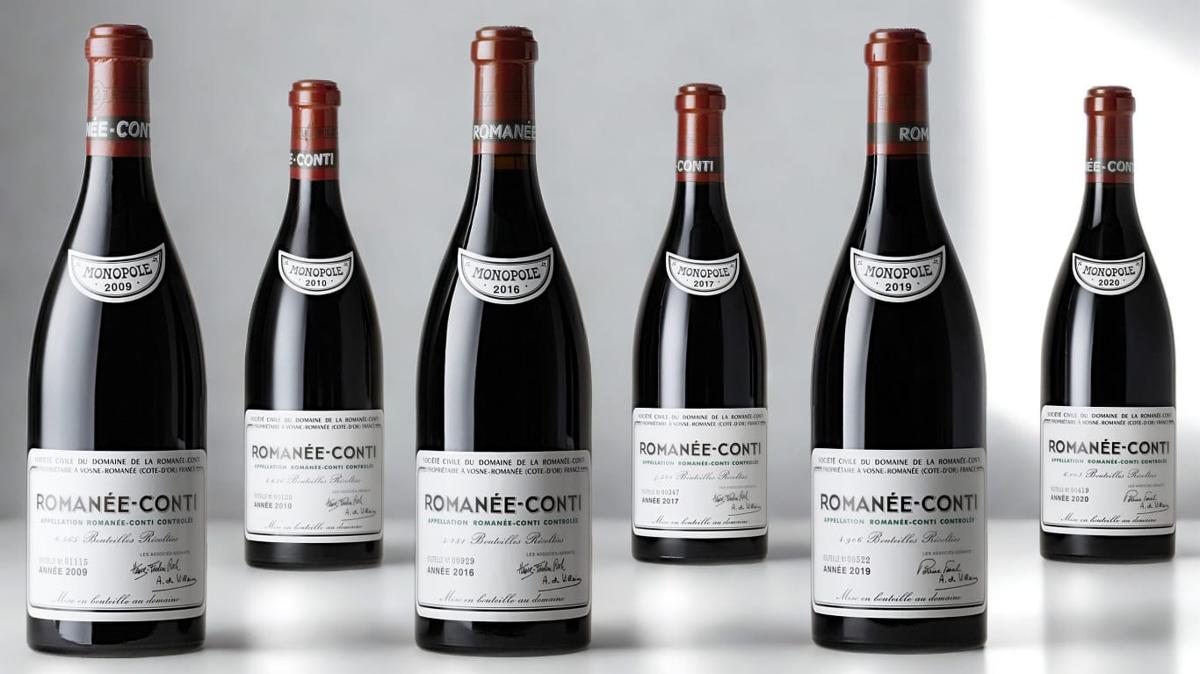
The Burgundy grand cru white tier centers on Le Montrachet, Chevalier-Montrachet, Bâtard-Montrachet, Bienvenues-Bâtard-Montrachet, and Corton-Charlemagne. The named producers, including Domaine de la Romanée-Conti, Domaine Leflaive, Coche-Dury, Lafon, Pierre-Yves Colin-Morey, and Domaine d'Auvenay, anchor the category.
The structural argument is tiny production. Coche-Dury's Corton-Charlemagne runs to perhaps 300 cases per vintage. The Le Montrachet bottlings from the named producers run smaller still.
The 1996, 1999, 2002, 2005, 2014, and 2015 vintages remain benchmark references. The Liv-ex Burgundy 150 has tracked the category's structural strength as part of the broader Burgundy outperformance against Bordeaux.
Champagne's vintage tier
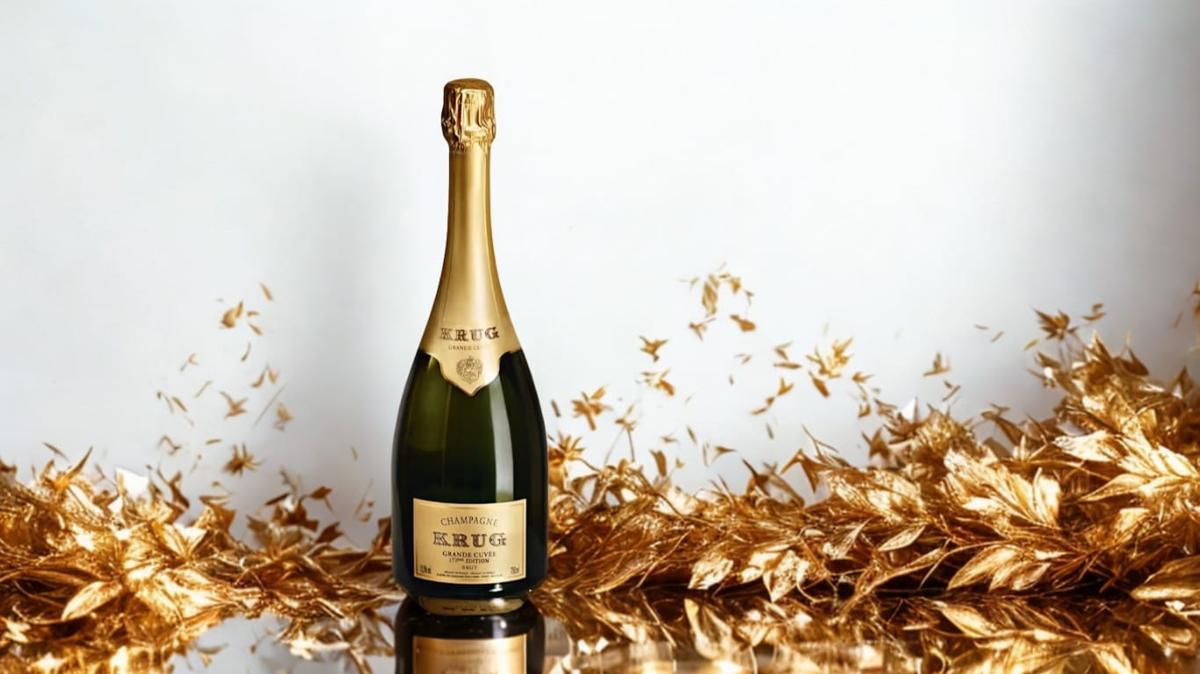
Champagne's vintage tier, particularly the prestige cuvées (Krug Vintage, Krug Clos du Mesnil, Salon Le Mesnil, Cristal, Dom Pérignon, Bollinger La Grande Année), defines the apex of contemporary white-wine collecting. The structural argument is that great vintage Champagne ages 30 to 40 years on the strength of its acidity, and the secondary market has priced this in across the past decade.
The 1996, 2002, 2008, and 2012 vintages remain the benchmark references. The Salon 2002 sits at the apex of recent vintage releases, and the Krug Clos du Mesnil bottlings from 1996, 2002, and 2008 anchor the single-vineyard category.
The Liv-ex Champagne 50 has outperformed the broader Liv-ex 100 across most of the post-2018 window, and the structural argument has been increasing collector recognition of Champagne's long-term ageability.
German Riesling at the apex
Germany's top Riesling tier is the most underweighted collecting category relative to its long-term ageing performance. Egon Müller's Scharzhofberger Trockenbeerenauslese, Joh. Jos.
Prüm's Wehlener Sonnenuhr Auslese and Trockenbeerenauslese, Fritz Haag's Brauneberger Juffer-Sonnenuhr, and Dr. Loosen's top sites all anchor the category.
The 1971, 1976, 1990, 2001, 2003, and 2010 vintages remain benchmark references. Egon Müller's Scharzhofberger TBA in great years routinely clears five-figure-per-bottle levels at Sotheby's and the Bad Kreuznach charity sales.
The structural argument is acid-driven ageability. Great German Riesling at TBA and BA levels routinely shows beautifully at 40 to 60 years, which is longer than nearly any other white wine category.
Yquem and the sweet white tier
Château d'Yquem, the Sauternes First Growth, anchors the apex of sweet white-wine collecting. The wine runs at production volumes of roughly 8,000 cases per vintage in great years and substantially less in difficult ones, with the estate declassifying entirely in unsuitable vintages.
The 1811 Yquem sold for £75,000 at Bonhams in 2011, a result that remains a benchmark for the apex of pre-phylloxera wine collecting. The 1921, 1945, 1947, 1959, 1967, 1989, 1990, and 2001 vintages remain the canonical references.
The category has spent the past decade in relative neglect compared with the more-fashionable categories, which we'd argue creates structural value opportunity for long-term holders.
The Loire's apex producers
The Loire's structural collecting strength concentrates in the Vouvray and Savennières tiers. François Chidaine and Domaine Huet anchor Vouvray, and Nicolas Joly's Coulée de Serrant anchors the Savennières category.
The Huet wines specifically have built secondary-market depth across multiple decades. The 1947 and 1959 Le Mont and Clos du Bourg bottlings remain benchmark references, and recent vintages including the 2014 and 2015 have continued to clear at strong levels.
The structural argument is Chenin Blanc's exceptional ageability, which our coverage of Chardonnay as a collecting category sets useful frame against.
Selosse, Egly-Ouriet, and grower Champagne's apex
The grower-Champagne category has emerged as a structural sub-category across the past two decades. Anselme Selosse, Egly-Ouriet, Ulysse Collin, Pierre Péters, Larmandier-Bernier, and Jérôme Prévost anchor the apex of the tier.
Selosse specifically has built secondary-market depth that rivals the prestige cuvées from the major houses. The Substance and the Lieux-Dits bottlings clear at structural levels at major auction.
The trajectory is younger than the named-house Champagne category, and the long-term ageing curves are still being established. The early signals are positive.
Hunter Valley Semillon and a few specific Australian whites
The Hunter Valley Semillon tier (Tyrrell's Vat 1, Brokenwood, Mount Pleasant) produces white wines whose long-term ageability rivals or exceeds many of the European references. The wines start at low alcohol, develop honeyed and toasty character across 15 to 25 years in bottle, and clear at structural levels at Australian auction.
The category is structurally underweighted in international cellars, in our view. The Tyrrell's Vat 1 bottlings specifically have built three decades of credible secondary-market activity.
Whether the category breaks into broader international collecting depends on whether the Wine Advocate or Vinous starts publishing more comprehensive Australian Semillon coverage. The early signals are tentative.
What makes a white wine durable across decades
Three structural variables drive long-term white-wine value. First, acidity sufficient to support 20 to 40 years of bottle development. Second, producer reputation that has held across multiple vintage cycles in a category (whites) where the named-producer pool is smaller than reds.
Third, production volume small enough that demand outpaces supply across the wine's drinking lifetime. The named producers in each category above operate at volumes that keep demand structurally ahead of supply at the top of the market.
The wines that score on all three are the wines that anchor serious cellars across generations, and the secondary-market data confirms the pattern across decades.
How the secondary market prices long-term white wine
The Liv-ex Burgundy 150's white-wine component has tracked the broader Burgundy outperformance across the post-2018 window. The Liv-ex Champagne 50 has outperformed the broader Liv-ex 100 since 2020.
The German Riesling category does not have a dedicated Liv-ex sub-index, and the secondary market for top German wines is more concentrated at Bad Kreuznach, Sotheby's London, and Christie's London than at the Hong Kong-driven major sales.
For collectors building serious depth in the categories above, the auction calendar at Sotheby's, Christie's, Acker, Zachys, and Hart Davis Hart provides the practical entry route.
What this means for collectors
The white wines that hold their value over decades concentrate in a smaller and more legible set of categories than the red equivalents. Burgundy grand cru whites, vintage Champagne, top German Riesling, Yquem, the Loire's apex, and the grower-Champagne tier together account for nearly all the structural durability in the category.
The collector building a serious cellar in 2026 should anchor white-wine depth across these categories rather than chasing volume from the broader white-wine market. Our broader frame on the red wines that hold their value over decades sets useful comparison, and our Riesling collector's field guide walks the German Riesling category in detail.
What we'll watch next
Three signals will tell us how the long-term white-wine landscape looks in 2027. First, whether Burgundy's white-wine outperformance continues or normalizes. Second, whether the Champagne 50 holds its premium against the broader Liv-ex 100.
Third, whether German Riesling earns broader collector recognition in international cellars relative to its long-term ageing performance.
The categories above have weathered worse corrections than the current one. We don't expect 2026 to dislodge them.
We last reviewed this analysis in May 2026.