
The autumn 2026 New York auctions delivered a burst of optimism that felt almost desperate after a dismal first half where confidence was fragile and bidding stayed selective.
Art Basel’s year-end market analysis described 2026 as “struggling” before ending strongly with approximately $2.2 billion sold in November’s marquee auctions, a headline that helped stabilize sentiment even if it didn’t fix the market’s underlying problems.
That late surge mattered psychologically because it suggested the worst might be over. But the rally arrived only after months of collectors reassessing whether art actually functions as an investment or merely as expensive decoration that sometimes appreciates.
Private art sales gaining ground over public auctions tells part of the story, but the headline numbers are just as telling. Bank of America’s art market update noted that fine art auction sales contracted roughly 10% year-over-year in the first half of 2026, extending a multi-year first-half downtrend. The Art Basel and UBS Art Market Report pegged 2024 global sales at approximately $57.5 billion, down 12% year-over-year, setting a subdued benchmark for what improvement even means at this stage.
The 2026 art market forecast points toward a similarly cautious trajectory as the market accepts that demand constraints now matter as much as supply constraints. Recovery may look more like rebalancing than a return to the 2021 heat, when stimulus money and pandemic boredom combined to create buying that was never going to last.
Table of Contents
Key Takeaways & The 5Ws
- The global art market is moving out of a multi-year downturn into a cautious 2026, with late-2025 auction strength stabilizing sentiment but not fully repairing structural demand weakness.
- The core shift is “less is more”: collectors and galleries are prioritizing smaller, domestic-scale, high-quality works and pruning spaces, fairs, and geographies instead of chasing spectacle.
- Geographic opportunity is concentrating in a few strategic hubs—India as the next major fair frontier, Qatar through sovereign-backed Art Basel expansion, and tax-favorable destinations like Portugal—while the UK faces continued millionaire outflows.
- For 2026 positioning, capital is tilting toward craft-based, hand-made works with clear provenance and institutional credibility, while AI art and other digital formats remain higher-risk, lower-conviction segments despite media and tech hype.
- Who is driving the shift?
- Galleries trimming overhead, major fair organizers such as Frieze and Art Basel, globally mobile high-net-worth collectors, and a growing cohort of buyers choosing smaller, craft-forward works over mega-scale trophy pieces.
- What is the market becoming?
- A cautious post-boom environment where strategy moves from aggressive growth to selective accumulation: fewer fairs, smaller works, tighter geography, and a focus on pieces that are easy to live with and easy to resell.
- When did the turn appear?
- After a weak 2024 and a contractionary first half of 2025, late-2025 auctions improved sentiment. The market now enters 2026 expecting slow, uneven rebalancing rather than a quick return to 2021-style exuberance.
- Where are the key dynamics?
- Across New York and London auctions, fair expansion into India and Qatar, tax-driven relocation toward destinations like Portugal, and a global gallery ecosystem consolidating around the most viable spaces and events.
- Why is “less is more” winning?
- Because costs are higher, demand is softer, and collectors are fatigued by spectacle; money is concentrating into manageable, high-conviction works, while structural frictions—fair economics and AI-authorship doubts among them—reward prudence over hype.

What Does the “Less Is More” Trend Mean for Art Investment Portfolios?
La Biennale di Venezia confirmed the title “In Minor Keys” for the show running May 9 through November 22, 2026, with the late Koyo Kouoh’s curatorial framing emphasizing slower frequencies and quieter registers as a direct pivot away from spectacle.
At the same time, Sean Kelly stopped staging public exhibitions in Los Angeles according to Artnet News, converting the space to private viewings after its final show. Stephen Friedman is closing its New York location at the end of February 2026, less than three years after opening, to refocus resources elsewhere according to The Art Newspaper.
These moves signal that galleries are pruning geography and shrinking their footprints in response to a new economic reality, rather than maintaining expensive prestige addresses that no longer generate sufficient returns.
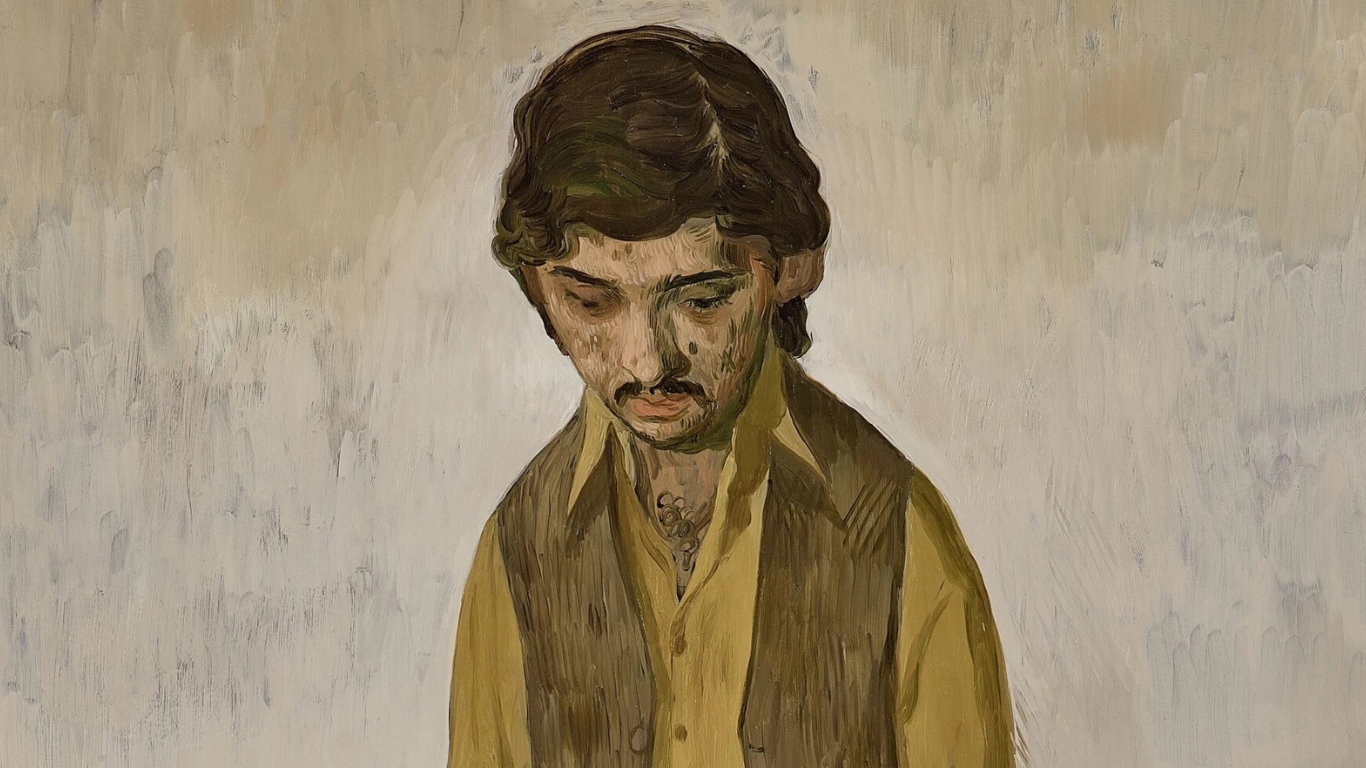
The dramatic shift toward smaller works shows up clearly in transaction data. Artsy reported that in 2026, purchases tagged “miniature and small-scale paintings” rose 66% year-over-year, with 40% of all platform purchases going to works under 40 square inches.
This isn’t just affordability pressure, though that certainly plays a role. It’s a genuine taste shift toward domestic imagery that favors comfort over spectacle, art that fits in actual homes rather than requiring dedicated gallery walls or institutional spaces to display properly.
Less is more doesn’t translate to buying cheap or chasing bargains in oversupplied categories. It means focusing on works that fit the new reality. Easier to place in residential settings, easier to live with over extended periods, easier to transact when you eventually want to sell.
Capital should stay reserved for truly rare, institution-grade objects when they appear, rather than being deployed constantly into mid-market material that may struggle to find buyers when tastes shift again. The collectors who navigate this transition successfully will be those who recognize that smaller scale and quieter aesthetic don’t preclude serious quality or long-term value. And as luxury brands continue converting contemporary works into blue-chip assets, the line between taste and strategy keeps getting blurrier.
Where Are the Geographic Opportunities and Risks in the 2026 Art Market?
India emerges as the most plausible next major fair frontier under the expansion logic that previously drove Frieze and Art Basel into new markets. Under Ari Emanuel’s Mari venture ownership, Frieze has renewed expansion energy, with India standing as the strongest candidate because it offers more potential buyers than Middle Eastern markets and features a growing aspirational art acquisition culture among the country’s expanding wealthy class.
This wouldn’t be a small boutique fair. It would be a full Frieze-branded event designed to capture the same premium positioning that Frieze London and Frieze Los Angeles established.
Art Basel’s approach to geographic expansion looks different and harder to replicate. The organization announced Art Basel Qatar through a long-term partnership with Qatar Sports Investments and QC+, with a 2026 debut that relies on deep local institutional capacity and sovereign-scale capital backing according to Art Basel’s own description.
This partnership structure works when you have government entities willing to invest heavily in cultural infrastructure. But it’s not a model that transfers easily to markets without that kind of institutional commitment. The Basel brand may prove more consolidation-oriented as a result, focusing on a small number of marquee locations rather than aggressive multiplication.
The broader fair market is contracting even as individual organizers expand selectively. Fewer events overall, smaller exhibitor counts at many shows, and gallery reluctance to commit to expensive fair participation all point to an ecosystem under genuine pressure.
The winners will be the fairs that achieve critical mass of both quality galleries and serious collectors, while marginal events that served mainly to fill calendars will disappear.
And the UK is facing real millionaire outflows on top of that. Fortune, citing the Henley Private Wealth Migration Report, noted roughly 16,500 millionaires leaving the UK in 2026, a large figure by global standards reflecting tax and policy pressures that make residence less attractive for ultra-wealthy individuals.
Yet London keeps pulling specific foreign demand including Americans, with recent Telegraph reporting explicitly framing a segment of US ultra-wealth as buying London property for political and lifestyle reasons that have nothing to do with UK tax policy.
Meanwhile, Portugal functions as a reference point for tax-optimized relocation among those leaving London and other high-tax European jurisdictions. PwC Tax Summaries notes there are no general wealth taxes in Portugal, while inheritances and gifts face stamp tax rules at 10% in many cases with common exemptions for close family transfers. That creates a structurally different environment from wealth tax jurisdictions, even though it’s far from zero taxation. If you’re thinking about where mobile capital flows, this context matters. It’s also worth understanding which international property markets are absorbing that capital as it moves.
For art collectors in particular, the absence of a wealth tax means your collection won’t face annual valuations and tax liability purely for owning appreciating assets. That advantage compounds fast as a collection grows in value.
Should Investors Bet on AI Art or Traditional Craft-Based Works in 2026?
AI-generated art faces structural challenges in establishing itself as a legitimate market segment despite considerable tech industry hype and media attention. The art market’s core value system builds on authenticity, scarcity, authorship, and provenance. AI art struggles on all of those terms.
The Guardian covered backlash around Christie’s AI sale where thousands of artists called for cancellation and alleged the models were trained on copyrighted work without permission or compensation.
Broader digital art trade has been slow to gain lasting traction after the NFT boom and bust cast a long shadow over the entire category. Collectors who bought heavily into NFTs at peak prices now own assets that trade at fractions of what they paid, creating deep skepticism about any new digital art category regardless of its specific technical merits.
On the other side, traditional craft-based work is moving in the opposite direction, with demand rising precisely because it signals everything AI is not. Multiple trend observers note renewed interest in labor, materiality, and handwork as a counter-reaction to algorithmic sameness.
Artsy’s curator-led trend reporting explicitly links the rise of tech-assisted art with increased collector interest in craft and natural materials including textiles and ceramics. The comparison to other collectible categories is instructive here. Much like choosing the right luxury watch to invest in, the craft art market rewards buyers who understand provenance, maker reputation, and long-term scarcity rather than chasing what’s trending in the moment.
But investors need to understand that popularity doesn’t automatically translate to instant blue-chip repricing. The evidence suggests craft-based contemporary work will stay primarily in the $5,000 to $75,000 range rather than achieving $500,000 and above status, absent meaningful auction house institutional support behind specific makers.
FAQ
Is the art market expected to recover in 2026?
A full “boom-style” recovery is unlikely. The more realistic outlook for 2026 is gradual rebalancing, where the market stabilizes through fewer but higher-conviction transactions. Recovery, if it continues, will likely look uneven across artists and categories.
What will drive art prices in 2026?
In 2026, prices are most likely to be driven by scarcity, institutional validation, and buyer confidence. Works with clear provenance, strong exhibition history, and recognizable demand tend to hold value better. Pricing power is expected to remain concentrated in the top tier rather than spreading evenly across the market.
Which art segments could perform best in 2026?
The segments with the strongest odds according to the Art Market 2026 Forecast are:
Works with institutional credibility and strong provenance
Smaller, high-quality works that are easy to place in homes
Craft-based categories where the artist’s hand and materials are obvious
These areas tend to attract consistent demand in cautious markets.
What does “less is more” mean for collectors in 2026?
It means collectors are leaning toward quieter, more intimate works and away from oversized spectacle pieces. For investors, it often translates into better liquidity, because smaller works usually fit more homes and appeal to a wider buyer pool.
Is AI art a good investment in 2026?
For most investors, AI art remains higher risk. The market still debates authorship, originality, and provenance, and those issues can limit institutional adoption. AI art may stay culturally visible, but cultural visibility does not always translate into stable long-term pricing.
Should investors buy art in 2026 or wait?
If you are buying for investment, 2026 favors patience and selectivity. It can be a good year to buy when pricing is realistic and quality is clear, especially for works with strong provenance and long-term demand. Waiting can also be smart if you are only seeing “optional” works at ambitious prices.