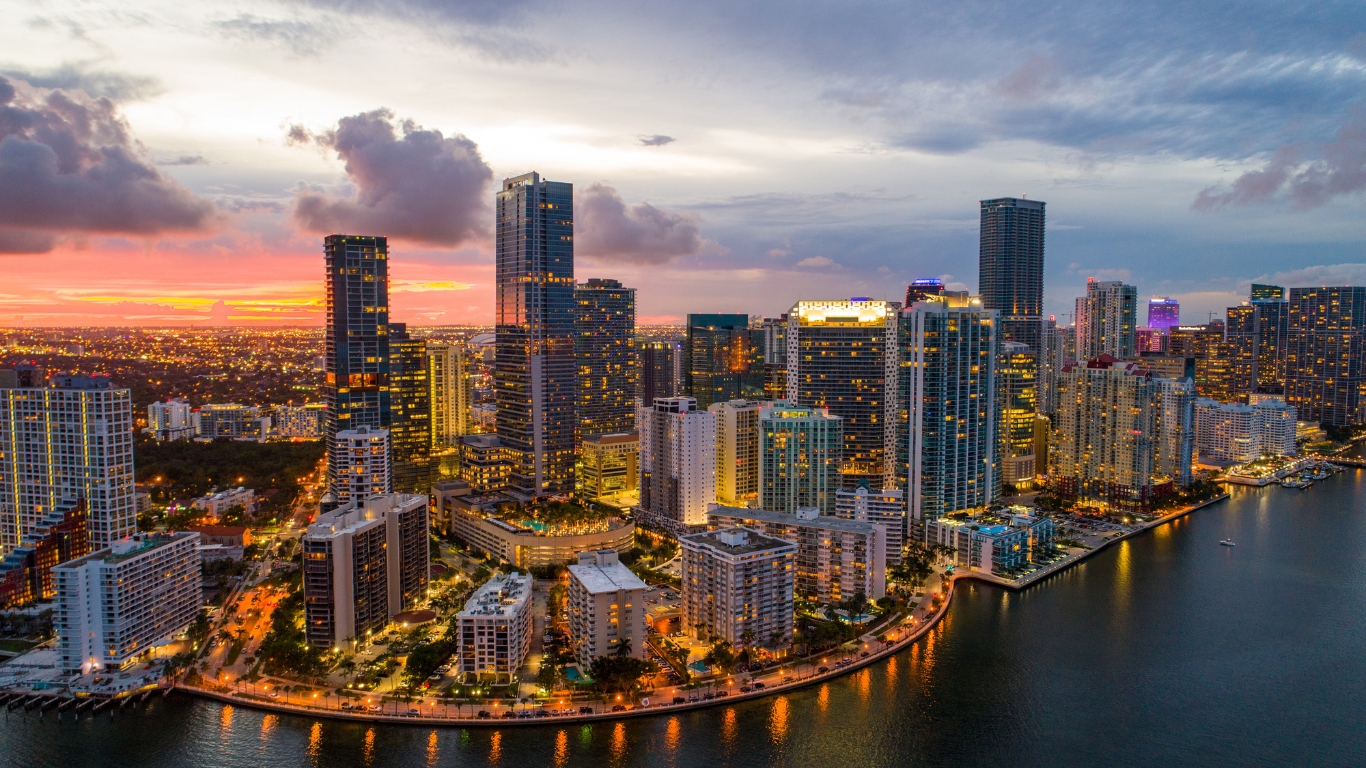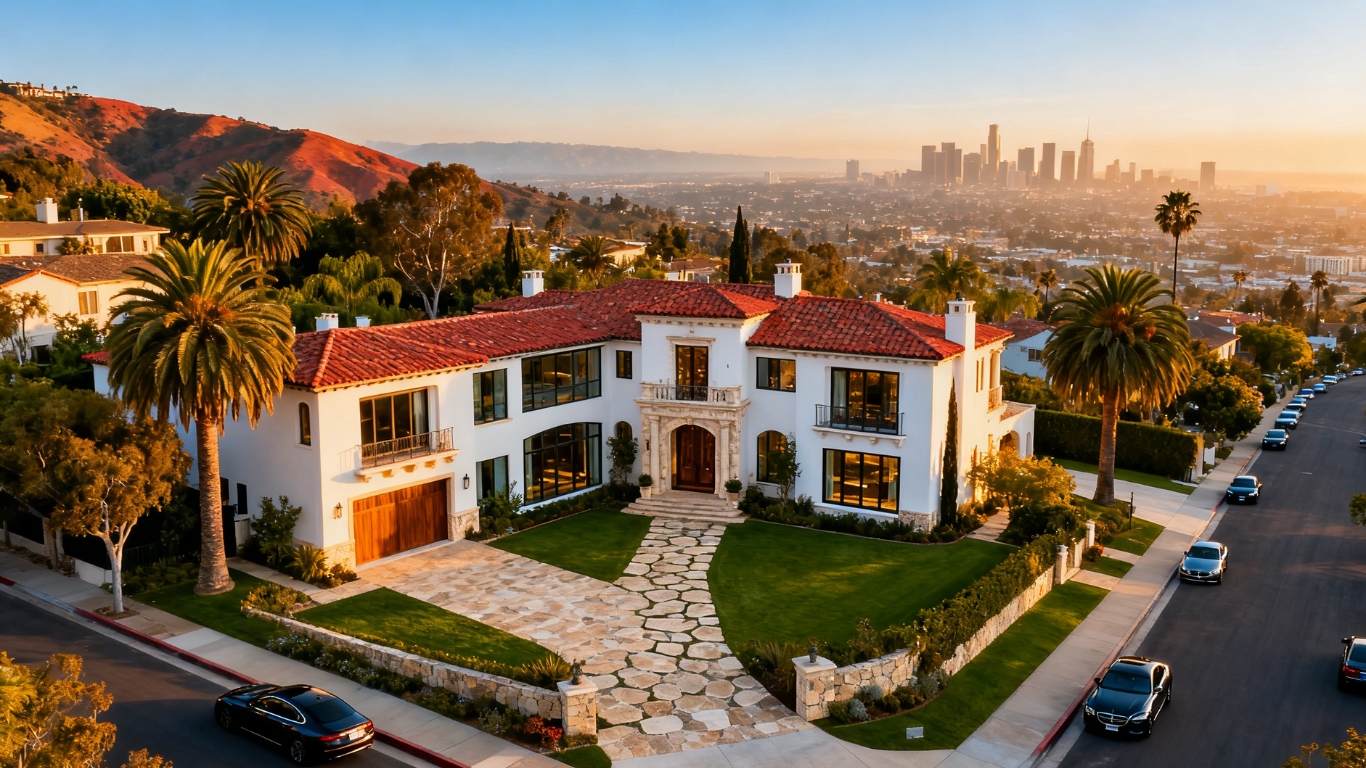

Luxury real estate in America exists in two completely different realities. The market is so geographically segmented that the very definition of what counts as luxury shifts dramatically depending on where you’re looking.
In some cities, stepping into the luxury tier means paying double the local median price. That’s a premium that feels substantial but achievable if you’re a successful professional building serious wealth. In others, crossing into luxury territory means paying five times more than the typical home, creating an economic chasm that changes not just what luxury costs, but who can actually access it and what that access means for your capital allocation and lifestyle choices.
This geographic divide has deepened even as the broader luxury housing market has found a stabilization point after years of pandemic-era swings.
Prices found a floor after the frenzied appreciation of 2020 through 2022 and the corrections that followed in 2023 and 2024. But the relationship between luxury and typical homes varies so wildly across metro areas that national averages completely obscure the market segmentation defining American wealth real estate right now.
Table of Contents
Key Takeaways & The 5Ws
- U.S. luxury housing is splitting into “value luxury” metros with roughly 2.1x–2.3x price multiples versus “trophy luxury” metros that trade around 4.0x–5.4x the local median home price.
- Orlando, Houston, Dallas–Fort Worth, San Antonio, Charlotte, Raleigh, Riverside–San Bernardino, Atlanta, Portland, Denver, and Boise rank among the strongest value luxury real estate markets in the U.S.
- In these value markets, luxury entry pricing typically ranges from about $750,000 to $1.3 million, versus $3–$4+ million in premium hubs like New York, Miami, Naples–Marco Island, and Bridgeport.
- Faster days-on-market in value metros (roughly 71–106 days) suggests healthier demand–supply balance and more realistic pricing than many ultra-premium coastal or resort markets.
- Structural factors—available land, flexible zoning, diversified local economies, and distributed affluence—keep luxury homes better anchored to real incomes in value markets.
- For long-term buyers and investors, “value luxury” cities can offer comparable lifestyle and amenity levels with lower capital outlay, lower correction risk, and stronger alignment with local fundamentals.
- Who is this for?
- High-earning professionals, HNW/UHNW investors, and relocating families looking for the best value luxury real estate markets in the U.S., especially those prioritizing lifestyle and long-term appreciation over prestige ZIP codes.
- What is the opportunity?
- A data-driven way to separate affordable “value luxury” metros from ultra-premium trophy hubs by comparing local price multiples, luxury entry thresholds, and days-on-market—so buyers can target markets offering more luxury per dollar.
- When is this most relevant?
- In the post-2020 cycle reset through 2025–2026, after the pandemic boom, subsequent correction, and the current stabilization phase that is reshaping pricing power and liquidity across U.S. luxury markets.
- Where are the key markets?
- Value luxury metros include Orlando, Houston, Dallas–Fort Worth, San Antonio, Charlotte, Raleigh, Riverside–San Bernardino, Atlanta, Portland, Denver, and Boise, contrasted against higher-multiple hubs such as New York, Miami, Naples–Marco Island, and Bridgeport.
- Why does it matter?
- Because understanding where luxury homes are still fairly priced helps buyers and investors deploy capital into markets with stronger fundamentals, better lifestyle value, and lower downside risk than overextended trophy markets.

America’s Best Value Markets

Orlando-Kissimmee-Sanford tops the value ranking among major metros with a remarkably modest 2.1 times luxury multiple. That means luxury homes in Central Florida cost just over double what typical properties fetch across the broader market.
Entry-level luxury in Orlando starts at $889,260, which is roughly half the premium you’d face in Bridgeport, Connecticut, where a 5.4 times multiple creates an entirely different economic equation. The value positioning here also comes with solid liquidity. Luxury homes in Orlando move in a median 93 days compared to the national 88-day average, a sign that pricing aligns well enough with buyer expectations to keep deals moving without the extended holding periods that signal overpricing or a standoff between stubborn sellers and skeptical buyers. If you want to understand how to evaluate these dynamics before committing capital, a SWOT analysis for real estate is worth running through before you make any offer.
Texas claims three prominent spots in the top value markets. The state’s reputation for business-friendly policies and expansive development patterns translates directly into accessible luxury real estate, and the numbers back that up.
Houston-Pasadena-The Woodlands operates at a 2.3 times multiple with luxury entry at $789,558, and it posts the fastest median time on market at just 71 days. That’s strong buyer demand meeting well-priced inventory, and it’s a combination that’s hard to ignore.
Dallas-Fort Worth matches the 2.3 times multiple with a slightly higher $950,136 luxury threshold and an 82-day median marketing period. San Antonio-New Braunfels, meanwhile, offers the lowest luxury entry point among major metros at $750,008, though with a slightly longer 106-day selling timeline.
North Carolina emerges as the East Coast value leader, giving you luxury accessibility without the South Florida premium or the extreme price compression you see in Northeastern markets. Charlotte-Concord-Gastonia operates at a 2.2 times multiple with luxury beginning at $922,626 and properties moving in 82 days. Raleigh-Cary matches that 2.2 times ratio with a $983,406 entry point and a 92-day median selling period. You can dig deeper into how the Portland housing market compares if the Pacific Northwest is also on your radar.
These Research Triangle and banking hub metros offer compelling alternatives if you want East Coast positioning, quality of life, and economic momentum without accepting the 4.0 to 5.4 times multiples that define luxury markets stretching from New York through Miami up to Bridgeport.
Riverside-San Bernardino-Ontario breaks California’s expensive reputation by proving that affordable luxury actually exists within the Golden State outside the coastal metros where prices go stratospheric. This Inland Empire region holds a 2.2 times multiple with a luxury threshold of $1.28 million and a brisk 71-day median time on market. That stands in sharp contrast to Los Angeles, which commands a 3.8 times multiple with $4.06 million luxury entry, or San Jose sitting at 2.9 times with a $3.50 million threshold.
Rounding out the value tier, Atlanta-Sandy Springs-Roswell operates at 2.2 times with $899,663 luxury entry and 79-day marketing periods. Portland-Vancouver-Hillsboro matches the 2.2 times multiple at $1.29 million, though with a longer 131-day selling timeline that points to either more selective buyers or elevated inventory levels.
Denver-Aurora-Centennial sits at 2.3 times with a $1.27 million luxury threshold and a 92-day median sales period. Boise City rounds out the group at 2.3 times, $1.38 million entry, and 80 days on market.

Why These Cities Offer Better Luxury Value, And What It Means For Buyers
The structural reason why these markets hold modest luxury premiums while others stretch to four or five times typical home prices starts with housing stock and development patterns. Newer construction and expansive development in growth markets let builders respond to luxury demand without running into the artificial land constraints that drive extreme premiums elsewhere.
Orlando, the Texas metros, and Charlotte all feature luxury inventory that doesn’t require extreme premiums precisely because developable land is still available and zoning allows responsive supply. That stands in sharp contrast to land-constrained markets like Bridgeport at 5.4 times or Naples-Marco Island at 5.0 times, where geographic limitations including waterfront scarcity, established neighborhood boundaries, and restrictive zoning create supply bottlenecks that no developer can easily overcome regardless of how strong demand gets.

Beyond physical constraints, wealth concentration patterns shape how luxury markets price. Value markets with distributed affluence and broader upper-middle-class prosperity create competitive luxury pricing because no ultra-exclusive enclaves dominate the high-end segment.
These metros lack the rarefied neighborhoods that drive four to five times multiples in Naples-Marco Island where luxury begins at $3.61 million, Miami at $2.44 million with a 4.9 times multiple, or New York at $3.00 million and a 4.0 times ratio. Understanding how real estate compares to stock investing historically puts the capital efficiency question in sharp relief when you’re weighing these kinds of entry points.
In those markets, international buyers, concentrated generational wealth, and celebrity-driven demand for specific zip codes create segmented neighborhoods where pricing disconnects entirely from local economic fundamentals. Value markets work differently. Luxury inventory spreads across multiple desirable areas without the winner-take-all dynamics that define the most exclusive enclaves.
The inventory dynamics and market efficiency visible in the data further explain why these value markets function differently. Properties in value-tier metros average 71 to 106 days on market for luxury listings, while premium-multiple markets like Bridgeport or Heber, Utah see 89 to 133-day marketing periods.
Faster absorption in value markets signals that pricing aligns closely with actual buyer demand rather than reflecting speculative holding, where sellers maintain elevated asking prices hoping to eventually find a buyer willing to pay premiums the current market simply doesn’t support.
When luxury homes move relatively quickly despite sitting at the top of the price tier, it signals healthy market function. Supply, demand, and pricing reach equilibrium rather than the drawn-out standoffs between unrealistic seller expectations and resistant buyers that you see in many high-premium markets.

For strategic buyers evaluating where to deploy capital into luxury real estate, purchasing in markets with 2.1 to 2.3 times multiples offers real advantages that go well beyond simply paying less.
Acquiring luxury properties at these price points means accessing top-tier amenities, high-end finishes, desirable locations, and quality construction at prices that stay connected to local economic realities rather than depending on continued appreciation driven by wealth concentration or supply constraints. When luxury costs $750,000 to $1.3 million versus $3 million to $7 million for comparable quality and lifestyle, you accomplish several strategic objectives at once. Structuring a solid real estate investment proposal becomes considerably more straightforward when the numbers aren’t stretched to their limits from day one.
They access the same lifestyle tier, from resort style pools to gourmet kitchens to smart home technology, with dramatically lower capital requirements that preserve liquidity for other investments or business opportunities.
You likely secure stronger long-term value preservation because pricing that never stretched to speculative extremes faces less correction risk when economic conditions shift or wealth migration patterns change. And you position yourself in growing metros where economic fundamentals including job growth, population expansion, and infrastructure development support sustained housing demand rather than depending purely on the continued influx of external wealth that can prove fickle when tax policies shift or other destinations become fashionable.
The geographic split of American luxury real estate into value and premium tiers reflects deeper economic and demographic patterns that will likely persist. This isn’t a temporary dislocation heading toward normalization. Markets with modest luxury multiples benefit from structural advantages including expansive development capacity, distributed wealth, responsive supply, and pricing discipline that keeps luxury accessible relative to local economics.
Markets with extreme multiples face structural constraints including geographic limitations, concentrated wealth, supply restrictions, and pricing that has decoupled from local fundamentals to become purely a function of external capital and ultra-high-net-worth buyer competition. Forbes Real Estate Council research has tracked this divergence accelerating over the past several years, and the gap isn’t closing anytime soon.
For buyers prioritizing value, lifestyle quality, and economic sustainability over exclusivity and status signaling, the choice increasingly favors the Orlandos and Houstons of America over the Naples and Bridgeport alternatives. And here’s the thing, both categories legitimately qualify as luxury by any objective measure of property quality and amenities. The difference is how much of your capital you’re putting to work efficiently, and how much you’re simply paying for a zip code. Wall Street Journal data on luxury home trends shows that savvy buyers are already making that calculation and voting with their purchase decisions.