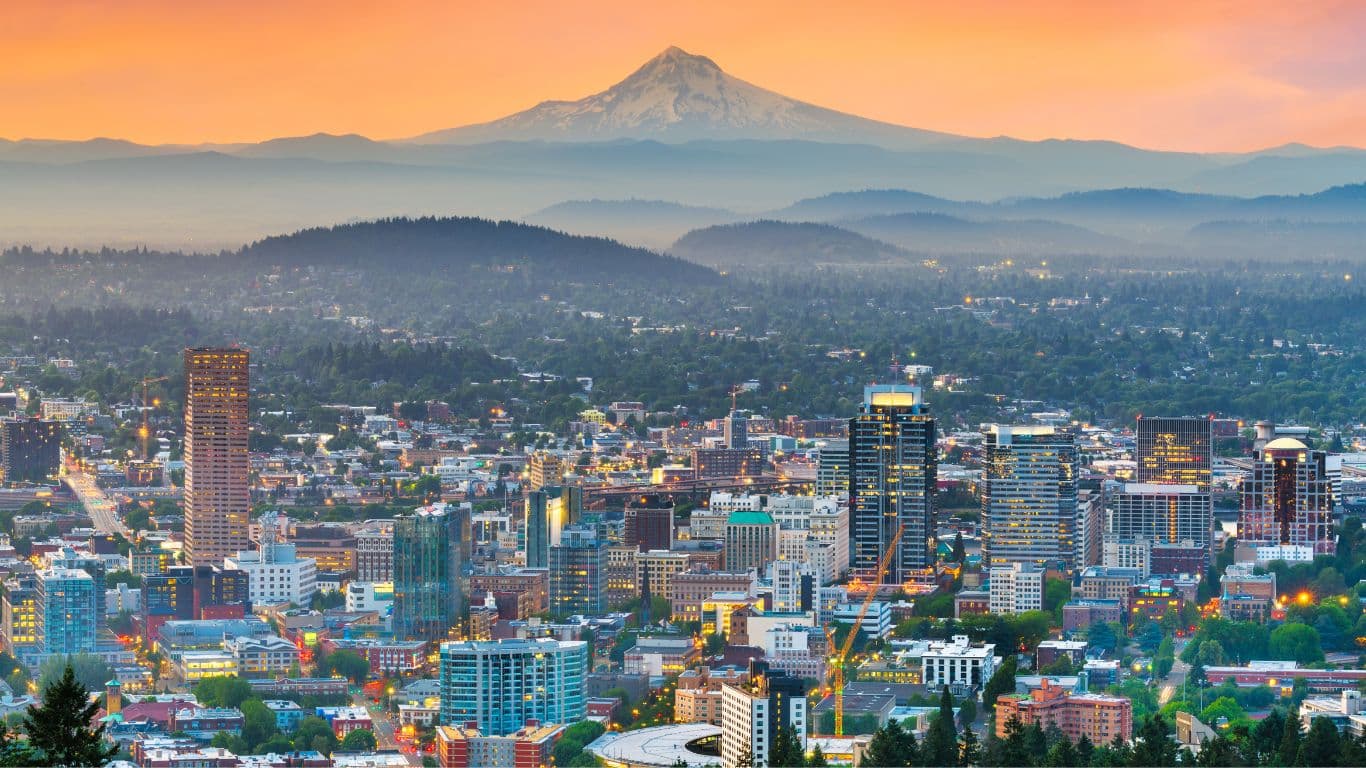
Portland's residential market in 2026 reads as one of the more distinctive Pacific Northwest property conversations. Knight Frank's North American desk, Cushman & Wakefield's Oregon coverage and Mansion Global's continuing Portland dispatches have all noted the city's reset across the past three years. The conversation is layered.
Portland combines genuine architectural texture, a deep sustainability-focused urban planning tradition and a buyer field that has rotated meaningfully through the recent cycle. Below, our read on where the city sits.
- Portland continues to work through a more pronounced post-pandemic adjustment than most peer Pacific Northwest markets, with the urban core having faced sharper headwinds than the suburbs.
- We see Nike, Intel and the broader Silicon Forest providing the employment base, with the recent semiconductor sector developments adding fresh demand support across the region.
- Inventory has expanded materially through 2025 and 2026, with months-of-supply moving into buyer-favourable conditions across most price tiers in the metropolitan area.
- West Hills, Eastmoreland, the broader Lake Oswego area and West Linn continue to anchor the upper end of the Greater Portland luxury market.
- Oregon imposes state income tax at among the highest rates in the country, with the offsetting absence of sales tax shaping the overall household tax picture.
- For most considered buyers we view Portland in 2026 as offering meaningful relative-value opportunities given the post-correction reset, with patient capital well-suited to the current entry conditions.
- Who is this for?
- Buyers and investors evaluating Portland for primary residence or income property, alongside relocation clients and the brokers, lenders and tax advisers supporting Greater Portland transactions.
- What is happening?
- A market overview and 2026 forecast for the Portland housing market, covering price levels, inventory dynamics, Silicon Forest employment drivers and the Oregon state tax considerations.
- When did this emerge?
- The article covers conditions through 2025 and 2026, with reference to the post-pandemic urban core adjustment and the latest Intel and Nike employment data.
- Where is this happening?
- The piece focuses on the Portland metropolitan area, including the West Hills, Eastmoreland, Lake Oswego, West Linn and the broader Multnomah and Clackamas County submarkets.
- Why does it matter?
- Portland in 2026 offers meaningful relative-value opportunities given the post-correction reset, which is why the entry-point case deserves explicit consideration from patient buyers.
The price texture and the neighbourhood map
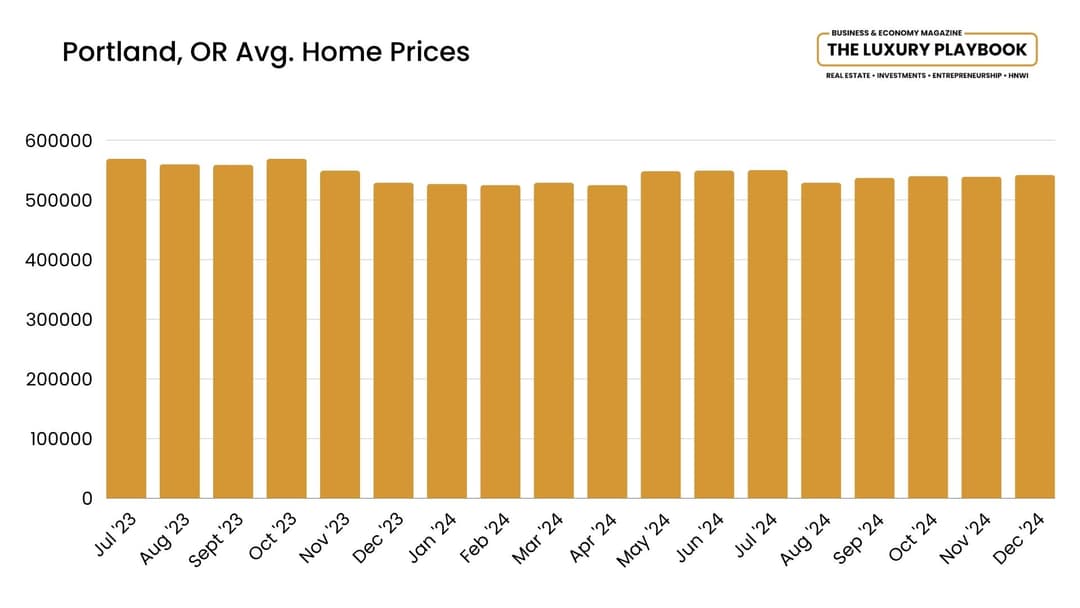
Portland's residential prices in 2026 cluster around a citywide median in the $545,000 range, with prime neighbourhoods like Southwest Hills, Pearl District, Northwest Heights and Hillside anchoring the higher per-square-foot bands. The wider city has absorbed a meaningful appreciation cycle since 2020, even as the city has navigated the broader Pacific Northwest macro turbulence.
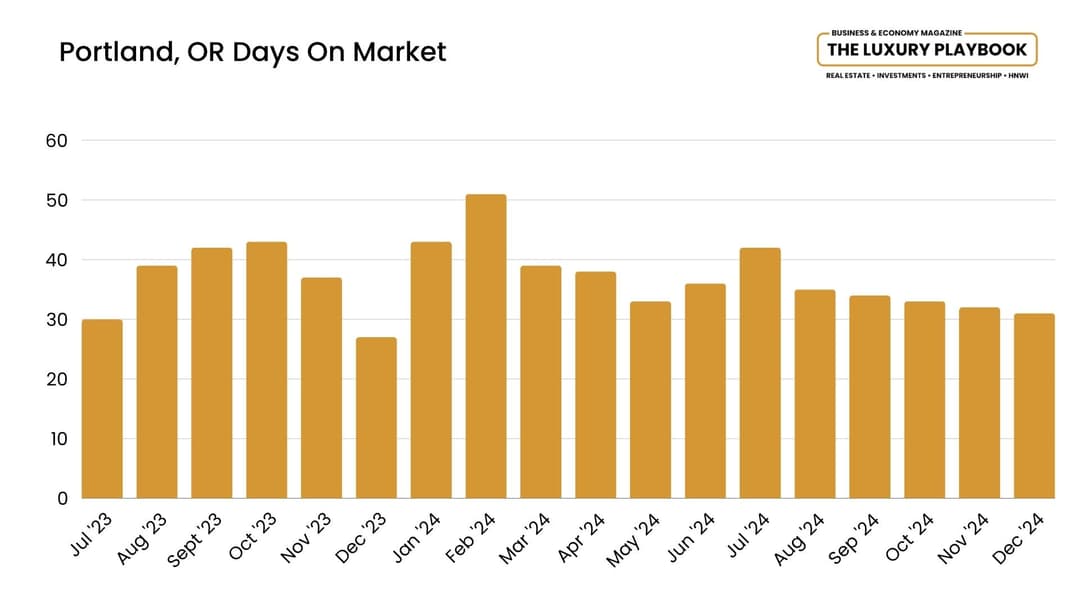
Realtor.com data through Q1 2026 places the citywide days-on-market figure in the mid-40s. The prime band has cleared in well under three weeks for well-presented stock through 2024 and 2025. Engel & Völkers' Pacific Northwest desk reports strong interest from California-based and out-of-state owners across the past 18 months.
Neighbourhood-level pricing
The neighbourhood map is more textured than the citywide headline suggests. The table below captures the median listing prices across the named Portland neighbourhoods at the start of 2026.
| Neighborhood | Median Listing Home Price | Listing $/SqFt |
|---|---|---|
| Southwest Hills | $1.1M | $357 |
| Hazelwood | $405K | $277 |
| Downtown Portland | $475K | $436 |
| Lents | $437.5K | $300 |
| Pearl | $800K | $470 |
| Centennial | $413.5K | $290 |
| Montavilla | $424.9K | $317 |
| South Portland | $627.5K | $382 |
| Pleasant Valley | $568.9K | $301 |
| Powellhurst-Gilbert | $419K | $262 |
| Northwest District | $427.5K | $401 |
| St. Johns | $454.9K | $325 |
| Cully | $427.5K | $308 |
| Northwest Heights | $985K | $294 |
| Sellwood-Moreland | $630K | $369 |
| Hillsdale | $804.5K | $319 |
| Brentwood-Darlington | $430K | $356 |
| Wilkes | $464K | $258 |
| Hillside | $1.2M | $400 |
| Goose Hollow | $324K | $356 |
The pricing spread reflects Portland's varied architectural texture, from the Tudor and Colonial Revival mansions of Southwest Hills and Northwest Heights to the warehouse-and-loft conversions of the Pearl District. Christie's International Real Estate's Oregon affiliate operates a separate book for the upper-tier off-market stock above $2 million.
The architectural texture and the Pearl District
Portland's architectural depth is the city's defining commercial argument. The Southwest Hills, Northwest Heights and Hillside neighbourhoods hold the early-twentieth-century mansion stock, with work by A.E. Doyle, Albert E. Doyle and the wider Portland architectural practice scene of the 1900s through 1940s. The Pittock Mansion, the Lan Su Chinese Garden and the Portland Japanese Garden anchor the cultural register.
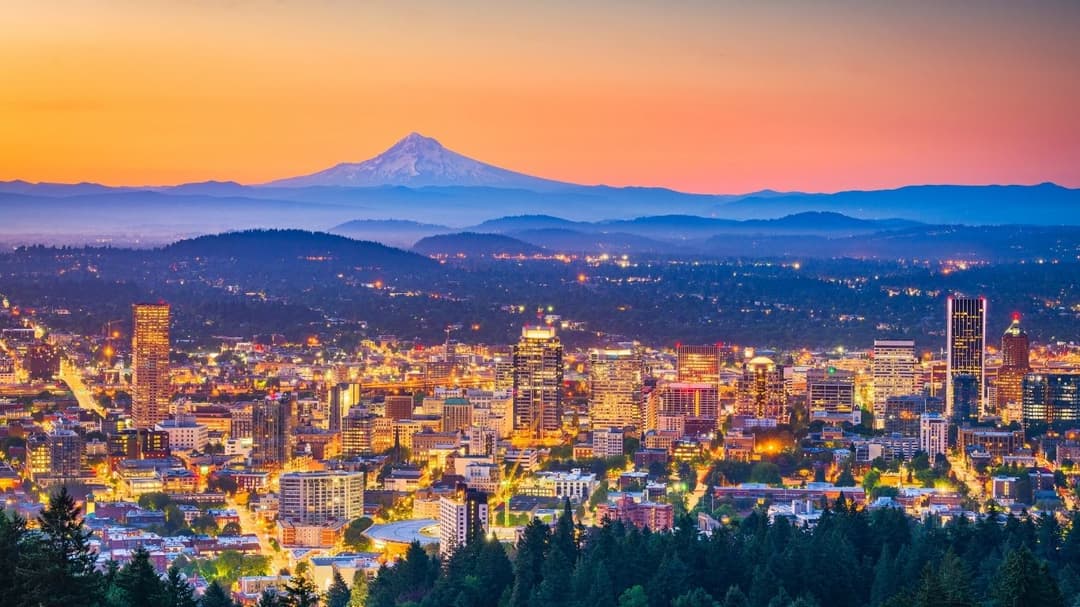
The Pearl District has been one of the most successful warehouse-to-residential conversions in the United States. The mid-rise condominium and loft stock anchors the contemporary prime conversation, with restaurants, design studios and the Portland Streetcar route clustered along the wider district. Northwest Portland and the Slabtown extension have continued the conversion cycle through 2024 and 2025.
The architectural commissioning across the wider city has thickened. Portland-based practices like Skylab Architecture, Hennebery Eddy Architects, Allied Works Architecture and the Portland desks of broader Pacific Northwest studios have built residential books that include serious restoration and infill work. The contemporary infill in Southeast Portland and the inner-eastside has been deliberate.
The economic backdrop and the buyer field
Portland's economic structure is anchored by Nike (Beaverton headquarters), Intel (Hillsboro semiconductor manufacturing), Columbia Sportswear and the wider regional manufacturing and creative-economy base. The technology-and-startup cluster has thickened through the past decade. The Oregon Health & Science University anchors a separate employment base.
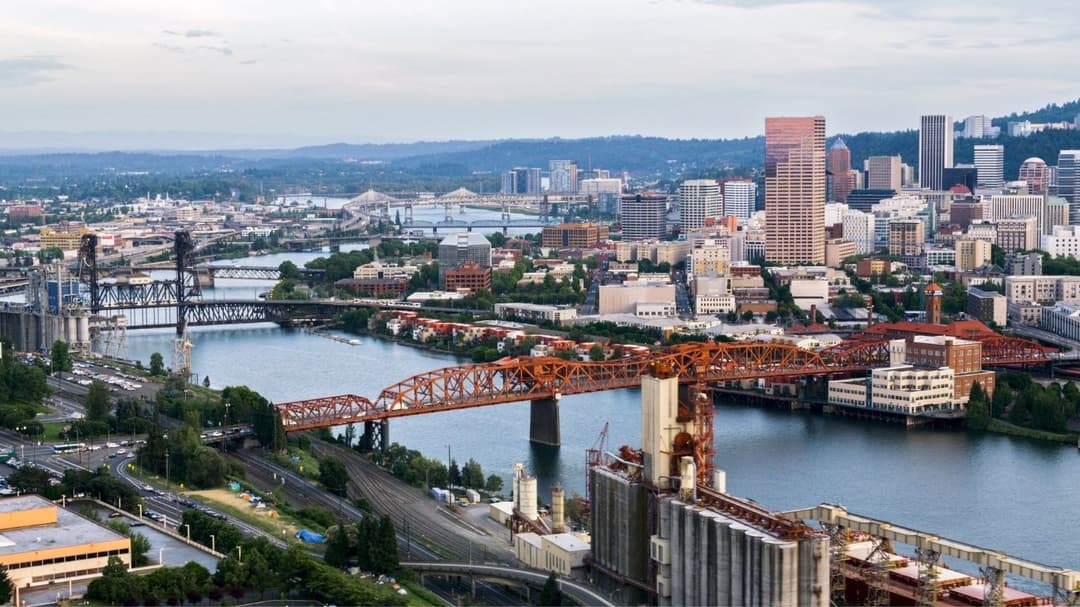
The buyer field has rotated meaningfully. Where the 2010s cycle saw mainly internal-Oregon and Pacific Northwest buyers, the 2024-2025 wave has absorbed waves of California-based families, out-of-state remote workers and a meaningful international segment. The wider Sun Belt and West Coast property cycle has reshaped the Portland buyer field.
Days on market and the rental texture
Average days on market in Portland has compressed across 2024 and 2025. The prime neighbourhoods clear in well under three weeks for well-presented stock, with Southwest Hills, Pearl District and Northwest Heights running the fastest sale cycles. The wider city averages have held in the mid-40s.
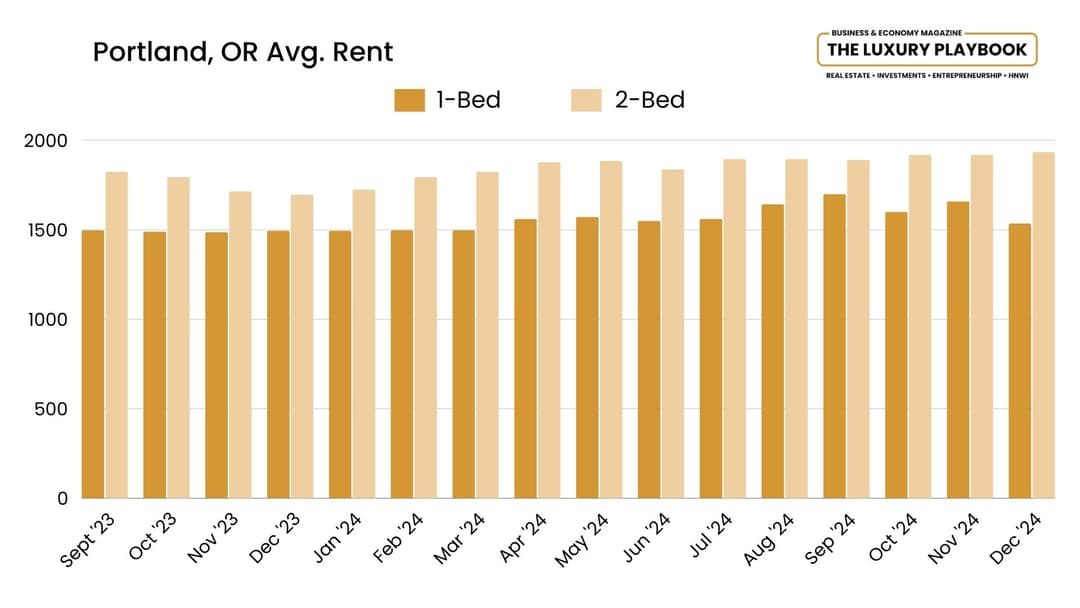
The rental layer is active. Average rents in the prime neighbourhoods cluster between $2,100 and $4,500 per month for two-bedroom stock, with the Pearl District and Northwest Portland condominium towers anchoring the upper band. The wider inflation conversation has reshaped how owners think about long-term Portland holdings.
The sustainability layer and the urban planning depth
Portland's sustainability framework is the city's clearest structural differentiator. The Urban Growth Boundary (the regional planning instrument that limits urban sprawl), the deep public-transport network (MAX light rail, the Portland Streetcar, the wider TriMet system), the cycling infrastructure and the green-building tradition have all reinforced the city's identity as a sustainability-first US prime market. The wider US prime market picture reads differently with Portland's specific planning framework.
The Living Building Challenge certifications across the Pacific Northwest have set a higher operational standard than most US markets. The Portland Architecture Foundation and the Portland Sustainability Office have anchored the institutional layer that supports the wider commissioning culture. Mansion Global's 2024 Portland dispatch covered the sustainability-prime intersection in some detail.
What this means for buyers
For owners considering broader US opportunities, Portland in 2026 offers a credible Pacific Northwest prime conversation with genuine architectural texture and a structural sustainability-first urban framework. The price points sit below the comparable Seattle, San Francisco or Vancouver bands, but the operational character is meaningfully different from the wider US prime field.
For owners landing on the city in 2026, the work is choosing the neighbourhood (Southwest Hills, Pearl District, Northwest Heights, Hillside, Sellwood-Moreland) and committing to a multi-year holding horizon. The Knight Frank, Christie's International Real Estate, Engel & Völkers and Cushman & Wakefield desks all cover the city now, which is a meaningful signal about how the institutional brokerage layer treats Portland in 2026.
We last reviewed this analysis in May 2026.


Savvas Agathangelou
Savvas Agathangelou co-founded The Luxury Playbook and has spent years reporting from the prime postcodes the magazine covers — Mayfair, Knightsbridge, the Athens Riviera, Dubai's Palm crescents, and the southern Mediterranean coastlines where the world's wealthy keep coming back. His background is in international hospitality, and that frame shapes how he writes about property: the developer's choices, the architect's signature, the agency's bench of named brokers, the building's service standard once the buyer moves in. He files developer spotlights, agency profiles, and the seasonal "Properties That Defined" listicles, and he hosts the magazine's founder-and-leadership interviews on the Voices side.