
The Rolex Daytona occupies a position unlike anything else in luxury watch collecting, where a single component, the dial, can separate a $25,000 timepiece from a $900,000 treasure that auction houses fight to feature in their prime selling slots.
That extraordinary value gap, based purely on face design, makes dial literacy absolutely essential if you’re a serious collector or investor hunting for asymmetric returns in the luxury watch market. Two mechanically identical references sharing the same movement, case construction, and bracelet can trade at prices differing by a factor of ten or twenty, simply because one carries a standard Daytona dial while the other displays a rare variant that drives collectors to pay astronomical premiums for specific aesthetic details.
These dramatic dial variations emerged largely by accident through Rolex’s philosophy of what collectors now describe as “controlled evolution.”
Small production changes implemented to test market reception, brief experimental runs that suppliers discontinued after limited quantities, and designs that proved unpopular during their original sales period all created unintentional scarcity that nobody planned for.
What retailers struggled to sell in the 1970s became objects of obsessive desire by the 2000s, as collectors recognized that these overlooked variants existed in tiny quantities compared to standard production. Decades later, that accidental scarcity translated into extraordinary collector premiums that now define the vintage Daytona market, creating a treasure hunt dynamic where knowledgeable buyers search for underappreciated dial variants that might become the next generation’s blue chip collectibles. If you understand how scarcity drives blue chip asset pricing, you’ll recognize this pattern immediately.
Table of Contents
Key Takeaways & The 5Ws
- Rare Rolex Daytona dial variants can turn a ~$25,000 watch into a $900,000+ trophy, making dial literacy a decisive edge for serious collectors and investors.
- Paul Newman “Exotic” dials on references such as 6239, 6263, and 6265 remain the blue-chip standard, combining multi-decade appreciation with extreme scarcity.
- Panda, Reverse Panda, Patrizzi, Tiffany-signed, and Green “John Mayer” dials sit in distinct investment tiers, each with different entry prices, risk profiles, and upside potential.
- Original, untouched dials command huge premiums; even minor refinishing or replacement can erase 40%–60% of value on top-tier vintage pieces.
- True rarity Daytonas often behave more like fine art or rare coins—more resilient through corrections—while modern production pieces tend to track broader watch cycles.
- Long-term upside often sits in underappreciated anomalies: short-run dials, unusual but coherent designs, and early-stage celebrity or regional variants not yet priced like icons.
- Who is this for?
- Luxury watch collectors, Rolex Daytona investors, and high-net-worth buyers looking for rare Daytona dials with blue-chip resilience or asymmetric appreciation potential.
- What is the focus?
- A strategic guide to Rolex Daytona dial variants—Paul Newman “Exotic,” Panda, Reverse Panda, Patrizzi, Tiffany-signed, and celebrity-boosted dials—framed through scarcity, originality, pricing tiers, and collectibility.
- When does it matter most?
- Most relevant for 2025–2035 long-term investors building multi-year holding strategies and assembling Daytona portfolios designed to survive full market cycles.
- Where is this market priced?
- Across global luxury watch hubs and the highest-trust venues: major auction houses, top vintage specialists, and vetted online marketplaces where Daytona provenance and dial condition can be verified and priced transparently.
- Why is dial literacy so valuable?
- Because dial scarcity and originality explain the biggest price dispersion in Daytonas; mastering those details is often the single most powerful way to turn a “good Rolex” into a true trophy asset while avoiding value-destroying restoration traps.

Best Dial Variants With Proven Investment Track Records
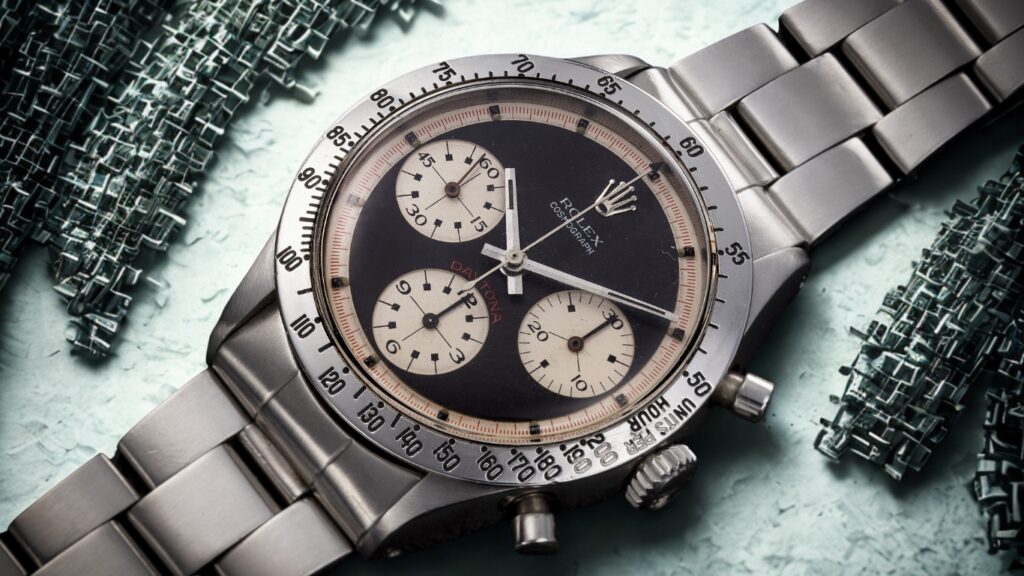
Paul Newman “Exotic” dials spanning references 6239, 6262, 6264, 6241, 6263, and 6265 sit at the absolute investment gold standard in Rolex collecting, with track records showing sustained appreciation across multiple decades and economic cycles.
White dial reference 6239 variants with the distinctive exotic configuration now command $350,000 or more at auction. That’s a staggering climb from the 1970s, when these watches sat unsold in retailer display cases because customers found the unusual Art Deco styling unappealing compared to conventional chronograph dials.
Reference 6262, featuring an acrylic bezel rather than the metal bezels that became standard on later production, exceeds $500,000 for quality examples with original components. Reference 6264 in 18K yellow gold with exotic dial reaches $950,000, placing it among the most valuable production Rolex watches ever made. understanding how Rolex compares to other luxury watch investments makes these numbers even more striking.
These exotic dials share a defining set of characteristics. Sharply contrasting subdials create visual separation from the main dial surface, square luminous hour indices replace the standard round markers, and Art Deco influenced numerals fill the chronograph registers. Together, those details give the watches the distinctive look that Paul Newman’s personal example made world famous.
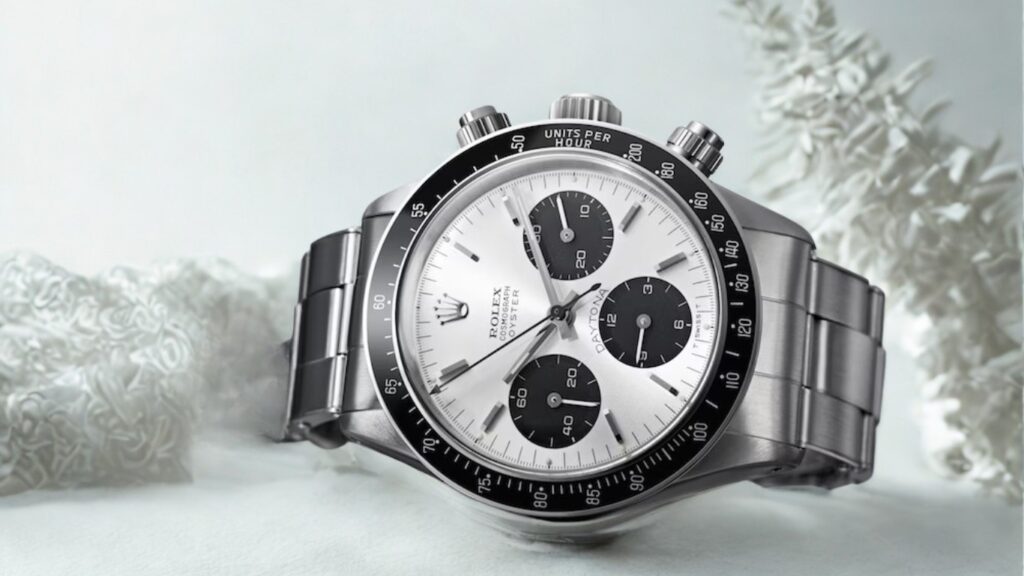
Move beyond the stratospheric pricing of genuine Paul Newman dials, and you’ll find that Panda and Reverse Panda configurations show consistent appreciation with substantially lower entry points, making them accessible to collectors building serious holdings without deploying six figure capital per watch.
Vintage reference 6263 featuring the classic Panda configuration with white dial and black subdials, particularly examples displaying the oversized “Big Red” Daytona lettering, trades around $600,000 in top condition. One exceptional example sold for $1.1 million at the Christie’s Important Watches auction back in 2013.
The modern 116500LN ceramic bezel Daytona in white dial Panda configuration climbed from its $13,200 retail price at 2016 launch to current secondary market values of $29,000 to $35,000. That trajectory shows you how the black and white contrast formula delivers timeless appeal that cuts across specific vintage eras.
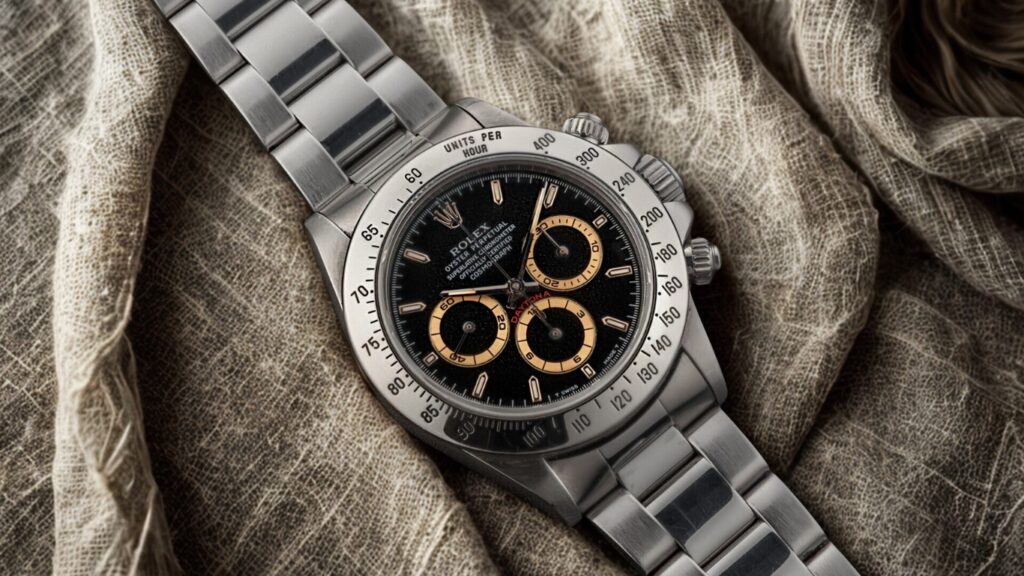
The “Patrizzi Dial” variants of reference 16520, covering the Zenith Daytona era from 1988 through 2000, are a fascinating case study in accidental value creation, where manufacturing defects became highly desirable collector characteristics.
These watches feature subdials that naturally oxidized over time, developing a tropical brown patina instead of maintaining the black color Rolex originally intended. What was once considered a defect that damaged a watch’s appeal, and might even justify a warranty replacement, now commands a 15% to 25% premium over standard black dial versions. Patina enthusiasts prize the unique aging that each watch develops individually, and the market has rewarded that enthusiasm.
Tiffany and Co. co-branded dials on vintage Daytonas are ultra rare variants with extreme appreciation potential. Finding authentic examples, though, requires serious authentication expertise given the prevalence of forgeries trying to exploit these premiums.
Reference 6263 reverse panda configurations bearing Tiffany’s signature below the Rolex coronet command premiums of 40% to 60% above already expensive standard reverse panda examples. Co-branded pieces sold through authorized retailers like Tiffany create ironclad provenance that institutional collectors and museums actively seek out.

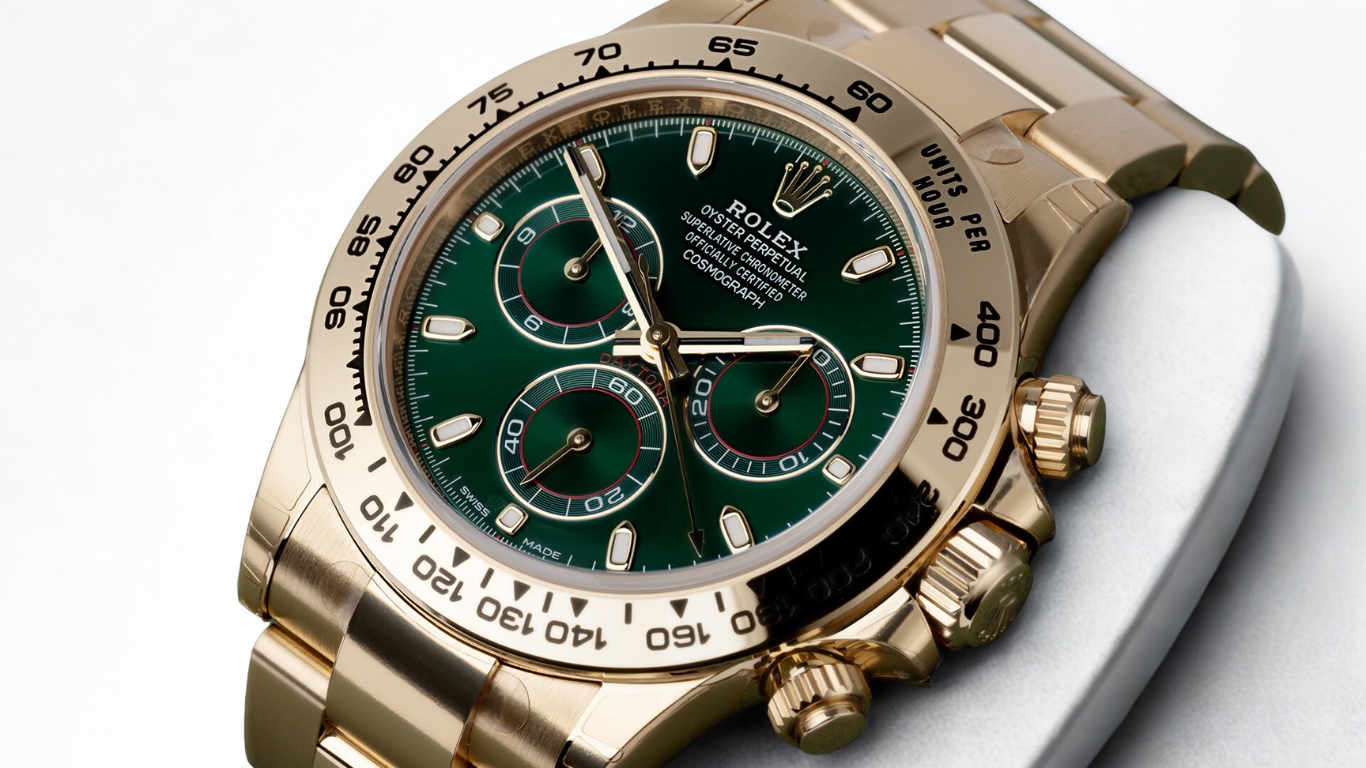
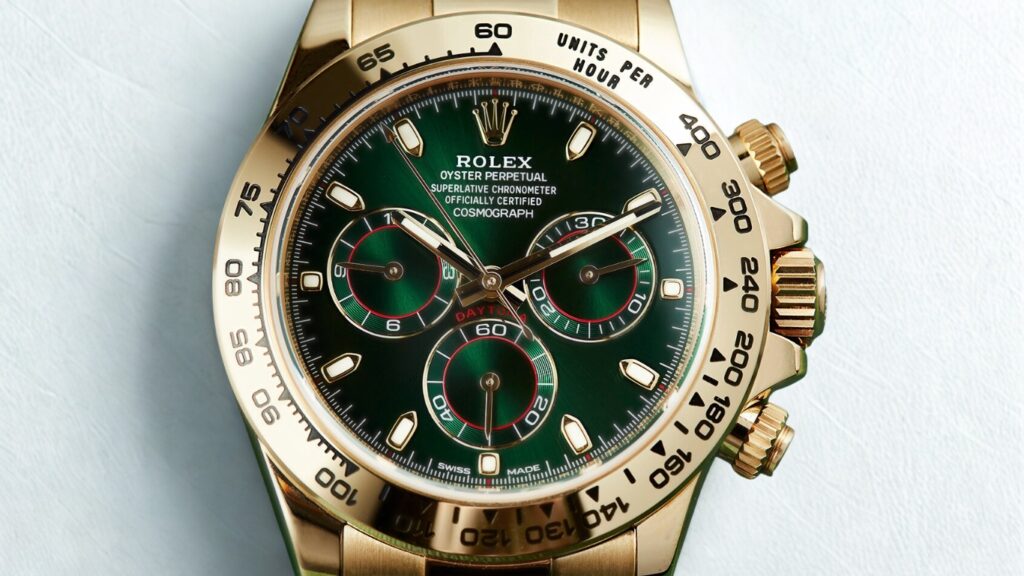
More recently, the John Mayer “Green Dial” effect on modern reference 116508 and its successor 126508 shows you how celebrity endorsement can transform appreciation trajectories almost overnight, creating value that operates independently of vintage status or traditional scarcity.
The musician and watch collector’s public enthusiasm for the $36,000 yellow gold Daytona with green dial, documented through Instagram posts and interviews about his collection, transformed this relatively available modern reference into a $100,000 or more collector piece within months. Bloomberg Pursuits has tracked similar celebrity-driven watch premiums across multiple references in recent years.
That said, the sustainability of celebrity driven premiums is still unproven compared to the decades long track records Paul Newman dials have built. You’re right to ask whether current green dial pricing reflects durable collector preference or temporary hype that will moderate once attention shifts to the next endorsed piece.
How To Choose The Perfect Daytona Dial
The relationship between entry point and appreciation potential creates distinct investment tiers, each demanding different capital allocations and risk tolerances. Paul Newman dials require $250,000 to $950,000 depending on reference and condition, but they offer proven 20 year track records of sustained value appreciation and exceptional resilience during broader luxury market corrections.
Modern ceramic bezel Daytonas in the $28,000 to $35,000 range offer dramatically lower barriers to entry, but carry uncertain long term appreciation multiples. These watches are either still in active production or only recently discontinued, lacking the decades of collector validation that vintage pieces carry.
Vintage exotic dials have delivered returns exceeding 1,500% since the 1990s, when savvy collectors began accumulating examples the market hadn’t yet recognized. Modern references show 100% to 150% appreciation since their 2016 launch. Impressive in absolute terms, but modest next to the life changing returns that early Paul Newman dial investors realized.
Condition sensitivity also amplifies dramatically with dial rarity, creating authentication and preservation challenges that standard production Daytonas simply never present. A refinished Paul Newman dial, where an owner or watchmaker replaced damaged luminous material, repainted markings, or otherwise altered the original surface, can lose 40% to 60% of its value compared to examples with original patina that collectors describe as untouched or unmolested.
Standard production Daytonas show only 10% to 20% condition based price variance between pristine and moderately worn examples. Because these watches are common enough, buyers focus primarily on functionality rather than the originality of every component.
Investing in rare dials therefore demands either significant personal authentication expertise developed through years of study and handling original examples, or trusted relationships with dealers and auction specialists who guarantee originality and accept returns if questions emerge. If you’re thinking about where rare watches fit within a broader alternative asset strategy, it’s worth exploring how other scarce collectibles build long term value through similar scarcity dynamics.
Beyond static valuations, examining market cycle resilience reveals how exotic dials outperform during corrections that punish modern luxury watches.
Contemporary Daytona references in markets like Los Angeles dropped 6.2% year over year, and California examples fell between 7.4% and 14.7% during recent luxury goods corrections as easy money conditions ended and discretionary spending moderated. Paul Newman variants held value or kept appreciating through that same period.
That performance gap tells you something important. Genuine scarcity insulates against the broader luxury market volatility that hits readily available pieces whenever buyer enthusiasm or financing conditions shift. If your holding period is 10 to 20 years, rare dial Daytonas behave more like fine art or rare coins than consumer goods, where extreme scarcity creates value floors that prevent the cyclical boom bust patterns affecting watches Rolex keeps producing, or that exist in quantities sufficient to satisfy normal market demand. The Financial Times has documented similar floor price dynamics across multiple hard asset categories.
The 20 to 30 year investment horizon favors buying tomorrow’s collecting icons today, at prices that reflect current utility rather than future scarcity premiums. That means focusing on production anomalies including short run dials Rolex discontinued quickly, celebrity associations in early stages before markets fully price in the endorsement effect, and designs that look underappreciated relative to their aesthetic distinctiveness and production quantities. Robb Report’s watch coverage regularly highlights emerging dial variants worth tracking before prices move.
The collectors who recognized Paul Newman dials as special in the 1990s, when examples traded for $3,000 to $8,000, or those who accumulated Panda dial references in the 2000s at $15,000 to $25,000, achieved returns that transformed watch collecting from an expensive hobby into genuine wealth building. Patient capital deployed toward undervalued scarcity can generate returns rivaling venture capital or early stage startup investing, and the Daytona dial market has proven that point more convincingly than almost any other collectible category you can name. If you’re also weighing which vintage watch models hold the strongest appreciation potential across the broader market, that context sharpens your perspective on where Daytona dials sit in the hierarchy.