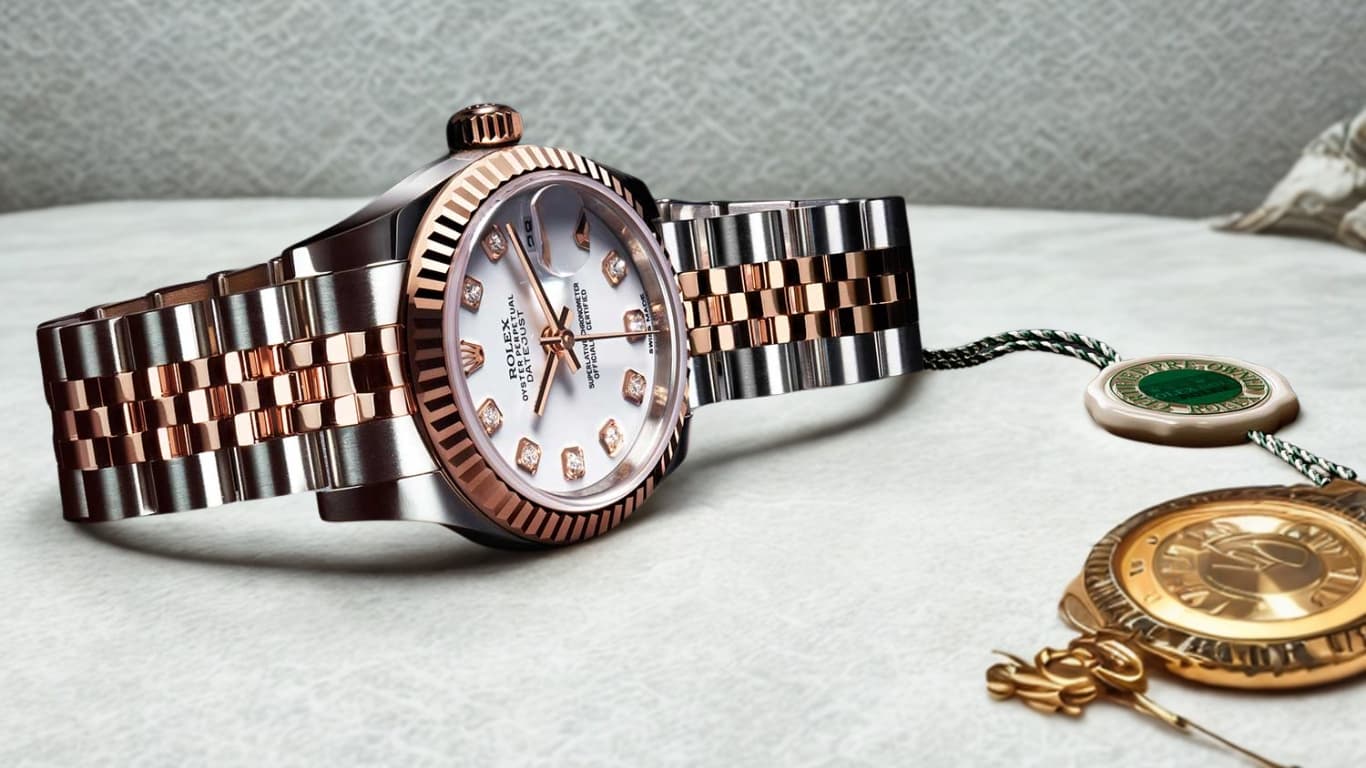
When you’re comparing Rolex vs Breitling in 2026, you’re not just picking between two luxury watch brands. You’re choosing between cultural capital and technical precision, resale dominance and enthusiast appeal.
Rolex is the undisputed heavyweight in value retention. Its models don’t just hold value. They often appreciate well beyond MSRP.
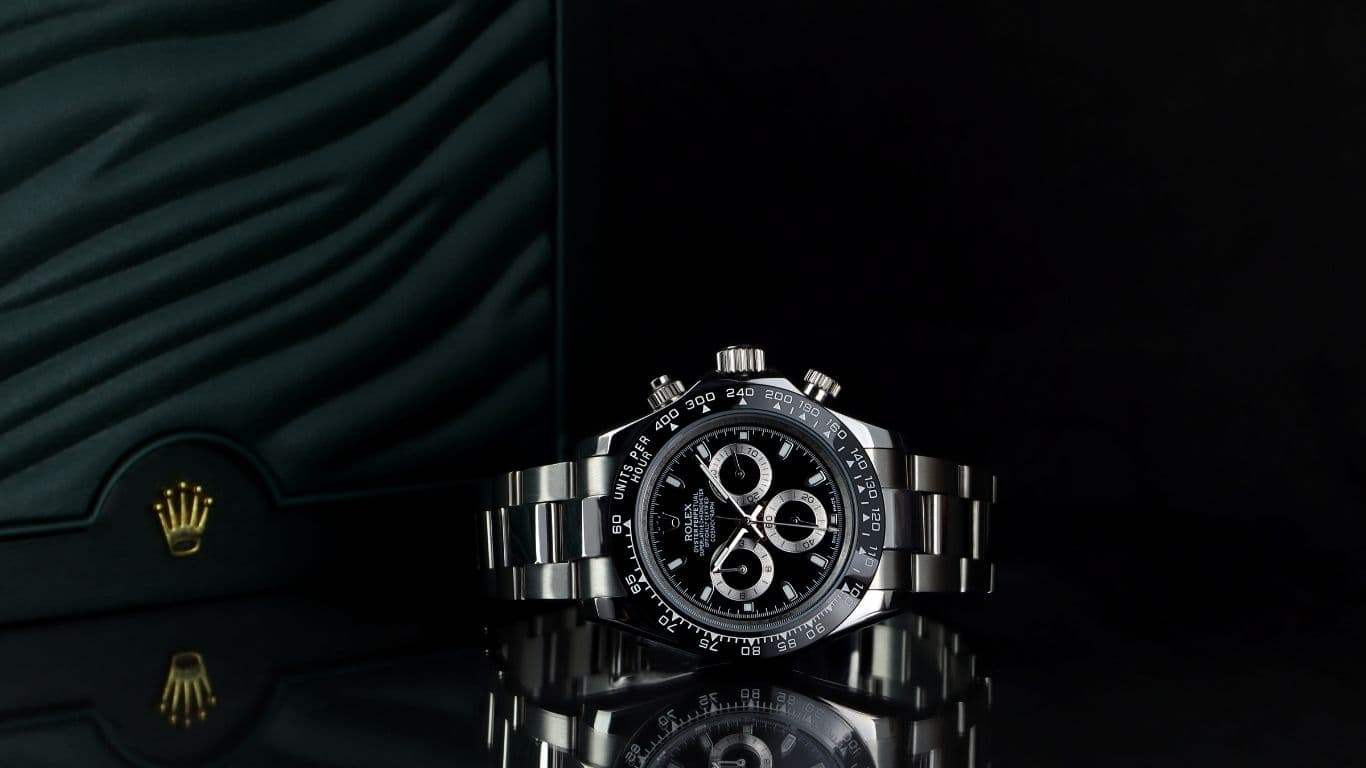
Take the Rolex Daytona 116500LN. It retails around $15,000 but trades consistently in the $28,000 to $32,000 range on the secondary market, effectively doubling its price within just a few years. The Submariner and GMT-Master II both benefit from Rolex’s deliberate supply throttling, fuelling waitlist frustration and serious grey market premiums.
Breitling, meanwhile, isn’t trying to be Rolex. It caters to a different kind of collector, one who appreciates aviation history, overbuilt chronographs, and in-house B01 movements.
Resale values don’t hit Rolex levels, but a serious mechanical watch investment doesn’t always have to. A Breitling Navitimer B01 Chronograph still holds strong in the $6,500 to $10,000 range depending on condition, even as the MSRP climbs past $16,000. For many buyers, Breitling is the practical connoisseur’s daily driver, not a hype watch, but a serious mechanical tool.
What follows is a deep dive into price comparisons, resale data, collector demand, materials, craftsmanship, and model reputation. The goal is simple: help you figure out which brand makes more sense, not just for your wrist, but for your portfolio.
Table of Contents
Rolex
Few names in luxury have cultivated such a universal aura of credibility, status, and mechanical integrity as Rolex. It’s a brand that doesn’t chase attention. It commands it by tradition.
Born in the early 20th century, Rolex grew into one of the most globally recognized symbols of success and reliability. Its origins are tied closely to genuine innovation. The first waterproof wristwatch, the first wristwatch with an automatically changing date, and the first watch to ascend Mount Everest all carried the Rolex name.
Over time, the brand evolved not by following trends but by defining them.
Rolex doesn’t reinvent itself with every release. Instead, it refines, leaning into design continuity and engineering discipline. Models like the Submariner, Datejust, and Explorer have endured for decades with only subtle adjustments, becoming cultural references far beyond the watch world.
To wear a Rolex isn’t just to wear a watch. It signals precision, achievement, and timeless taste. It’s not a flash-in-the-pan luxury piece or an experiment in design abstraction. It’s an anchor.
From presidents to explorers, CEOs to artists, the Rolex clientele is as varied as it is influential. That breadth gives the brand a rare kind of relevance, conservative enough for a boardroom, iconic enough for a film close-up.
Even among serious collectors, Rolex is often the standard unit by which other watches get evaluated. Its models act as reference points across the industry, benchmarks of performance, durability, and demand.
Owning a Rolex is rarely impulsive. It often comes after a goal achieved, a milestone marked, or an era closed. That emotional weight has helped solidify its position as a watch for life, not a passing accessory.
And that long-term relevance is a big part of what gives Rolex such staying power across generations, cementing its position as a true benchmark in horology.

Breitling
Born in 1884 in the heart of the Swiss Jura, Breitling didn’t build its reputation in royal courts or on red carpets. It earned it in cockpits, laboratories, and toolboxes.
Breitling’s identity is inseparable from its role in aviation history. When pilots needed more than a wrist ornament, when they needed slide rule bezels for fuel calculations or chronographs built to handle turbulence, Breitling answered. The Navitimer, released in 1952, was more than a commercial success. It became part of the standard flight kit. Not a marketing story, a practical solution.
Even today, that legacy is front and center. Breitling doesn’t hide its utilitarian DNA under minimalist dress cases. It celebrates oversized bezels, high-contrast dials, and movements tuned for legibility in low-light cockpits.
A Breitling watch doesn’t just sit on your wrist. It commands attention with purpose.
Where Rolex whispers status, Breitling speaks in boldface. It’s a watch that doesn’t need to be explained to those who understand it, and won’t make sense to those who don’t. That’s the point. Breitling isn’t trying to be universally loved. It thrives on personality, unapologetically technical, slightly rebellious, and deeply committed to mechanical complexity.
Its most loyal wearers aren’t always investors or collectors. They’re climbers, divers, test pilots, military veterans, and engineers. That gives the brand a very different kind of cultural currency. It’s respected for what it does, not just what it costs.
Breitling’s recent evolution under Georges Kern has re-centered the brand without softening its edges. The watches are still bold, but smarter, more wearable, and storytelling-driven. Partnerships with military air squadrons, collaborations with vintage airline brands, and limited releases grounded in real-world missions bring back the emotional anchor Breitling always owned but hadn’t fully marketed.
This isn’t just heritage play. It’s a calculated reclamation of its niche, watches built for performance, not pretense.

Rolex vs Breitling: Price Comparison
Price is one of the most influential factors when choosing between Rolex and Breitling, and each brand occupies a distinct segment within the luxury watch market. Both offer exceptional craftsmanship and heritage, but their pricing strategies and long-term value differ considerably.
Rolex has long been associated with prestige and enduring value. Its watches aren’t only status symbols. They’re strong investment assets, often retaining or increasing in value over time. On the secondary market, certain Rolex models regularly command prices well above their original retail value, driven by limited production, high demand, and serious collector interest.
- Entry-Level Rolex (Oyster Perpetual): $5,000 – $15,000
- Mid-Range Rolex (Submariner, GMT-Master II, Explorer II): $8,000 – $40,000
- High-End Rolex (Daytona, Yacht-Master II): $40,000 – $80,000+
Popular models like the Submariner and GMT-Master II consistently sell out at authorized dealers, pushing resale prices up by 20% to 50% or more depending on condition, rarity, and reference number. Limited-edition and discontinued Rolex pieces, especially steel sports models, are widely viewed as appreciating assets in the collector market.
According to our analysts’ data, Rolex watches appreciate on average 7% to 9% annually in strong economic conditions, making them one of the most reliable luxury watch investments globally.
Breitling, while also a prestigious Swiss brand, sits at a more accessible price point. Known for technical features and aviation heritage, Breitling watches appeal to professionals and enthusiasts seeking functional luxury without the steep premiums that come with Rolex.
- Entry-Level Breitling (Colt, Endurance Pro): $3,000 – $4,000
- Mid-Range Breitling (Superocean, Avenger): $4,000 – $6,000
- High-End Breitling (Navitimer, Chronomat, Premier B01): $7,000 – $30,000+
Breitling’s broader pricing range allows for a more inclusive entry into the luxury watch world. Breitling watches generally don’t appreciate at the same rate as Rolex, but certain models, especially limited-edition Navitimers and vintage pieces, do see solid performance in the pre-owned market.
Some high-demand models can retain 70% to 80% of their retail value after several years of ownership.
From an investment standpoint, Breitling is best viewed as a value-retaining brand rather than a speculative asset. Buyers typically choose Breitling for its tool-watch functionality, bold design, and accessible luxury positioning rather than for long-term resale profits.
| Category | Rolex | Breitling |
|---|---|---|
| Entry-Level MSRP | ~$6,500 (e.g. Oyster Perpetual 36mm) | ~$4,000 (e.g. Breitling Colt Automatic) |
| Mid-Range Iconic Models | $9,500–$14,000 (e.g. Submariner, GMT-Master II) | $4,500–$6,500 (e.g. Navitimer, Chronomat) |
| High-End / Complications | $30,000+ (e.g. Day-Date, Sky-Dweller, Yacht-Master) | $9,000–$30,000+ (e.g. Premier B21 Tourbillon) |
| Pre-Owned Price Retention | Often trades at or above MSRP | Generally trades below MSRP, exceptions apply |
| Waitlist / Scarcity Premium | Yes – 6–36 months for models like the Daytona | Rare – Most Breitlings are readily available |
Iconic Models Comparison
Both Rolex and Breitling have produced some of the most iconic and respected timepieces in luxury watchmaking. Rolex is often associated with timeless elegance and prestige, while Breitling is renowned for technical prowess and professional-grade durability. Comparing their flagship models gives you valuable insight into each brand’s philosophy and who they’re really built for.
Rolex Submariner vs. Breitling Superocean
The Rolex Submariner is widely regarded as the benchmark for modern dive watches, blending refined design with robust functionality. With water resistance up to 300 meters, a 70-hour power reserve, and Rolex’s Caliber 3235 movement, it delivers both performance and status. The ceramic bezel, date function, and Superlative Chronometer certification ensure superior precision and durability.
The Breitling Superocean takes a different approach, offering professional-grade diving capability with water resistance up to 500 meters, surpassing the Submariner on that specific metric. It runs on the Breitling 17 automatic movement, based on the ETA 2824-2, with a 38-hour power reserve. The movement isn’t in-house, but it carries COSC certification, which guarantees high accuracy.
- Submariner Price Range: $8,000 – $12,000
- Superocean Price Range: $4,000 – $6,000
Both watches serve the diving community well. The Submariner’s higher price reflects its superior finishing, in-house movement, and unmatched prestige in the wider market.
Rolex Daytona vs. Breitling Navitimer
The Rolex Daytona is arguably one of the most celebrated chronographs in horology. Originally developed for motorsport timing, its Caliber 4130 movement is known for reliability, simplicity, and a 72-hour power reserve. The Daytona features a tachymeter bezel ideal for measuring speed, and collectors prize it for its limited availability and strong resale performance in the investment-grade watch segment.
Breitling’s Navitimer is a cornerstone of aviation watches. It incorporates the brand’s in-house B01 chronograph movement, offering a 70-hour power reserve and COSC certification. The slide rule bezel is a Navitimer hallmark, giving pilots the ability to perform crucial in-flight calculations right on the wrist.
- Daytona Price Range: $14,000 – $40,000+
- Navitimer Price Range: $7,000 – $10,000
The Daytona dominates on resale value and prestige. But the Navitimer appeals to buyers who genuinely value technical functionality and deep aeronautical heritage.
Rolex GMT-Master II vs. Breitling Avenger
Designed for global travelers, the Rolex GMT-Master II offers dual time zone functionality through the Caliber 3285 movement, which delivers a 70-hour power reserve and Superlative Chronometer precision. The ceramic bidirectional bezel and iconic two-tone color schemes have made the GMT-Master II a favorite among pilots and international professionals alike.
Breitling’s Avenger line is engineered for rugged performance. Available in chronograph and GMT variants, the Avenger prioritizes legibility, robustness, and accessibility. It typically features the ETA-based Breitling 17 movement with COSC certification and a 38-hour power reserve.
- GMT-Master II Price Range: $9,000 – $12,000
- Avenger Price Range: $4,000 – $5,500
The GMT-Master II offers greater brand cachet and mechanical sophistication. The Avenger delivers excellent utility and resilience at a more accessible price point. Both serve a purpose, depending on what you actually need on your wrist.
Rolex vs Breitling: Investment Performance
Among luxury watch brands, Rolex has built a reputation for exceptional value retention, making it a standout choice for enthusiasts and investors alike. Financial Times wealth coverage and specialist market data both confirm that certain Rolex models have appreciated strongly over the past decade, with resale values frequently surpassing their original retail prices.
For example:
- Rolex Submariner: The no-date version, originally priced around $8,100 USD (as of 2020), now commands upwards of $13,000–$15,000 on the secondary market—an increase of over 60% in just a few years.
- Rolex Daytona: Stainless steel models retail for approximately $15,000, but due to demand and limited production, they frequently sell for $30,000–$40,000+ on the pre-owned market.
That consistent appreciation is driven by a combination of Rolex’s controlled supply, iconic status, and unwavering global demand. Rolex benefits from a unique dynamic where almost every model it releases becomes a collector’s item over time, particularly in the sports watch category.
Pre-owned Rolex timepieces retain on average 85% to 95% of their value within the first five years, depending on model and condition, with many models appreciating well beyond that timeframe. If you want to understand how watch investments stack up against other alternative assets, it’s worth reviewing how smart investors approach asset allocation across categories.
Breitling watches, while offering exceptional build quality and COSC-certified movements, tend to depreciate more noticeably after purchase. Industry estimates suggest Breitling watches generally retain around 60% to 75% of their original retail value after five years.
That said, certain collections, particularly the Navitimer B01 and limited-edition Chronomat models, have shown stronger value retention, especially when kept in excellent condition with original papers and packaging.
To illustrate:
- Breitling Navitimer B01 Chronograph 43: Retailing at around $9,000, the model typically resells for $6,000–$7,000, depending on wear and market conditions.
- Breitling Superocean Automatic 42: With a new price near $5,000, resale values hover around $3,000–$3,500.
That depreciation may deter buyers focused purely on investment potential. But Breitling’s lower entry price and more accessible availability make it a compelling option for enthusiasts who want high-performance luxury without the long waitlists and elevated premiums that follow Rolex everywhere.
Breitling has also made visible efforts to strengthen long-term value, enhancing its heritage reissues, offering extended warranties up to five years on in-house movements, and revamping its resale program. These moves signal a growing commitment to improving resale performance in the years ahead.
| Metric | Rolex | Breitling |
|---|---|---|
| Average Annual ROI (2020–2025) | 8–14% (varies by model) | 1.5–3.5% (select models only) |
| Auction Results | Frequently exceeds estimates (e.g. Phillips, Christie’s) | Rarely featured; lower hammer prices |
| Holding Period Recommendation | 5+ years (strong long-term capital appreciation) | Short-to-mid term; modest appreciation, if any |
| Liquidity in Secondary Market | Extremely high – global demand and rapid turnaround | Moderate – depends on model and condition |
| Market Scarcity Factor | High – contributes to consistent price inflation | Low – broad availability caps potential upside |
| Notable Investment Models | Submariner, Daytona, GMT-Master II, Day-Date | Navitimer (Heritage series), Chronomat B01 (steel versions) |
Rolex holds the clear lead in value retention and ROI, often outperforming traditional investments and even other asset classes over the short to medium term.
Rolex vs Breitling: Design
Design philosophy is one of the most distinctive dividing lines between Rolex and Breitling. Both brands appeal to luxury consumers, but they approach aesthetics from very different angles. Rolex leans into refined minimalism and timeless utility. Breitling embraces technical complexity and a bold, aviation-inspired identity.
| Aspect | Rolex | Breitling |
|---|---|---|
| Overall Aesthetic | Understated, classic, clean | Bold, technical, often busy |
| Dial Complexity | Simple dials, few complications, strong legibility | Multi-subdial chronographs, tachymeters, slide rules |
| Bezel Design | Primarily functional (diving, GMT) | Prominent, often oversized bezels with rider tabs or knurling |
| Case Profile | Compact, symmetrical, ergonomic | Larger case diameters (43mm+), pronounced crown guards and pushers |
| Target Use Case | Professional tool watches refined for daily wear | Aviation, motorsport, and military-style tool aesthetics |
| Bracelets/Straps | Oyster, Jubilee, President—iconic and instantly recognizable | Rouleaux, military-style NATO straps, integrated rubber options |
Rolex’s design strength lies in its restraint. The brand rarely chases trends. Instead, it refines familiar silhouettes over decades. Watches like the Oyster Perpetual, Submariner, and Datejust maintain near-identical case lines year after year, giving them a timeless appeal that ages gracefully. Rolex is the embodiment of less is more.
Breitling, by contrast, embraces maximalism. Chronographs dominate its portfolio, and most models carry design DNA from aviation instruments, like the Navitimer’s iconic slide rule bezel. As Robb Report’s watch coverage regularly notes, Breitling watches exude rugged masculinity and technical prowess, favored by pilots, engineers, and anyone who wants serious presence on the wrist.
Rolex is the subtle statement of legacy. Breitling is a louder declaration of purpose. Which one suits you depends entirely on whether you value versatile elegance or distinctive utility in the watches you wear.
Rolex vs Breitling: Quality of Materials and Craftsmanship
Both Rolex and Breitling operate at the top end of Swiss watchmaking, but their approach to materials, engineering, and finishing differs based on their priorities. Rolex favors in-house vertical integration and material innovation. Breitling emphasizes precision manufacturing and COSC certification across its collections.
| Aspect | Rolex | Breitling |
|---|---|---|
| Movement Production | 100% in-house, proprietary calibers across all models | Mix of in-house (e.g. B01) and modified ETA/Sellita movements |
| Certification | All movements are Superlative Chronometer certified (Rolex standard + COSC) | COSC-certified chronometers across almost the entire product range |
| Case Material | Oystersteel (904L steel), gold alloys (Everose, Rolesor), platinum | 316L steel, titanium, ceramic, 18k gold in premium models |
| Bracelet & Clasp Engineering | Patented Glidelock, Easylink, robust link construction | Distinctive designs, durable clasps, but less proprietary innovation |
| Finishing & Tolerances | Highly controlled tolerances, mirror-like polishing, precision brushing | Industrial-grade finishing with high durability but slightly coarser |
| Innovation & R&D | Own metallurgy lab, patented alloys, Parachrom hairspring, Chromalight lume | Strong focus on movement architecture and case material experiments |
Rolex is in a class of its own when it comes to in-house production. From its proprietary Parachrom hairspring, which resists magnetism and shocks, to its Cerachrom bezels and 904L Oystersteel cases, Rolex controls every variable in the process. That vertical integration allows for tight quality control, long-term part availability, and genuine innovation at the material level.
Breitling, while less vertically integrated, has raised its craftsmanship significantly over the past decade. The Breitling Manufacture Caliber B01 is a robust in-house movement with a power reserve of around 70 hours, found in the Chronomat and Navitimer lines. The brand also makes extensive use of lightweight materials like titanium and proprietary DLC coatings for its sportier references.
Rolex prioritizes longevity, polish, and silent precision. Breitling leans into functionality, legibility, and tool-watch resilience. Both are genuinely high quality. Rolex may edge ahead on overall refinement, but Breitling offers robust performance, especially in chronograph engineering.

Rolex vs Breitling: Market Position and Audience
Rolex and Breitling occupy distinct but occasionally overlapping spaces in the luxury watch world. Both are rooted in Swiss horological tradition, but they cater to different buyer psychographics, lifestyle affinities, and emotional touchpoints.
| Brand | Core Identity | Primary Audience |
|---|---|---|
| Rolex | Timeless prestige, status symbol, versatile luxury | Executives, collectors, first-time luxury buyers, legacy-driven individuals |
| Breitling | Aviation heritage, tool-watch functionality, technical appeal | Adventure enthusiasts, professionals, pilots, sports-inclined buyers |
Rolex carries an aura of exclusivity, achievement, and universally recognized status. For many buyers, owning a Rolex, whether a Datejust or a Daytona, is a milestone purchase. Its presence on the wrists of world leaders, athletes, and creatives reinforces the idea that a Rolex isn’t just a watch. It’s a cultural artifact. You can see similar dynamics play out with other investment-grade watches like Jaeger-LeCoultre, though none quite match Rolex’s mainstream pull.
Breitling, by contrast, evokes rugged precision and a deep affinity for aviation, exploration, and mechanical innovation. The brand is closely tied to historical aeronautics, and the Navitimer is practically synonymous with cockpit instrumentation.
Breitling also appeals to buyers who prefer high-performance chronographs and sporty designs, often with larger case diameters and more aggressive styling than anything Rolex produces.
Which Watch is Right for You?
Choosing between Rolex and Breitling comes down to what you’re actually looking for in a luxury timepiece.
Choose Rolex if you prioritize strong resale value, universal brand recognition, and a watch that works equally well in a boardroom or at a black-tie event. Boat International’s style coverage consistently places Rolex as the go-to choice for buyers who want a watch that holds its ground as both a status symbol and a financial asset. If your priority is long-term value retention, a Rolex is hard to argue against.
- You value timeless elegance and want a watch that can be worn in any setting.
- You are looking for a timepiece with proven investment potential, as Rolex watches tend to hold or increase in value over time.
- You appreciate in-house movements and the highest levels of precision and craftsmanship.
Choose Breitling if you want a watch with genuine technical depth, a bold design that turns heads for the right reasons, and a heritage story you can actually feel on your wrist. If you’re drawn to aviation history, serious chronograph complications, and a brand that rewards those who know what they’re looking at, Breitling delivers something Rolex simply doesn’t.
- You prefer bold, technical designs with a focus on functionality and legibility.
- You need a watch that can handle professional or extreme environments, such as aviation or diving.
- You’re seeking a luxury watch at a lower price point, while still enjoying high-quality materials and Swiss craftsmanship.
Whichever brand you choose, you’re buying into decades of Swiss watchmaking excellence. Whether you lean toward the timeless prestige of Rolex or the bold, purposeful spirit of Breitling, you’re putting something on your wrist that will reward you well beyond the purchase price.
FAQ
Is Rolex more prestigious than Breitling?
Yes, Rolex is widely considered more prestigious due to its global brand recognition, resale value, and long-standing status as a symbol of wealth and success.
Do Breitling watches hold their value?
Breitling watches generally depreciate faster than Rolex but models like the Navitimer and limited editions can retain value if well-maintained and accompanied by box and papers.
Is Rolex a better investment than Breitling?
From an investment perspective, Rolex outperforms Breitling. Popular Rolex models like the Submariner and Daytona regularly sell for 20–100% above MSRP, making them stronger assets in the secondary market.
Which brand is more accurate: Rolex or Breitling?
Both brands produce COSC-certified chronometers, but Breitling tends to offer more complex complications and technical features, especially in aviation-focused models.
Are Breitling watches considered luxury?
Yes, Breitling is a Swiss luxury watchmaker known for its precision instruments and durable chronographs, particularly favored by pilots and adventure-seekers.
Which brand offers better resale value?
Rolex offers better resale value. Its scarcity, demand, and universal appeal make it one of the top-performing watch brands on the secondary market.
Is a Breitling worth buying in 2025?
Yes, especially for buyers who value rugged design, aviation history, and technical specs. While not always ideal for investment, Breitling delivers strong quality and brand credibility.