
The 2024 art market tells a story of sharp contrasts, and if you’re watching where smart money moves, the details matter. Drawing on the UBS Art Market Report and insights from Pearl Lam, the overall picture shows global sales dipping 4% to $65 billion. But buried inside that headline number is something worth your attention. China surged 9%, overtaking the UK to claim second place with $12.2 billion in sales. The US still leads with a 42% share of global sales, even after absorbing a 10% drop in total value.
Dig a little deeper and the turbulence becomes clearer. Auction sales fell 27% and average sale prices dropped 32%, hitting a low not seen in over seven years. Still, the market has shown real staying power. Online art sales posted strong growth, and profits for high-end dealers have climbed back above pre-pandemic levels. With high interest rates weighing on buyers through 2023 and into 2024, any Federal Reserve rate cuts could quickly unlock fresh appetite for art as an investment.
A few trends are quietly reshaping how the market works. Women artists are drawing more serious collector attention. Auction houses are consolidating. And the smartest dealers are pivoting their strategies, leaning into lower-priced segments and single-owner estate sales to stay relevant as buyer preferences shift.
Global Art Market Trends
The Art Market Report 2024 lays out a world where the US still dominates, China is rising fast, and the overall sales total has pulled back. If you’re thinking about art as part of your broader alternative asset strategy, understanding these shifts is essential before you commit capital.
US Market Dominance
The United States holds a 42% share of the global art market in 2023, even as headwinds build. Rising operating costs for galleries, flagged by 42% of respondents in the UBS survey, are putting real pressure on the ecosystem. And because American collectors frequently buy art abroad, the true scale of US appetite for art likely runs even larger than the headline figures suggest.
Rise of China in the Art World
China has overtaken the UK to become the world’s second-biggest art market, and this isn’t a blip. Growing domestic interest in collecting, a wave of new cultural venues, and marquee events like Art Basel Hong Kong are all fueling the momentum. This is a structural shift worth watching closely if you’re thinking about where the next generation of major collectors will come from.
Slowdown in Global Sales
Global art sales slipped 4% in 2024, though the story varies widely by region. Online sales are up, but traditional galleries still anchor the high-value end of the market. Physical spaces haven’t lost their relevance. Art fair participation also shifted, with 39% of dealers surveyed noting changes in how they engage with fairs, adding another layer of complexity to the overall slowdown.
Online Art Sales Growth
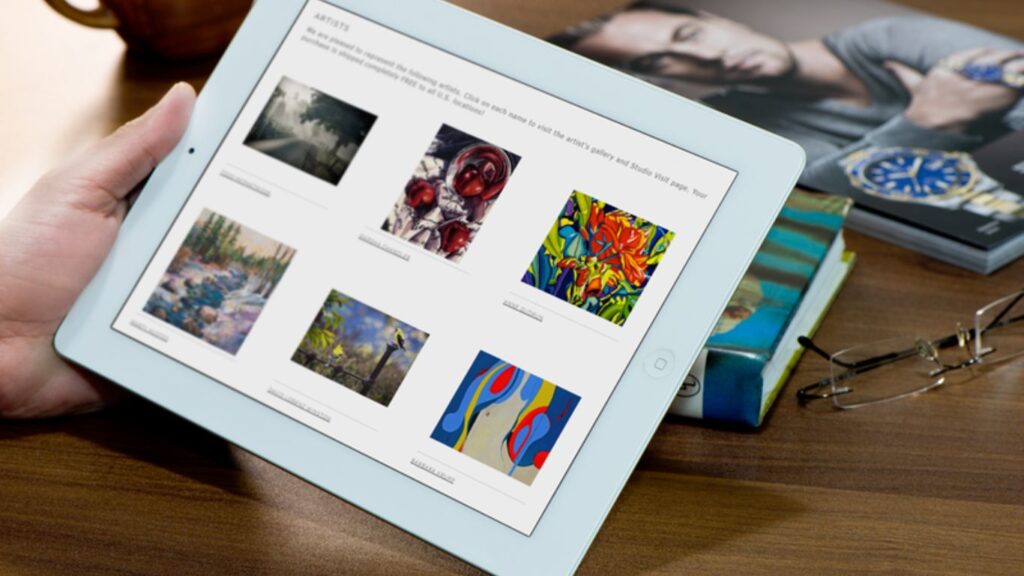
Online art platforms have fundamentally changed how buying and selling works, and the numbers back that up. By mid-2024, online art sales had climbed to roughly $11.8 billion, a 7% increase from the year before. That kind of growth signals a real behavioral shift, not just a pandemic-era anomaly, as digital transactions become a permanent fixture of how collectors engage with the market.
The pandemic originally pushed galleries and artists onto digital platforms out of necessity, back in 2022. What started as a workaround became a new normal. That said, most online art sales still involve works priced below $50,000. The high-six-figure and multi-million-dollar pieces still tend to trade through traditional auction formats, where the theater of bidding and the presence of serious collectors still drives results.
A few key figures put the online sales shift into context and show just how much digital channels now influence the broader art market.
| Key Statistics | 2024 Data |
|---|---|
| Estimated Online Art Sales | $11.8 billion |
| Year-on-Year Increase | 7% |
| Contributors to Global Profits | 18% |
The trajectory for online art platforms looks strong. Some analysts expect growth to level off, but the underlying resilience of the market argues against complacency. Keep watching this space. The patterns forming now will shape where collector dollars flow over the next decade. You can also see similar premium-quality shifts playing out in other collectible categories, like fine wine investment, where digital sales and shifting buyer demographics are rewriting the old rules.
Art Market Statistics for 2024
The 2024 art market statistics paint a year of real volatility. Auction and dealer sales told very different stories, and understanding both gives you a much clearer read on where the opportunities and the risks actually sat.
Auction Sales Data
Auction sales in 2024 dropped 27% from the prior year, with the average price of artworks sold falling sharply. Total auction revenue came in at USD 28.9 billion, a 5% decrease overall. The steepest declines were concentrated at the top end, specifically in fine art auctions where individual lots crossed USD 10 million.
Country-level contributions shifted noticeably too. The US led with a 42% share but absorbed a 10% drop, totaling USD 27.2 billion. China bucked the trend entirely, growing 9% to reach USD 12.2 billion and locking in second place globally. The UK slipped to third with USD 10.9 billion and a 17% share, despite the decline.
| Country | Market Share | Sales Value (USD Billion) | Change from Previous Year |
|---|---|---|---|
| United States | 42% | 27.2 | -10% |
| China | 19% | 12.2 | +9% |
| United Kingdom | 17% | 10.9 | -8% |
Dealer Sales Metrics
Dealer sales edged down 3% in 2024, landing at USD 36.1 billion globally. But the aggregate number masks some interesting dynamics. Smaller dealers actually saw an 11% surge in sales, suggesting that nimble operators with strong collector relationships outperformed the broader trend. Dealers in high-turnover categories pushed profits above pre-pandemic levels.
Art fairs accounted for 29% of dealer sales, even after a 6% fall from the prior year. Put that in context though. It still marks a strong recovery from the near-zero fair participation of 2021, which underlines just how critical in-person events are to dealer business models.
Collector demand in 2024 leaned toward historical and midcareer artists. The middle market became a genuine focal point, with buyers negotiating harder and placing real weight on provenance when making purchasing decisions.
Taken together, the 2023 and 2024 data reveal a market that’s complex, adaptive, and far from uniform. The dynamics playing out now will shape how galleries, auction houses, and collectors position themselves through the rest of the decade.

Impact of Economic Factors
Economic conditions have a direct and measurable impact on art as an asset class. Rising inflation, shifting interest rates, and the prospect of Federal Reserve cuts all feed into how collectors and investors approach the market.
Rising Inflation and Interest Rates
Soaring inflation and elevated interest rates reshaped the calculus for art investment throughout 2023. Christie’s and Sotheby’s combined for $14.2 billion in auction and private sales that year, a 13% fall from the prior year that showed exactly how much economic pressure was bleeding into even the most resilient asset categories.
The global economy ran at a 6.8% inflation rate in 2024, and IMF projections pointed to a modest easing toward 5.2% in 2026. High inflation squeezes disposable income and pushes potential buyers to the sidelines. Sales in the high-end market fell 30%, though mid-range and lower-priced segments produced more varied outcomes.
The divergence across categories is worth noting. Contemporary art auctions fell 12.8%. Post-war art dropped a steep 31.6%. Old Masters, by contrast, barely flinched, declining just 5.3%. That kind of relative stability at the historical end of the market tells you something useful about where collector conviction holds firm under pressure.
Anticipated Rate Cuts
Federal Reserve rate cuts expected through 2026 could meaningfully shift the art investment mood. Lower borrowing costs ease the financial burden on buyers and collectors, and historically that kind of monetary loosening has translated into renewed appetite for discretionary spending, including at auctions and in galleries.
Global economic growth forecasts for 2024 came in at a modest 2.9%, but paired with falling rates, even modest growth can catalyze a sales rebound. Auction sales for works by female artists reached $780.4 million in 2024, an 8.1% increase from the prior year, showing that certain segments of the market were already recovering ahead of the broader trend.
Rate reductions are expected to rebuild collector confidence by bringing borrowing costs down. That shift tends to push buyers toward higher-value pieces and can counteract the kind of wait-and-see behavior that dominated 2023 and early 2024.
Market Adjustments and Collector Behavior
The art market is adapting in real time. Collectors are recalibrating their expectations, sellers are being more strategic about timing, and those with works they don’t need to sell are choosing to hold rather than accept lower prices in a softer market.
The global art market closed 2023 at $65 billion, showing a modest pull-back. Spring 2024 auction sales in New York brought in $1.4 billion, roughly half of the prior year’s record. That gap tells you a great deal about where confidence sat. Galleries and auction houses are actively repricing to attract buyers, and the shift toward more accessible price points is becoming a deliberate strategy rather than a concession.
Collector interest has pivoted toward ultra-contemporary artists, especially those under 40, women artists, and artists from minority communities. Buyers are negotiating more, exploring a wider range of works, and staying genuinely curious about where new value will emerge next.
The geographic spread of serious collecting is broadening too. Non-Western art is gaining real traction globally, and the Chinese market’s 9% growth is a signal that a new generation of collectors is forming convictions and putting capital to work. For those tracking where the next wave of wealth is being deployed, understanding how alternative assets behave across economic cycles adds valuable context.
Galleries and auction houses are adapting their playbooks accordingly. A Jean-Michel Basquiat piece fetching $46.5 million during the season made clear that trophy works still command serious money, even when the broader market is cooling. The appetite for quality at the very top never really disappears.

Performance of Women Artists
The market’s growing recognition of female artists is one of the most meaningful structural shifts happening right now. Auction sales for works by women climbed 10% last year, and Christie’s, Sotheby’s, and Phillips have all set new records in this category. This isn’t a short-term trend driven by sentiment. It points to a genuine revaluation that’s changing who collects, what they collect, and what they’re willing to pay.
Increased Auction Sales
Nearly 70% of auction sales for artists under 30 now involve works by women. That share is closing the price gap between ultra-contemporary female and male artists at a pace the market hasn’t seen before. Almost 70% of contemporary auctions feature female artists, and in some subcategories, women are beginning to out-earn their male counterparts. Jadé Fadojutimi’s work selling for a record £1,552,500 at Christie’s puts a sharp number on what that shift looks like in practice.
Emerging Interest in Historical Women Artists
The reappraisal of historical women artists is gathering real force too. The National Portrait Gallery in London and the Dia Foundation in New York have both moved to expand their collections of female-created works, lending institutional weight to a trend that was previously driven mostly by individual collectors. Sales of works by female contemporary artists above the $1 million mark have more than doubled since 2018, a figure that signals genuine market conviction rather than speculative enthusiasm.
The art market’s embrace of women artists points toward something more durable than a cycle. This shift enriches the diversity of what gets collected and valued, and it suggests that the definition of blue-chip art is quietly but steadily expanding to reflect a much broader range of voices and histories.