

Panerai occupies a unique position in luxury watchmaking as one of the only brands that spent six decades functioning as classified military equipment before becoming publicly available.
While most luxury watch houses evolved through gradual market expansion, building civilian customer bases over generations, Panerai existed in complete secrecy, supplying tools to Italian naval commandos who relied on these instruments for survival during covert operations.
This hidden heritage created a mythology that no marketing campaign could manufacture.
Military innovation during wartime created design solutions so effective they remain unchanged today, while design DNA preservation ensured the civilian watches retained authentic military proportions and features rather than diluting them for mass appeal.
Strategic scarcity, both during the early civilian years and continuing through Richemont ownership, created investment grade appeal by preventing the overproduction that has damaged value retention for other luxury brands.
These elements combined to transform utilitarian military instruments into objects of desire for collectors who appreciate both horological significance and distinctive aesthetics that announced themselves boldly on the wrist.
Table of Contents
Key Takeaways & The 5Ws
- Panerai spent roughly six decades as classified Italian naval equipment before any civilian could buy its watches, giving it a military pedigree most luxury brands can only simulate in marketing.
- The wartime design codes—Radiomir cushion cases, huge luminous dials, and the Luminor crown-guard bridge—carried almost unchanged into the modern era, making Panerai feel like authentic tools rather than softened “fashion” versions.
- Richemont’s 1997 takeover and the later shift to in-house calibres (P.3000, P.5000, P.9000, etc.) turned Panerai from a niche cult into a full manufacture, with numbered PAM references and limited runs creating a clear hierarchy of collectible models.
- After an overproduction hangover and 30–40% price corrections in the 2010s, the secondary market has largely stabilized; value now concentrates in Pre-Vendôme pieces, low-run Luminor/Radiomir references with in-house movements, and clean, original examples rather than the broader catalog.
- Who is it for?
- A once-secret Italian military supplier turned Richemont-backed luxury brand, serving first the Royal Italian Navy’s combat divers and, from the 1990s onward, civilian collectors drawn to oversized tool watches with real military provenance.
- What is the value story?
- A design-driven, historically military watch brand whose value rests on Radiomir and Luminor cases, the iconic crown-guard bridge, and modern in-house movements—plus a PAM numbering and limited-edition culture that created clear tiers of collectability.
- When did the cycle play out?
- Military development began in the mid-1930s, remained classified through the 1940s–1980s, reached civilians in 1993, pivoted under Vendôme/Richemont after 1997, expanded and overproduced in the 2000s–2010s, and is now in a post-correction, more selective phase by 2026.
- Where is it priced and traded?
- Born in Florence supplying Italy’s naval special forces, later industrialized through Swiss manufacturing under Richemont, and now traded globally through boutiques, authorized dealers, auctions, and specialist dealers where Pre-V and low-production Luminor/Radiomir references command the strongest premiums.
- Why can it be investment grade?
- Because authentic military heritage, instantly recognizable design, and a maturing in-house movement platform create enduring narrative and collector appeal—while past overproduction means only historically anchored, genuinely scarce, and clean original references deserve “investment grade” status.

What Happened During Panerai’s Military Years And How Did They Finally Reach Public Markets?
The story begins during the 1936 to 1940s military innovation period when Italy’s Royal Navy sought equipment for its elite combat divers. These specialized units, nicknamed “Black Seals” for their distinctive night diving wetsuits, required luminous timekeeping instruments that remained legible in complete darkness underwater.
Panerai responded with the first Radiomir reference 3646 watches featuring radium based luminous material that glowed intensely without external light source, cushion shaped cases that protected movements from pressure and impacts, and wire loop lugs that allowed strap changes underwater using only fingertips rather than tools.
These design elements, born from operational necessity rather than aesthetic preference, became Panerai DNA that defines the brand today despite serving no practical purpose for modern civilian wearers who will never conduct night raids on enemy harbors.
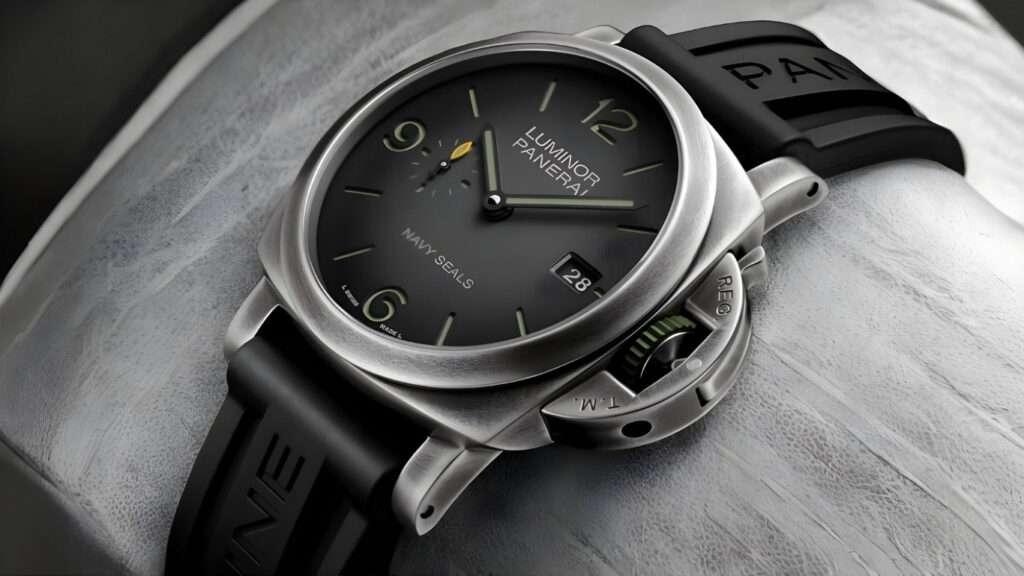
By the 1950s, Panerai had developed what would become its most iconic feature as the Luminor evolution introduced the crown protecting bridge mechanism. This distinctive half moon shaped guard served dual purposes: protecting the delicate crown from impacts during combat operations while pressing it firmly into the case body for enhanced water resistance when locked down.
The crown guard became the Luminor’s signature feature, making Panerai instantly recognizable decades later when the brand finally entered civilian markets. Unlike complications or finishing techniques that require expertise to appreciate, the crown guard announced itself immediately, creating visual distinctiveness that luxury watch marketing teams spend millions attempting to engineer.
However, these innovative military tools remained completely unavailable to civilians for over five decades as Panerai continued supplying Italian special forces exclusively.
The brand’s 1993 civilian release represented a seismic shift from classified supplier to public company, though initial production remained limited to small quantities as the company tested whether demand existed beyond military procurement contracts. The transition from obscurity to desirability accelerated dramatically through what collectors now call the Sylvester Stallone effect.
The actor discovered Panerai while filming in Italy, immediately recognized the watches’ distinctive character, and wore them prominently both on and off screen while purchasing multiple pieces for friends in Hollywood. This celebrity endorsement sparked initial collector interest in what remained essentially unknown outside military and Italian watch collecting circles, creating the foundation for Panerai’s transformation into a globally recognized luxury brand.
The real inflection point arrived in 1997 when Vendôme Luxury Group, now known as Richemont, acquired Panerai and immediately repositioned it within the ultra luxury segment. Richemont’s strategy centered on positioning Panerai as embodying Italian design DNA combined with Swiss horological precision, a combination that differentiated it from purely Swiss brands while maintaining the technical credibility that luxury watch buyers demanded.
The conglomerate expanded production capacity substantially while maintaining strict design purity, ensuring every new model retained the visual codes established during the military years. This approach transformed military relics into aspirational luxury goods within just five years, with Panerai boutiques appearing in major cities globally and the brand gaining recognition among watch enthusiasts who had never heard of it during the military supply era.
How Did Panerai Transition From Niche Military Brand To Investment Grade Luxury Timepieces?
Richemont’s ownership brought capital for technical development that would prove essential for establishing Panerai as a legitimate manufacture rather than simply an Italian brand assembling Swiss components. The in-house movement development program running from 2005 through 2014 served as the primary value catalyst that justified premium pricing.
Panerai shifted from relying on third party ETA and Unitas movements, which watch enthusiasts recognized as readily available calibers used across numerous brands at various price points, to proprietary movements including the P.3000, P.5000, and P.9000 series featuring impressive power reserves of 3 days, 8 days, and even 10 days.
This technical independence positioned Panerai alongside prestigious manufacture watchmakers like Rolex, Patek Philippe, and Audemars Piguet who controlled their own movement production, justifying price points ranging from $10,000 to $30,000 that would have seemed absurd for watches containing off the shelf movements.
At the same time, Panerai cultivated collector culture through its distinctive PAM numbering system where each reference received a sequential PAM designation such as PAM00112 or PAM00425. This seemingly simple numbering approach created mythology around specific references as collectors researched production quantities, case materials, and dial variations that distinguished otherwise similar looking watches.
Limited editions produced in quantities of 500 or 1,000 pieces, small production runs of regular catalog models, and strategically discontinued references, especially the coveted Pre Vendôme or “Pre V” pieces from the brief 1993 to 1997 period before Richemont acquisition, became highly sought after with secondary market premiums of 20 to 30% over original retail prices.
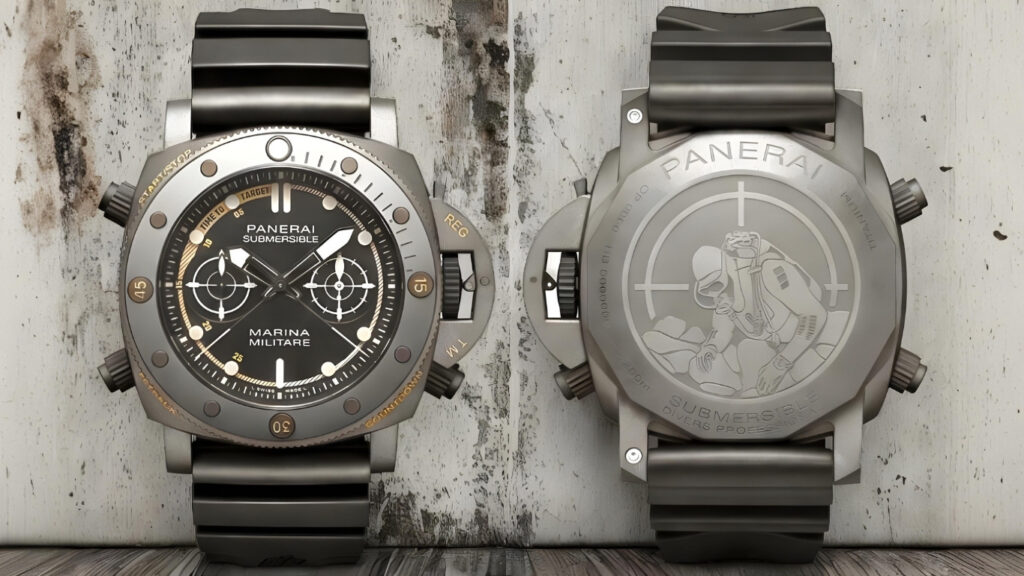
However, Panerai’s value proposition faced serious challenges during the 2015 to 2020 period when secondary market stabilization revealed price corrections that damaged the brand’s investment credentials.
Some models dropped 30 to 40% below retail prices as supply from authorized dealers exceeded organic demand and gray market dealers flooded the market with discounted inventory. This correction period forced reassessment of Panerai’s investment potential, with many collectors concluding the brand had overextended production during the 2010s boom years.
Yet by 2026, entry level models like the Radiomir Black Seal and Luminor Base have stabilized around $4,500 to $6,500 on secondary markets, offering better value retention than many Swiss competitors at similar price points that experienced even steeper depreciation.
The market appears to be demonstrating renewed collector interest as buyers who dismissed Panerai during the correction years now recognize the stabilized pricing as creating entry opportunities.
Panerai’s journey from classified military supplier to investment grade luxury brand illustrates how heritage, when authentic rather than manufactured, creates value that marketing budgets cannot replicate. The six decades of military exclusivity were not a deliberate brand building strategy but an accident of history.
Yet this accident created mystique and design purity that positioned Panerai uniquely when it finally entered civilian markets. Collectors willing to research specific references, focus on models with in-house movements, and prioritize originality over condition can still find value in a brand that many enthusiasts initially dismissed as overpriced Italian marketing.
The watches that once lit the way for combat swimmers in darkness now light up auction results for collectors who understand which references deserve premium prices and which represent the overproduction that temporarily damaged Panerai’s investment credentials.