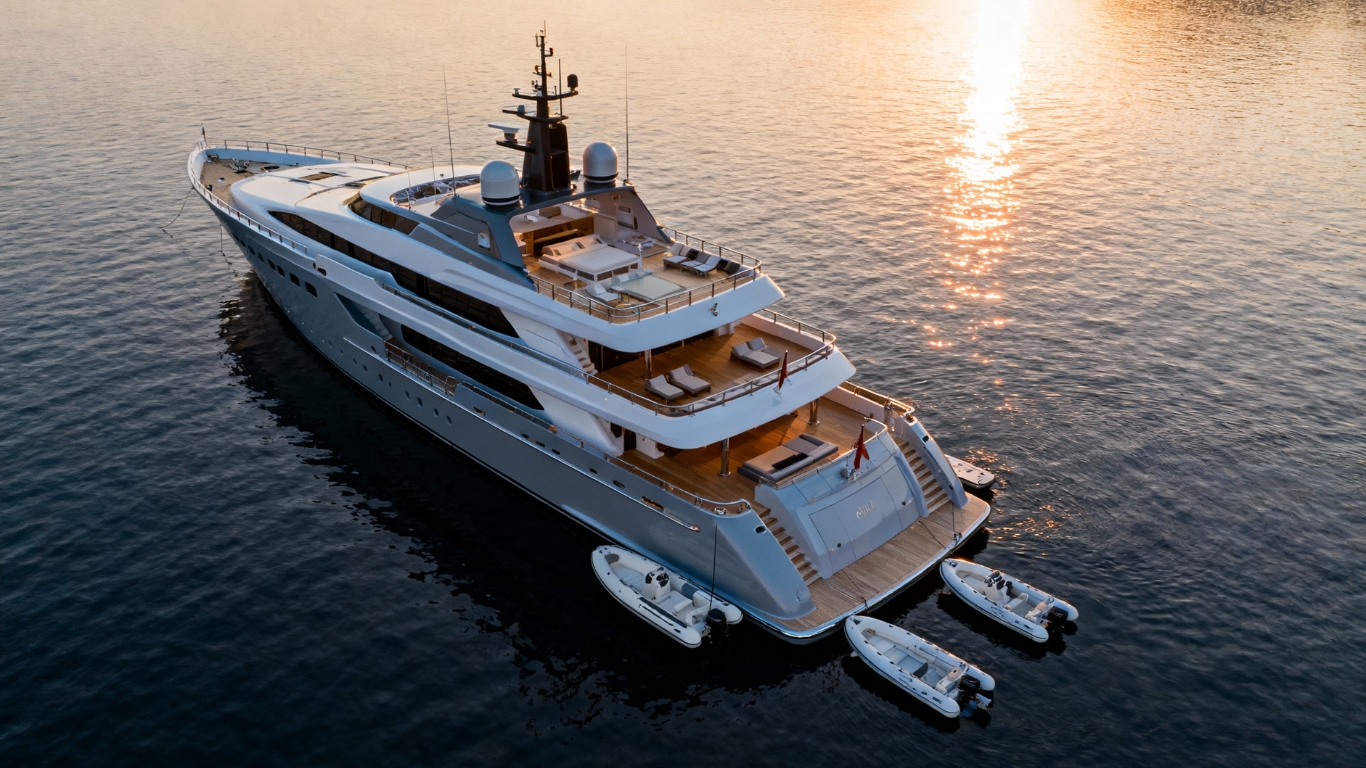
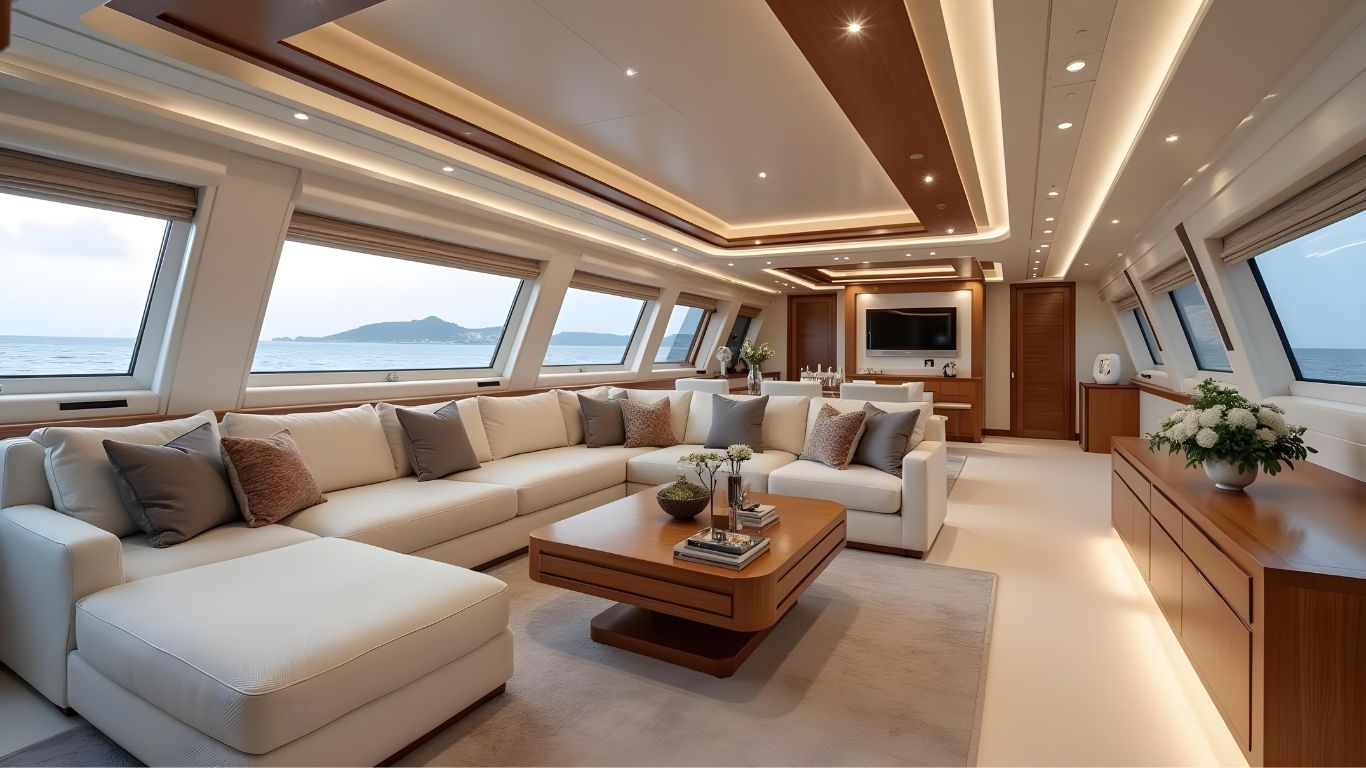

Building a superyacht from scratch takes an astonishing two to three years, sometimes even longer. When you factor that in, the idea of buying a previously owned yacht starts looking very attractive.
Pros:
- Cost Savings: Used yachts are much cheaper than new ones, offering significant upfront savings.
- Immediate Use: No waiting for construction—you can start yachting right away.
- Variety and Upgrades: A wide selection of models and many come with previous owner upgrades, enhancing features for less money.
Cons:
- Maintenance and Repairs: Older yachts need more upkeep, which can be costly and time-consuming.
- Depreciation: Used yachts still lose value over time, affecting resale.
- No Warranty: Most lack warranties, increasing the risk of expensive repairs.
The most obvious win with a used yacht is financial. You’re looking at a price tag that’s meaningfully lower than a new build. And if you want to put your own stamp on a pre-owned vessel, a full customization takes roughly six to twelve months — far quicker than waiting for a new yacht to come out of the shipyard.
But the purchase price is just the beginning. Yachts, much like cars and private jets, depreciate over time, and maintaining an older vessel can get expensive fast. Detailed marine surveys, mechanical overhauls, and cosmetic refits all add up. That said, the ability to step aboard and sail immediately is a genuine luxury in itself. No years of waiting, no construction delays. Just open water. Your decision really comes down to budget, personal taste, and whether the story behind an older hull appeals to you. For many buyers, a pre-owned yacht is the smartest entry point into the yachting world.
If you’re ready to explore the used yacht market, you can reach out to our trusted partners at YachtingMates by clicking here.
Key Takeaways
- Superyacht construction can take 2-3 years, making pre-owned yachts appealing for immediate ownership.
- Refitting a pre-owned yacht can take between 6 and 12 months, shorter than building new.
- Pre-owned yachts generally cost less upfront than new yachts.
- Depreciation impacts resale value, a crucial aspect of yacht ownership.
- Used yachts require thorough marine surveys and may have higher maintenance needs.
- Immediate availability allows you to enjoy the yacht lifestyle sooner.
Benefits of Pre-Owned Yachts
Buying a used yacht opens up a world of advantages that go well beyond the sticker price. From lower upfront costs to a far broader selection of vessels, the pre-owned market gives you real options.
More Affordable Upfront Cost
The savings when you go pre-owned are hard to ignore. A used yacht typically costs a fraction of what a new build commands, which means you can put more of your capital to work elsewhere. The steepest depreciation has already hit, giving you a more stable platform for resale value down the line. For buyers who want a foothold in luxury yachting without overextending, a used vessel is often the smarter financial move.
Private sellers are also far more willing to negotiate than a shipyard or dealer, which gives you genuine room to find a deal. Financing is easier too, since the lower price means smaller loans and more manageable monthly payments. That financial breathing room can fund upgrades, experiences, or other investments you care about. If you want to understand how luxury assets are reshaping how the wealthy allocate capital, yachts fit squarely into that conversation.
Wider Range of Options
The pre-owned market is where variety lives. Across models, brands, sizes, and eras of design, your options are genuinely vast. That competition in the market keeps prices sharp and works in your favor as a buyer.
Many sellers have already upgraded their yachts with premium technology, custom interiors, or high-end navigation systems. That means you can inherit those enhancements without paying the premium that comes with specifying them from new. It’s one of the quiet advantages of buying used that most first-time buyers don’t fully appreciate.
The trade-off, of course, is that older vessels tend to need more attention. Maintenance costs are higher, warranties are rare or non-existent, and the technology on board may not match what a modern build offers in terms of fuel efficiency. These are real costs, and you should factor them into your total ownership budget from day one.
But when you weigh everything up, the combination of choice and cost savings makes a compelling case. For buyers who do their homework, a pre-owned yacht offers genuine access to the freedom and prestige of yachting at a fraction of the cost of going new.
Benefits of Pre-Owned Yachts
Challenges of Maintenance and Repair
Owning a used yacht comes with a distinct set of responsibilities, and maintenance sits at the top of that list. Understanding what you’re getting into before you sign anything will save you significant money and stress down the road.
Yacht Maintenance Costs
What you’ll spend on maintenance depends heavily on the age and condition of the vessel. A six-year-old, 40-foot yacht might need repairs totaling around 8 to 10% of its purchase price in a given year. By year twelve, cumulative costs can climb to match or exceed the yacht’s resale value entirely. A smart rule of thumb is to budget at least 50% of the purchase price for maintenance if the yacht is in average shape, and up to 100% if it’s in poor condition. Those numbers sound stark, but they reflect reality for older vessels.
One way to manage costs is to look beyond boatyards and work directly with smaller, independent contractors. Boatyards carry premium pricing, and for much of the routine work, you don’t need it. Planning your maintenance calendar well in advance also helps you avoid the kind of rushed, expensive decisions that come from reactive repairs.
Ongoing Repair Needs
Used yachts tend to carry deferred maintenance from previous owners, meaning work that should have been done but wasn’t. The older and cheaper the vessel, the more of that backlog you’re likely to inherit. A medium-scale refurbishment typically takes around six months to complete. A major overhaul can stretch to a full year.
Bringing in an experienced project manager before you buy is worth every penny. They can give you a preliminary cost assessment that reveals what you’re really signing up for. And you’d be surprised how many buyers skip this step entirely. Boat International estimates that up to 70% of boat buyers purchase without setting a proper budget, leaving them wide open to overspending.
Ongoing Yacht Repair Needs
Once you own the yacht, a strict maintenance schedule is your best friend. Staying on top of routine upkeep protects the structural integrity of the vessel and keeps your time on the water enjoyable rather than stressful. Think of it as the price of admission for the yachting lifestyle.
The Importance of Pre-Owned Boat Inspection
A thorough yacht condition evaluation is one of the most critical steps in the entire buying process. Skipping it or cutting corners here is where buyers get burned. A detailed marine survey can uncover hidden problems before they become your problem, and it gives you the clarity you need to make a confident purchase decision.
Why Marine Surveys Are Essential
A proper marine survey gives you a complete picture of the yacht’s current condition, covering everything from the hull to the mechanical systems. For a 40-foot vessel or smaller in the US, a survey typically costs around $500. Given what it can reveal, that’s a trivial expense. The National Association of Marine Surveyors notes that lenders and insurance companies almost universally require these surveys before they’ll proceed, which tells you everything about how essential they are.
Beyond uncovering problems, a survey gives you leverage in negotiations. If issues surface, you have documented grounds to push the price down or request repairs before closing. And since pre-owned yachts don’t come with extended manufacturer warranties, the survey is really your only safety net going in.
Necessary Pre-Purchase Inspection
The pre-purchase inspection goes hand-in-hand with the marine survey. It covers the hull, the mechanical systems, electronics, safety equipment, and the overall structural condition of the yacht. Because used vessels often come with incomplete or patchy service records, this inspection is your best shot at understanding the true state of what you’re buying.
Bring in a qualified marine surveyor or a seasoned boat mechanic, not a generalist. Given that pre-owned yachts rarely carry meaningful warranties, identifying issues now is what protects your investment. And with yacht mortgages typically running ten to twenty years, you want absolute confidence that the vessel is sound before you commit. This step isn’t just about finding damage. It’s about projecting future maintenance costs, which on older yachts can be substantial. If you’re also thinking about where to base the yacht, it’s worth reading up on whether buying a yacht in Greece makes financial sense.
Quick Availability of Used Yachts
One of the most underrated advantages of the pre-owned market is how fast you can actually get on the water. New build timelines are long and often unpredictable. With a used yacht, the process from offer to ownership can move in weeks, not years.
That speed is a real advantage if you’re someone who doesn’t want to sit and wait. The used market is built for buyers who are ready to move and want to start living the yachting life without delay. For spontaneous, action-oriented buyers, it’s hard to beat.
The financial side of quick availability also works in your favor. New yacht financing often means larger loans and heavier monthly obligations. Pre-owned yachts typically require smaller loans and lower payments, and private sellers often have more flexibility in how a deal gets structured. That combination of speed and financial efficiency makes the used market compelling on multiple levels.
Here’s a comparative breakdown illustrating some of the key advantages of buying a used yacht versus going new.
Yacht Financing Options for Used Yachts (for US Citizens)
Getting your financing right is just as important as finding the right boat. Understanding your loan options and what lenders will actually offer on a used vessel sets you up to budget with real confidence.
Loan Considerations
Credit unions tend to offer some of the most competitive rates for boat financing. Credit Union of Southern California, for example, has been offering low-interest loans in this space for over sixty years. Secured boat loan terms can stretch up to twenty years, with rates typically falling between 5% and 7%. Unsecured loans carry shorter terms of five to seven years and often come with higher rates. Knowing which structure fits your financial picture is essential before you start shopping.
A down payment on a yacht generally falls between 10% and 20%, with 15% being a common midpoint. Depending on the lender and the age of the vessel, that figure can push toward 30%. Getting preapproved requires submitting your credit score, income documentation, and existing debt details. Using a loan calculator early in the process helps you model monthly payments across different scenarios before you fall in love with a specific boat.
Interest Rates on Used Yachts
Interest rates on used yacht loans vary depending on whether the loan is secured or unsecured. Secured loans are the more attractive option, typically in that 5% to 7% range. Unsecured loans carry higher rates and shorter repayment windows, which pushes your monthly outgoings up. Buyers with lower credit scores or those financing older vessels often face steeper rates, since lenders view those loans as carrying more risk. Bloomberg’s personal finance coverage regularly highlights how credit profile directly shapes the terms you’ll be offered.
Lenders also apply stricter criteria when financing older, used yachts. The perceived risk is higher, and that shows up in the terms. Going in with a clear understanding of these variables means you won’t be caught off guard when the offers land on your desk.
By mapping out your down payment, loan duration, and likely interest rate before you make an offer, you put yourself in a position to make a genuinely informed financing decision. Do the research, run the numbers, and match your marine finance structure to your actual financial goals rather than your best-case assumptions.
Used Yacht Buyer’s Guide
Buying a pre-owned yacht isn’t something you want to rush or navigate alone. The process rewards preparation and the right expertise in your corner. Here’s how to approach it properly.
Working with Yacht Brokerage Services
A good yacht broker is worth their commission. They bring market knowledge, an established network, and negotiating experience that most private buyers simply can’t replicate on their own. They know which listings are priced fairly, which sellers are motivated, and where the hidden gems are. Firms like Denison Yachting and Northrop and Johnson offer full-service brokerage that covers the entire purchase journey from first search to closing.
Steps to Purchasing a Pre-Owned Yacht
Buying a pre-owned vessel follows a clear process, and skipping steps is where things go wrong. Start by defining your budget and intended use, then work with a broker to shortlist suitable vessels. Arrange viewings, commission a full marine survey, conduct a sea trial, negotiate price based on survey findings, secure financing, and complete the title transfer through proper legal channels. Each step protects you and builds toward a purchase you can feel confident about.
- Define Your Requirements: Determine your budget, preferred size, and desired yacht features.
- Find a Trusted Broker: Engage a well-reputed broker to locate suitable vessels.
- Survey and Sea Trial: Ensure the yacht’s condition with an inspection and a sea trial before making an offer.
- Make an Offer: Typically, a 10% deposit of the purchase price is required when offering.
- Get Financing: Secure a loan, with down payments commonly between 20% and 40% for a 20-year term.
- Closing the Deal: Finalize the purchase once documentation is prepared, and any necessary repairs are negotiated.
Boating Certifications Required
Owning the yacht is one thing. Being qualified to operate it is another. For larger vessels, certifications like the US Coast Guard Captain’s License are not optional. These qualifications validate your seamanship and keep you on the right side of maritime law. Requirements vary by state, so research the specific rules for wherever you plan to use the yacht. Getting certified before you take the helm is the responsible move, and it protects everyone on board.
Follow these steps, lean on experienced brokers, and take your time with due diligence. The reward is stepping into the yachting lifestyle with full confidence in your purchase and your ability to enjoy it properly.
If you’re ready to start your search, reach out to our trusted partners at YachtingMates by clicking here.