Taxes and regulations around the globe shape yachting economics more than first-time buyers expect. Montenegro charges 0 percent VAT on yacht charters; France lands a 20 percent rate at the headline level. Monaco sits in a different category again.
Get the structure right and a season's charter bill can shift by six figures. Get it wrong and the planning suddenly looks expensive.
The IMO, ILO and the major flag-state registries set the regulatory frame. BOAT International and the SuperYacht Group track the practical impact on the cruising community. What follows is our editorial read on the global picture, with a particular focus on navigating international yacht regulations across the Mediterranean, the Caribbean and the major flag states.
Key takeaways
- VAT on yacht charters in Europe ranges from 0 percent (Montenegro) to 20 percent (France headline) with structured discounts for vessels operating outside EU waters.
- The SOLAS and MARPOL conventions set the global baseline for safety and environmental compliance.
- Top flag states (Marshall Islands, Cayman Islands, Panama, Malta, Netherlands) all offer competitive registration with different operational profiles.
- Crew employment compliance, environmental rules and import-export structure are all material lines in long-run vessel economics.

- Yachting taxes and regulations vary materially across jurisdictions, with VAT status, flag state choice, cruising taxes and crew employment frameworks all factoring into ownership economics.
- We see EU VAT-paid status as foundational for vessels intending to operate in EU waters, with the framework continuing to shape the practical acquisition decision.
- Italian leasing schemes, French commercial exemption pathways and Greek TEPAI represent the most consequential national frameworks for Mediterranean cruising.
- Flag state choice including Marshall Islands, Cayman Islands, Malta and Jersey affects everything from tonnage tax exposure to charter operation eligibility.
- Crew employment frameworks under the Maritime Labour Convention establish baseline standards across most flag states, with seafarer welfare and contract structures meaningfully regulated.
- For most considered yacht owners we view explicit cross-jurisdiction tax and regulatory modelling as foundational before any acquisition, refit or operational deployment decision.
- Who is this for?
- Yacht owners, captains, brokers and the maritime lawyers, tax advisers and yacht management firms framing cross-jurisdictional yachting decisions.
- What is happening?
- A read of yachting taxes and regulations around the globe, covering EU VAT, Italian leasing, French commercial frameworks, Greek TEPAI, flag state choice and crew employment.
- When did this emerge?
- The article reflects current frameworks through 2025 and into 2026, with reference to the broader multi-year regulatory evolution across the major jurisdictions.
- Where is this happening?
- The piece covers the global yachting regulatory complex, including the Mediterranean, Caribbean, Pacific and the major flag state jurisdictions.
- Why does it matter?
- Yachting regulatory frameworks shape all-in ownership economics, which is why explicit jurisdiction-by-jurisdiction analysis matters before any acquisition or deployment decision.
International maritime law in working terms
The international regulatory frame sits on top of every national tax regime. Two conventions matter most: the International Convention for the Safety of Life at Sea (SOLAS) and the International Convention for the Prevention of Pollution from Ships (MARPOL).
Why the international frame matters
SOLAS sets the safety baseline (life-saving equipment, fire protection, navigation gear, structural standards) that flag states are obliged to enforce. MARPOL sets the environmental baseline (oil discharge, sewage handling, garbage management, air emissions).
Both conventions apply across borders. A Greek-flagged vessel cruising in the Caribbean still owes SOLAS compliance; a Cayman-flagged superyacht in the Mediterranean still owes MARPOL. The conventions effectively put a floor under serious yachting worldwide.
Key conventions and protocols
Beyond SOLAS and MARPOL, the Maritime Labour Convention, the STCW (Standards of Training, Certification and Watchkeeping), and the Commercial Yacht Code all shape how serious vessels operate. The serious flag states all enforce them. The credibility of a flag is largely about how rigorously its compliance regime actually runs.
VAT on yacht charters in Europe
The European VAT picture is the single most consequential line in Mediterranean charter economics. The headline rates conceal a layered set of structured discounts for vessels operating outside EU waters, and the planning work is meaningful.
France and Italy
France applies 20 percent VAT on yacht charters at the headline level, with structured reductions of up to 50 percent on the portion of the charter spent in international waters under historical practice. The rules have tightened in recent years, and current compliance requires careful documentation.
Italy applies a similar regime with a 22 percent headline rate and structured reductions for international waters. The Italian tax authority's enforcement posture has hardened, and the days of casual application are over.
Spain and Croatia
Spain applies 21 percent VAT and runs the Matriculation Tax on top for non-EU-resident charterers. Croatia applies 13 percent VAT on chartering, materially below the Western European rates, which has been part of the country's pull as a serious cruising ground.
Greece and Turkey
Greece applies 12 percent VAT on yacht charters and the cruising tax (TEPAI) on top. The TEPAI regime sits as a fixed line for any vessel over 7 metres. Our detailed read on yacht charter taxes across Europe tracks the comparative position.
Turkey applies 18 percent VAT but offers competitive marina and operational economics that frequently offset the rate. The Aegean coast remains a serious working ground for charter operations.
Flag state and yacht registration
Flag-state choice is the single most consequential structural decision in serious yacht ownership. The serious flag states all offer competitive registration regimes; the differences are in compliance rigor, tax treatment and operational reputation.
Top flag states
The Marshall Islands, the Cayman Islands, Panama, Malta and the Netherlands all sit on the Paris MoU White List, which is the working credibility marker for serious flags. Each offers a different operational profile.
| Country | Advantages |
|---|---|
| Malta | Preferred by superyacht owners for EU-flagged vessels due to beneficial VAT treatment, reduced port charges, and tax exemptions on shipping income. |
| Cayman Islands | Home to many yachts due to attractive tax rates, simplified administration, and expedited registration processes. |
| Marshall Islands | Offers a 24-hour yacht registration process and global office support, ensuring efficient document handling regardless of time zone. |
| Panama | Known for its low registration costs and flexible corporate structures, essential for maritime investment protection. |
| Netherlands | Provides a fast registration process, delivering licenses within days, making it ideal for quick and efficient registration. |
Required documentation
The serious flag states require ownership proof, marine survey, classification (Lloyd's Register, Bureau Veritas, ABS or similar), insurance certificates, and crew certification per the STCW. The Commercial Yacht Code framework adds a further compliance layer for vessels in commercial charter use.
Caribbean yacht taxation
The Caribbean tax picture is meaningfully more accommodating than the Mediterranean equivalent. Each jurisdiction has its own structure, and the serious operators run different vessels in different jurisdictions for different reasons.
Bahamas
The Bahamas applies a 10 percent VAT and has structured the regime to keep yachts in working order across the regional cruising calendar. The infrastructure is mature, the regulatory regime is well-understood, and the Bahamas remains a working flag state.
Cayman Islands
The Cayman Islands has no direct yacht-charter taxation and runs one of the most efficient registries globally. The combination has made it the preferred flag for a meaningful share of the global superyacht fleet.
British Virgin Islands
The BVI runs a competitive registration regime alongside one of the strongest charter markets in the Caribbean. The territory's regulatory posture is friendly to working vessels, and the cruising ground is among the best globally.
Environmental compliance
Environmental regulation has moved from peripheral concern to material operating line over the past decade. MARPOL is the international baseline; national regimes add their own layers.
Environmental regulations
The MARPOL Convention sets the global standard. Vessels in the Mediterranean and the Caribbean both face additional national-level requirements on bilge water, sewage discharge and garbage handling.
Best practices for owners
The serious vessels are now specified with onboard waste-management systems, advanced sewage treatment, and emissions monitoring as standard. The compliance documentation is non-negotiable; the operational discipline is increasingly seen as part of the working spec rather than an add-on.

Crew employment
Crew employment is a regulated discipline at the serious end of the market. The Maritime Labour Convention sets maritime labor standards covering hours, accommodation, pay, repatriation and welfare. The serious flag states all enforce it.
The MLC applies to commercial yachts above the relevant tonnage thresholds. Compliance is documented through onboard Declaration of Maritime Labour Compliance certificates and crew employment agreements. The serious yacht management firms handle this work as standard.
Import and export
The import-export regulatory frame matters most when vessels change hands across borders or when an owner brings a new build into a cruising jurisdiction for the first time.
Duties and tariffs
EU customs treatment for yachts entering EU waters is structured around the Temporary Admission regime, which allows non-EU-flagged vessels up to 18 months of duty-free use under specific conditions. US Customs applies its own regime, with duty rates and Jones Act considerations relevant to specific buyer profiles.
Required documentation
Bill of sale, builder's certificate, marine survey, registration documents, insurance certificates and proof of VAT-paid status all matter. The serious yacht brokers handle this paperwork as standard; first-time buyers underestimate the document weight at their cost.
| Country | Key Statistics | Special Conditions |
|---|---|---|
| Panama | Largest ship registry with 9,000+ ships | Competitive registration rates |
| Netherlands | 299 EUR for EU citizens, 648 EUR for non-EU citizens | Completion in three days |
| Cayman Islands | Expedited registration process | License to cruise U.S. waters |
| Marshall Islands | 24-hour registration process | Worldwide sailing options |
How to choose a flag state
The flag state decision shapes everything that follows: tax treatment, compliance obligations, operational reputation and resale liquidity. Buyers approaching the question seriously look at several lines together.
The Paris MoU White List is the working credibility marker for a flag's compliance regime. Marina infrastructure that recognises the flag is the operational marker. The owner's residence and tax position is the structural marker.
Our companion read covers Saudi Arabia's bid for maritime credibility as a new entrant to this conversation.
For owners thinking specifically about EU residency overlays, our note on the Cyprus option specifically covers the practical side, and our rise event coverage tracks where the wider conversation is heading.
Marina regulations
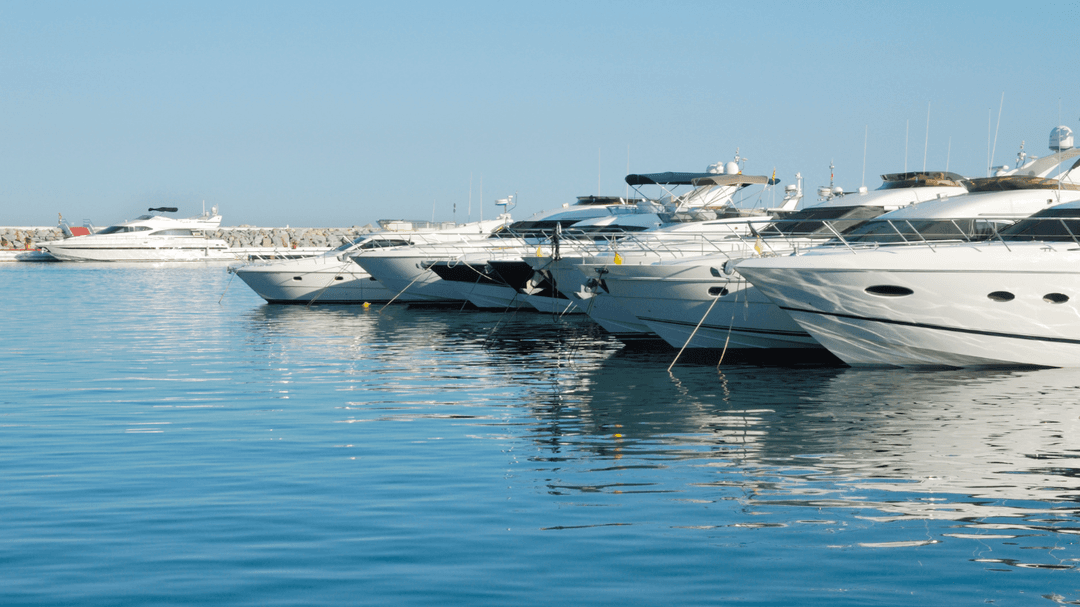
Marina-level rules vary materially by jurisdiction and individual facility. The serious owners and their captains have working relationships with the marinas they use most, and the routine compliance work runs through those channels.
BOAT International's coverage of MARPOL regulations at the marina level captures the operational picture well. The trend is toward stricter enforcement of waste management, fuel handling and night-time noise rules, which the serious facilities already enforce as standard.
| Fee Type | Details |
|---|---|
| Resort Area Speed Limit | 10MPH |
| Pet Policy | Max two per site, breed, and behavior restrictions apply |
| Smoking Policy | No smoking in common areas |
| Electric Vehicle Charge | $5 per day |
| Storage Fees | $25 per day for up to 35ft, $650 per month for over 35ft |
| Laundry Facility | $1.00 per reloadable card, $3.00 per wash or dry |
| Pool Hours | Sunrise to sunset |
| Quiet Hours | 10 PM to 7 AM |
What this means for owners
The global taxes-and-regulations picture rewards owners who treat the compliance frame as a planning problem rather than a paperwork inconvenience. The arithmetic across a multi-year ownership and chartering programme is meaningful.
For serious buyers, the right specialist team (maritime tax advisor, flag-state registrar, yacht management firm) is worth its annual cost many times over. The cost of getting this wrong is not just financial.
It can cost a vessel its season, its insurance cover, or its working relationships with the marinas it depends on. We last reviewed this analysis in May 2026.


Stefanos Moschopoulos
Stefanos Moschopoulos founded The Luxury Playbook in Athens and has spent the better part of a decade following the auction calendar, the en primeur releases, and the watchmakers, gallerists, and shipyards the magazine covers. He writes the field guides and listicles that anchor the Connoisseur section — pieces built on Phillips and Christie's results, Liv-ex movements, and conversations with collectors he has met across Geneva, Bordeaux, Basel, and Monaco. His own collecting habits sit closer to watches and wine than art, and it shows in the level of detail in the magazine's coverage of those categories. Under his direction, The Luxury Playbook now publishes long-form field guides, market-defining year-end listicles, and the Voices interview series with the founders behind the houses and the brands.