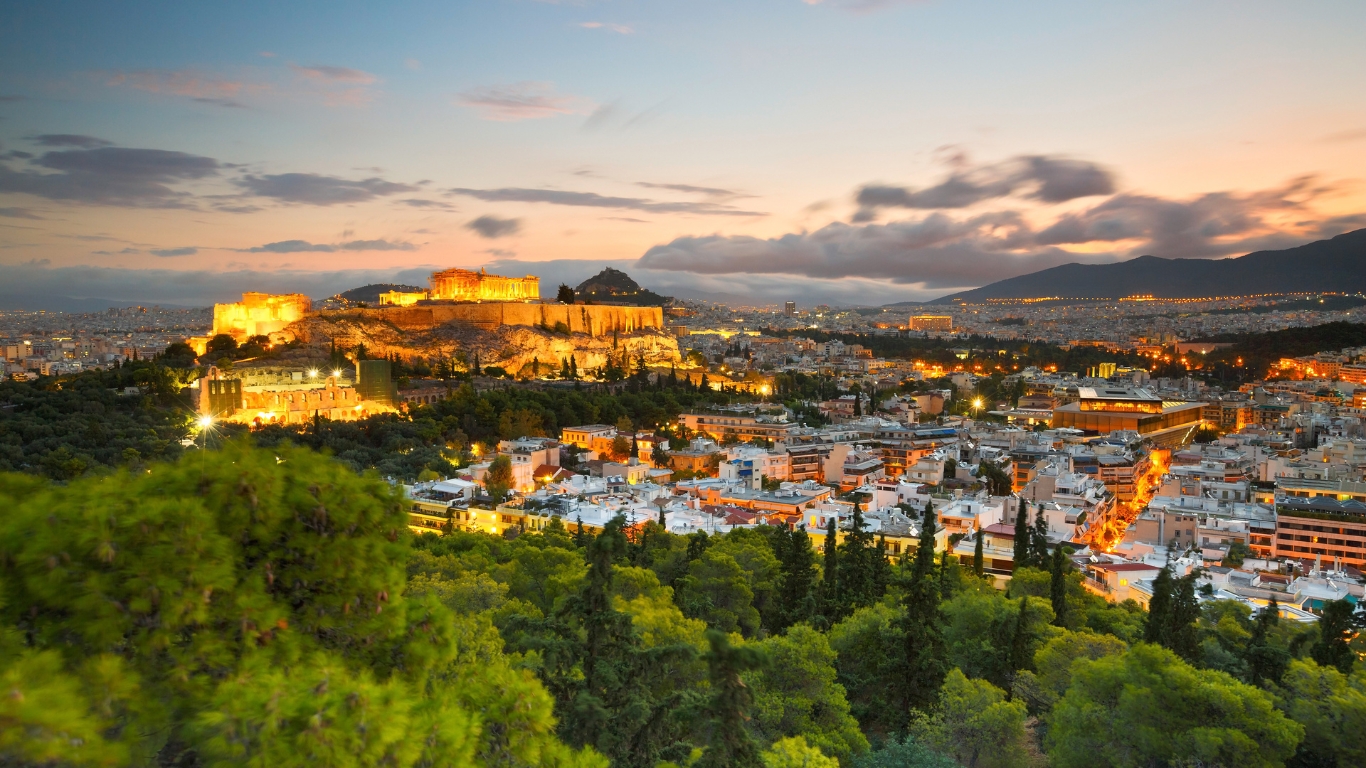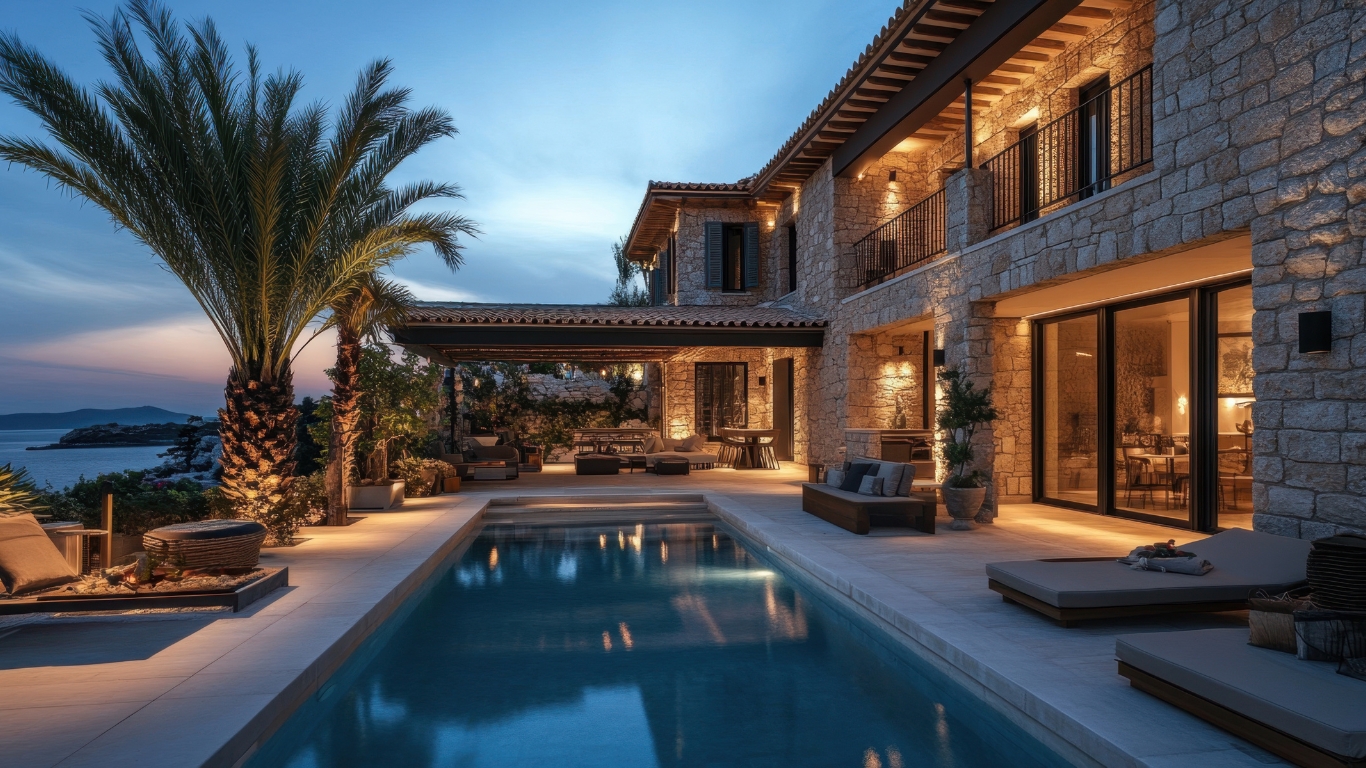
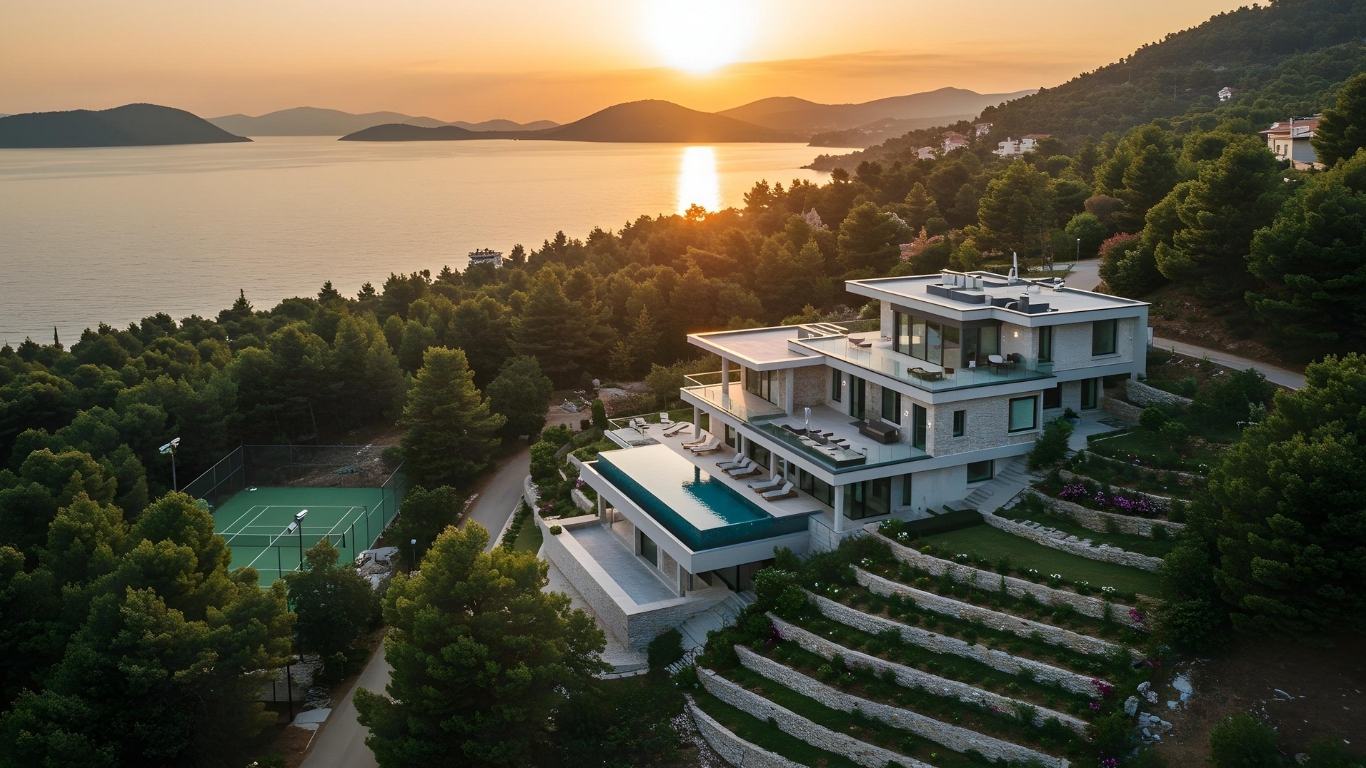

Porto Heli sits in one of the most privileged positions along the Peloponnese coast, facing the Saronic Gulf with protected waters and a natural harbor that has drawn sailors and travelers for centuries. Historically, it was the quiet retreat Greeks turned to when they wanted coastal beauty without the chaos that swallowed more famous islands.
That low-profile appeal kept property prices grounded while the natural beauty and geography stayed exactly as they were, creating precisely the kind of asymmetry that sophisticated real estate investors look for when a market is on the verge of something bigger.
Porto Heli is shifting from a traditional Greek tourism destination into ultra-luxury market territory, and the shift is being driven by a combination of flagship hotel developments, serious infrastructure upgrades, and the arrival of international capital that knows how to spot opportunity before it becomes obvious to everyone else.
Porto Heli fits that profile precisely, and it offers advantages that comparable markets in Spain, France, or other Greek islands simply cannot match at current price points. If you want a reference point for what that looks like in practice, the best places to invest in property in Spain give you a useful benchmark for where Mediterranean luxury pricing already stands.
International attention from ultra-high-net-worth individuals and institutional investors has picked up sharply over the past two years. The pace is accelerating, not slowing.
These buyers aren’t chasing the next Mykonos or trying to recreate Santorini’s appeal. They’re positioning ahead of luxury brand validation and infrastructure completion that will make Porto Heli’s advantages visible to a much broader buyer pool. And once that visibility arrives, today’s entry prices won’t exist anymore.
Table of Contents
Key Takeaways & The 5Ws
- Porto Heli is moving from a low-profile Greek coastal escape to an emerging ultra-luxury hub, driven by flagship hotel projects, marina upgrades, and private aviation access.
- Four Seasons, Six Senses, and the already-operating Nikki Beach are creating a concentrated luxury ecosystem that validates the area for global UHNW buyers and institutional capital.
- Prime Porto Heli real estate still trades at a steep discount to Mykonos, Santorini, the French Riviera, and Marbella, creating asymmetric upside if values partially converge.
- For well-chosen assets, a realistic base case is roughly 30% capital appreciation over 2026–2031, assuming hotel openings, infrastructure completion, and sustained UHNW demand for underexposed Mediterranean destinations.
- Who is this for?
- Ultra-high-net-worth individuals, family offices, and institutional investors seeking Mediterranean luxury exposure with more upside than fully priced markets like Mykonos, Santorini, Saint-Tropez, or Marbella.
- What is happening?
- A coastal Greek market transitioning from quiet domestic retreat to branded ultra-luxury destination—anchored by Four Seasons, Six Senses, Nikki Beach, new marinas, and improving private aviation and road access.
- When is the key window?
- From now through the mid-2020s, with 2026–2031 expected to capture the main repricing as major hotels open, infrastructure matures, and international buyer awareness scales.
- Where is the opportunity?
- Porto Heli and the surrounding Ermionida coastline on the Peloponnese, facing the Saronic Gulf—within reach of Athens, yet positioned as a quieter, more exclusive alternative to overcrowded Aegean islands and mature Western Mediterranean resorts.
- Why does it matter?
- Because Porto Heli combines hard-to-replicate natural assets with blue-chip brand entry and institutional capital, while real estate still prices like an under-discovered market—creating a rare chance to buy before full luxury convergence is reflected in values.

What Major Developments Are Transforming Porto Heli’s Real Estate Market?
The Four Seasons Porto Heli is the single most significant validation that this market has moved beyond speculation into concrete development. Four Seasons doesn’t enter emerging markets casually. The brand runs exhaustive due diligence on everything from land quality to regulatory stability to long-term tourism projections before committing capital and reputation to any new location, and they chose Porto Heli.
That decision signals institutional confidence that this market can support the rates, occupancy levels, and guest profile that Four Seasons properties require globally. When a brand with that standard says yes, you pay attention.
Six Senses is following with its own project, creating a concentration of ultra-luxury hospitality that transforms how the market gets perceived internationally. When two globally recognized brands commit to the same small geographic area, they’re not just building hotels. They’re building a category.
They’re creating a luxury ecosystem where the brands reinforce each other’s positioning and collectively establish the destination as worthy of serious consideration from travelers and property buyers who previously had no reason to look at Porto Heli.
Nikki Beach Resort and Spa already operates successfully here, providing real proof of concept that high-end hospitality works in Porto Heli. The existing property shows that Porto Heli can attract the international clientele that luxury real estate depends on, that the infrastructure can support premium operations, and that the market has enough depth to sustain activity beyond just peak season.
That operational track record matters more than most buyers realize. It removes the uncertainty that surrounds emerging luxury markets where everything is theoretical until someone actually opens and runs a profitable business at scale.
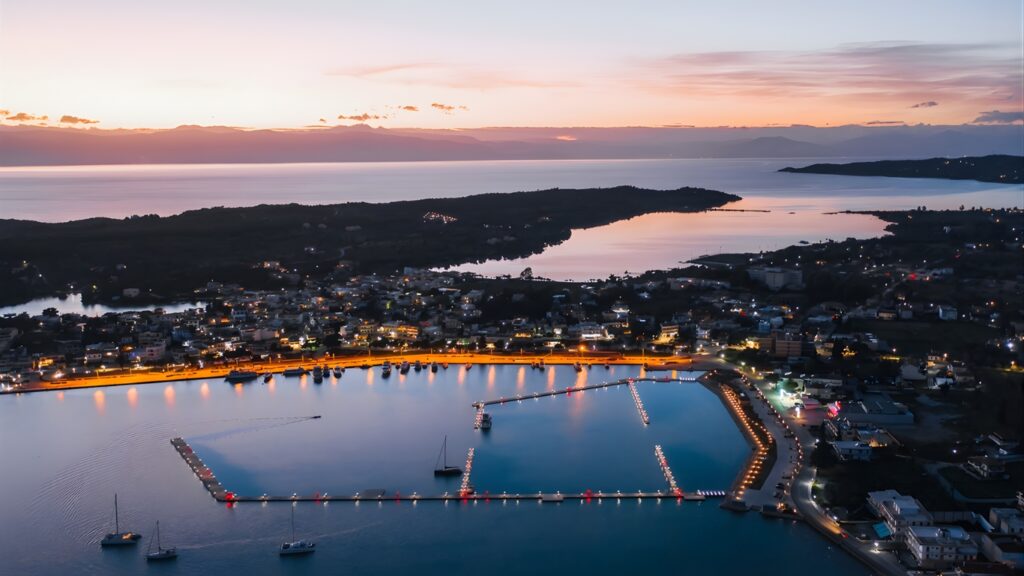
Infrastructure upgrades provide the foundation that luxury real estate genuinely requires. Private marina developments in both Porto Heli and Ermioni accommodate the superyachts that ultra-wealthy buyers arrive on, creating the nautical access that high-net-worth individuals increasingly prioritize when choosing Mediterranean destinations.
Private aviation facilities allow business jets to reach the area directly rather than requiring transfers from Athens, which eliminates the friction that often limits luxury market growth. Improved road connectivity means the region integrates with broader Greek infrastructure rather than feeling isolated, and that matters for both construction logistics and eventual resident access.
These investments create network effects where each project makes the others more valuable. The Four Seasons attracts visitors who then explore real estate. Marina facilities bring yacht owners who discover the area and consider permanent or seasonal residence. Aviation access makes the location viable for international buyers who would never consider a destination requiring complicated travel arrangements.
The combination positions Porto Heli as an emerging Mediterranean luxury hub comparable to what the Côte d’Azur or Mykonos looked like in earlier stages of their development, before prices reached levels that made entry prohibitively expensive for all but the wealthiest buyers. You can see a similar dynamic at work in how branded residences transformed Dubai’s real estate market, where hotel brand validation directly repriced surrounding property values.
How Does Porto Heli’s Market Valuation Compare to Other Mediterranean Luxury Destinations?
Current Porto Heli property valuations sit well below established luxury markets when measured on any reasonable comparative basis. As of late 2025 and into early 2026, the average price per square meter stands at around 8,760 euros per square meter.
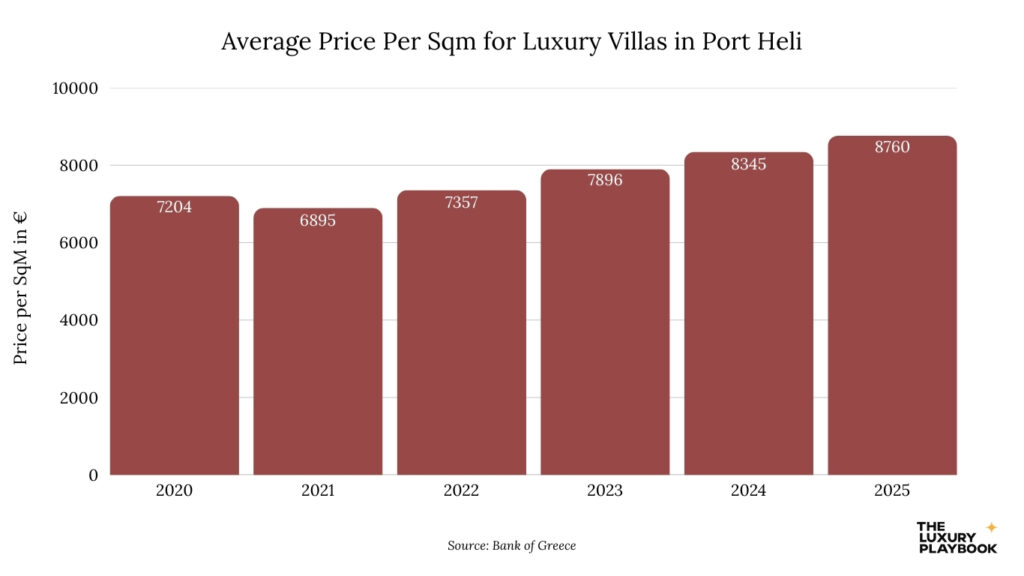
Mykonos, for comparison, commands prices that can exceed 10,000 euros per square meter for prime locations, while Santorini’s limited buildable land and global recognition push premium properties into similar territory.
The French Riviera operates in an entirely different universe. Saint-Tropez and Cap Ferrat reach valuations that make Greek islands look affordable by comparison. Even Marbella, after decades of development, trades at multiples of what Porto Heli currently offers for comparable quality and location.
The gap between Porto Heli’s current pricing and these established markets is what investment analysts would call undervalued relative to long-term potential. And that gap is still wide enough to matter.
That doesn’t mean Porto Heli is cheap in absolute terms or that valuations won’t adjust as development progresses. What it means is that if Porto Heli achieves even partial convergence with comparable Mediterranean luxury destinations, buyers entering today capture substantial appreciation simply through the market repricing to reflect the infrastructure and brand presence already being built.
Market lifecycle positioning explains why this valuation gap exists and why it likely won’t stay this wide much longer. Porto Heli is still in the growth phase where infrastructure is being completed, luxury brands are just entering, and international awareness among target buyers is still building.
Mykonos and Santorini reached maturity years ago, with limited remaining development opportunities and prices that fully reflect their established status. The French Riviera has been a luxury destination for over a century, with valuations incorporating generations of brand building and constrained supply. Porto Heli hasn’t priced any of that in yet.
Institutional investor interest provides a useful timing signal because these buyers enter markets based on development visibility rather than waiting for full transformation. Current institutional activity in Porto Heli suggests sophisticated capital believes the infrastructure and brand commitments are far enough along to reduce execution risk while still offering meaningful upside before the market reaches saturation. You can learn more about how liquidity dynamics affect these timing decisions by reading about liquidity risk and why it matters for real estate investors.
That creates a window where individual investors can position alongside institutions rather than buying from them years later at fully adjusted prices.
What Capital Appreciation Can Investors Expect from Porto Heli Real Estate Through 2026 to 2031?
A realistic appreciation forecast for Porto Heli over the next five years falls in the range of roughly 30% capital appreciation for well-selected properties in prime locations. That’s not a speculative number. It’s grounded in what comparable emerging Mediterranean markets have delivered at similar stages of their development cycle.
This projection assumes the major hotel developments complete on schedule, infrastructure projects deliver as planned, and UHNW demand patterns keep favoring emerging Mediterranean luxury markets over increasingly saturated alternatives. All three of those conditions are tracking in the right direction right now.
The forecast doesn’t require Porto Heli to match Mykonos pricing or become the next Saint-Tropez. It simply requires partial convergence with comparable markets as the transformation becomes visible to a broader buyer pool.
Several key drivers support this appreciation outlook. The Four Seasons and Six Senses openings will trigger immediate repricing as the market absorbs what luxury brand presence means for surrounding real estate values. Completion of marina and aviation infrastructure removes barriers that currently limit buyer interest from the yacht-owning and private-jet-traveling demographic that drives ultra-luxury real estate globally. Financial Times real estate coverage has tracked how branded hotel arrivals consistently trigger double-digit property value adjustments in surrounding areas.
UHNW demand patterns show sustained interest in emerging Mediterranean markets where large parcels are still available, regulatory environments support development, and the experience feels more exclusive than crowded, established destinations. Porto Heli checks all three boxes.
The investment window centers on why 2026 is optimal entry timing. Properties bought now or through early 2026 capture value before the major hotels open and before infrastructure completion triggers the repricing that makes the opportunity obvious to everyone watching. Bloomberg Wealth has documented repeatedly how early-stage entries into luxury real estate cycles outperform late entries by a wide margin once brand validation arrives.
Waiting until the Four Seasons is operating and the marina is full means paying for the validation those developments provide rather than positioning ahead of it. Markets don’t wait for perfect clarity before adjusting prices. They reprice as visibility improves and institutional capital flows increase, and that process is already underway in Porto Heli.
Comparing Porto Heli’s return potential against alternative Mediterranean luxury real estate investments helps clarify where it fits within portfolio construction. Forbes real estate analysis consistently shows that mid-cycle emerging market entries outperform both early-stage frontier plays and late-stage mature market bets when institutional validation is already confirmed.
Buying into established markets like Mykonos or Saint-Tropez offers stability and proven demand but limited appreciation upside from current levels. Emerging markets in Montenegro or Albania offer lower entry prices but carry higher execution risk and uncertain institutional validation. Porto Heli sits between those two extremes in the best possible way.
Porto Heli occupies middle ground where institutional capital commitment reduces extreme downside risk while infrastructure and brand development still offer meaningful upside before the market reaches maturity. That balance is rare, and it doesn’t last.
For investors building Mediterranean real estate exposure, Porto Heli is at the stage where opportunity and risk find reasonable balance. The repricing hasn’t happened yet in ways that eliminate return potential for buyers entering now.
That window typically doesn’t stay open long once the validation becomes undeniable. The choice is straightforward. You either position before peak valuation is reached, or you wait for more certainty while accepting that certainty comes with prices that already reflect everything the completed transformation delivers.