
Back in May 2026, China’s government issued sweeping austerity measures that included an absolute ban on alcohol at official events. That single move instantly eliminated the primary sales channel that had built a multi-billion dollar premium wine industry over the preceding two decades.
That one policy decree showed you exactly how regulatory risk in emerging markets can turn investment-grade assets into stranded inventory overnight. Importers, distributors, and domestic producers were left holding vast quantities of expensive wine with suddenly no buyers willing to pay anything close to what those bottles had fetched just weeks before.
China’s wine market had grown from negligible consumption in the 1990s to a $1.6 billion import market by 2024. The fuel behind that rise was business culture, where expensive bottles functioned as essential social currency at government banquets, corporate dinners, and state-sponsored events. If you were doing serious business in China, wine was part of the language.
That consumption model created artificial demand completely disconnected from genuine consumer preference for wine’s taste, quality, or food pairing characteristics. Bottles were status signals and relationship-building tools. The price you paid for the wine communicated respect, seriousness, and generosity far more effectively than anything in the glass ever could.
China’s wine market has now shrunk to roughly one third the size it occupied just five years ago. Domestic production collapsed to historic lows of 97,000 kiloliters, down 17.1% year over year in 2026 alone. Per capita consumption keeps falling rather than stabilizing, which tells you the structural foundation supporting wine demand has fundamentally changed, not temporarily wobbled. If you’re watching this market as an investor, that distinction matters enormously.
Table of Contents
Key Takeaways & The 5Ws
- China’s wine market has shrunk to roughly one third of its former size, with domestic production at historic lows.
- A May 2025 alcohol ban at official events wiped out the banquet channel that had fueled premium imports and high-end domestic brands.
- Luxury wines and Baijiu tied to state and corporate entertaining have taken the biggest hit, while $10–$30 everyday wines serving real consumers have proved more resilient.
- A younger, mostly female cohort is driving demand for whites, sparkling wines, and “micro-intoxication” styles that fit Chinese food and lifestyle.
- Digital platforms—especially Douyin livestream commerce—are now the central battlefield, reshaping how brands reach and convert Chinese wine drinkers.
- Who is this for?
- Global and domestic wine producers, importers, distributors, and investors reassessing China after the 2025 austerity shock and looking for durable consumer demand rather than policy-driven spikes.
- What is changing?
- A structural reset: banquet-driven premium wine demand is collapsing, everyday wine remains viable, and growth is shifting toward younger consumers, lighter styles (white and sparkling), and digital-first distribution.
- When is the inflection?
- 2025–2026, following the May 2025 alcohol ban at official events and the subsequent production and import declines that exposed how fragile the old banquet-led model was.
- Where is the new market forming?
- Across mainland China’s wine ecosystem—moving away from official and legacy channels toward end-consumer platforms and retailers such as Douyin, Tmall, JD.com, and modern offline networks built around real household demand.
- Why does it matter?
- Because the long-term opportunity in China is no longer government banquets; it is winning real consumers with relevant styles, sharp pricing, and digital storytelling that converts—building brand loyalty that can survive policy and macro shocks.

Winners, Losers, and a Market Reduced to Survival Mode
French wine exports to China, which had dominated the premium segment and shaped Chinese perceptions of quality wine for decades, collapsed 36% in the first ten months of 2026. The foundation supporting their market position simply disintegrated beneath them.
Generic Bordeaux took the steepest hit. This was once the undisputed king of Chinese business banquets, where bottles from even modest châteaux commanded $100 or more based purely on regional prestige. When the austerity measures took effect, the buyers who had once purchased cases for government dinners vanished overnight.
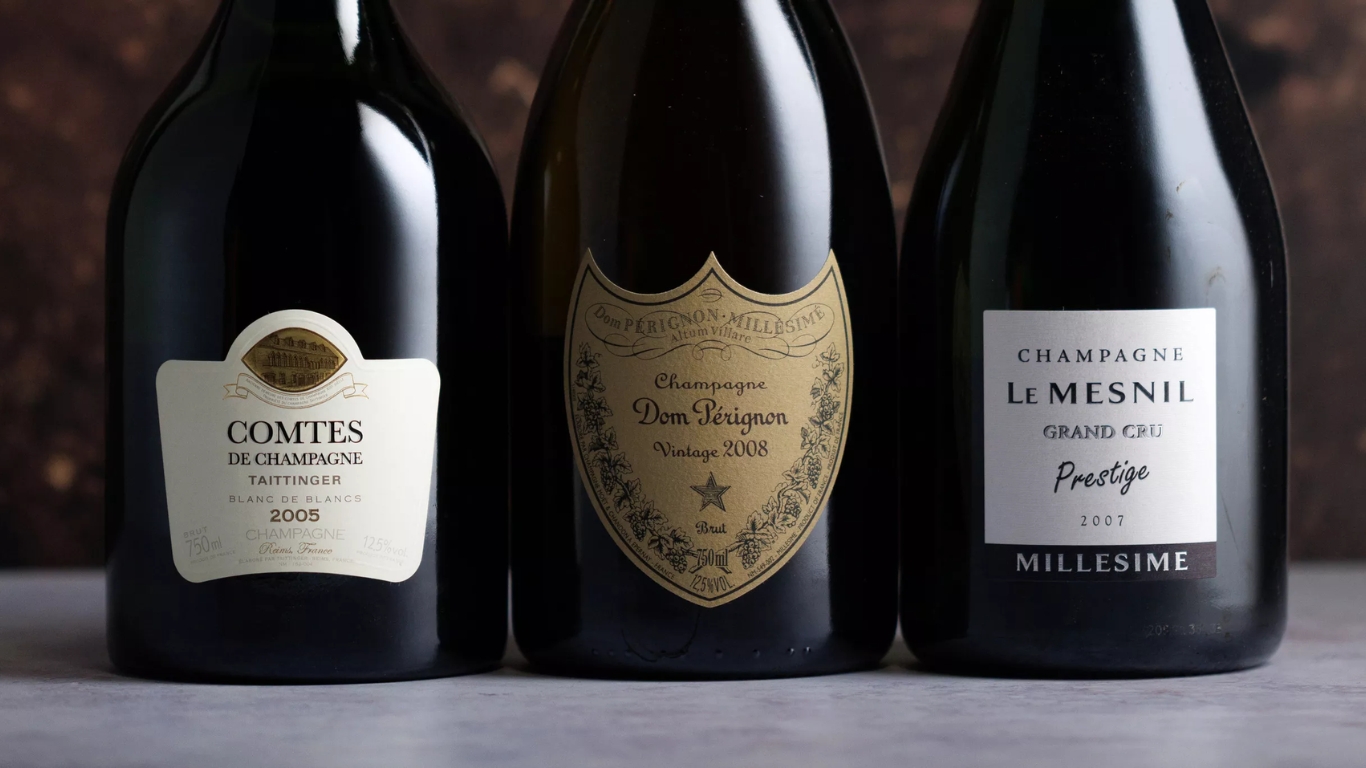
Even Champagne, which had enjoyed seemingly unstoppable growth as China’s wealthy classes embraced celebration culture and nightlife, saw sales slow sharply as luxury spending pulled back across categories. Nightclub closures reduced the high-visibility consumption occasions where premium sparkling wines had genuinely thrived.
At the same time, China’s domestic wine industry confronts an existential crisis that threatens the survival of producers who had invested billions in vineyards, wineries, and distribution networks. All of that was built on optimistic projections of continued market expansion that the market simply stopped delivering.
Changyu Pioneer Wine, China’s largest winery and the company positioned as the domestic champion capable of competing with imported prestige labels, posted a devastating 42% net profit decline in 2024, followed by an additional 16.09% drop in the first half of 2026. Those are not numbers you recover from quickly.
Meanwhile, Australia emerged as the unexpected winner, surging to $650 million in wine exports to China over a twelve-month period after anti-dumping tariffs that had effectively banned Australian wine were lifted in March 2024. If you had positioned in Australian wine producers before that reversal, you were sitting very well.
But that success story gets complicated on closer inspection. The surge was driven primarily by distributors and importers restocking completely empty pipelines after years when Australian wine was simply unavailable, not by genuine final consumer demand pulling product through the distribution chain. Restocking is a one-time event. Real demand is what you actually want to see.
Treasury Wine Estates, Australia’s largest producer and exporter, warned by early 2026 that actual consumer offtake lags far behind import volumes, with inventory building up in warehouses rather than moving to retail shelves and ultimately into consumers’ glasses.
High-end wines and premium Baijiu, China’s traditional grain spirit that had similarly relied on government and state-owned enterprise purchasing channels, lost their core customer base almost entirely when official entertaining vanished from the calendar.
These luxury categories had never built broad consumer bases willing to spend $100, $500, or $1,000 on a bottle for home consumption. They depended on institutional buyers spending other people’s money to fulfill social obligations or signal corporate success. Strip that away and you’re left with very little. This is the kind of concentration risk that sophisticated asset allocation strategies are specifically designed to protect you against.
Mass market wine priced at $10 to $30 per bottle proved far more resilient, serving actual consumer demand from individuals buying for dinner parties, dates, or personal enjoyment. The result was a full market inversion. Luxury brands that should theoretically weather downturns better than value products suffered disproportionately, while everyday drinking wines held relatively stable sales by serving genuine rather than artificial demand. As the Financial Times has covered extensively, this kind of demand fragility in prestige categories is rarely priced in until the collapse has already happened.
How China’s Wine Market Reinvents Itself
The crisis accelerated a consumer demographic transformation that was already underway but might have taken decades to fully develop without the forced reset that government policy imposed. Middle-aged businessmen who had dominated wine consumption through their roles at corporate banquets and official dinners have been replaced by young consumers, predominantly female, motivated by personal enjoyment rather than status signaling or social obligation.
This younger cohort embraces what Chinese media describes as the “micro-intoxication” trend, favoring lower alcohol wines with fruitier, more approachable flavor profiles over the tannic, full-bodied reds that prestige-oriented business culture had elevated. The wine that wins in China going forward looks nothing like the wine that won there five years ago.
White wine and sparkling wine categories have surged as young Chinese consumers discovered that these styles pair far better with spicy regional cuisine and the seafood that dominates coastal Chinese diets than heavy reds ever did. This is authentic product-market fit emerging organically, and it’s the kind of signal worth paying attention to if you’re watching where the real opportunity lies.
Australian white wine exports grew 77% in volume during 2026, while sparkling wine imports across all countries rose 19% in the first half of the year. When authentic consumer preference rather than business protocol drives purchasing decisions, what actually gets drunk matters vastly more than established luxury hierarchies or critics’ scores. Forbes has noted that this consumer-led reset is reshaping how wine brands need to position themselves across all emerging markets, not just China.

Digital platforms have seized control of wine distribution with remarkable speed, completely altering how wines reach consumers and which marketing strategies succeed. Douyin, the Chinese version of TikTok, led explosive 38% growth in the alcohol category’s gross merchandise value in early 2026 as short-form videos and livestream shopping sessions converted viewers into buyers within seconds. The speed at which this channel has scaled would surprise even seasoned investors tracking the space.
Algorithms surface wine content to users based on viewing patterns rather than requiring consumers to actively seek out specific brands. Influencer recommendations and viral videos drive impulse purchases that traditional marketing could never achieve at this scale or speed.
This opens market access for new brands lacking the budgets to secure premium retail placement or run expensive advertising campaigns. Traditional e-commerce platforms including Tmall and JD.com, by contrast, see their alcohol category growth slow to single digits as consumers migrate toward more engaging, entertainment-driven shopping experiences. The brands that understand this shift early are the ones you want to watch. It mirrors broader patterns that alternative asset investors have observed when cultural tastes shift faster than traditional distribution can adapt.
China’s wine market is not recovering to its previous structure but rather being rebuilt entirely around fundamentally different consumers, consumption occasions, distribution channels, and success factors.
The multi-billion dollar premium wine industry that government banquets supported has effectively died. And it’s unlikely to resurrect even if future administrations relax austerity measures, because the political and reputational risks of conspicuous official consumption now outweigh any cultural benefits that such entertaining once provided. Bloomberg’s analysis of China’s anti-corruption campaign makes clear that this is a structural political shift, not a temporary policy pause.
What emerges in its place is still taking shape, but it will necessarily center on authentic consumer preference, genuine value at accessible price points, digital-native marketing and distribution, and wine styles that actually suit Chinese cuisine and climate. Prestige in Western markets buys you very little if it doesn’t translate to the glass in front of a 28-year-old consumer in Chengdu. If you’re evaluating where to deploy capital into emerging consumer brands, understanding this new Chinese buyer is non-negotiable.
For producers and investors evaluating China’s wine potential, the lesson cuts deep. Artificial demand created by institutional purchasing and status competition proved extraordinarily valuable in the short term but almost infinitely fragile. The slow, unglamorous work of building genuine consumer appreciation for wine as a beverage rather than a symbol turned out to be the only foundation worth building on. You can’t see that clearly until the government pulls the rug out and you find out exactly what was real.