Portugal's 2025 wine production fell 14% to a decade-low level. The structural driver was climate volatility (summer heat, dehydration, and irregular rainfall patterns) rather than demand-side pressure, and the implications run further than the headline harvest number suggests.
This is our editorial read on what the Portuguese wine production collapse means for the broader category, which producers are best positioned through the climate volatility, and what serious collectors should be watching.
According to data from Portugal's National Institute of Statistics, total Portuguese wine production in 2025 came in at roughly 5.8 million hectolitres, well below the 6.7 million hectolitres annual average across the past decade and the lowest single-year reading since 2015.
Key Takeaways & The 5Ws
- Portugal’s 2025 wine production fell about 14% year over year (around 16% below the five-year average), marking the weakest output in a decade and signaling climate-driven structural stress rather than a normal bad vintage.
- A wet, mildew-heavy spring followed by extreme summer heat and dehydration created a one-two punch that devastated vineyards, hitting small growers hardest while large, diversified producers contained damage more effectively.
- The production collapse has partially reduced surplus stocks from prior years, but it is an “unfair” correction driven by climate shock rather than healthy supply–demand adjustment.
- Trade uncertainty, especially 15% U.S. tariffs and importer hesitation, is amplifying the crisis by weakening Portugal’s largest export market precisely when producers need stable revenue.
- Large groups such as Sogrape and Casa Santos Lima are responding with geographic diversification, product innovation, and new export channels, while small family producers face existential risk.
- Scarcer volumes but high quality in 2025 may support premium pricing at the top end, yet the 2026 outlook remains particularly challenging as climate volatility, cost pressure, and global competition intensify.
- Who is affected?
- Portuguese winegrowers across the value chain, from small single-vineyard family estates with limited capital and no irrigation to large groups like Sogrape and Casa Santos Lima with multi-region holdings and export networks, plus U.S. importers facing tariff risk, trade bodies such as ACIBEV, and international buyers who rely on Portugal for value-driven, characterful wines.
- What is happening?
-
A climate-driven production crisis in 2025 cut Portugal’s wine output by roughly 14%, triggered by a mildew-friendly wet spring followed by punishing summer heat and dehydration.
The shock exposed a widening divide between well-resourced producers able to fight disease and adapt, and smaller growers who lacked protection capacity, while the industry simultaneously contends with surplus inventory overhang, U.S. tariff uncertainty, and pressure to pivot toward premium positioning and diversified exports.
- When is the pressure most acute?
- The breaking point is the 2025 harvest, the lowest production in a decade, turning existing pressures into an acute crisis. The consequences run through 2026 and beyond as tighter stock levels, tariff negotiations, and adaptation investments filter through the sector, with many producers expecting 2026 to be even more challenging from a business standpoint.
- Where is it concentrated?
- Across Portugal’s key wine regions, with heavier damage in areas dominated by smaller growers lacking irrigation or intensive plant-protection resources. The impact also runs through export corridors connecting Portugal to the U.S. and EU, and toward alternative growth markets such as Mercosur countries, India, and other emerging destinations that may partially offset U.S. demand risk.
- Why does it matter?
-
Because climate volatility, not a one-off bad year, is colliding with fragile farm economics and hostile trade conditions.
Mildew outbreaks, heat spikes, and water stress arrive as input costs rise and U.S. tariffs inject uncertainty into Portugal’s largest export market. Large players can absorb shocks through diversification and premium strategies, but smaller producers face a survival test, making 2025–2026 a pivotal period likely to reshape Portugal’s wine industry structure for the next decade.
What the climate stress looked like in 2025
Portugal experienced compound climate stress through the 2025 growing season. Spring frosts hit Douro and Vinho Verde regions across early April.
Summer temperatures reached record-territory across multiple weeks in July and August, particularly in Alentejo and Douro Superior. Rainfall patterns through the late-summer development period were structurally irregular.
The compound effect was severe. Producers across the Douro reported yield reductions of 20% to 30% against typical years. Alentejo reported even sharper reductions in some specific sub-regions.
The Vinho Verde region, traditionally less heat-stressed, reported meaningful compression on its named-producer tier.
The story echoes the broader European pattern across 2025, with summer heat and dehydration reshaping multiple major producing regions simultaneously.
The category context: Portugal in the European wine landscape
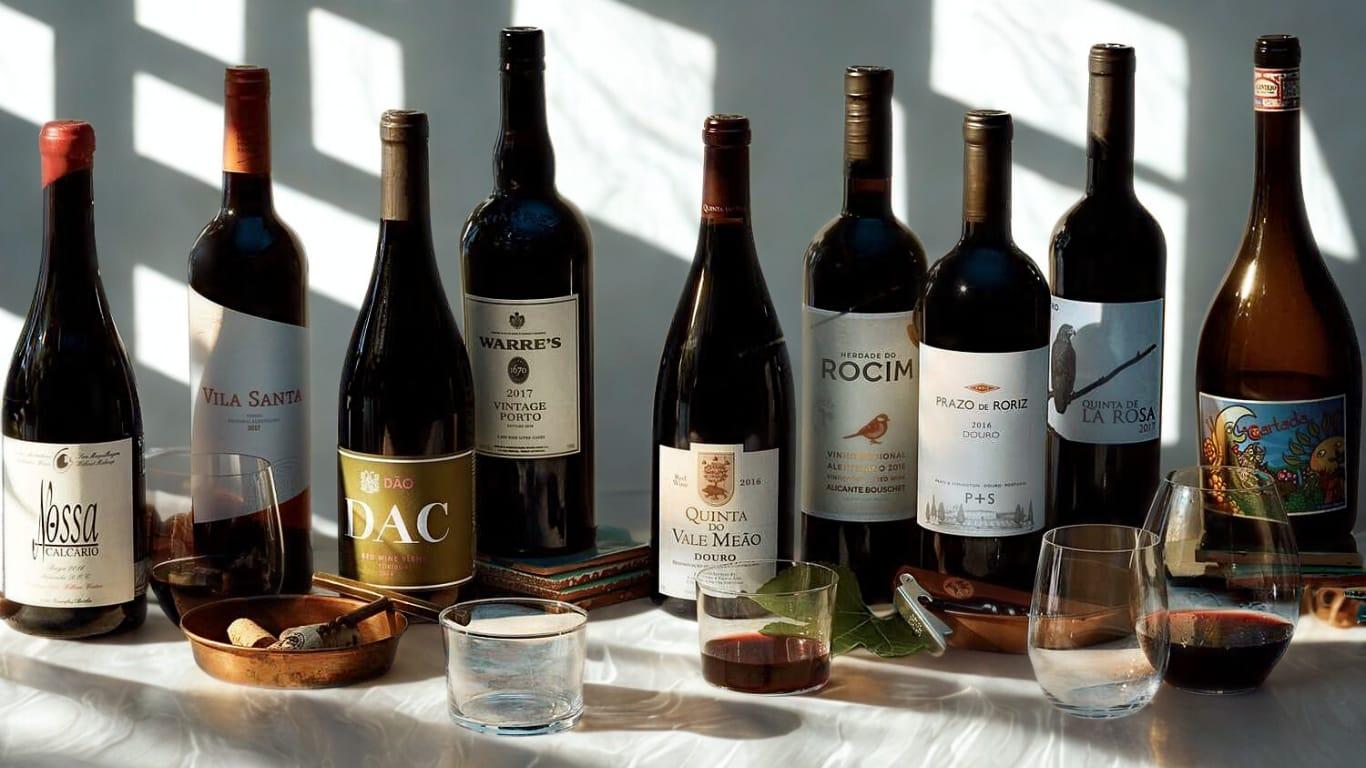
Portugal sits at roughly 5% of total European wine production by volume in a normal year. The structural categories include Port wine (the named houses: Taylor's, Graham's, Fonseca, Dow's, Croft, Quinta do Noval, Niepoort), Douro Valley table wine, Alentejo table wine, Vinho Verde, and the broader Lisboa, Bairrada, and Dão categories.
The Port category is structurally insulated from short-term harvest variation by the multi-year ageing arc of the named houses. The named houses release vintage Port only in years they consider exceptional (typically two to four years per decade), and the structural value of their inventory comes from decades-old stocks rather than current harvest. The 2025 production collapse does not directly affect 2026 vintage Port pricing, although it may affect the broader category through 2030.
The Douro Superior table-wine category is structurally more exposed. The named producers (Quinta do Noval, Niepoort's table wines, Vallado, Pintas, the broader Douro Superior tier) operate at production volumes where harvest variation translates directly into release volume.
The compound pressure beyond climate
Portugal's wine industry sits inside the broader European wine consumption decline, which compounds the structural picture. The on-trade pressure across multiple major European markets has pushed margin-constrained operators toward lower-cost producers. 15% U.S. tariffs and importer hesitation, is also reshaping the export picture for Portuguese wine alongside the broader European producer base.
The structural shift toward wine regions beyond the established European mid-tier is also affecting Portuguese producer positioning. The broader category implications run alongside the climate volatility story.
For Portugal, the compound effect is sharp. Climate pressure compresses volume, on-trade pressure compresses pricing, and the broader category shift compresses long-term producer positioning. The named-producer top tier (the historical Port houses, the named Douro Superior table-wine producers, Quinta do Noval and Niepoort at the multi-category tier) continues to function across the structural pressure, but the broader mid-tier sits under real consolidation pressure.
The export story
Portuguese wine exports have shown meaningful structural growth across the past decade at the named-producer top tier. The named Douro Superior table-wine producers have built genuine secondary-market positioning in the UK, US, and named-Asian markets. The named Port houses continue to clear vintage releases at meaningful collector prices.
The export reach into growth markets such as Mercosur countries, southeast Asia, and India provides structural diversification away from the established European-and-North-American axis. Portuguese named producers are structurally well-positioned to capture growth in those markets across the rest of the decade, particularly because the named-producer category positioning supports premium pricing in growth markets that the broader Portuguese mid-tier cannot match.
The rise of integrated luxury-and-collecting markets in Asia is part of the broader structural picture for Portuguese named producer growth through 2030.
What this means for serious collectors
The named Portuguese producer tier deserves a structural cellar position. Vintage Port from named houses (Taylor's, Graham's, Fonseca, Dow's, Quinta do Noval) is one of the most age-worthy categories anywhere, with multi-decade ageing arcs that few European categories match. The named Douro Superior table-wine producers (Quinta do Noval's table wines, Niepoort, Pintas, Vallado) sit in a structurally undervalued position relative to comparable named-producer Spanish and Italian categories.
The 2025 climate-driven production collapse is unlikely to translate into immediate secondary-market price compression at the named-producer top tier. The structural inventory dynamics of vintage Port and the named-producer table-wine category absorb single-year harvest variation across multi-year release calendars.
The broader category implications sit primarily in the European wine consumption-and-supply landscape rather than in immediate Portuguese cellar-pricing dynamics. European wine producers across the board grapple with market pressures, and Portugal is one of several categories under structural pressure simultaneously.
The bigger climate-and-trade picture
The Portuguese 2025 production collapse sits alongside meaningful climate stress across multiple major European producing regions. The compound effect on European wine production volume across the rest of the decade is one of the structural questions the category continues to work through.
The structural pressure on Portuguese producers also compounds the broader European on-trade pressure. US tariff pressures are already reshaping the premium wine market alongside the broader category dynamics, and Portugal sits inside that broader picture rather than separate from it.
What we watch next
Three signals will tell us whether Portuguese wine production stabilises or remains under structural climate pressure through the rest of the decade. First, the 2026 harvest data through OIV and the National Institute of Statistics. Second, named-producer release pricing across vintage Port and Douro Superior table-wine releases.
Third, the export volume data through Mercosur and Asian growth markets across the named-producer tier.
Portuguese fine wine continues to sit in a structurally undervalued position relative to comparable European categories. For serious collectors, that structural positioning is the opportunity, even as the broader category works through the climate volatility and trade-pressure dynamics. For the broader category context, see also fine wine investment value.
We last reviewed this analysis in May 2026.