Syrah and Cabernet Sauvignon both belong in a serious cellar, but the two varietals make their structural arguments in different ways. Syrah, at its apex, delivers Northern Rhône single-vineyard work that ages across forty years from producers like Chave, Guigal, Jaboulet, and Allemand. Cabernet Sauvignon, at its apex, delivers Bordeaux First Growth, Napa Cult, and Coonawarra Cabernet that defines the long-aging cellar.
- Syrah and Cabernet Sauvignon both belong in a serious cellar, but the two varietals make their structural arguments in different ways at the apex tier.
- Syrah at its apex delivers Northern Rhone single-vineyard work that ages across forty years from producers like Chave, Guigal, Jaboulet, and Allemand.
- Cabernet Sauvignon at its apex delivers Bordeaux First Growth, Napa Cult, and Coonawarra Cabernet that defines the long-aging cellar.
- The Cabernet structural anchor sits at the heart of the global fine-wine collecting tradition, with the First Growth tier driving the international apex.
- Syrah's structural case rests more heavily on producer-led depth in the Northern Rhone, with Cote-Rotie often more graceful than Hermitage at maturity.
- For serious cellars both varietals deserve weight, with the relative proportion shaped by the broader cellar architecture and apex-tier allocation strategy.
- Who is this for?
- Cellar builders weighing Cabernet positions against structural Syrah, and serious collectors evaluating the apex Bordeaux and Northern Rhone tiers.
- What is happening?
- We compare Syrah and Cabernet Sauvignon as structural cellar positions, with the regional, producer, and ageing variables that distinguish each at the apex tier.
- When did this emerge?
- The piece reads the contemporary post-2020 market, with the Bordeaux Left Bank resilience and the Northern Rhone apex tier as live structural context.
- Where is this happening?
- The Northern Rhone for Syrah, Bordeaux's Left Bank and Napa's apex cluster for Cabernet Sauvignon as the structural reference regions.
- Why does it matter?
- Sizing Syrah and Cabernet correctly is foundational for serious red-wine architecture, and the structural cellar logic for each is meaningfully different at every tier.
This is our editorial read on how the two varietals compare for serious collectors. The wider single-varietal frame is covered in our Cabernet Sauvignon Collector's Field Guide and our Syrah Collector's Field Guide.
The comparison reveals real stylistic and structural differences that collectors should understand before building positions.
The Cabernet Sauvignon argument
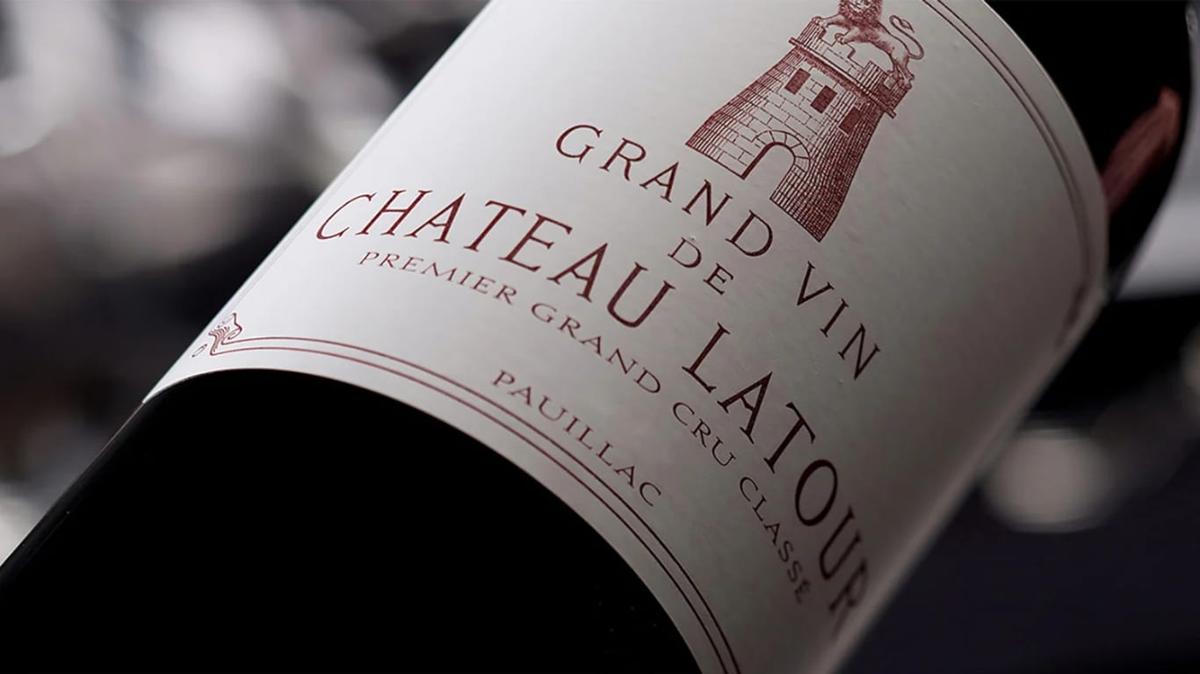
Cabernet Sauvignon is the structural anchor of the global fine-wine collecting tradition. The First Growth Bordeaux estates (Lafite Rothschild, Latour, Margaux, Mouton Rothschild, Haut-Brion) are Cabernet-dominant blends with Merlot and Cabernet Franc supporting. The Liv-ex Bordeaux 500 index, even with its post-2017 decline relative to Burgundy, remains the most active single fine-wine category by trading volume.
The varietal has three structural anchors. Bordeaux Left Bank delivers the long-aging, structured, tannic style that defines the canonical aging cellar. Napa Cabernet (Screaming Eagle, Harlan Estate, Bond, Sine Qua Non for varietally distinct Cult work, plus Spottswoode, Ridge Monte Bello, Dunn Howell Mountain at the serious-quality second tier) delivers a riper, more concentrated New World expression. Coonawarra and the better Australian Cabernet tier (Penfolds Bin 707, Wynns John Riddoch) deliver the southern hemisphere structural alternative.
Cabernet Sauvignon's aging window is what defines the collector argument. A First Growth Bordeaux from a strong vintage (1982, 1990, 1995, 1996, 2000, 2005, 2009, 2010, 2015, 2016) develops across thirty to fifty years. Napa Cult Cabernet typically peaks across twenty to thirty.
Coonawarra serious Cabernet across fifteen to twenty-five. The category rewards patience.
The Syrah argument
Syrah is the more structurally narrow category at the apex, but the work produced at that apex is, in our editorial read, among the most distinctive in serious wine. The Northern Rhône appellations (Hermitage, Côte-Rôtie, Cornas, Saint-Joseph) produce Syrah single-vineyard work that ages across forty years from a tight tier of named producers.
The canonical Northern Rhône list runs through Jean-Louis Chave (Hermitage Cuvée Cathelin and the standard Hermitage), E. Guigal (the La-La trio: La Mouline, La Landonne, La Turque), Paul Jaboulet Aîné (Hermitage La Chapelle, with the 1961 vintage trading at apex bottle-pricing alongside the canonical Bordeaux), Domaine Jamet (Côte-Rôtie), Thierry Allemand (Cornas), and Auguste Clape (Cornas).
Each operates at quality levels that earn 96-100 Wine Advocate, Vinous, and Decanter scores with regularity.
Australia produces serious Shiraz at the apex through Penfolds Grange (the most active Australian fine wine on the secondary market, with consistent 94-99 critical scores across recent vintages), Henschke Hill of Grace (single-vineyard, multi-generational), Torbreck Run Rig, and Yalumba The Octavius. The category's stylistic identity is distinct from the Northern Rhône but operates at comparable quality. The wider Northern Rhône versus Australian Shiraz framing is one we have covered in our Napa versus Bordeaux comparison.
Stylistic comparison
The two varietals produce structurally different wines. Cabernet Sauvignon at its apex is dense, structured, tannic in youth, with cedar, graphite, blackcurrant, and tobacco notes that develop across decades into the secondary leather-and-tobacco-and-mature-fruit profile that defines aged claret.
Syrah at its apex is denser, more savory, with the black-olive, smoked-meat, peppery profile that defines Northern Rhône expression. The aging profile develops in a different direction (more game and pepper than tobacco and leather) but with comparable aging window at the apex.
The food-and-occasion pattern differs. Cabernet Sauvignon defines the structured-meat-course pairing pattern (Bordeaux with rack of lamb, Napa Cult with prime rib, Coonawarra with venison). Syrah defines the gamier, more savory pairing pattern (Northern Rhône with smoked duck, with charcuterie, with game).
For collectors building positions in either, the food culture surrounding the varietal is part of what shapes the holding pattern. Cabernet Sauvignon is the category that benefits from broad food pairings; Syrah is the category that rewards specific, considered ones.
How the two compare on aging, scarcity, and secondary market
The comparative framework matters most for collectors. The structural differences across aging window, scarcity, and secondary-market depth are summarized below.
| Dimension | Cabernet Sauvignon apex | Syrah apex |
|---|---|---|
| Aging window | 30-50 years (First Growth) | 30-40 years (Northern Rhône) |
| Production scale | Higher (First Growth: 200-300k bottles) | Lower (Chave Cathelin: 5-6k bottles) |
| Secondary market depth | Deep, Liv-ex Bordeaux 500 | Narrower, Liv-ex 1000 inclusion |
| International collector base | Broadest of any varietal | Smaller, more dedicated |
Cabernet Sauvignon's structural advantage is depth. The international collector base is broader, the secondary-market liquidity is greater, and the apex is more widely recognized.
Syrah's structural advantage is scarcity. The Northern Rhône apex producers operate at production volumes that are, in some cases, an order of magnitude below First Growth Bordeaux. The category's structural-rarity argument is real.
What this means for serious cellars
The straightforward answer for collectors is that both categories belong in any serious cellar, and the question is how to weight them.
For collectors anchoring around long-aging cellar work, Cabernet Sauvignon is the structural anchor. A serious First Growth or Right Bank Bordeaux position, supplemented by named Napa work and select Coonawarra, defines the spine of a Cabernet-led cellar. The category's depth and secondary-market liquidity make it the most flexible aging-cellar category.
For collectors building stylistic breadth, Syrah is the essential complement. A serious Northern Rhône position (Chave or Jamet at the apex, plus Allemand or Clape for Cornas) defines the spine of a Syrah-led category. Australian Shiraz at the Grange or Hill of Grace level provides the southern hemisphere alternative.
The two anchors together cover the structural Syrah argument.
Neither category replaces the other. The serious cellar holds meaningful positions in both, weighted according to the collector's stylistic preferences and aging-holding pattern.
What we will watch next
Two signals for each category. On the Cabernet side: whether the 2024 and 2025 Bordeaux en primeur campaigns deliver release-pricing discipline that restores merchant trust, and whether the Napa Cult tier (Screaming Eagle, Harlan, Bond) sees release allocations remain as concentrated as they have been across recent vintages.
On the Syrah side: whether the next generation at Domaine Jean-Louis Chave maintains the structural quality of the Cathelin and standard Hermitage work, and whether Penfolds Grange and Henschke Hill of Grace continue to draw the international secondary-market depth they have built across the past decade.
Each signal would shape how the two-varietal cellar conversation looks in 2028 and 2030.
We last reviewed this analysis in May 2026.