A. Lange & Söhne belongs in every serious collection because the Glashütte-based maker has, across three decades of revived production, rebuilt itself into one of the most respected classical watchmakers in the world. The Saxon manufacture's place in serious modern collecting is now uncontroversial.
- A. Lange & Söhne belongs in every serious collection through finishing standards, calibre architecture, and the kind of Glashütte heritage that no other manufacturer can replicate.
- The Lange 1, Datograph, and Saxonia anchor the modern catalogue, with hand-finished German silver three-quarter plates defining the visual identity.
- Reference 110.025 Lange 1 remains the cornerstone purchase, with the distinctive asymmetric dial and the Calibre L121.1 supporting decades of reliable wear.
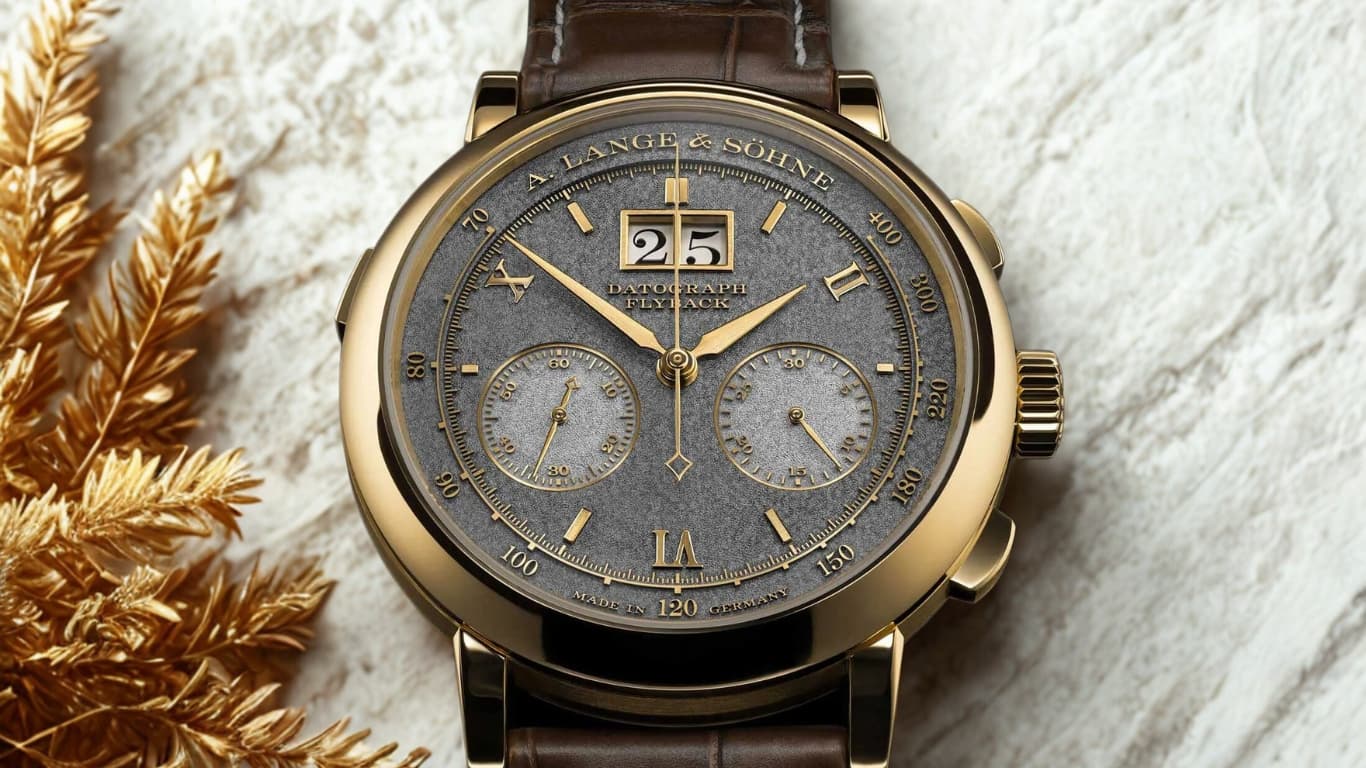
- We see the Datograph Up/Down as the most coveted modern Lange chronograph, with flyback functionality and dial finishing that few other manufacturers approach.
- Vintage Lange visibility has grown across the last decade, with 1990s and early-2000s pieces gaining auction attention as the brand's collector base matures.
- Honey gold and platinum Lange configurations have outperformed expectations through the cycle, with limited editions commanding meaningful secondary premiums.
- Who is this for?
- High-end collectors looking beyond Swiss watchmaking, finishing-anchored buyers, and serious students of German horological tradition.
- What is happening?
- A grounded case for A. Lange & Söhne as a structural pillar in any serious collection, covering the Lange 1, Datograph, and Saxonia cornerstones.
- When did this emerge?
- The case has crystallised through the last decade, with the Datograph Up/Down and Lange 1 continuing to anchor collector attention into 2026.
- Where is this happening?
- Authorised Lange dealers globally maintain waitlists, while Phillips, Christie's, and specialist auctions handle the secondary market.
- Why does it matter?
- Lange offers Glashütte finishing standards and calibre architecture that no other manufacturer can replicate, with auction visibility validating the collector case.
What is interesting is how quickly the brand has moved from "interesting revival story" to "essential reading for any serious collection," and how the brand's stewardship has shaped the contemporary classical watchmaking category.
The brand's history reads like one of horology's most consequential second acts. Founded in 1845 by Ferdinand Adolph Lange, destroyed in February 1945 during the closing days of World War II, expropriated under East German rule, and revived from 1990 onwards by Walter Lange (Ferdinand's great-grandson) and Günter Blümlein.
The collectors we hear from at the Geneva and New York classical-watch events read Lange as one of the very few names that genuinely belongs in any serious classical collection regardless of taste.
Why A. Lange & Söhne belongs in every serious collection
The collector case runs through three pillars. First, movement architecture and finishing. Lange movements are widely considered to set the standard for traditional Swiss-style finishing executed at scale: the three-quarter plate (the German watchmaking signature inherited from the historical pocket-watch tradition), the gold chatons securing the jewel bearings, the hand-engraved balance cock (each one engraved by hand by a master engraver, with the pattern unique to that specific movement), and the entirety of the bridge geometry all read as serious classical watchmaking executed at the highest contemporary tier.
Hodinkee, Monochrome, and A Collected Man all give Lange's movement architecture consistent coverage. The consensus reading is that the brand's finishing standard is among the most exacting in contemporary production, and the consensus has held across the past decade of expanded coverage.
Second, the brand's measured production cadence. Annual production sits in low-five-digit territory across the entire global catalogue. The production discipline anchors the long-term collector category.
The constraint isn't artificial: Lange is genuinely a small production maker, with hand-finishing operations that don't scale, and the brand's stewardship has held that discipline across three decades.
Third, the design language. The Lange visual code (the asymmetric Lange 1 layout, the Datograph dial geometry, the considered classical proportions of the 1815 and Saxonia lines) reads as cohesive across the catalogue without being derivative. The brand has built a contemporary identity that doesn't reach for stylistic gimmicks.
Thirty years of catalogue refinement has consolidated the visual language as one of the most considered in modern watchmaking.
The Lange 1 and the asymmetric dial
The Lange 1, the asymmetric-dial reference designed by Reinhard Meis, is the brand's most recognisable contemporary reference. The off-centre time display, the outsized date at three (the Großdatum), and the power-reserve indicator at four together create the most distinctive dial geometry in contemporary classical watchmaking.
The reference was introduced in October 1994 as one of the four founding references of the revived Lange catalogue, alongside the Saxonia, the Tourbillon Pour le Mérite, and the Arkade. The asymmetric layout breaks with traditional Swiss-style dress watchmaking in a way that has become the brand's defining visual signature.
Pricing across the Lange 1 catalogue runs from around €40,000 in the standard reference through €100,000-plus in the precious-metal and complicated variants. The Lange 1 Time Zone, the Lange 1 Daymatic, and the various Lange 1 complications extend the line.
The Datograph and the chronograph case
The Datograph, the manual-wind chronograph reference introduced in 1999 with the Calibre L951. 1 (and later iterations including the L951. 6 in the contemporary Up/Down references), is the brand's most acclaimed contemporary chronograph.
The movement architecture is widely cited by serious watchmaking analysts as the best contemporary chronograph caliber in production.
Philippe Dufour himself has reportedly identified the Datograph as one of the chronographs that brought him back into the contemporary watchmaking conversation. The dial geometry, with the precise Großdatum and the outsized 30-minute counter at four, anchors the most distinctive contemporary chronograph design language.
Pricing runs from around €85,000 through €150,000-plus in the various Up/Down and complicated variants. The Datograph in its various dial-colour configurations remains the reference serious chronograph collectors arrive at after the broader chronograph category has done its work.
The 1815 line and the classical Saxonia catalogue
The 1815 reference, named for Ferdinand Adolph Lange's birth year, anchors the brand's classical dress catalogue. The reference 1815 in the standard 38. 5mm case (around €25,000) is the cleanest contemporary expression of classical Lange dress watchmaking.
The 1815 Up/Down with the power-reserve indicator and the 1815 Chronograph extend the line.
The Saxonia and the Saxonia Thin references anchor the more accessible end of the catalogue, with the more minimalist dress watches starting in the lower-€20,000 range. The Saxonia Thin specifically, with its 5. 9mm-thick movement housing the Calibre L093.
1 and the cleanly proportioned dial geometry, is the contemporary expression of the brand's classical dress watchmaking at its most reduced.
These are the references collectors arrive at when they want the Lange finishing standard without the asymmetric Lange 1 visual code. The cleaner classical dress register suits a particular kind of collection, and the 1815 and Saxonia lines fill it.
The Pour le Mérite series and the Handwerkskunst tier
The Pour le Mérite series, the brand's tourbillon line with the historical fusée-and-chain mechanism that traces directly to Abraham-Louis Breguet's nineteenth-century work, anchors the upper tier of contemporary Lange. The series was named for the Prussian military and academic honour Pour le Mérite, which was awarded to historical figures including Wilhelm Röntgen and Albert Einstein.
The Tourbillon Pour le Mérite (the original, with the chain-and-cone constant-force mechanism), the Datograph Pour le Mérite, and the various subsequent Pour le Mérite references are produced in small annual quantities at upper-six-figure-and-above pricing. These are the references the very upper tier of contemporary classical collecting engages with directly.
The Handwerkskunst small-batch references demonstrate the brand's hand-finishing ambition at the most considered level. Hand-engraved patterns on the dials, mother-of-pearl elements, gold-painted hour markers, and other artisanal techniques anchor the category. The Handwerkskunst tier exists specifically to showcase the manufacture's hand-finishing capability, and the references function as effectively as private commissions while sitting inside the formal catalogue structure.
What collectors look for in a Lange
For modern Lange, the references that come up most consistently in serious collector conversation are the Lange 1 in the various standard and special-edition configurations (the Lange 1 Daymatic, the Lange 1 Time Zone, the various commemorative editions), the Datograph in both the standard and Up/Down variants, the 1815 in the cleaner classical references (particularly the standard 1815 in white gold with the silver dial), the Saxonia Thin for collectors preferring the most minimalist dress watch in the catalogue, and the various Pour le Mérite and Handwerkskunst limited editions for collectors operating at the upper tier.
Box-and-papers documentation matters substantially. Service-network access through the brand's authorised facilities is the practical baseline for any reference where future provenance will matter. The dealer relationships at the authorised Lange retailer network handle the cleanest secondary inventory, and the boutique pre-owned channels through select Lange retailers anchor the considered market.
The vintage Lange references (the pre-war pocket watches from Ferdinand Adolph Lange's original production, and the post-1990 early-revival pieces from the brand's first decade of contemporary production) anchor the historical-piece tier of Lange collecting. Phillips and Christie's both handle vintage Lange at their major sales; the Glashütte-specialist dealers handle the broader vintage market.
What this means for collectors
Lange has, across three decades, established itself as the contemporary German maker that genuinely belongs in serious classical collections alongside the Swiss trinity. The brand's place in the upper tier of modern watchmaking is now structural rather than emerging.
We'd argue the brand's stewardship of the German classical watchmaking tradition is one of the more consequential developments in late-twentieth- and early-twenty-first-century horology. The combination of historical heritage, contemporary production discipline, and finishing ambition produces references that read as essential reading for any serious collection committed to classical watchmaking at the highest level.
We last reviewed this analysis in May 2026.

Frequently Asked Questions
- Which A. Lange & Söhne watch holds value best?
- The Lange 1, Datograph, and Zeitwerk families consistently retain or exceed their original retail prices, especially in platinum or limited editions. These models are sought after for their in-house calibers, finishing, and scarcity.<br><br>
- Do A. Lange & Söhne watches appreciate over time?
- Yes. While not known for rapid flips, Lange watches steadily appreciate due to limited supply and increasing collector demand. Auction prices for rare references have risen significantly over the past five years.<br><br>
- Is it hard to sell an A. Lange & Söhne watch on the secondary market?
- No, but liquidity depends on the model. Core references like the Lange 1 and Datograph are relatively easy to sell through auction houses or high-end resale platforms, especially with box and papers.<br><br>
- What is the starting price of an A. Lange & Söhne watch in 2025?
- Entry-level models like the Saxonia Thin begin at approximately $22,000. More complex references such as the Zeitwerk or Grand Lange 1 can range from $60,000 to over $120,000 at retail.<br><br>
- Are A. Lange & Söhne watches rare?
- Yes. Lange produces a fraction of the volume of Swiss brands—often fewer than 5,500 pieces per year globally. This controlled output creates natural scarcity, helping support long-term value retention.

Stefanos Moschopoulos
Stefanos Moschopoulos founded The Luxury Playbook in Athens and has spent the better part of a decade following the auction calendar, the en primeur releases, and the watchmakers, gallerists, and shipyards the magazine covers. He writes the field guides and listicles that anchor the Connoisseur section — pieces built on Phillips and Christie's results, Liv-ex movements, and conversations with collectors he has met across Geneva, Bordeaux, Basel, and Monaco. His own collecting habits sit closer to watches and wine than art, and it shows in the level of detail in the magazine's coverage of those categories. Under his direction, The Luxury Playbook now publishes long-form field guides, market-defining year-end listicles, and the Voices interview series with the founders behind the houses and the brands.