For decades, Omega watches have sat just outside the loudest hype cycles around Rolex and Patek Philippe. But that distance is starting to look like a strategic advantage.
With more than 175 years of watchmaking history, Omega brings together proven mechanical innovation, genuine cultural milestones from the Moonwatch to James Bond’s Seamaster, and modern Master Chronometer movements that outperform many pricier Swiss rivals on paper.
Instead of leaning on artificial scarcity or endless waitlists, Omega’s value story is built on technical credibility, everyday wearability, and resilient resale demand. That’s a foundation worth paying attention to.
Core references like the Speedmaster Professional and Seamaster Diver 300M typically hold 80 to 100% of retail value in the secondary market. And sought-after limited editions, especially Silver Snoopy and Apollo anniversary Speedmasters, have historically appreciated well above their original MSRP.

Table of Contents
Omega Watches Investment Snapshot (2026)
| Model / Reference | Retail (approx, 2025) | Typical Market Range (2025) | Premium vs Retail | Investment Profile |
|---|---|---|---|---|
| Speedmaster Moonwatch Hesalite (310.30.42.50.01.001) | ≈ $7,800 | ≈ $6,300–$6,800 (full set) | ≈ −10% to −20% | Blue-chip Omega; high liquidity, very stable pricing, best bought slightly below retail on the secondary market. |
| Speedmaster “Silver Snoopy Award” 50th (310.32.42.50.02.001) | ≈ $9,600 launch MSRP | ≈ $14,000–$16,000 | ≈ +45% to +65% | High-demand limited edition; strong long-term upside, but already priced with a substantial collectible premium. |
| Seamaster Diver 300M (210.30.42.20.01.001) | ≈ $5,800 | ≈ $5,200–$6,200 | ≈ −10% to +5% | Core daily-wear diver; excellent value retention, especially for box-and-papers examples bought close to retail. |
| Seamaster Planet Ocean 600M (215.30.44.21.01.001) | ≈ $8,000 | ≈ $4,100–$5,200 | ≈ −35% to −50% | Technically impressive but softer resale; best targeted pre-owned, where much of the initial depreciation is already priced in. |
| Seamaster 300 Heritage (234.30.41.21.01.001) | ≈ $7,000–$7,500 | ≈ $5,500–$6,800 | ≈ −10% to −25% | Heritage-style diver with good long-term appeal; moderate liquidity, stronger risk–reward when bought below retail. |

How Omega Watches Became Valuable Investments
Omega became an investment-grade brand by stacking real achievements on top of modern Master Chronometer technology. Olympic timekeeping, NASA flight certification for the Speedmaster, and the long-running James Bond Seamaster partnership are not marketing stories; they are verifiable milestones. Instead of manufacturing scarcity, Omega built value through technical credibility, cultural heritage, and consistent quality in the $5k to $10k bracket, which now underpins stable resale demand and compounding returns on core references.
Founded in 1848 by Louis Brandt in La Chaux-de-Fonds, Switzerland, Omega did not rise to prominence through exclusivity. It rose through precision. By the early 20th century, the brand was already supplying watches to military forces and international expeditions. The 1932 Los Angeles Olympics marked the beginning of Omega’s now 90-plus year reign as the official timekeeper of the Olympic Games, a distinction no other luxury brand comes close to matching.
But the brand’s real turning point came in 1969 with the Speedmaster Professional, the first watch worn on the moon. vintage Omega collectors know this story well, and for good reason. NASA did not choose the Speedmaster for brand image. It chose it because it beat out Rolex, Longines, and Hamilton in brutal lab testing. That mission permanently changed Omega’s brand equity, especially among collectors who value purpose-driven horology over marketing noise.
In the 1990s, Omega doubled down on pop culture relevance by becoming the official watch of James Bond, starting with GoldenEye in 1995. The Seamaster Diver 300M has since become one of the most iconic cinematic timepieces, giving the brand both Hollywood exposure and a fresh design identity that carries through to this day.
More recently, Omega has made bold moves in technical credibility. The introduction of Co-Axial escapements and METAS-certified Master Chronometer movements has set Omega apart in the $5k to $10k bracket. Unlike many Swiss competitors, Omega now builds watches that are not just certified, but antimagnetic to 15,000 gauss, tested in-house, and independently verified by a third-party authority.
In 2026, Omega sits at a rare convergence point: mass production capability with collector-grade legitimacy. The brand does not rely on waitlists or artificial scarcity. Instead, it leans on consistent innovation, historical achievements, and an increasingly global collector base that understands what Omega truly offers, which is reliability backed by real pedigree.

Which Omega Watches Hold Their Value Best
The strongest value retention sits in the Speedmaster and Seamaster families. The Moonwatch Hesalite is the core blue-chip Omega reference, typically trading at only a modest discount to retail with very high liquidity. Limited editions like the Silver Snoopy 50th sell far above MSRP. Below that tier, the Seamaster Diver 300M and key Planet Ocean and Aqua Terra references hold 80 to 100% of retail when bought right, especially as full sets in clean, unworn condition.
Investment-grade Omega references concentrate in the Speedmaster and Seamaster collections, where heritage, recognition, and technical credibility converge. Within these families, specific configurations show superior appreciation driven by cultural weight, mechanical sophistication, or controlled production numbers.
Speedmaster Professional Moonwatch
The current Moonwatch Hesalite (ref. 310.30.42.50.01.001) retails at roughly $7,800, while recent secondary market data clusters around $6,500 to $7,000 for most full-set examples.
Over the past year, prices have been essentially flat to slightly negative, reflecting the broader post-2022 luxury watch correction rather than any loss of confidence in the model itself.
Moonwatch Value Drivers
- Historical authenticity maintaining NASA flight certification design
- Manual‑wind Caliber 3861 with Co‑Axial escapement and Master Chronometer certification
- Hesalite crystal preserving vintage aesthetic purists value
- Strong full‑set demand with box and papers commanding 10–15% premiums
- Limited production of special dial variants creating collectibility
The sapphire sandwich variant trades similarly, appealing to buyers who prioritize visibility into movement finishing over historical authenticity. Both versions hold value remarkably well for current production watches, with early examples from reference introduction showing modest appreciation as production evolves.
Speedmaster Limited Editions
Special edition Speedmasters targeting specific missions, anniversaries, or collaborations show the strongest appreciation trajectories. The Silver Snoopy Award editions honoring Omega’s role in the Apollo 13 rescue have achieved cult status, with recent references doubling original retail pricing. According to WatchCharts market data, the reference 310.32.42.50.02.001 currently trades around $14,924, a substantial jump from the approximately $9,600 retail price at launch.
The Apollo 11 50th Anniversary models released in stainless steel and precious metals followed a similar pattern, appreciating 30 to 50% within years of release as production concluded and collector demand held firm. These limited editions benefit from defined production numbers, distinctive design elements, and narrative connections to space exploration milestones that create emotional resonance well beyond the technical specifications.
Seamaster Diver 300M
The James Bond Seamaster maintains strong recognition through decades of cinema visibility, creating broad awareness that translates into consistent secondary market demand. Current production models hold 90 to 100% of retail value, with limited edition Bond releases commanding 10 to 20% premiums post-release. The black dial reference 210.30.42.20.01.001 is the most liquid configuration, appealing to buyers who want iconic design without limited edition pricing.
The Seamaster benefits from functional credibility alongside cultural cachet. ISO-certified 300-meter water resistance, ceramic bezel inserts, and helium escape valves deliver genuine diving capability that buyers rarely use but psychologically value. Co-Axial movements with Master Chronometer certification add technical legitimacy that supports long-term value retention as mechanical sophistication becomes increasingly prized by serious collectors.
| Reference | Model | Retail Price | Market Range |
|---|---|---|---|
| 310.30.42.50.01.001 | Moonwatch Hesalite | $7,800 | $6,400–$7,900 |
| 310.32.42.50.02.001 | Snoopy Edition | ~$9,600 | $14,000–$16,000 |
| 210.30.42.20.01.001 | Seamaster 300M | $5,800 | $5,200–$6,200 |
| 215.30.44.21.01.001 | Planet Ocean 600M | $7,400 | $6,300–$7,100 |
| 234.30.41.21.01.001 | Seamaster 300 Heritage | $6,900 | $6,000–$6,800 |
What Are The Main Features of Omega Watches
Modern Omega watches are defined by Co-Axial Master Chronometer movements combining COSC and METAS certification, 15,000 gauss antimagnetic resistance, robust water resistance across Seamaster lines, and long-lived materials like ceramic bezels and proprietary gold alloys. Design continuity, especially on the Moonwatch and Seamaster Diver 300M, keeps models visually recognizable across generations. Solid bracelets, micro-adjust clasps, and varied strap options make these practical daily-wear pieces that stand up to long-term use without losing their appeal.
Omega’s value as an investment asset is not just tied to branding. It is built into the hardware. These watches do not rely on hype or waitlists. They earn their place in serious collections through engineering depth, innovation pedigree, and a design philosophy that puts performance ahead of flash.
In 2026, Omega continues to offer some of the most technically impressive and mechanically sophisticated timepieces under $10,000. That positioning is not an accident.
At the core of Omega’s identity is its movement technology. Nearly every modern Omega is powered by a Co-Axial Master Chronometer caliber, certified by both COSC and METAS. This dual-certification is not marketing fluff. It is a real-world assurance that the watch is antimagnetic up to 15,000 gauss, accurate to within 0 to 5 seconds per day, and tested across eight different positions and conditions. The METAS certification process is genuinely rigorous, and it shows in long-term reliability.
These movements, like the Caliber 3861 in the Speedmaster or Caliber 8800 in the Seamaster, are built for long-term reliability, serviceability, and daily performance.
Omega has also redefined modern case materials. The brand was early to adopt ceramic bezels and liquidmetal inserts, which offer superior scratch resistance and long-lasting color retention. In higher-end models, Omega deploys proprietary alloys like Sedna gold (a copper-rich rose gold blend) and Canopus white gold, both developed to maintain brilliance over time, which enhances visual value and resale durability.
Water resistance is another core strength. Seamaster references such as the 300M and Planet Ocean are not merely desk divers. They are ISO-certified tools with depth ratings from 300 meters to 600 meters, helium escape valves, and screw-down crowns that mean business.
The PloProf, in particular, offers a remarkable 1,200-meter depth rating, demonstrating Omega’s commitment to purpose-built specifications that often exceed industry norms by a wide margin.
Design consistency is another key to Omega’s long-term collector appeal. Models like the Speedmaster Professional Moonwatch and Seamaster Diver 300M retain recognizable dial layouts, handsets, and case silhouettes even across generations. That brand continuity preserves visual legacy and gives each piece timeless market value, especially for investors seeking watches that will not look dated in a decade. Much like Panerai’s evolution from military tool to collector staple, Omega’s design discipline pays dividends over time.
Omega also leads in antimagnetic innovation. The brand’s commitment to building movements that resist magnetic fields, one of the most common causes of accuracy loss in mechanical watches, is unmatched at this price point. While most luxury watches still suffer from magnetization in everyday environments, Omega’s Master Chronometer pieces are effectively immune.
Bracelet and strap quality also reinforces long-term value. Omega bracelets feature solid links, screw-in pins, and micro-adjusting clasps engineered to last under real stress and daily wear. For higher-end models, Omega offers alligator, rubber, and NATO-style options built to the same standards as the casework itself. These bracelets are not accessories; they are value-preserving components.
And perhaps most importantly for you as an investor, Omega does not flood the market. While it does not operate with Rolex’s rigid scarcity model, production is controlled tightly enough to maintain exclusivity, especially for limited editions, boutique exclusives, and heritage reissues. That supply balance, combined with global brand recognition, keeps Omega watches liquid and stable across collector markets worldwide. Bloomberg’s watch market analysis has noted how brands with genuine technical credibility weather market corrections far better than hype-driven names.
How Much Do Omega Watches Cost
In 2026, core steel Omegas sit roughly between $5,000 and $8,000 at retail. The Seamaster Diver 300M lands around the mid-$5k range, the Moonwatch Hesalite around the high-$7k range, and larger or more complex models like the Planet Ocean and heritage Seamasters push higher still. On the secondary market, everyday Seamasters often trade near or slightly below retail, while halo pieces like the Silver Snoopy 50th command five-figure prices well above original MSRP.
Omega pricing positions the brand as accessible luxury delivering Swiss manufacturing quality and in-house movement technology at entry points below competitors offering similar specifications. That gap between price and capability is exactly what smart collectors exploit.
Retail pricing spans approximately $5,000 for steel Seamaster variants to $60,000 and above for precious metal limited editions, creating multiple tiers that accommodate a wide range of investment budgets.
Current production Speedmaster Professional models retail around $7,800 for standard steel configurations, trading on secondary markets near retail or modestly below for pre-owned pieces showing wear. Full-set unworn examples occasionally command slight premiums of 5 to 10% when desirable production dates or dial variations create additional collectibility.
Limited edition releases follow different pricing dynamics entirely. The Silver Snoopy editions trading around $14,924 reflect 55 to 60% appreciation from original retail, while discontinued heritage reissues show 20 to 40% gains post-production conclusion.
Current and Recent Production Models
Omega Current & Recent Production Models
Discontinued and Collectible Omega Models
Omega Discontinued & Collectible Omega Models

How Do Omega Watches Perform as Investments
Omega behaves like a steady compounder rather than a hype rocket. Core Speedmaster and Seamaster references tend to deliver low to mid single-digit annual returns over multi-year holding periods, while well-chosen limited editions and vintage pieces have historically achieved high single to low double-digit appreciation. You do not usually see Rolex-style spikes, but you also avoid the same crash risk. Omega’s upside is built on fundamentals, not waiting-list theatre. If you want to understand how patience compounds returns in alternative assets, this piece on long-term market strategy is worth your time.
Historical performance data confirms Omega’s position as a brand delivering stable appreciation without the volatility that characterizes hype-driven names. Speedmaster Professional references show 5 to 10% annual appreciation over multi-year holding periods, while exceptional limited editions achieve 10 to 15% returns, particularly when cultural weight or production scarcity aligns with collector demand. Forbes has covered luxury watches as alternative investments, and Omega consistently features as one of the more rational bets in the category.
Performance by Category
- Entry models (Seamaster 300M, Aqua Terra): 3–6% annual appreciation, high liquidity
- Core references (Moonwatch Professional): 5–10% annual returns, stable demand
- Limited editions (Snoopy, Apollo): 10–15%+ annual appreciation, defined scarcity
- Vintage collectibles (Pre‑Moon Speedmaster): 8–12% appreciation, condition‑dependent
Vintage Speedmaster chronographs, particularly pre-1969 references associated with early space missions, show the strongest long-term appreciation. Well-preserved examples with original components and documented provenance command substantial premiums, with certain references appreciating 200% or more over decades as they transition from used modern watches into genuine vintage collectibles with irreplaceable historical context.
Who Should Invest in Omega Watches in 2026
Omega suits investors who want substance over hype. That means first-time buyers building a serious collection under $10k, collectors priced out of vintage Rolex or Patek, and long-term holders who prefer stable 5 to 12% type returns on key references over speculative flips. It is also ideal for people who actually wear their watches. Moonwatch and Seamaster buyers get tool-grade engineering plus credible resale value, not a safe queen they are afraid to scratch.
Omega watches occupy a unique space in the watch investment market. They are technically superior to most in their price range, historically credible, and globally recognized across collector communities from Tokyo to Geneva to New York.
In 2026, the brand appeals to multiple types of investors, each benefiting from Omega’s ability to deliver compounding returns without the volatility often associated with hype-driven brands. Whether you are starting a portfolio or rebalancing from higher-risk assets, Omega offers reliability with real room for appreciation. And unlike equities, you get to wear the asset.
- First-Time Investors: Omega is an ideal starting point for those entering the investment side of watch collecting. Models like the Speedmaster Professional or Seamaster Diver 300M provide certified movement quality, strong brand identity, and clear resale pathways—all at price points under $7,000. Investors gain exposure to heritage without the inflated premiums often seen with Rolex or AP.
- Collectors Seeking Heritage Without Rolex Hype: Omega delivers history—moon landings, James Bond, Olympic timekeeping—without the artificial scarcity or marketing theatrics. Collectors who value authenticity and historical relevance will find tremendous depth in vintage Speedmasters, 1950s Railmasters, and early Seamaster chronographs. These pieces offer legitimate investment upside and carry narratives that hold weight with serious buyers.
- Mid-Level Investors Looking for Stability & Consistency: Omega isn’t about rapid flips. It’s about steady, 7–12% annual appreciation across key references—especially in limited editions or early production runs. This makes the brand ideal for investors looking to build a diversified portfolio with a balance of technical depth, legacy value, and strong resale liquidity.
- Buyers Priced Out of Vintage Rolex or Patek: As vintage Rolex Submariners and Speedmasters with Caliber 321 continue to climb in value, many investors are priced out. Omega’s historical lineup—including Seamaster 300s, vintage Flightmasters, and transitional Co-Axial pieces from the early 2000s—offers high-end finishing and mechanical credibility at half the price of comparable Swiss icons. The result? Greater upside potential and lower cost of entry.
- Long-Term Holders: Investors with a 5–10-year horizon and an eye for movement innovation should target references like the Speedmaster Snoopy LE, Caliber 321 Ed White, and early Master Chronometer-certified Seamaster 300s. These watches are poised to outperform their generation as Omega continues to lead in anti-magnetic and chronometry technology.
Omega is not for the investor chasing hype-driven spikes. It is for the investor who values substance over spectacle and understands that long-term gains are often built on innovation, history, and consistency. In 2026, Omega delivers exactly that. The fundamentals are sound, the collector base is growing, and the best references are only getting harder to find at retail.
Best Omega Watch Investments Under $6,000
- Seamaster Diver 300M (210.30.42.20.01.001 and similar): Modern Bond-era Seamaster with Master Chronometer movement, ceramic bezel, and huge brand recognition. Often available pre-owned in the low- to mid-$5k range, with strong liquidity and very resilient resale if bought as a full set.
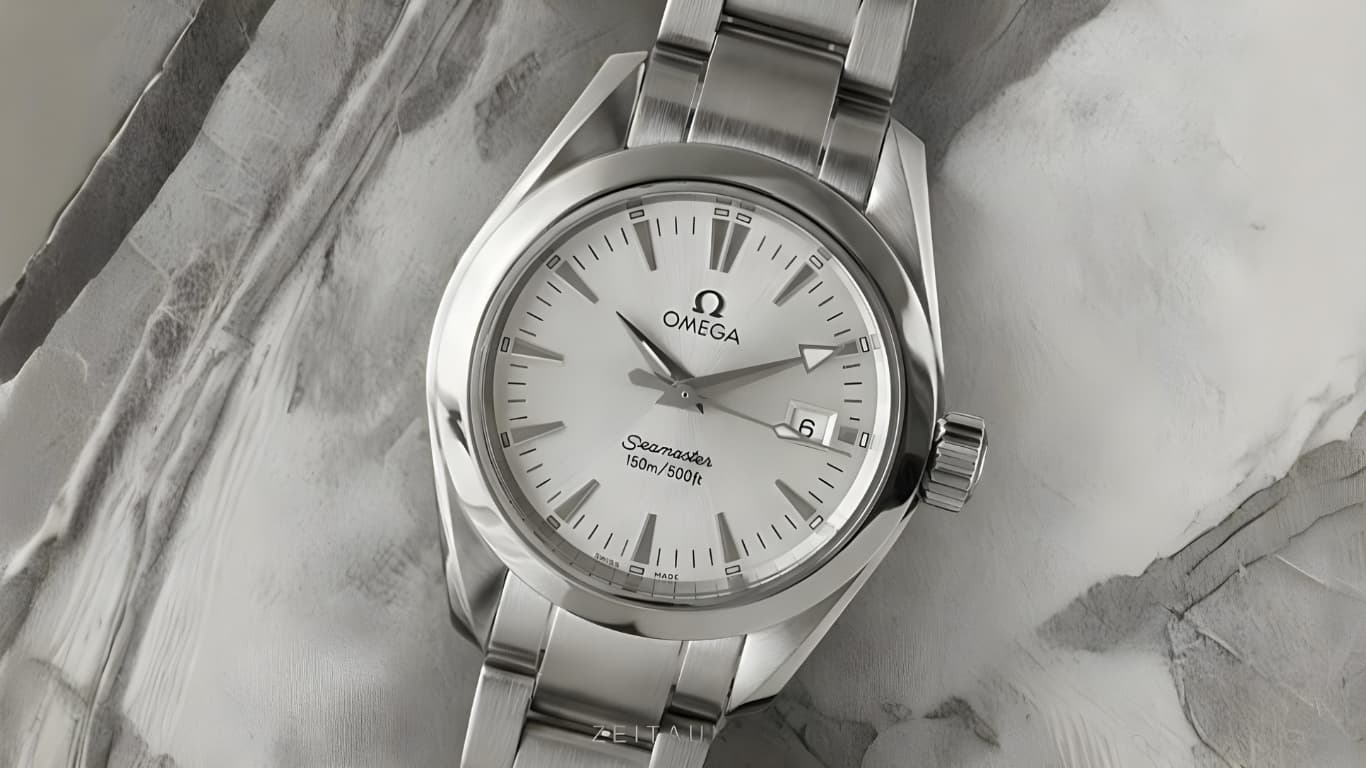
- Seamaster Aqua Terra 38/41 mm (core steel references): Versatile “one-watch” option that works with everything from suits to T-shirts. Clean design, 150 m water resistance, and Co-Axial Master Chronometer calibers make it a safe long-term hold with gentle appreciation rather than big spikes.
- Pre-owned Seamaster Planet Ocean 600M (earlier generations): Over-engineered dive watch with serious specs (600 m WR, helium valve) that tends to depreciate more from retail, making good-condition pre-owned pieces attractive value plays under $6k.
- Entry-level heritage pieces (Railmaster / Seamaster 300 heritage at good prices): When purchased below retail, these give you vintage-inspired aesthetics and modern tech. They’re ideal for buyers who care more about wearing history on the wrist than chasing maximum ROI.
Best Omega Watch Investments Between $6,000 and $10,000
- Speedmaster Professional Moonwatch Hesalite (310.30.42.50.01.001): The core Omega investment reference: NASA heritage, manual-wind caliber 3861, and massive global collector base. Usually trades slightly under retail, which creates a very clean entry point in the $6k–$7k band.
- Speedmaster Professional “sapphire sandwich” variants: Same core story as the Hesalite Moonwatch but with display caseback and sapphire crystal. Slightly higher retail and a touch more “luxury” on wrist; strong value retention for buyers who prefer to see the movement.
- Newer Seamaster 300 Heritage or Aqua Terra higher-spec models: Sit comfortably in the upper-$6k to mid-$7k zone. They’re less “flippable” than a Speedmaster but make excellent multi-year holds: you get modern Omega tech plus classic design with modest, steady appreciation.
- Well-bought Planet Ocean 600M or Diver 300M special variants: Ceramic dials, special colorways, or titanium cases can add long-term collectability. The trick here is buying at the right discount so you’re not eating the steepest part of the depreciation curve.
Best Omega Watch Investments Above $10,000
- Speedmaster “Silver Snoopy Award” 50th Anniversary (310.32.42.50.02.001): Space-history storytelling plus real scarcity. Typical asking prices in the mid-five figures mean you’re paying for collectibility, but long-term demand looks structurally strong among Speedmaster die-hards.
- Speedmaster Calibre 321 “Ed White” and similar 321 pieces: Hand-assembled movement, historic architecture, and constrained production make these the connoisseur Speedmasters. They behave more like high-end vintage/neo-vintage Rolex: low volume, strong floors, and meaningful upside over a decade+.
- Precious-metal Speedmasters and Seamasters with compelling narratives: Sedna™ gold or Canopus™ gold models tied to anniversaries, Olympics themes, or Bond editions can work as slow-burn investments. They tend to depreciate from retail but offer attractive value if bought well on the secondary market, especially as full sets.
- Curated vintage Omega chronographs and pre-Moon Speedmasters: Condition-correct, documented vintage pieces are where you can see 8–12%+ annualised returns over long horizons. But they require more homework: originality, dial condition, and service history become make-or-break for future liquidity.
FAQ
Will Omega watches go up in price?
Yes. Omega watches—especially Speedmasters, limited editions, and discontinued Seamaster models—have shown annual appreciation rates of 5–15% depending on rarity and condition.
Which Omega model is best for investment?
The Speedmaster “Snoopy” editions, Moonwatch Hesalite, Seamaster Spectre, and Apollo 11 LE models are top-performing investment references in 2025.
Is Omega as good as Rolex?
In terms of movement innovation and value for money, yes. Omega offers Master Chronometer certification, superior anti-magnetism, and strong resale potential—often at a lower entry point than Rolex.
How long should I hold an Omega watch for investment?
Hold for 3–5 years for modern models and 5–10 years for limited editions and vintage references to see meaningful ROI.
Do limited edition Omega watches increase in value?
Yes. Most limited editions—especially Speedmaster LEs like the Snoopy and Apollo 11—have doubled or tripled in value post-release.
Is Omega a luxury watch brand?
Yes. Omega is a Swiss luxury brand known for its precision, innovation, and cultural relevance in space exploration, sports timing, and cinema.