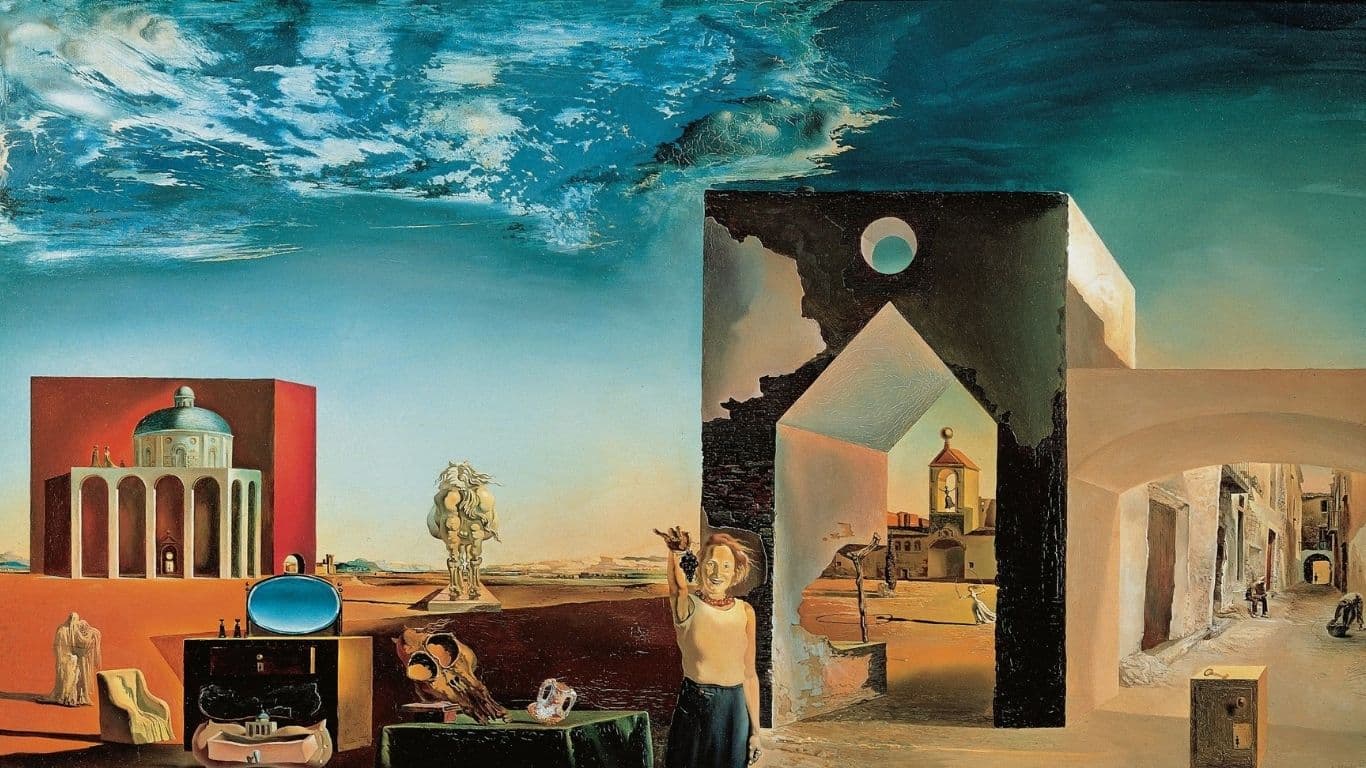
Salvador Dalí is one of the most recognized and enigmatic artists of the 20th century, and his surrealist masterpieces have never stopped captivating collectors and investors worldwide. His paintings, known for their dreamlike imagery, symbolic depth, and unique perspective on time and space, have built extraordinary market value over the decades.
Beyond their artistic appeal, Dalí’s paintings have become serious investment assets, with some works appreciating by jaw-dropping percentages over the past decade alone.
Auction prices for Dalí’s paintings have soared, with some works fetching tens of millions at prestigious sales. That consistent upward movement makes Salvador Dalí’s artworks a genuinely compelling investment opportunity heading into 2026 and beyond.
This guide walks you through the best Salvador Dalí paintings to invest in, their historical context, and how they have performed in the fine art market. By looking at auction history and ROI, you can gain real insight into which Dalí artworks carry the highest potential for future appreciation.
Table of Contents
Why Salvador Dalí Paintings Are A Good Investment
Investing in Salvador Dalí paintings has proven to be a genuinely lucrative strategy for collectors and fine art investors. His surrealist masterpieces, rich with symbolism and intricate detail, keep gaining recognition in both the art world and the investment market.
Over the past decade, Dalí’s works have appreciated in value with striking consistency, turning them into sought-after assets for serious investors.

Salvador Dalí’s paintings have delivered strong auction performance, with some works selling for record-breaking prices. Here are a few examples worth knowing.
- “Portrait de Paul Eluard” (1929) was sold for £13.5 million ($21.7 million) at Sotheby’s London in 2011, setting a new auction record for the artist.
- Dalí’s prints and lithographs have also experienced appreciation, with an average 2% annual increase in value over the past five years, while certain paintings have recorded an annual ROI of 7-10% over the last two decades.
- Between 2003 and 2017, 88.2% of Dalí’s works resold at auction increased in value, showing a strong historical performance.
One of the key forces driving the investment potential of Dalí’s paintings is their scarcity. Unlike contemporary artists who keep producing new work, Dalí’s original paintings are finite. His most iconic pieces sit in museums and private collections, which limits their availability on the secondary market and pushes annual appreciation higher. luxury assets like fine art are increasingly replacing stocks in the portfolios of the world’s wealthiest collectors, and scarcity is exactly why.

As collectors and museums compete for the limited number of Dalí paintings on the market, prices have climbed with remarkable consistency. That high demand and low supply equation gives Dalí’s paintings strong liquidity and real appreciation potential.
Dalí’s impact on the Surrealist movement and his influence on modern art make his paintings timeless investments. His works are featured in major institutions around the world, including MoMA in New York, the Reina Sofía in Madrid, and the Dalí Theatre-Museum in Figueres.
- The Museum of Modern Art (MoMA), New York
- The Dalí Theatre-Museum, Spain
- Tate Modern, London
That institutional recognition adds a layer of prestige that feeds directly into investment value. While Picasso and Van Gogh are often viewed as the ultimate blue-chip artists, Dalí’s paintings offer a lower entry point while still delivering high appreciation potential. His growth rates have tracked closely with works by Magritte, Max Ernst, and Joan Miró, making him a strong alternative in the fine art investment space.
As more collectors and institutions chase original Salvador Dalí paintings, auction prices will likely keep climbing. And with digitalization and fractional ownership platforms opening up fine art to a broader pool of capital, Dalí’s market demand is expected to grow even further.
If you are thinking about diversifying your portfolio, Dalí’s paintings offer a compelling combination of strong historical appreciation, genuine scarcity, institutional validation, and a global collector base that shows no signs of shrinking.
- Strong long-term ROI, with an annual appreciation of 7-10% on premium pieces.
- Scarcity value, as original works are rarely available.
- Cultural significance, ensuring continued demand.
- High auction liquidity, making resale opportunities favorable.
With all of that in mind, Dalí’s paintings stand out as one of the best opportunities in fine art investment heading into 2026.
The Persistence of Memory – Auction Price: Est. $150 million
The Persistence of Memory (1931) is one of the most famous Salvador Dalí paintings ever created and an outright icon of Surrealism. The painting features melting clocks draped over a barren landscape, symbolizing the fluidity of time and the dreamlike nature of reality. Dalí created this masterpiece after being inspired by the concept of relativity and the idea that time is not fixed but deeply subjective.
The soft, melting clocks play against a solid, still landscape, reinforcing the theme of time distortion in the subconscious mind. A distorted face, often read as Dalí’s own profile, adds another layer of psychological depth that keeps drawing viewers back.
Auction History and Market Value
The Persistence of Memory has never been publicly auctioned. It has been part of the Museum of Modern Art in New York since 1934, and its historical and cultural weight makes it one of the most valuable paintings in the world. If it were ever to be sold, its estimated market value would exceed $150 million.
Other Dalí paintings from the same era have fetched millions at auction, which gives us a useful benchmark for estimating what this piece could command.
- “Portrait de Paul Eluard” (1929) sold for $21.7 million in 2011.
- “The Sublime Moment” (1938) fetched $10.4 million in 2012.
- “Printemps Nécrophilique” (1936) sold for $16.3 million in 2022.
Based on historical appreciation trends and Dalí’s continued market demand, experts speculate that if The Persistence of Memory ever hit the auction block, its final sale price could exceed $200 million. The painting is not available for direct investment, but its influence on the broader market is real. As his most recognized work, it elevates the desirability of his other surrealist masterpieces and drives their annual appreciation rates upward.
Smart investors look at works Dalí produced during the same period, pieces that share the visual vocabulary and psychological depth of The Persistence of Memory but are actually accessible on the secondary market.
- Similar period Dalí works (1928-1935), which have shown annual appreciation rates of 7-10%.
- Paintings featuring melting clocks, as they are linked to this legendary piece and tend to command higher prices.
Acquiring The Persistence of Memory is not an option. But owning related Salvador Dalí paintings from the same era is one of the sharpest fine art investment strategies you can pursue heading into 2026.

The Elephants – Auction Price: Est. $12 million to $20 million
The Elephants (1948) is one of Salvador Dalí’s most striking and symbolic works, depicting elongated, thin-legged elephants carrying obelisks on their backs. These creatures stand impossibly tall on spindly, almost invisible legs, seeming to defy gravity entirely and evoking themes of power, fragility, and weightlessness.
Dalí frequently used elephants as symbols of strength, intelligence, and eternity. But their depiction here deliberately contrasts stability with surreal instability.
The towering creatures appear both delicate and imposing, capturing the burdens of materialism and the distorted perception of power. This painting reflects Dalí’s fascination with dream logic, psychological symbolism, and Renaissance-inspired forms, all working together in a single composition.
Auction History and Market Value
The Elephants sits in a private collection, but its investment value has grown steadily over the years. Comparable Salvador Dalí paintings from the late 1940s and 1950s have seen substantial appreciation, with several achieving multimillion-dollar price tags at major auction houses.
To get a sense of where The Elephants sits in terms of value, it helps to look at similar Dalí artworks sold at auction and how they have performed.
- “Couple aux têtes pleines de nuages” (1937) – Sold for $11.5 million in 2020.
- “Printemps Nécrophilique” (1936) – Sold for $16.3 million in 2022.
- “The Sublime Moment” (1938) – Fetched $10.4 million in 2012.
Given the historical performance of Dalí’s works, experts estimate that The Elephants could fetch between $12 million and $20 million if it appeared at a major auction house. Paintings from this period have appreciated at an annual rate of 7 to 10%, making them genuinely lucrative assets for collectors with a long-term view.
The Elephants holds strong investment value for several reasons. It is one of Dalí’s most visually recognized pieces, it comes from a period of peak creative output, and the symbolic depth of the work keeps it relevant to both academic and collector audiences.
- Recognizability: This painting is highly celebrated in art history and is featured in books, prints, and educational materials.
- Scarcity of Similar Works: Dalí created few major paintings in the late 1940s, making this a rare opportunity for collectors.
- Auction Demand: Large-scale surrealist works by Dalí are highly competitive in the fine art market, often fetching above their estimated value at auction.
Given the continuous price appreciation of Dalí’s surrealist masterpieces, acquiring a painting from the 1940s to 1950s period could be a highly profitable long-term investment.

The Angelus – Auction Price: $10 Million
Salvador Dalí’s The Angelus is a bold reinterpretation of the famous 19th-century painting by Jean-François Millet.
Dalí became obsessed with Millet’s work, convinced that its meaning ran far darker than it appeared on the surface. While Millet’s original depicts two farmers praying in a field, Dalí read the scene as a symbol of sexual repression, death, and subconscious fear. He created multiple works inspired by The Angelus, including paintings, sketches, and written analyses, all exploring Freudian psychoanalysis, hidden symbolism, and what he called his paranoia theory. His fascination led him to paint distorted and surreal versions of the composition, infusing them with a nightmarish, dreamlike quality.
One of Dalí’s most valuable reinterpretations of The Angelus is a canvas painted in the late 1930s, featuring eerie, elongated figures set against a barren landscape. This version conveys a sense of unease and existential dread, reinforcing Dalí’s belief that Millet’s original carried hidden meanings of mortality and tragedy.
Auction History and Market Value
A major version of The Angelus sold for over $10 million at Sotheby’s New York on November 16, 2021, marking it as one of the most expensive Dalí paintings ever sold. The price appreciation of Dalí’s reimagined historical works has been striking, demonstrating deep demand for his surrealist take on classical painting.
To understand the investment trajectory of Dalí’s The Angelus, it helps to look at other Dalí paintings with similar themes and how they have performed at auction.
- “Couple aux têtes pleines de nuages” (1937) – Sold for $11.5 million in 2020.
- “Printemps Nécrophilique” (1936) – Fetched $16.3 million in 2022.
- “Figure at a Window” (1925) – Sold for $8.5 million in 2019.
Given that steady price appreciation, experts estimate that if another major version of The Angelus appeared at auction, it could fetch between $12 million and $18 million in 2026. Dalí’s works that reinterpret historical masterpieces have consistently gained value, and The Angelus is one of the best-performing examples in that category.
The investment case for The Angelus is strong. It bridges two of the most compelling narratives in art collecting, Dalí’s surrealist genius and the enduring power of classical art history. That combination drives demand from a wide range of buyers.
- Psychological and Historical Significance: Dalí’s reinterpretation of The Angelus has been studied extensively in art theory and psychology, increasing its value among collectors.
- Market Demand for Surrealist Works: Surrealism remains one of the strongest-performing genres in the fine art market, and Dalí is among the top-traded surrealist artists.
- Auction Track Record: Works from Dalí’s late 1930s period have shown an annual appreciation rate of 8-12%, making them prime investments for long-term collectors.
With the increasing appreciation of Dalí’s psychologically driven surrealist paintings, acquiring a version of The Angelus could be one of the best moves you make in fine art in 2026.

Christ of Saint John of the Cross – Auction Price: Est. $100 million
Christ of Saint John of the Cross (1951) is one of Salvador Dalí’s most spiritually charged paintings and widely regarded as one of the greatest religious artworks of the 20th century.
Unlike traditional depictions of the crucifixion, Dalí presents Christ from an aerial perspective, suspended above a dark void and a serene seascape, creating an otherworldly and transcendent effect. His inspiration came from a mystical vision and a drawing by the 16th-century Spanish friar Saint John of the Cross, which presented a geometrically unique perspective of Christ on the cross.
Dalí brought his surrealist precision together with a deep sense of divine illumination, producing a painting that conveys both physical weight and spiritual elevation. Unlike many of his earlier works, this piece is free of melting clocks or distorted figures. Dalí was after something else here, the ultimate harmony between heaven and earth, which makes it one of his most emotionally powerful works.
Auction History and Market Value
The painting has never been publicly auctioned. It has been part of the Kelvingrove Art Gallery and Museum in Glasgow since 1952, and as of 2013 it was insured for over £60 million, roughly $80 million at the time. Experts believe that if Christ of Saint John of the Cross ever came to auction, it could easily exceed $100 million, given its religious weight and cultural impact. understanding how to build asset allocation strategies around rare, museum-quality works like this one is a discipline that separates serious collectors from casual buyers.
Other Dalí religious-themed paintings that have sold at auction help frame what this piece could command, and the comparables are impressive.
- “The Sacrament of the Last Supper” (1955) – Sold for $14.6 million in 2017.
- “Madonna of Port Lligat” (1950) – Estimated value $25 million but remains in a private collection.
Given the growing market demand for religious art, Christ of Saint John of the Cross would likely rank among the most expensive Salvador Dalí paintings ever sold if it were ever made available. While direct investment is not possible, its significance in Dalí’s artistic legacy shapes the market for similar religious and metaphysical works.
The influence of this painting on Dalí’s broader market is hard to overstate. Collectors pursuing his metaphysical period know this work anchors the entire category, and that drives up prices for everything adjacent to it.
- Historical and Religious Importance: One of Dalí’s most celebrated masterpieces, frequently ranked among the greatest religious artworks of all time.
- Increased Demand for Religious and Spiritual Art: The high value of religious artworks in the fine art market continues to drive up interest in Dalí’s faith-based pieces.
- Rarity of Comparable Works: Dalí’s spiritual-themed paintings from the 1950s are highly sought-after, with their values increasing by 8-10% annually.
If you want to capitalize on Dalí’s metaphysical period, look at paintings he produced during the 1950s. They have shown strong appreciation trends and carry the same spiritual intensity that makes Christ of Saint John of the Cross so compelling.

Moment of Transition – Auction Price: $5.4 Million
Moment of Transition is a fascinating exploration of transformation, time, and perception, showcasing Dalí’s ability to construct surreal, dreamlike narratives that challenge your sense of reality.
The painting features fluid, shifting forms that morph into one another, symbolizing the impermanence of existence and the subconscious mind’s ability to interpret multiple realities at once. Dalí used his paranoiac-critical method here, a technique he developed to explore the subconscious through optical illusions and multiple perspectives. The imagery seems to evolve as you look at it, reinforcing the idea that time and perception are not fixed but constantly in flux.
This painting came from a period when Dalí was incorporating more psychological, mathematical, and illusionistic elements into his work, transitioning from purely surrealist themes toward a broader exploration of spirituality and existential thought.
Auction History and Market Value
Moment of Transition sold at Christie’s New York on May 6, 2014 for $5.4 million, reflecting the continued appreciation of Dalí’s mid-to-late career works. That price puts it in the upper range of Dalí paintings exploring optical illusions and dream-state transformations, making it a valuable acquisition for collectors and investors with a sharp eye.
To get a clearer picture of its market trajectory, you can compare it with other Salvador Dalí paintings that explore psychological transformation and surreal perception.
- “Couple aux têtes pleines de nuages” (1937) – Sold for $11.5 million in 2020.
- “Printemps Nécrophilique” (1936) – Fetched $16.3 million in 2022.
- “The Eye of Time” (1949, jeweled artwork) – Fetched $1.3 million in 2014, showcasing the demand for Dalí’s time-related motifs.
Since Dalí’s illusion-based paintings have drawn increasing market interest, Moment of Transition is expected to keep appreciating, following the same upward trends seen across his surrealist catalog. At $5.4 million, it sits at a compelling entry point for collectors focused on Dalí’s surrealist and transformational themes.
The investment case here is built on several strong pillars. The work’s psychological complexity drives collector demand, its auction provenance is clean, and the category of illusion-based surrealist painting has shown consistent price growth over the past two decades.
- Strong Demand for Surrealist Paintings – Dalí’s dreamlike, fluid transformations remain highly sought-after in the fine art market.
- Proven Market Growth – Paintings from this period have exhibited annual appreciation rates of 7-10%, making them lucrative long-term assets.
- Increasing Auction Prices for Similar Works – Comparable Dalí paintings that explore psychological and optical illusions have experienced significant appreciation over time, suggesting that Moment of Transition will follow a similar trajectory.
Given its historical significance, auction price growth, and the sustained demand for Dalí’s surrealist masterpieces, Moment of Transition is a valuable and appreciating asset for art investors heading into 2026 and beyond.

La Musique – Auction Price: $6 Million
La Musique is one of Salvador Dalí’s lesser-known yet highly valuable works, reflecting his fascination with music, sound, and surrealist visual interpretation.
The painting blends abstract and figurative elements, incorporating dreamlike figures and fluid, organic shapes that seem to move rhythmically across the canvas. Dalí often spoke about the relationship between visual art and music, believing both had the power to evoke deep emotions and transcend reality. In La Musique, he builds a harmonious, almost symphonic composition where surreal elements interact in a way that suggests movement and melody.
The use of bright colors and ethereal forms reinforces the idea of sound becoming visible, a theme other surrealists explored but that Dalí executed in a way that was entirely his own. Created during a period when he was experimenting with mathematical precision, spiritual themes, and dream-state imagery, La Musique is a testament to his ability to capture intangible concepts on canvas.
Auction History and Market Value
La Musique sold for $6 million at Sotheby’s New York on June 19, 2013, placing it among Dalí’s more valuable mid-to-late career paintings.
That price reflects the sustained demand for surrealist works that go beyond the purely visual, particularly those that intersect with music, time, and the subconscious mind.
To assess its market trajectory, comparing its auction performance with other Dalí paintings from similar periods gives you a useful frame of reference.
- “Couple aux têtes pleines de nuages” (1937) – Sold for $11.5 million in 2020.
- “Printemps Nécrophilique” (1936) – Sold for $16.3 million in 2022.
- “Moment of Transition” – Sold for $5.4 million, reinforcing the market’s interest in Dalí’s mid-century works.
At $6 million, La Musique sits firmly within Dalí’s mid-to-high-value sales bracket, indicating strong appreciation potential going forward. Over the last 20 years, Dalí’s artworks have appreciated at an average annual rate of 7 to 10%, with some pieces more than doubling in value. La Musique is well positioned to follow that curve.
The investment case for La Musique is built on its thematic rarity within Dalí’s catalog, its clean auction history, and the growing collector appetite for surrealist works that operate at the intersection of multiple art forms.
- Growing Interest in Dalí’s Conceptual Surrealism – Paintings that explore non-visual themes, such as time and music, have gained significant market traction.
- Recent Auction Performance – The $6 million sale price confirms its desirability, with expectations of further appreciation.
- Limited Availability of Similar Works – Dalí produced fewer paintings centered on music and sound, increasing the rarity and exclusivity of this piece.
Given its strong sale price, growing investor interest, and its place within Dalí’s surrealist legacy, La Musique is a high-value opportunity for collectors in 2026 and beyond. And if you are thinking about how fine art fits alongside other collectible investments, it is worth knowing that Hermès handbags have quietly outperformed gold over the same period, which tells you a great deal about where sophisticated capital is moving.

Spectre du Soir sur la Plage – Auction Price: $6.7 Million
Spectre du Soir sur la Plage is one of Salvador Dalí’s most evocative and psychologically intense works, blending his signature surrealist dreamscapes with an eerie, almost unsettling realism.
The title translates to Specter of the Evening on the Beach, and it delivers exactly what the name promises: a ghostly, otherworldly presence that keeps you looking. Set against a vast, desolate beach, the painting features an elongated, distorted figure that appears frozen in an introspective, almost melancholic state. The contrast between the stillness of the landscape and the fluid surrealism of the figure creates a sense of loneliness, existential questioning, and the quiet weight of passing time.
Dalí frequently returned to beach settings in his work, often drawing on the Catalonian shores of his childhood. But Spectre du Soir sur la Plage takes on a darker, more introspective tone, making it one of his most hauntingly beautiful compositions.
Auction History and Market Value
On November 14, 2017, Spectre du Soir sur la Plage sold for $6.7 million at Sotheby’s New York, reinforcing its high value and strong demand among Dalí collectors. The final price exceeded pre-sale estimates, signaling the growing appetite for Dalí’s psychologically driven surrealist works.
Comparing its price appreciation with other Dalí paintings that explore surrealist beachscapes and dreamlike figures gives you a clearer picture of where this work is headed.
- “Couple aux têtes pleines de nuages” (1937) – Sold for $11.5 million in 2020.
- “Printemps Nécrophilique” (1936) – Fetched $16.3 million in 2022.
- “La Musique” (1940s) – Sold for $6 million, showing a consistent demand for Dalí’s dreamlike and conceptual works.
- “Moment of Transition” – Sold for $5.4 million, confirming rising interest in Dalí’s surrealist transformations.
At $6.7 million, Spectre du Soir sur la Plage sits firmly in Dalí’s high-value sales bracket and shows strong appreciation potential for investors. Given that Dalí’s top-tier paintings keep rising, this work is expected to follow the same upward trajectory in the years ahead.
The investment drivers here are compelling. The work’s psychological depth, its roots in Dalí’s personal geography, and its strong auction history all point toward continued appreciation. building a diversified allocation that includes high-quality surrealist works like this one is a strategy more private wealth managers are recommending to their clients.
- Dalí’s Beachscapes Are in High Demand – His coastal surrealist works are among his most sought-after, particularly those exploring psychological and existential themes.
- Strong Auction Performance – Dalí’s paintings have experienced annual appreciation rates of 8-12%, with major sales in the last decade exceeding expectations.
- Emotional and Psychological Depth – Works that evoke symbolic introspection and surreal transformations are particularly desirable among collectors and institutions, ensuring high resale value.
Given its historical significance, auction performance, and the increasing demand for Dalí’s psychologically immersive works, Spectre du Soir sur la Plage is a top-tier investment to watch in 2026 and beyond.

Maison pour Érotomane – Auction Price: $4.7 Million
Maison pour Érotomane is one of Salvador Dalí’s more enigmatic and symbol-laden works, blending surrealist architecture with genuine psychological depth.
The title translates to House for an Erotomaniac, and it signals exactly the kind of territory Dalí loved to explore: desire, obsession, and subconscious impulse. In this painting, he constructs a dreamlike architectural space where distorted buildings and symbolic figures merge, reflecting his deep engagement with Freudian psychoanalysis and the hidden forces that shape human behavior. The whole composition exudes a tension between control and chaos, mirroring Dalí’s belief that the mind is governed by desires it rarely acknowledges.
The work is striking for its sharp surrealist precision, showing Dalí’s full command of light, shadow, and architectural perspective all at once.
Maison pour Érotomane belongs to a period when Dalí was pushing hard into themes of eroticism, paranoia, and transformation, making it a valuable example of his psychological surrealism at its most concentrated.
Auction History and Market Value
On February 28, 2018, Maison pour Érotomane sold for £3.5 million, roughly $4.7 million, at Sotheby’s London, placing it among Dalí’s mid-to-high-value surrealist works. The final price met expectations and reinforced the market’s consistent demand for Dalí’s psychologically immersive compositions. Comparing it with other Dalí paintings that explore psychological symbolism and surrealist architecture helps frame its investment trajectory.
- “Couple aux têtes pleines de nuages” (1937) – Sold for $11.5 million in 2020.
- “Moment of Transition” (1930s-1940s) – Sold for $5.4 million, demonstrating the increasing interest in Dalí’s transformation-based works.
- “La Musique” (1940s) – Sold for $6 million, showing strong demand for Dalí’s conceptual and dreamlike paintings.
At $4.7 million, Maison pour Érotomane sits in the mid-range tier of Dalí’s auction results. But its highly symbolic nature and rare architectural theme suggest real room for future appreciation, particularly as collector interest in psychological surrealism keeps growing.
Maison pour Érotomane is a strategic acquisition for investors who want a Dalí work with both psychological complexity and architectural rarity, two qualities that are hard to find combined in a single piece.
The investment factors here are worth spelling out. The work’s thematic rarity within Dalí’s catalog, its clean Sotheby’s provenance, and the growing academic and collector interest in surrealist psychoanalysis all point toward sustained appreciation.
- Freudian Influence Increases Market Value – Dalí’s paintings that explore sexuality, desire, and subconscious impulses tend to appreciate faster, as they attract collectors and scholars interested in surrealist psychology.
- Auction Performance Reflects Strong Demand – The $4.7 million sale confirms steady appreciation, with expectations of future value growth as demand for Dalí’s psychologically immersive works continues to rise.
- Limited Number of Similar Works – Dalí produced relatively few architectural surrealist pieces, making Maison pour Érotomane a rare and valuable asset for collectors.
Considering Dalí’s increasing auction performance and the expanding market interest in surrealist psychoanalysis, Maison pour Érotomane is expected to keep climbing in value, making it a solid fine art investment heading into 2026 and beyond.

The Burning Giraffe – Auction Price: Est. $20 million
The Burning Giraffe (1937) is one of Salvador Dalí’s most politically and psychologically charged works. Painted during the Spanish Civil War and on the eve of World War II, this piece channels Dalí’s deep anxieties about the state of the world and the fragile nature of human existence.
It features a distorted, elongated female figure with opened drawers protruding from her body, symbolizing hidden subconscious secrets, repression, and psychological turmoil, all concepts drawn from Freud’s psychoanalytic framework. The figure appears emotionally frozen, yet her supporting crutches suggest both physical and mental instability, reinforcing Dalí’s recurring theme that humanity relies on external support systems to stay upright in a chaotic world. In the background, a burning giraffe stands ominously against a dark, apocalyptic sky, representing war, destruction, and the collapse of civilization.
Dalí once described the burning giraffe as the masculine cosmic apocalyptic monster, a symbol for the violent and destructive forces shaping 20th-century history. This painting is a masterpiece of political surrealism, blending dreamlike horror with existential introspection, and it stands as one of Dalí’s most thought-provoking and historically significant works. You can read more about Dalí’s enduring cultural legacy and why institutions continue to place him at the center of 20th-century art history.
Auction History and Market Value
Despite its cultural weight, The Burning Giraffe is not available for private sale. It is housed in the Kunstmuseum Basel in Switzerland. But similar Dalí paintings from the 1930s, especially those exploring political, war-related, and psychological themes, have seen substantial price increases at auction.
To estimate the potential market value of The Burning Giraffe, comparing it with other high-value Dalí paintings from the same period gives you the clearest picture available.
- “Couple aux têtes pleines de nuages” (1937) – Sold for $11.5 million in 2020.
- “Printemps Nécrophilique” (1936) – Auctioned for $16.3 million in 2022.
- “Soft Construction with Boiled Beans (Premonition of Civil War)” (1936) – Estimated to be worth $20 million+ if it were to be auctioned today.
Given the historical significance and rarity of politically charged Dalí works, experts estimate that if The Burning Giraffe ever went to auction, its sale price could exceed $20 million, placing it among Dalí’s highest-valued artworks. The painting is not available for purchase, but its impact on the art market raises the value of similar Dalí works across the board. Investors seeking strong ROI should focus on other 1930s Dalí works, as these have shown consistent annual appreciation, deep collector demand, and a proven track record at major auction houses. You can follow Dalí auction results and market commentary at ARTnews to stay on top of pricing movements in real time.
- Annual appreciation rates of 8-12%, outperforming many other surrealist artworks.
- Record-breaking auction performances in recent years, demonstrating the continued rise in value for Dalí’s politically and psychologically themed paintings.
- Growing demand from museums and high-net-worth collectors, ensuring strong liquidity for Dalí’s most renowned works.
Given the historical importance of Dalí’s pre-WWII works, any collector who acquires a piece from this period can reasonably expect strong value appreciation over the next decade. The political and psychological weight of these paintings only deepens with time, and the global pool of buyers willing to pay for that history keeps growing. For a broader view of how rare collectibles fit into a high-net-worth investment strategy, the Financial Times collecting desk offers some of the sharpest analysis available, and it is well worth bookmarking.

FAQ
Why are Salvador Dalí paintings considered a good investment?
Salvador Dalí’s paintings have consistently appreciated in value due to their cultural significance, historical importance, and limited supply. His paintings have shown annual appreciation rates of 7-12%, with some high-profile pieces doubling or tripling in value over the last two decades.
Which Salvador Dalí paintings have seen the highest auction prices?
– “Portrait de Paul Eluard” (1929) – Sold for $21.7 million at Sotheby’s London in 2011.
– “Printemps Nécrophilique” (1936) – Sold for $16.3 million in 2022.
– “Couple aux têtes pleines de nuages” (1937) – Sold for $11.5 million in 2020.
– “The Sacrament of the Last Supper” (1955) – Sold for $14.6 million in 2017.
Are Salvador Dalí prints or lithographs good investments?
While original Dalí paintings hold the highest investment value, prints and lithographs can also appreciate. Limited edition prints have seen a steady 2-5% annual appreciation rate, with rare signed editions fetching thousands of dollars.
How do Dalí’s paintings compare to other blue-chip artists in terms of investment?
Dalí paintings offer a strong alternative to Picasso, Magritte, and Miró, providing lower entry costs while still offering high appreciation potential. While Picasso remains the most dominant name in modern art auctions, Dalí’s works have demonstrated comparable growth rates and continue to be highly liquid in the fine art market.