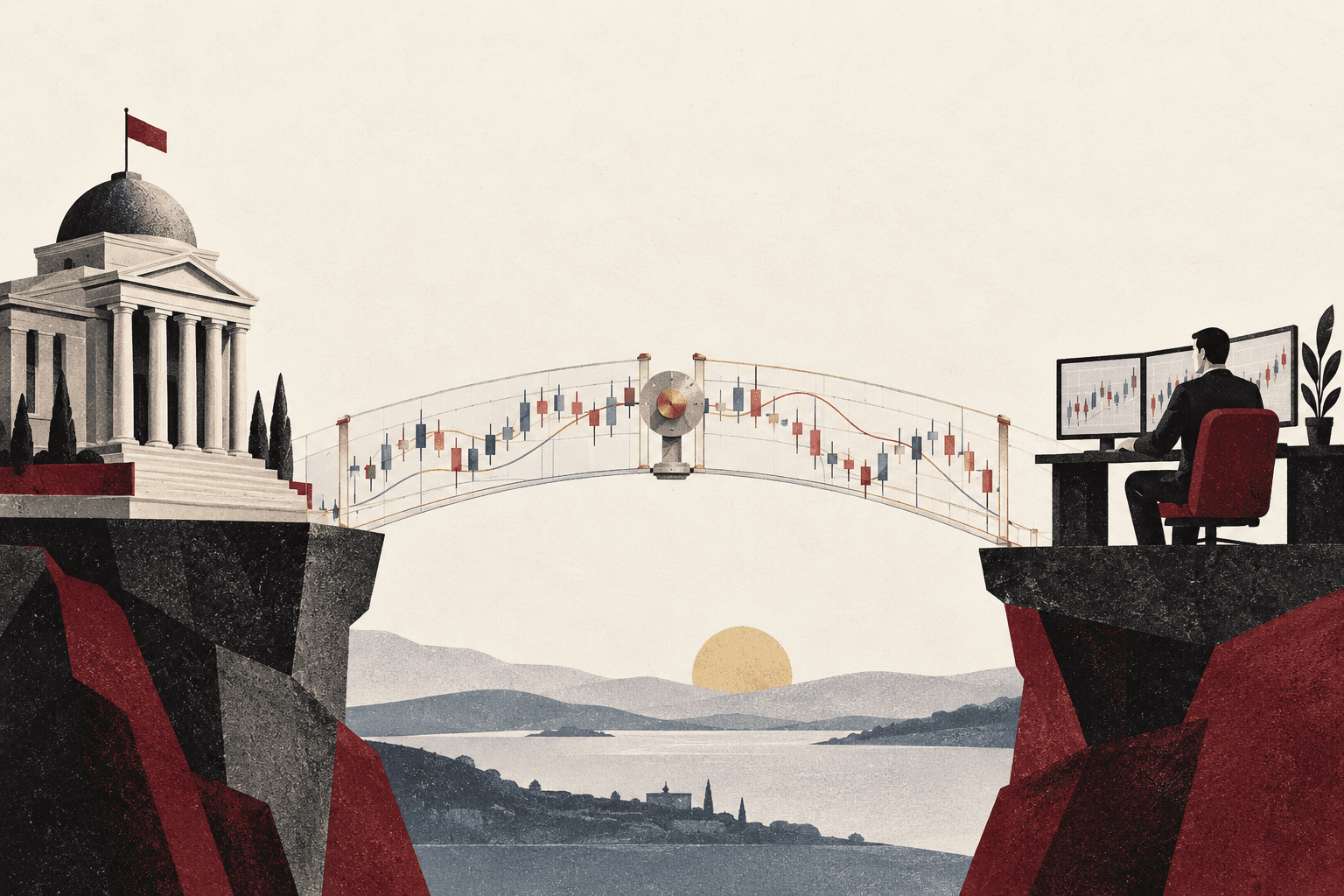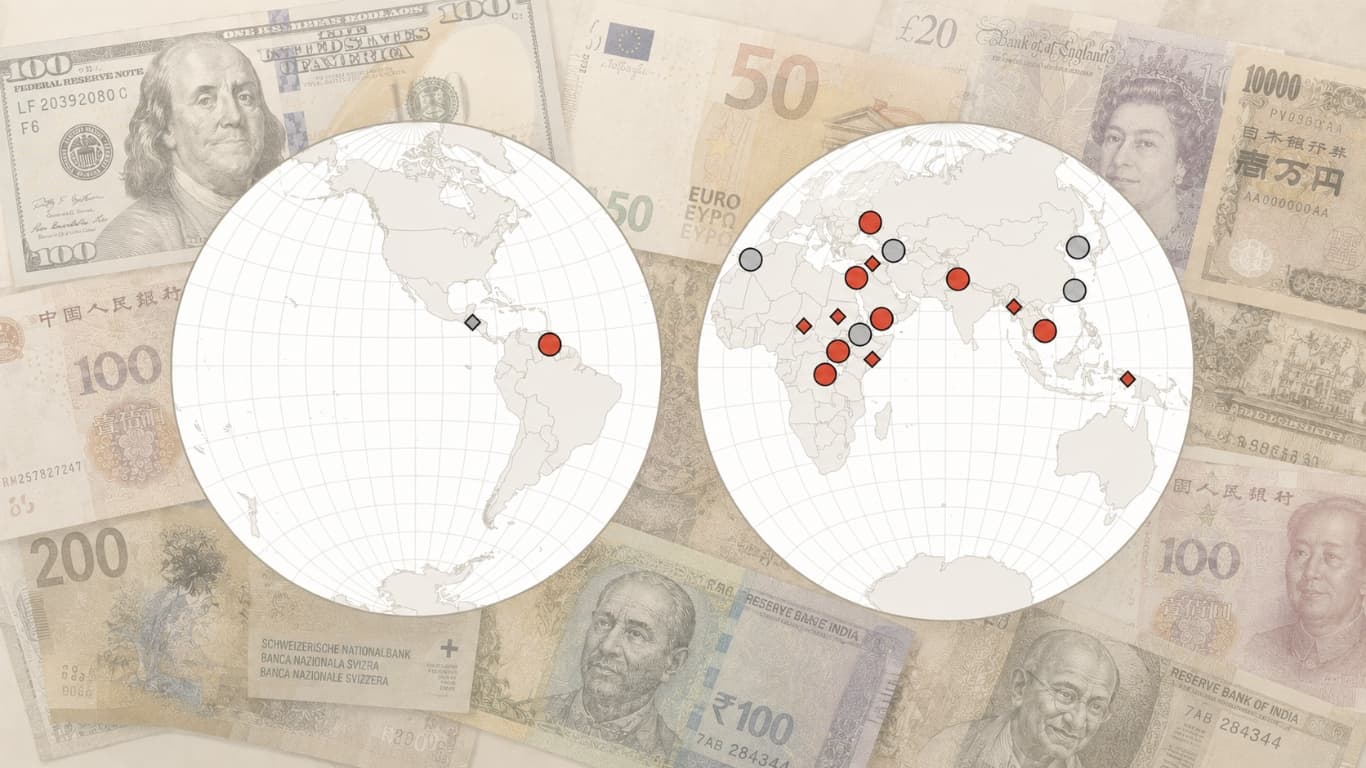
Companies always focus on the usual: tax planning, product-led growth, innovation, and hiring the best people.
But they all overlook one of the most important parts of the business: how money moves. Getting paid and paying others can make or break any business, yet management somehow thinks it is “something finance handles.” Well, no.
The people who manage payment and banking functions are not adequately trained to do so. Key areas, such as how payments and banking affect technology, UX, compliance, and other essential aspects of a business, are absent from accounting, economics, and MBA courses.
Key Takeaways
- How money moves is a core business function, not “something finance handles.” Getting paid and paying others can make or break a company.
- Legal does not mean bankable. Banks assess risk, not legality, so a perfectly legal structure can still be refused or quietly de-risked.
- Cross-border payments travel invisible routes through correspondent banks and several jurisdictions, so a sanction or a changed risk appetite far away can block a transfer that looks unrelated.
- Diversification is often an illusion. Many payment providers are white-label layers resting on the same acquiring bank or correspondent network, so the hidden concentration can fail all at once.
- Banks make blanket decisions under pressure. As governments’ enforcement arms they can drop a currency, country, or long-standing client overnight, without explanation.
- Payment and banking strategy is now a necessity, not a nice to have. The more international the company, the more geopolitical risk runs straight through its money flows.
- Who: CFOs, treasurers, founders, and family offices that move money across borders, plus the banks and payment providers that route it.
- What: How geopolitics, sanctions, and bank risk appetite reshape global money movement, and why payment and banking strategy belongs beside tax and legal planning.
- When: Now, in a world of sanctions, wars, and capital controls where a distant decision can freeze your money overnight.
- Where: Across the invisible correspondent banking rails and multiple jurisdictions that every international transfer passes through.
- Why: Because a geopolitical event does not need to touch a company directly to disrupt its ability to move money, and most leaders only react once the damage is done.
Business Is Global
We are living in an unpredictable world where sanctions, wars, and capital controls can affect our money overnight, even when our business has nothing to do with the countries involved. Politics and country-level decisions can greatly influence how money moves through the global financial system, and they can become the biggest payment and banking risks that no one is really talking about. What is worse, we only focus on these issues when the damage is already done.
Every organisation faces payment or banking issues at some point: delayed, rejected, or completely blocked transfers, never-ending questions from banks, or “out of the blue” rejections are the nightmare of every CFO. We think we have the right to bank accounts and to conduct business globally. However, banks and financial institutions are independent private companies that all rely on international payment routes and intermediary rails to execute transfers and are greatly affected by any seemingly small change.
Understanding how money moves internationally today is a superpower that not many have.
The Illusion of Legal Structures
One of the biggest mistakes companies make is assuming that if something is legal, banks should automatically accept it. This could not be further from the truth.
Lawyers and tax advisors are only interested in whether a company’s activities are legal. Banks think differently because they are focused on risk. All banks and financial institutions are strictly regulated because they are expected to prevent financial crime, comply with sanctions, monitor suspicious activity, and protect the wider financial system. This means that they are interested in the “what if” rather than the “what now.”
Even though a structure is perfectly legal, if a company operates across multiple jurisdictions, serves higher-risk markets, or has ownership structures that are complicated to understand, banks can easily decide that the relationship creates more risk than reward.
This is even more important when the world is facing geopolitical uncertainty. Financial institutions are expected to demonstrate that they have taken reasonable steps to identify risks before problems arise; otherwise, they face regulatory action, financial penalties, and reputational damage. This means that anyone handling your money will think twice before getting involved in questionable situations and would rather miss the revenue.
This is why payment and banking planning is just as important as legal and tax planning. A structure that looks attractive on paper but struggles to move money efficiently can create costs, delays, and operational problems that outweigh the original benefit.
The World Is More Connected Than We Think
Think of sending money like travelling from one village to another: you start on a small local road, join larger connecting roads, travel on the highway, then exit onto smaller roads until you reach your destination. In banking, local banks are the villages, payment infrastructure is the connecting roads, and correspondent banks are the highways that allow your money to move between banks that have no direct connection.
This means that a single transfer between two countries can involve several jurisdictions, banks, and systems in between, which seemingly have no connection to either the sender or the recipient. Users only see the beginning and the end, while the route itself is invisible. If all systems work well, this is how it is supposed to be. However, if sanctions are introduced, a correspondent bank changes its risk appetite, or a financial institution decides to stop servicing a particular region, the entire underlying payment infrastructure can be disrupted. Companies that have no direct relationship with the affected countries or financial institutions can still experience disruptions because the route used to move the money has changed. The danger is that these invisible routes cannot be planned for.
For example, when sanctions were imposed on Russian financial institutions, many companies thought they were unaffected because they had no direct exposure to Russia, but transfers to countries that relied on Russian intermediary banks were also blocked or delayed.
We Still Depend on Physical Infrastructure
We think that online banking and digital payments exist in the cloud and are detached from anything physical. However, even the most advanced digital financial institution relies on physical infrastructure to operate: data still moves through physical wires, data centres, and telecommunications networks. The attacks of September 11 affected far more than buildings and people, as they also damaged financial infrastructure through communications systems. Many major banks and financial institutions were forced to reroute operations suddenly to adapt to the catastrophe, which resulted in higher fees and longer clearing times.
The Illusion of Diversification
Several CFOs live under the false impression that they have diversified their payment and banking risks because the business uses several providers. But the whole FinTech industry was created to improve customer experience, which means they are all just multiple layers on top of each other, reselling the same few underlying services through different front ends. A company can use several payment gateways, merchant accounts, wallets, or financial platforms and assume that risk is spread across different providers, while these providers are all white-label, BaaS, or embedded payment solutions of the same acquiring bank or correspondent network. The risk lies in the unseen concentration underneath, which the user has no access to.
This creates additional challenges during periods of geopolitical uncertainty because multiple providers can suddenly experience the same problems at the same time. Unknowingly, CFOs have assessed risks and built their liquidity plans on completely false assumptions.
Why Banks Make Blanket Decisions
Banks are governments’ main enforcement arms for sanctions, financial crime prevention, capital controls, and regulatory requirements. They are expected to identify suspicious activity, monitor transactions, and notify regulators in order to protect their licences. They carry enormous responsibility, and even a small failure can be significant. This is why banks become extremely cautious during uncertain periods and make blanket decisions.
Since banks are private institutions with their own risk appetite, they can easily decide that they will no longer support a particular currency, country, transaction type, business activity, or even customer nationality. They do not have to share their reasoning with clients and can make these decisions overnight, which can seriously affect legitimate businesses, even when successful relationships have existed for years.
From the company’s perspective, this might seem unfair, but banks have the upper hand in deciding whether a client is worth the risk and can terminate the relationship if they determine that compliance costs, potential penalties, or reputational exposure exceed the revenue generated by that client. During periods of uncertainty, reducing risk is often more important than generating additional revenue.
Understanding how banks think is therefore essential today, and a payment and banking strategy is no longer a “good to have” but a basic necessity.
Education Matters
Technology, regulation, and geopolitics are changing faster than most organisations can adapt.
Most businesses only react after a problem appears, and firefighting usually results in more limited, more expensive, and much worse outcomes. However, the more international a company becomes, the more important payment and banking strategy becomes.
Due to the lack of education on this subject, CFOs often make important decisions based on gut feeling, recommendations, or even Google searches, rather than on a proper understanding of how the financial system operates. We cannot blame them because structured education does not exist. We cannot even clearly define the scope of a “Chief Payment Officer,” whose skill set is completely different from that of a traditional CFO or Treasurer.
Understanding geopolitical uncertainty and applying that understanding across all the areas affected by payment and banking flows requires a specialised skill set. Organisations must understand that all departments are interconnected through the flow of funds within the company: where funds originate, where they are sent, which currencies are involved, which institutions hold funds, how suppliers are paid, how salaries are processed, and what happens if part of the process stops functioning. This also applies to external factors: decisions made in one jurisdiction can create consequences far beyond their original location and influence how money moves.
The Future
Geopolitics has already become one of the most important forces shaping international money movement, yet payment and banking issues remain far less discussed. Fund flows can no longer be treated as background functions that deserve attention only when something goes wrong. Our financial system has become increasingly interconnected, and geopolitical decisions now influence how money moves across borders, how banks assess risk, and how financial institutions interact with businesses.
Companies need to stop relying solely on CFOs to make these decisions because they are simply not trained in even the basics, such as SEPA, SWIFT, open banking, APIs, and orchestrators. Instead of asking how much a payment costs, financial professionals need to understand how money moves, who holds it, and what happens when any of the payment routes become unavailable.
Geopolitical events do not need to affect a company directly to affect its ability to move money, as the consequences often travel much further than the original event itself.
Related reading on how capital is going global can be found in Why Investing Across Countries Is Becoming the New Standard.
We last reviewed this analysis in June 2026.


Viktoria Soltesz
Viktoria Soltesz is an international payment and banking strategist, founder of the PSP Angels Group and The Soltesz Institute. She helps international businesses, family offices, fintech companies, and regulated financial firms understand how banks think, reduce payment and banking risks, and build stronger structures for moving and protecting money globally. Having worked with more than 3,000 companies worldwide, Viktoria launched the world's first EU MBA specialising in Payments and Banking. She is also the author of the bestseller Moving Money: How Banks Think and of The CPayO, Chief Payment Officer, The Role Which Doesn't Exist (but should!). She has been recognised as Payment Consultant of the Year for three consecutive years. At The Luxury Playbook, she writes about wealth preservation, international banking, geopolitical risk, family office structures, and the financial infrastructure behind global wealth.