The stock market is a fascinating yet unpredictable beast. It has the power to build vast wealth or dismantle fortunes in the blink of an eye. If you’re a serious investor, knowing when a bubble is forming is one of the most valuable skills you can develop.
A stock market bubble can feel like an intoxicating illusion of endless growth, but history has shown time and again that every bubble eventually bursts, leaving devastation in its wake. What follows is your guide to the telltale signs of a stock market bubble, the stages it moves through, and the knowledge you need to spot these financial traps before they wreak havoc on your portfolio.
- A stock market bubble forms when asset prices rise far above any reasonable estimate of underlying intrinsic value, sustained by speculation rather than fundamentals.
- Classic warning signs include extreme valuation multiples, rapid retail participation, narrative-driven IPOs and visible reluctance to discuss downside scenarios.
- Historical bubbles from tulips in 1637 to dot-com stocks in 2000 share common patterns of leverage, easy credit and conviction that this time is genuinely different.
- Bubbles can persist longer than rational analysis suggests, making timing exits difficult even for investors who correctly identify the bubble well in advance.
- Defensive responses include trimming exposure, raising cash, rotating into less-bubbly sectors and ensuring portfolio leverage remains modest relative to long-term plans.
- A disciplined investor combines historical pattern recognition with valuation discipline, accepting that participating in late-stage bubbles often destroys more capital than missing them.
- Who is this for?
- Long-term investors and active allocators who want to recognise the historical patterns of stock market bubbles and protect their portfolios from the eventual reversals that follow excess.
- What is happening?
- A comprehensive guide to identifying stock market bubbles, covering historical examples, warning signs, behavioural drivers and the defensive portfolio actions investors can take when conditions warrant.
- When did this emerge?
- Most relevant late in long bull markets, after rapid sector-specific price rises and when public discussion increasingly treats high valuations as permanently justified by new conditions.
- Where is this happening?
- Universal across global equity markets, with the clearest historical case studies drawn from US tech in 2000, US housing in 2007 and various sector-specific manias in subsequent decades.
- Why does it matter?
- Bubbles have caused the largest permanent capital losses in modern market history, and the discipline to recognise and respond to them is one of the most valuable skills any long-term investor can develop.
The Anatomy of a Stock Market Bubble
Bubble identification is one of the most-studied topics in monetary economics. The Federal Reserve's financial-stability reports track asset-valuation extremes across cycles, and FRED hosts the underlying valuation and credit-condition data.
The institutional research desks add the cross-cycle context. Goldman Sachs, JP Morgan, and Morgan Stanley all maintain valuation dashboards that flag the kind of extremes that historically precede major drawdowns.
Before you can spot a bubble, you need to understand what one actually is and how it forms. A stock market bubble occurs when stock prices rise rapidly to levels far beyond their intrinsic value. This surge gets driven by irrational exuberance, speculation, and a collective belief that prices will climb indefinitely.
That unsustainable growth eventually hits a tipping point, leading to a sharp and often sudden collapse in prices, what most people simply call a market crash. Asian markets betting too much on AI offer a timely example of how quickly that exuberance can shift to anxiety.
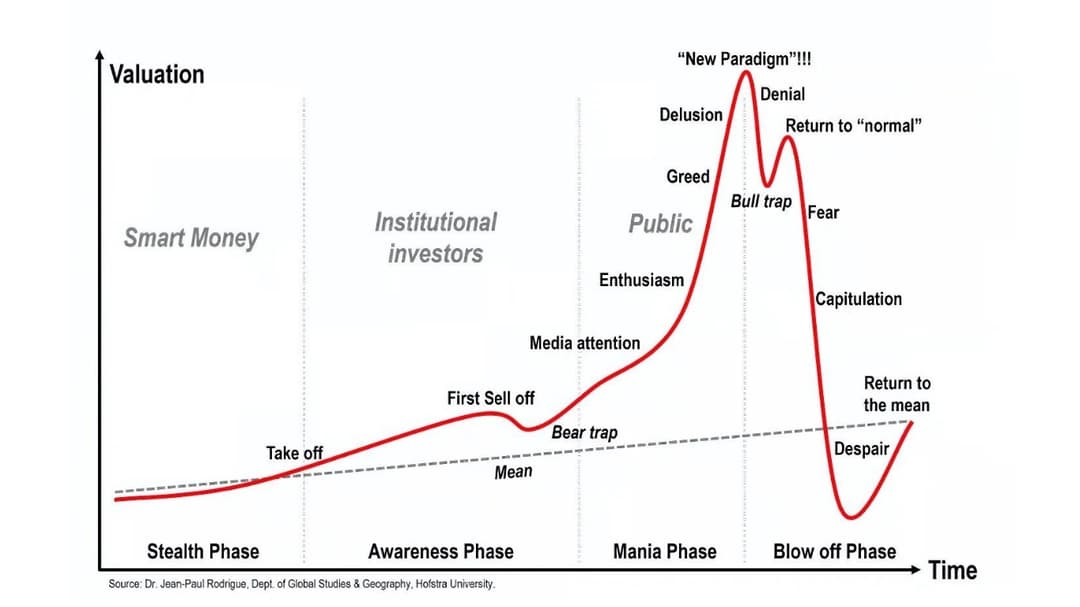
Stage 1: Displacement
Bubbles almost always start with a displacement, an event that shifts how investors see the world. This could be a technological breakthrough, a regulatory change, or an economic shift that opens up new opportunities. The dot-com bubble of the late 1990s, for instance, was ignited by the rapid rise of internet-based companies.
Displacement brings with it excitement and optimism, and it lays the groundwork for everything that follows.
Stage 2: Boom
Stage 2: The Boom The boom stage is where the bubble truly begins to inflate. Prices rise steadily, pulling in more investors who are terrified of missing out on the gains. Media coverage intensifies, and stories of overnight fortunes start circulating everywhere you look.
Trading volumes surge, leverage climbs, and investors start borrowing to amplify their returns. This stage can stretch across several months or even years, creating a dangerous sense of normalcy around prices that are anything but normal.
Stage 3: Euphoria
Euphoria marks the peak. Caution gets thrown out entirely as investors chase ever-higher returns with little regard for risk. Valuations become completely disconnected from fundamentals, with price-to-earnings ratios hitting levels that would have seemed absurd just years earlier.
Everyone is operating on the “greater fool theory,” convinced they can always offload their position to someone willing to pay even more. That collective blindness is what sets the stage for the crash that follows.
Stage 4: Profit-Taking
As the bubble reaches its peak, the savviest investors start recognizing that prices cannot hold and begin quietly taking profits. Selling pressure builds and prices start to drift lower. But many investors stay in, still convinced there are gains left to capture.
The profit-taking stage tends to be short-lived. The market shifts quickly into its final and most destructive chapter.
Stage 5: Panic
Stage 5: Panic The panic phase is where the bubble finally bursts. Prices plummet as investors scramble to exit at almost any price. That mass exodus creates a cascading decline, erasing the gains accumulated over months or years in a matter of weeks.
Margin calls make everything worse, forcing leveraged investors to liquidate positions they never planned to sell, which pushes prices down even further. When the dust settles, markets are in disarray and investor confidence is shattered.
Key Indicators of a Stock Market Bubble
For deeper context, the breakdown in how to manage risk in the stock market when valuations look stretched is worth reading alongside this analysis.
Spotting a bubble before it bursts can save you from losses that take years to recover from. No single indicator gives you a definitive answer, but several warning signs tend to appear together in the lead-up to a collapse.
1. Excessive Valuations
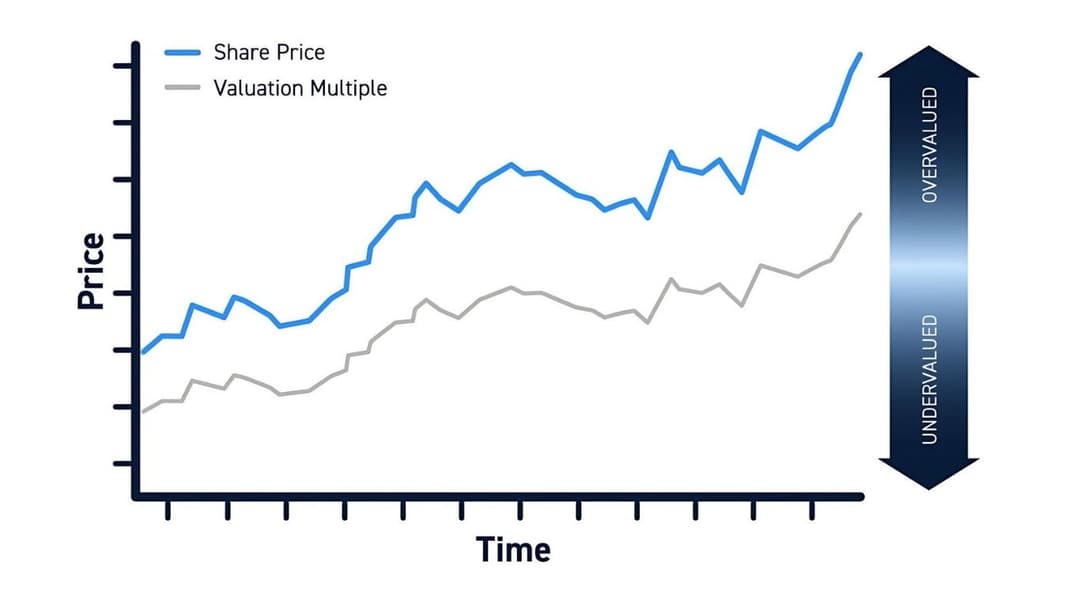
One of the clearest signs of a bubble is when stock prices lose their connection to underlying fundamentals like earnings, revenue, and realistic growth prospects. The price-to-earnings ratio is a useful tool here. Historically, when the P/E ratio of a broad index like the S&P 500 climbs above 30, it signals the market may be running on speculation rather than substance.
During the dot-com bubble, the NASDAQ’s P/E ratio surged past 200 before the whole thing collapsed. Bloomberg Markets tracks these valuation metrics in real time, and it’s worth checking them regularly.
2. Surging Market Liquidity
A sharp flood of liquidity into the market is another warning sign worth watching. When more participants pile in and trading volumes spike, prices can get pushed higher in ways that have nothing to do with the actual value of the underlying assets. That same surge in liquidity makes the market far more vulnerable to a sudden reversal in sentiment.
The global financial crisis of 2008 was preceded by exactly this kind of environment, fueled by loose monetary policy and credit conditions that made borrowing almost effortless.
3. Widespread Speculation
Speculation sits at the heart of every bubble. When investors start buying assets not because of what they’re worth, but because they expect to sell them to someone else at a higher price, the market has become a breeding ground for trouble. You can see speculative behavior in the rise of day trading activity, surging margin borrowing, and the sudden popularity of high-risk investments with little track record.
The housing bubble of the mid-2000s showed exactly how destructive this gets, as speculative bets on subprime mortgages and mortgage-backed securities eventually brought the entire financial system to its knees.
4. Herd Mentality
Herd mentality is one of the most powerful forces in financial markets, and one of the most dangerous. When investors collectively follow the crowd and abandon their own analysis, bubbles form fast. The fear of missing out drives money into popular stocks and sectors, inflating prices well beyond what fundamentals can justify.
The cryptocurrency boom of 2017 is a perfect illustration, where herd behavior pushed Bitcoin to nearly $20,000 before a brutal collapse wiped out latecomers. Understanding how panic moves markets can help you stay clear-headed when the crowd starts running.
5. High Levels of Leverage
Leverage amplifies everything. When investors borrow heavily to buy assets, they make the market fragile. A modest price decline can trigger forced selling among leveraged positions, which pushes prices lower still, setting off a chain reaction.
The 1929 crash that triggered the Great Depression was fueled in large part by investors buying stocks on margin, with borrowed money they had no way to repay once prices turned. The mechanics of leverage as an investment tool are worth understanding deeply, so you know exactly when it works in your favor and when it becomes a liability.
6. IPO Activity
A surge in initial public offerings is another red flag you should not ignore. During a bubble, companies rush to go public while investor enthusiasm is running high and valuations are inflated. Many of these companies have unproven business models and speculative growth stories that fall apart under scrutiny.
The dot-com era saw wave after wave of internet companies list on public exchanges, many of which had never turned a profit and never would. When the bubble burst, investors in those IPOs were left holding almost nothing.
7. Parabolic Price Increases
When asset prices start rising exponentially in a short window of time, that parabolic move is almost always a warning sign. It typically happens during the euphoria stage when caution has completely evaporated and momentum buyers are piling in. But parabolic moves are not sustainable, and the reversal tends to be just as sharp as the run-up.
Bitcoin’s 2017 surge to nearly $20,000 followed by its collapse to around $3,000 within a year is one of the clearest modern examples of this pattern playing out.
Real-World Examples of Stock Market Bubbles
Looking at past bubbles gives you a sharper eye for spotting the next one. Here are some of the most instructive examples from history.
1. The Tulip Mania (1636 to 1637)
Tulip Mania in the Netherlands is widely considered the first recorded speculative bubble. Tulip bulb prices soared to extraordinary levels driven entirely by speculation. At the peak, a single bulb could fetch more than the price of a house.
The bubble collapsed in 1637, prices cratered almost overnight, and many investors were left in financial ruin. The episode proved that speculative excess is a human tendency that transcends any particular era or asset class.
2. The South Sea Bubble (1720)
The South Sea Bubble was a financial scheme built around the South Sea Company, which promised enormous profits from trade with South America. As speculation grew, the company’s stock price skyrocketed, drawing in investors from across Britain. When it became clear the promised profits were fiction, the bubble collapsed, triggering widespread economic hardship. The Financial Times has covered the enduring lessons of this episode extensively, and the parallels to modern speculative manias are hard to miss.
3. The Dot-Com Bubble (1995 to 2000)
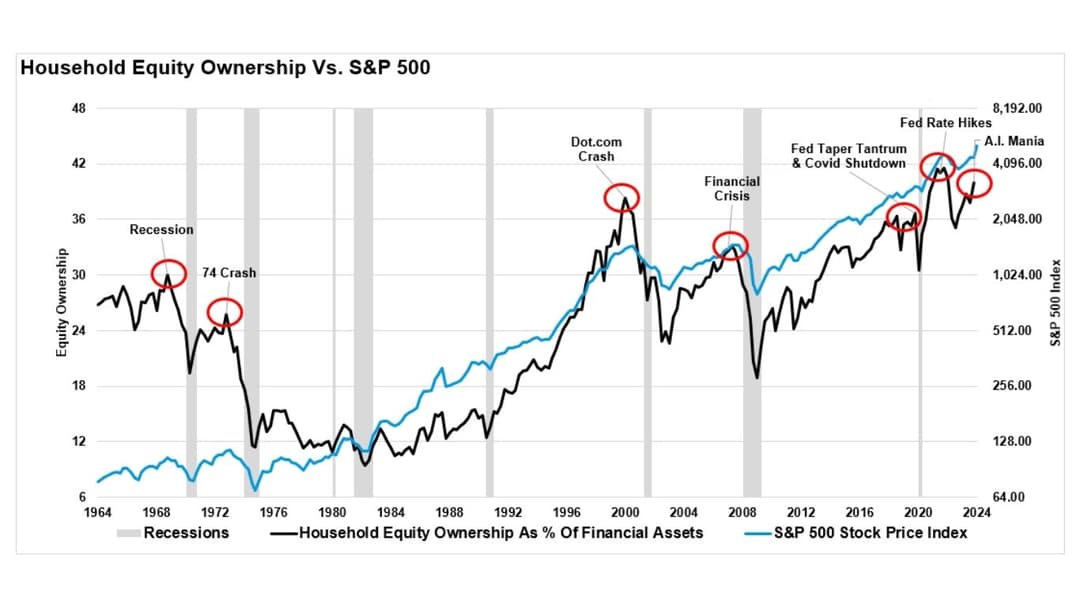
The dot-com bubble was powered by a collective belief that the internet would transform everything, and that any company with a website deserved a sky-high valuation. Money poured into tech stocks, the NASDAQ climbed to 5,000 points, and rational analysis took a back seat to excitement. Most of these companies were burning cash with no path to profitability.
When the bubble burst in 2000, the NASDAQ lost nearly 80% of its value, destroying trillions of dollars in market capitalization and wiping out countless portfolios.
4. The Housing Bubble (2003 to 2008)
The housing bubble of the mid-2000s was built on easy credit, lax lending standards, and the widespread belief that real estate prices could only ever go up. Home prices across the United States surged, and speculative investment in real estate became almost fashionable. When the bubble burst in 2008, it set off the global financial crisis, triggering mass foreclosures, bank failures, and one of the worst recessions in modern history.
The damage took years to repair and reshaped financial regulation across the world.
5. The Bitcoin Bubble (2017 to 2018)
Bitcoin’s 2017 surge stands as one of the most dramatic speculative bubbles of the modern era. Excitement around blockchain technology and the prospect of life-changing returns pushed Bitcoin from around $1,000 in January 2017 to nearly $20,000 by December. The collapse that followed was brutal, with prices falling to around $3,000 by the end of 2018.
Investors who bought near the peak faced losses that took years to recover, if they stayed in long enough to see it.
Strategies to Protect Yourself from Stock Market Bubbles
Spotting a bubble is only half the job. The other half is making sure you’re positioned to survive it, or better yet, to come out ahead. Here are the strategies worth building into your approach.
1. Diversify Your Portfolio
Diversification is your first line of defense. By spreading your capital across different asset classes, sectors, and geographies, you reduce the damage any single market downturn can do to your overall wealth. If you’re heavily concentrated in tech stocks and a bubble forms in that sector, a well-diversified portfolio can absorb the hit without destroying your financial position.
2. Focus on Fundamentals
When the market gets frothy, the temptation to chase high-flying stocks gets strong. Resist it. Anchor your decisions in fundamentals, companies with solid balance sheets, consistent earnings growth, and business models that actually make sense.
These are the investments that hold up when speculative excess unwinds, and they’re far more likely to deliver real long-term value. A deep look at how to analyze and invest in bank stocks is a useful starting point for sharpening your fundamental analysis skills.
3. Avoid Leverage
Leverage works beautifully in a rising market and catastrophically in a falling one. During a bubble, the risk of using borrowed capital rises sharply because a sudden market correction can force you to sell assets at exactly the wrong moment just to cover margin calls. If you suspect a bubble is forming, seriously consider reducing your leverage, not increasing it.
4. Stay Informed
Keeping a close eye on market trends, economic indicators, and financial news is how you catch warning signs early. Watch for parabolic price moves, surging IPO activity, rising margin borrowing, and the kind of breathless media coverage that signals speculative fever is running hot. Reuters Markets and Bloomberg are solid daily sources for cutting through the noise.
5. Consider Taking Profits
If you’re sitting on substantial gains in a market that feels overheated, taking some chips off the table is rarely a bad idea. You cannot time the market perfectly, but locking in profits reduces your exposure to a sudden reversal. Rebalancing toward safer, less speculative positions during a bubble phase is a disciplined move that protects what you’ve already built.
6. Use Stop-Loss Orders
Stop-loss orders give you a safety net when markets move fast. By setting a predetermined exit price for your positions, you cap your downside if sentiment suddenly shifts. That said, set your stop levels thoughtfully.
If they’re too tight, normal day-to-day volatility will trigger them and pull you out of positions prematurely. The goal is protection from a real crash, not from routine market movement.
The Role of Behavioral Finance in Stock Market Bubbles
Bubbles are not just financial events. They’re psychological ones. Understanding the mental patterns that drive investor behavior during a bubble is one of the most powerful tools you have for staying rational when everyone around you is not.
1. Overconfidence
Overconfidence is one of the most common traps in investing. During a bubble, it leads investors to believe they can time the market perfectly or that their particular picks are somehow immune to a downturn. That belief encourages excessive risk-taking, and when the bubble bursts, the losses can be severe.
The investors who get hurt most are often those who were the most certain they had everything figured out.
2. Confirmation Bias
Confirmation bias is what happens when you seek out information that supports what you already believe and quietly ignore anything that challenges it. In a bubble environment, this means dismissing warning signs and doubling down on overvalued positions because you’ve surrounded yourself with voices telling you what you want to hear. Recognizing this tendency in yourself is the first step toward making clearer, more rational decisions.
3. Herding Behavior
As covered earlier, herding behavior pushes investors to follow the crowd even when the crowd is heading somewhere dangerous. During a bubble, this creates a feedback loop where rising prices attract more buyers, which pushes prices higher still, which attracts even more buyers. Breaking that cycle requires independent thinking and the willingness to reach conclusions that differ from consensus.
Do your own research. Make your own calls.
4. Fear of Missing Out (FOMO)
FOMO is a powerful force, and in a bubble environment, it can push you into decisions you’d never make with a clear head. The fear of watching others profit while you sit on the sidelines is real, but acting on it often means buying at exactly the wrong time. The antidote is a long-term perspective.
When you’re anchored to your actual financial goals rather than chasing short-term market moves, FOMO loses most of its grip. Forbes Advisor’s investing section covers the psychology of investing in depth and is worth bookmarking as a regular reference.
We last reviewed this analysis in May 2026.


Alex Tzoulis
Alex Tzoulis is Co-Owner and Markets Analyst at The Luxury Playbook, specializing in equities, crypto, forex, and global financial markets. His work focuses on analyzing macroeconomic trends, geopolitical developments, and monetary policy, translating them into actionable insights across both traditional and digital asset classes. He leads the platform's financial market coverage, providing structured analysis across stock market investing, trading strategies, and cryptocurrency markets. His expertise strengthens the publication's authority in financial markets and capital allocation, bridging traditional finance with emerging digital investment ecosystems.