Collecting luxury watches, done seriously, is a discipline before it's anything else. The mistake new collectors make is to treat it as a shopping exercise: picking pieces off a website, choosing references by visual appeal, optimising for what looks good in the next month rather than what holds its place in a collection over a decade.
- Serious watch collecting demands a framework, not a wishlist, with provenance, condition, and reference fluency carrying more weight than any single brand affinity.
- We treat the first ten acquisitions as foundational, building toward a coherent collection rather than chasing whatever the secondary market is hyping that quarter.
- Condition reigns over rarity in most cases, because an unpolished example of a common reference will outperform a polished version of a scarce one.
- Service history, original parts, and box-and-papers documentation now matter at every price tier, not only at the auction-grade end of the market.
- Liquidity varies enormously by brand and reference, and the patient collector understands which pieces can be sold quickly versus which require the right buyer.
- A trusted dealer or independent advisor pays for itself the first time they steer you away from a marginal piece you would otherwise have bought.
- Who is this for?
- Collectors moving from casual interest to deliberate accumulation, and buyers who want a structural framework rather than a list of fashionable references.
- What is happening?
- A working playbook for serious watch collecting, covering provenance, condition standards, dealer relationships, and the discipline a multi-piece collection requires.
- When did this emerge?
- The principles hold across cycles, but they have grown more important as auction transparency, online dealer pricing, and digital provenance research expand.
- Where is this happening?
- Major Swiss and US auction houses set the reference points, while Chrono24, WatchCharts, and Subdial 50 supply the data collectors now treat as essential.
- Why does it matter?
- Collecting without a framework leads to expensive lessons, while a disciplined approach builds value and protects the joy that drew collectors in to begin with.
The actual practice is closer to the working culture of vintage cars or fine wine. Reference numbers matter, provenance matters, condition gets read in detail, and the boutique-floor sticker price is one data point among many.
The collectors who get this right tend to start by reading auction-house catalogues for two years before they buy anything significant. They build their reference literacy before they build their collection, and they treat Phillips, Christie's and Sotheby's lot books as the working textbook of the field.
How serious luxury watch collecting actually works
The market has the depth to reward that patience. Patek Philippe produces something on the order of 68,000 watches a year across its entire global output. Audemars Piguet sits at a similar scale.
Richard Mille produces dramatically less. The base-rate scarcity is real. What the secondary market then does is reward the references that combine genuine production constraint with collector recognition, and punishes the references that don't.
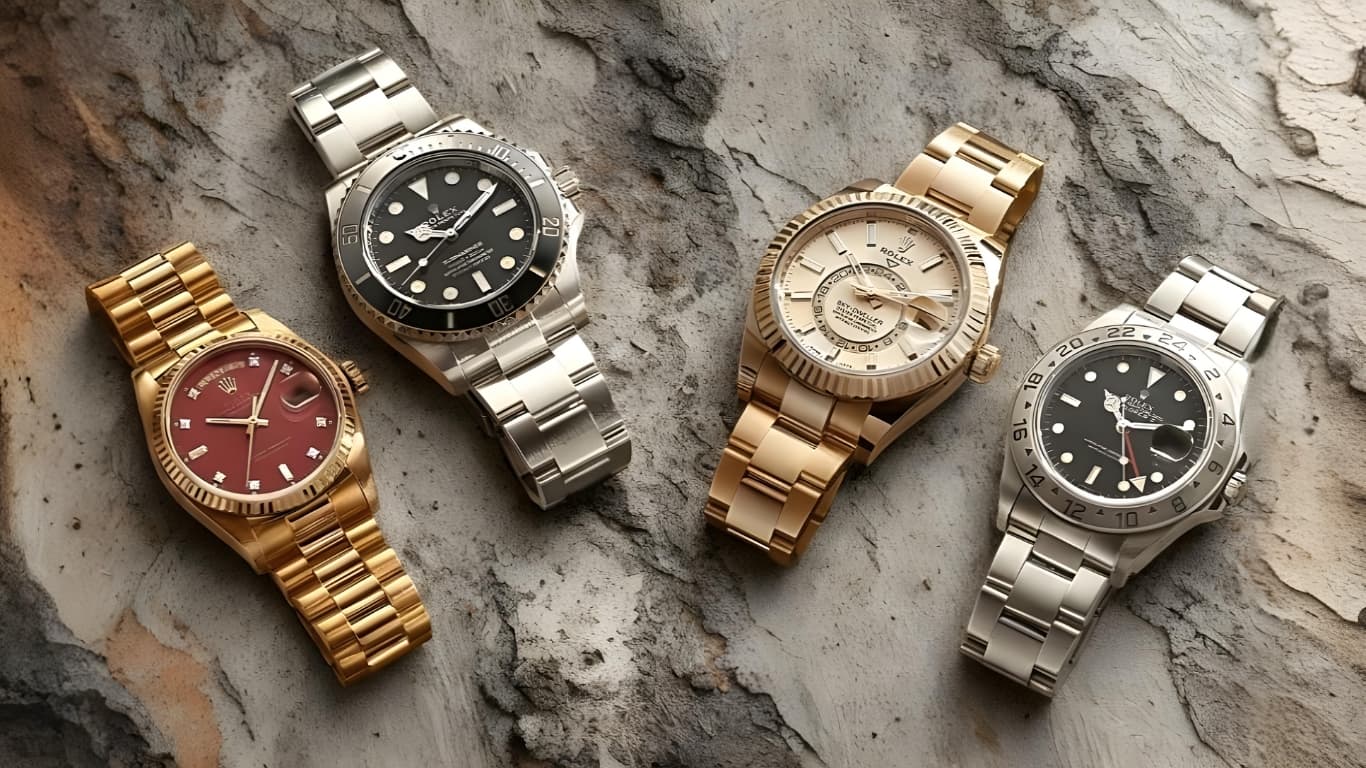
The first decision a serious collector makes is about register: which corner of the market they want to spend time in. Vintage Patek and Rolex sits at one end, with references like the Patek 5711 (discontinued 2022, now trading between roughly €100,000 and €130,000 in clean condition with full set), the Rolex Daytona reference 116500LN (around €30,000 to €34,000 on the secondary market against a €13,000 to €14,750 historical retail), and the AP Royal Oak Jumbo reference 16202 (around €70,000 to €85,000 against a €35,000 retail).
The references that anchor most modern collections
These are the references that anchor most serious modern collections, and they're the references whose secondary-market depth is the deepest. They trade frequently, authenticate cleanly, and carry the kind of cultural recognition that holds value through correction cycles.
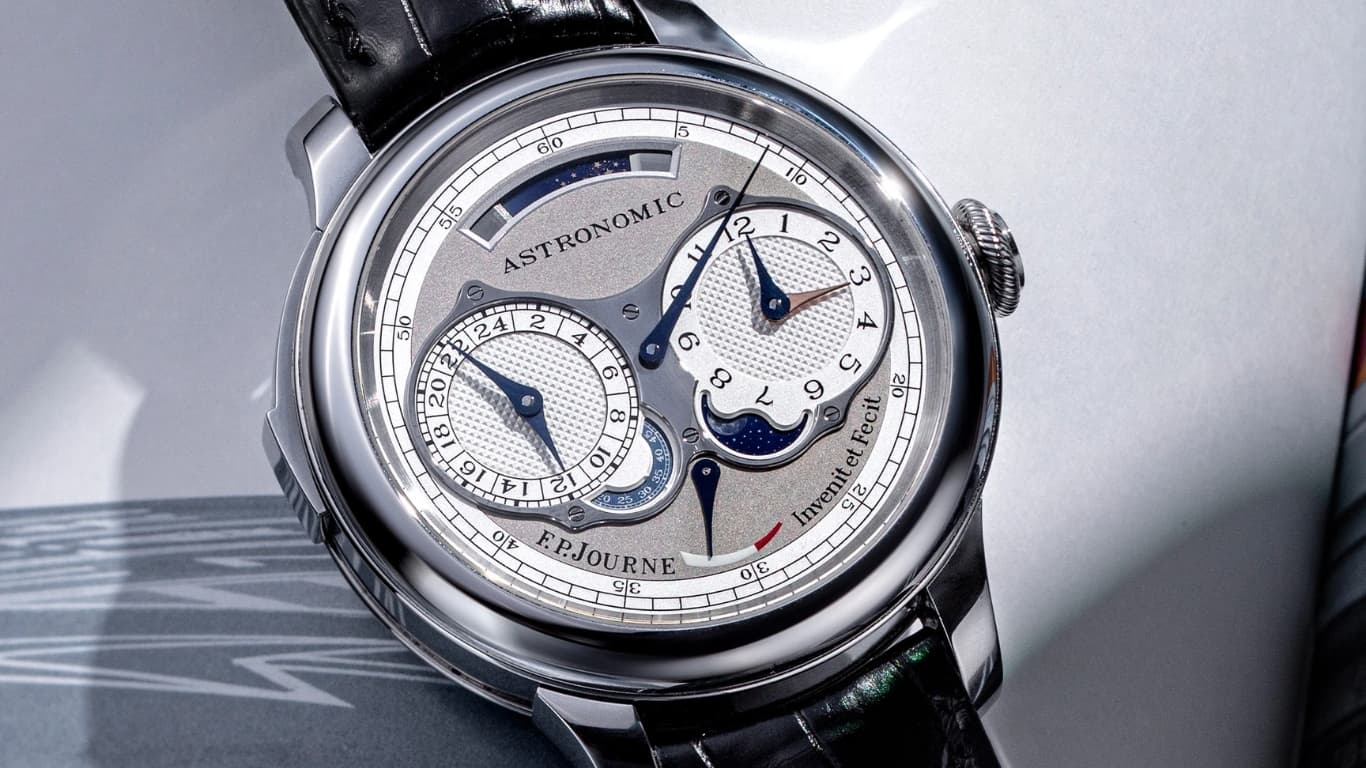
At the independent end, F.P. Journe's Chronomètre Bleu (annual production of fewer than 1,000 pieces) and Richard Mille's various RM 011 editions occupy a different register entirely. Small-batch contemporary watchmaking where the secondary market is thin and the collector base specialised.
The Chronomètre Bleu has moved from sub-€25,000 in the early 2010s to roughly €70,000 to €80,000 today. Richard Mille RM 011 references trade between €250,000 and €400,000 depending on edition and provenance.
The middle band where most collectors actually live
The middle band is where most collectors actually spend most of their time. Omega Speedmaster Professional around €9,000 to €11,000, Cartier Tank Louis Cartier around €12,000 to €15,000, Vacheron Constantin Overseas reference 4500V around €30,000 to €38,000.
These are the references that hold their value reliably, trade steadily, and reward careful purchase decisions without requiring six-figure capital deployment. The strongest collections we see from readers consistently use this middle band as their foundation, then layer in vintage and independent pieces over time.
Reference numbers and where the real collecting work happens
The single most important habit serious collectors build is reading by reference rather than by model family. Two Submariners with very different reference numbers can trade at multiples of each other. The model name "Submariner" is essentially marketing shorthand.
The Rolex Submariner reference 16610LV, the "Kermit", produced for a defined window in the 2000s with the green bezel, commands a meaningful premium over standard Submariner references purely because of its production constraint and the cult collector status that built around it. Reference 16610LV cleared $20,000 to $25,000 at recent Phillips sessions.
The Patek 5711/1A in the discontinued blue-dial reference is the textbook example. Nearly identical aesthetically to references that came before, but the 2022 discontinuation announcement created a moment of secondary-market recalibration that took prices from roughly six times retail to seven, and held them there.
Why reference literacy separates collectors
Reference-number literacy is what separates collectors who buy well from collectors who pay premium for adjacent references that aren't the ones the auction houses care about. It's also the layer most beginners skip, and the layer that costs the most when they do.
The working practice we see from serious collectors is straightforward: every model family has two or three references that define the line, and the rest sit at meaningful discounts. Knowing which is which is the difference between a clean entry and a market-clearing premium.
Condition, provenance and the full-set documentation premium
Condition reads in three pieces. Case condition first: original case lines, sharp bevels, no aggressive polishing. Polishing erases the geometry that defines vintage watch design.
A watch with two or three previous polishes can be worth substantially less than an unpolished sibling, even at otherwise identical condition. Dial originality second: original lume colour, no refinishing, no replacement printing. Movement third: credible service history from the manufacturer or an authorised service centre, no unauthorised parts, consistent serial numbers between movement and case.
Full-set documentation, including original box, warranty card, papers, manuals, hangtags and receipts where available, moves a piece's secondary value by 10 to 30 percent versus a watch-only sale at the upper end of the market. For vintage references where original full sets are rare, even partial documentation (warranty card alone, or a credible chain of ownership) carries weight.
Box-and-papers status is the first question any specialist dealer or auction house asks. It's also the first thing experienced collectors verify before agreeing a price.
Authorised dealer versus the luxury watch secondary market
The two channels work very differently. The authorised dealer route, buying directly from a Patek or Rolex boutique at retail, requires waitlist discipline, purchase history, and often a relationship cultivated over years.
For the most sought-after references (current production Daytona, Patek Aquanaut, AP Royal Oak), boutique allocation is rare enough that most collectors never see one. The secondary market, Phillips, Christie's, Sotheby's, Antiquorum, plus serious specialist dealers and Chrono24 / WatchCharts as marketplaces, is where most collecting actually happens.
Premium over retail is the cost of immediacy. Authentication is the load-bearing concern on the secondary market.
Why authentication discipline matters now
Counterfeit watchmaking has reached the point where high-end fakes can fool casual inspection. Serious pre-purchase authentication runs through movement examination, serial-number consistency, reference-engraving inspection, and (for major pieces) a specialist's hand.
Auction-house lots come authenticated. Private-sale watches do not, which is why the experienced collectors we hear from will pay a few percent more for an auction-house piece over an equivalent private listing.
Servicing, storage and insurance for serious collections
The ownership cost is real and worth budgeting for. Service intervals run roughly four to seven years for most modern Swiss watches. Service costs run from around €500 to €1,000 for Rolex, €1,000 to €2,000 for Patek and AP, €2,000 and up for Richard Mille and complicated independent pieces.
A watch run past its service interval can develop movement issues that affect long-term collector value. Storage matters more than most new collectors realise.
Watches kept in humidity- and temperature-controlled environments, including bank deposit boxes and home safes with dehumidifiers, preserve dial finish, gasket integrity and case condition over decades. Stacking watches in generic travel rolls or storing them in attics and garages does measurable damage.
Winders, insurance and documentation
Watch winders are useful for complicated automatic pieces (perpetual calendars, moonphases) where the resetting routine is non-trivial. For simple time-and-date references, a winder is more about convenience than necessity.
Specialist watch insurance is worth the premium. Standard household contents policies typically cap individual item values at levels well below what a serious collection requires. Specialist insurers (Hodinkee Insurance, Chubb, Hiscox in the UK) write policies based on current secondary-market valuations rather than retail.
Documentation, including high-resolution photos of every piece, serial numbers, and proof-of-purchase records, is the prerequisite for clean claims processing. It's also useful inventory discipline for any collection of meaningful scale.
What serious watch collectors actually do
The collectors whose pieces command the strongest secondary-market depth tend to share a small number of habits. They specialise. Most serious collections are organised around a vertical (vintage Patek, modern AP, Rolex sport references, independent watchmaking) rather than spread thinly across the market.
They read auction-house catalogues consistently, including Phillips, Christie's, Sotheby's and Antiquorum, and develop a sense of what condition actually looks like at the top end. They know their reference numbers and trade on reference-level knowledge rather than brand-level enthusiasm.
They treat their pieces as objects to be worn and lived with, not as paper-asset curiosities to be locked away. The most considered modern collections are working collections: pieces rotated through wear, serviced on schedule, photographed and documented, sold occasionally to rebalance, but mostly held. The collectors who flip aggressively are running a different game entirely.
The ones building collections that hold their cultural weight over decades tend to buy slowly and hold for years.
We last reviewed this analysis in May 2026.

Frequently Asked Questions
- Do watches go up in value over time?
- Yes—especially discontinued or limited-edition models with strong demand. Watches with box, papers, and minimal wear tend to appreciate faster and hold their value longer.<br><br>

Stefanos Moschopoulos
Stefanos Moschopoulos founded The Luxury Playbook in Athens and has spent the better part of a decade following the auction calendar, the en primeur releases, and the watchmakers, gallerists, and shipyards the magazine covers. He writes the field guides and listicles that anchor the Connoisseur section — pieces built on Phillips and Christie's results, Liv-ex movements, and conversations with collectors he has met across Geneva, Bordeaux, Basel, and Monaco. His own collecting habits sit closer to watches and wine than art, and it shows in the level of detail in the magazine's coverage of those categories. Under his direction, The Luxury Playbook now publishes long-form field guides, market-defining year-end listicles, and the Voices interview series with the founders behind the houses and the brands.