
When you know how to read your financial statements, you can spot ways to drive more profit, expand your business, and catch problems long before they become expensive.
- Financial-statement analysis is less about formulas and more about asking whether a business actually generates and protects cash over time.
- The income statement, balance sheet and cash-flow statement should always be read together because each one alone can mislead.
- Quality of earnings checks, such as comparing net income to operating cash flow, reveal whether reported profits actually translate into spendable cash.
- Leverage metrics including net debt to EBITDA and interest coverage show how much room a business has when conditions tighten.
- Return on invested capital and free-cash-flow yield are blunt but effective shortcuts to whether a company creates value for owners.
- Reading footnotes and the management discussion section in 10-K filings is where many investors find the real story behind the headline numbers.
- Who is this for?
- Self-directed equity investors and analysts who want a structured approach to reading corporate financials rather than relying solely on broker summaries.
- What is happening?
- A guide to analyzing the income statement, balance sheet and cash-flow statement, including key ratios, quality-of-earnings checks and leverage screens.
- When did this emerge?
- Most relevant ahead of earnings season and whenever a new position is being evaluated for inclusion in a long-term portfolio.
- Where is this happening?
- Financial-statement frameworks are universal, although US 10-K filings on SEC EDGAR remain the deepest publicly available data set for individual investors.
- Why does it matter?
- Strong companies and fragile ones often look similar at the headline level. Patient statement analysis is what separates them before share prices catch up.
What Is Financial Statement Analysis?
Financial statement analysis is the process of digging into a company’s numbers to understand what’s really going on beneath the surface. Whether you’re an investor, a creditor, or a business owner, it gives you a clear read on profitability, liquidity, solvency, and overall financial health. Done well, it sharpens every decision you make, from where to put your capital to who you do business with.
The core goal here is to understand a company’s true financial position, not just what the headline numbers say. You’re looking at the relationships between revenues, expenses, assets, and liabilities to spot the real trends driving performance. That’s how you identify risks before they bite, find opportunities others miss, and pinpoint exactly where a business needs to improve.

Importance of Analyzing Financial Statements
Knowing how to analyze financial statements isn’t optional if you’re serious about money. For lenders and creditors, it’s the foundation of any credit decision. Before extending a loan or a credit line, you need to know how much risk you’re actually taking on, and the statements tell you exactly that.
For investors, whether you favor passive strategies or active stock picking, financial statement analysis is where real conviction comes from. You’re looking at key ratios and indicators to judge profitability, growth prospects, and what a business is actually worth. That’s what separates a calculated bet from a guess.
And if you’re running a business, this analysis is your performance dashboard. Regular reviews let management track progress toward financial goals, catch operational inefficiencies early, and make smarter moves to protect margins and keep operations tight.
Types of Financial Statements
Balance Sheet
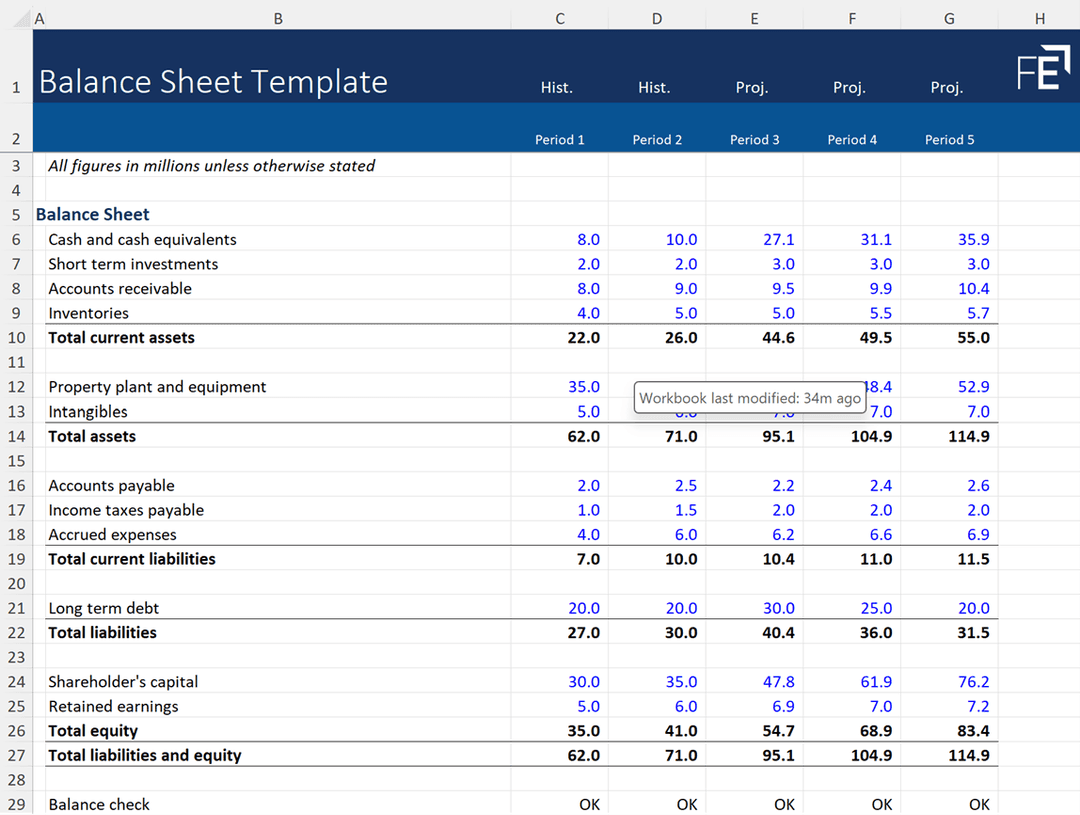
The balance sheet is one of the first places you look when analyzing a company. Think of it as a financial snapshot taken at a single point in time. It breaks down into three core components, namely assets, liabilities, and shareholders’ equity, each telling you something critical about where the business stands.
Assets are everything the company owns and controls, from cash and inventory to property and equipment. Liabilities are what it owes, covering loans, accounts payable, and accrued expenses. Shareholders’ equity is what’s left over once you subtract the liabilities from the assets.
That remainder is what actually belongs to the owners.
Digging into the balance sheet lets you assess liquidity and solvency at a glance. Ratios like the current ratio and the debt-to-equity ratio, both pulled straight from balance sheet data, tell you whether a company can handle its short-term bills and how solid its long-term financial footing really is. You can find more on applying this kind of analysis in our guide on how to analyze a company’s earnings report.
Income Statement
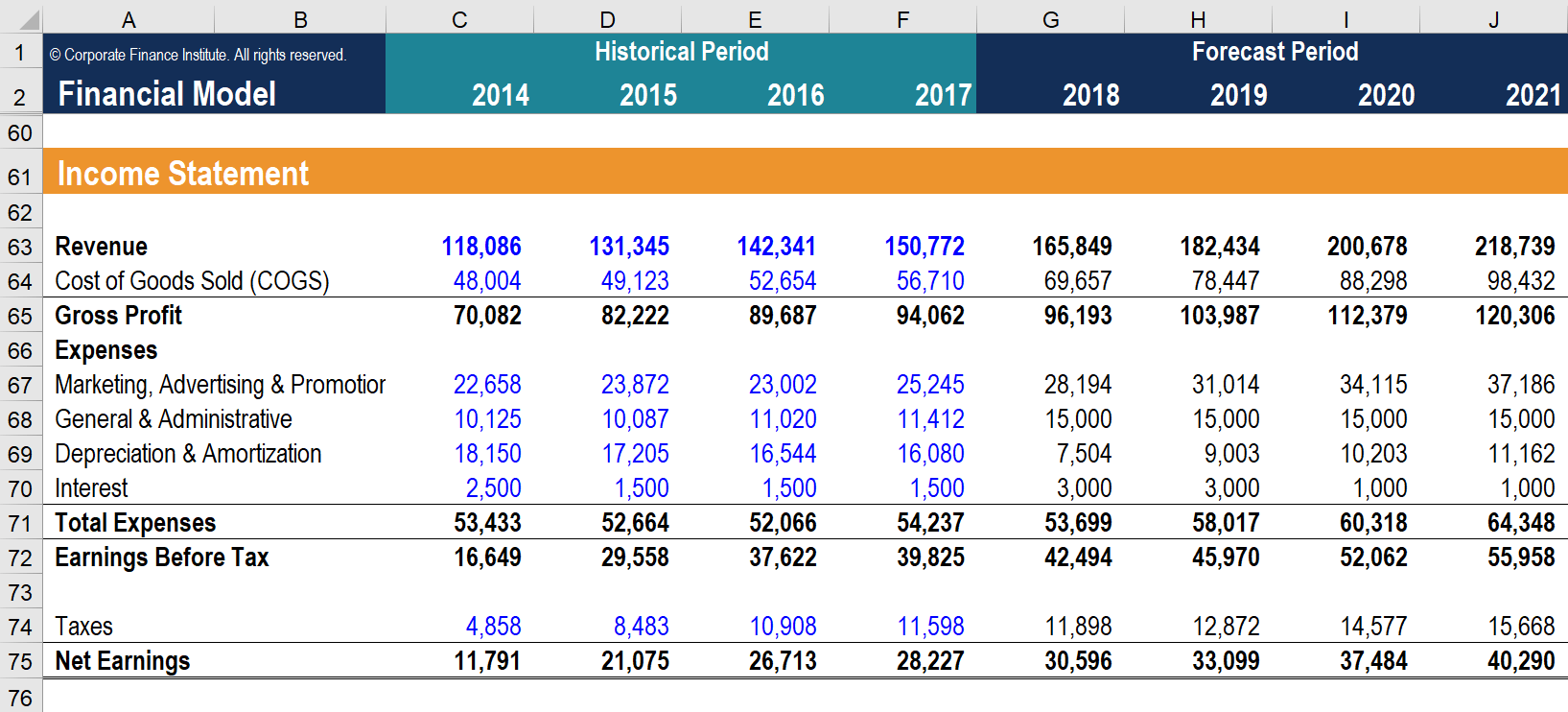
The income statement, often called the profit and loss statement, shows you what a company earned, what it spent, and what was left over across a defined period. It’s your clearest window into whether the core business is actually making money.
It starts at the top with revenues, which include sales, fees, and any other income sources the company generates. From there, you work down through expenses like cost of goods sold, operating costs, and taxes, until you arrive at net income. That bottom line tells you the real story.
When you analyze the income statement, you’re measuring profitability and operational efficiency. Ratios like gross profit margin and net profit margin give you a precise read on how well the company converts revenue into profit and keeps its costs under control. According to Investopedia’s breakdown of income statements, these margins are among the most closely watched metrics by serious analysts.
Cash Flow Statement
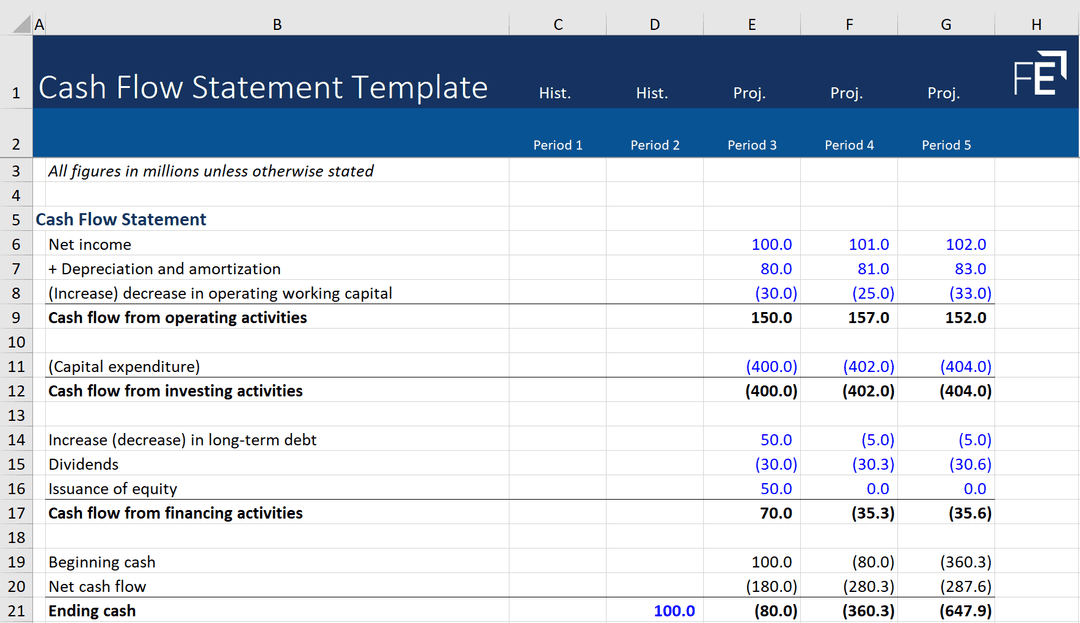
The cash flow statement tracks every dollar moving in and out of a business over a given period. It’s divided into three sections, covering operating activities, investing activities, and financing activities, each revealing a different dimension of how a company manages its money.
Operating activities capture cash flows from the day-to-day business, such as cash collected from customers and cash paid to suppliers. Investing activities cover the buying and selling of long-term assets like property, plant, and equipment. Financing activities show you the cash tied to raising capital, paying down debt, and distributing dividends to shareholders.
Analyzing the cash flow statement is one of the sharpest tests of a company’s financial health. By zeroing in on operating cash flow, you can tell whether the business generates enough cash on its own to cover its obligations, without relying on outside financing. It also tells you a great deal about where management is choosing to invest and how it’s funding future growth.
Free Cash Flow and Other Valuation Statements
Beyond the three core statements, serious analysts bring in additional valuation tools to get the full picture. These supplementary statements add depth and context that the standard financials alone won’t give you.
The statement of retained earnings is one worth knowing. It tracks changes in a company’s retained earnings over a period, showing you how much profit was kept inside the business for reinvestment versus how much went back to shareholders as dividends. That split tells you a lot about how management thinks about growth.
The statement of comprehensive income goes even further. It captures all changes in equity during a period that didn’t come from shareholder transactions, things like foreign currency translation adjustments and unrealized gains or losses on investments. It gives you a fuller, more honest view of financial performance than net income alone.
Then there’s free cash flow. Calculated by subtracting capital expenditures from operating cash flow, it shows you how much cash a business truly generates after keeping the lights on and the machines running. Bloomberg’s market analysis consistently flags free cash flow as one of the most reliable signals of a company’s ability to invest in growth, pay down debt, and reward shareholders.
What are The Different Types of Financial Statement Analysis?
Horizontal Analysis
Horizontal analysis is how you track a company’s financial performance across time. You’re comparing numbers from multiple periods side by side to spot trends, shifts, and inflection points. The goal is to see whether the company’s financial position is strengthening or starting to slip.
To run a horizontal analysis, you line up financial data from consecutive years or quarters and look at what changed. You’re measuring growth rates, tracking how revenues and expenses are moving, and watching for meaningful shifts in key financial ratios. Those patterns are what tell you whether the company is building momentum or quietly losing ground.
Vertical Analysis
Vertical analysis, also called common-size analysis, reframes every line item in a financial statement as a percentage of a base figure, usually total assets or net sales. That single adjustment lets you see the true composition of a company’s finances and compare it fairly against other businesses, regardless of size.
Once you apply vertical analysis, patterns jump out that raw numbers often hide. You can see exactly how assets are distributed across categories, how much of each revenue dollar is absorbed by different expenses, and whether the financial structure is efficient. It’s a clean way to benchmark a company against competitors or against its own historical norms.
For investors building a portfolio, pairing this with tools covered in our guide on the best stock market investing tools gives you a real analytical edge.
Ratio Analysis
Ratio analysis is one of the most practical tools in your financial toolkit. You take key figures from the statements and calculate ratios that measure liquidity, solvency, profitability, and efficiency all at once. The result is a clear, comparable snapshot of where a company stands and how it stacks up.
The main categories worth knowing are liquidity ratios, profitability ratios, solvency ratios, and efficiency ratios. Liquidity ratios tell you if a company can cover its short-term obligations. Profitability ratios measure how effectively it turns revenue into earnings.
Solvency ratios assess long-term financial durability. And efficiency ratios reveal how well management is using its assets to generate returns. The Financial Times regularly uses these ratio frameworks when evaluating corporate performance across industries. Together, they give you the kind of benchmarking power that separates sharp analysis from surface-level reading.

Steps To Analyze Financial Statements
Analyzing financial statements can be a complex process that requires a systematic approach.<br><br>
Gather And Review Financial Statements
The first step in analyzing financial statements is to gather the relevant documents, which typically include the balance sheet, income statement, and cash flow statement. These statements provide a snapshot of the company’s financial position at a specific point in time and its financial performance over a period. To ensure accuracy, it is essential to obtain the most recent financial statements available.
Once you have gathered the financial statements, the next step is to review them carefully. Start by examining the balance sheet, which presents the company’s assets, liabilities, and shareholders’ equity. Analyzing the balance sheet will help you understand the company’s liquidity, leverage, and overall financial strength.
Look for any significant changes in the composition of assets and liabilities over time, as this can indicate potential risks or opportunities.
After reviewing the balance sheet, move on to the income statement. This statement provides information about the company’s revenues, expenses, and net income over a specific period. Analyzing the income statement will help you assess the company’s profitability, revenue growth, and cost management.
Pay attention to trends in sales and expenses, as well as any unusual or non-recurring items that may affect the company’s financial performance.
Lastly, examine the cash flow statement, which reveals the company’s cash inflows and outflows during a given period. Understanding the cash flow statement is crucial for evaluating a company’s ability to generate cash and meet its financial obligations. Focus on the operating, investing, and financing activities sections to identify any significant changes in cash flow patterns.
A positive operating cash flow indicates a healthy business, while negative cash flows may raise concerns about liquidity.
Calculate Financial Ratios
1. Quick ratio
The quick ratio (also called the acid test ratio) is like the current ratio, it measures how well your business can pay off its debts. However, it only looks at highly liquid assets, such as cash or assets that can easily be converted to cash, that is, money you can get your hands on quickly.
To calculate the quick ratio, use this formula:
Quick Ratio = (Cash and Cash Equivalents + Marketable Securities + Accounts Receivable) / Current Liabilities
Using the example above, the total number of cash and cash equivalents, plus accounts receivable, is $24,000. (Chelsea’s Ceramics doesn’t have any marketable securities.)
We don’t include the equipment line item in these assets, because selling off equipment isn’t a quick way to raise cash.
So, the formula looks like:
Quick Ratio = 24,000 / 11,000 = 2.18
Or a ratio of 2.18:1 (quick assets:liabilities).
So long as your quick ratio is 1:1 or higher, you’re doing well; you’ve got enough easy-to-liquidate assets to cover all your debts.
2. Debt-to-equity ratio
The debt to equity ratio tells you how much your business depends on equity versus borrowed money.
To calculate your debt-to-equity ratio, use this formula:
Debt to Equity Ratio = Total Debt / Owner or Shareholders’ Equity
Using the example above, we include the long-term debt, but not accounts payable, in the calculation.
So, our formula looks like this:
Debt to Equity Ratio = 10,000 / 25,000 = 0.4
Or a ratio of 0.4:1 (debt:equity).
In this case, Chelsea’s doing well. A 4:1 debt-to-equity ratio is considered acceptable. With all her retained earnings, Chelsea is able to run her business largely using her own money.
3. Current ratio
The current ratio measures your liquidity, how easily your current assets can be converted to cash in order to cover your short-term liabilities.
The higher the ratio, the more liquid your assets.
To calculate the current ratio, use this formula:
Current Ratio = Current Assets / Current Liabilities
If we use the example above, the calculation looks like this:
Current Ratio = 36,000 / 11,000 = 3.27
Meaning a ratio of 3.27:1 (assets:liabilities).
Your current ratio shouldn’t dip far below 2:1; if it’s less than 1:1, you don’t have enough current assets on hand to cover your short-term debts, and you’re in a tight position.
The higher your ratio, the better able you are to cover liabilities.
Compare Ratios And Industry Benchmarks
After calculating the financial ratios, the next step is to compare them to industry benchmarks and historical data. Industry benchmarks provide a point of reference to evaluate a company’s financial performance against its peers. By comparing ratios to industry averages, you can identify areas of strength or weakness and gain insights into the company’s competitive position.
When comparing ratios to industry benchmarks, it’s important to consider the company’s size, industry, and unique circumstances. A small company may have different financial ratios compared to a large corporation, and each industry may have its own set of benchmarks. Therefore, it’s essential to use industry-specific benchmarks and adjust for any unique factors that may affect the company’s performance.
Additionally, comparing ratios to historical data allows you to identify trends and patterns in the company’s financial performance. Look for any significant changes or deviations from previous periods, as this can provide valuable insights into the company’s financial trajectory. Positive trends may indicate growth opportunities, while negative trends may suggest underlying issues that need to be addressed.
Identify Trends Over Time
Analyzing financial statements goes beyond just comparing ratios to industry benchmarks; it also involves identifying trends over time. By analyzing financial trends, you can gain a deeper understanding of the company’s financial performance and identify potential risks or opportunities.
Start by examining key financial metrics, such as revenue growth, net income growth, and cash flow growth. Look for consistent patterns of growth or decline over multiple periods. A company with consistent revenue and profit growth may indicate a well-managed and stable business, while inconsistent or declining growth rates may raise concerns.
Furthermore, analyze trends in the company’s financial ratios. Look for any patterns of improvement or deterioration in liquidity, profitability, efficiency, and solvency ratios. These trends can provide insights into the company’s financial management practices and its ability to adapt to changing market conditions.
Interpret Findings And Draw Conclusions
The final step in analyzing financial statements is to interpret the findings and draw conclusions. By synthesizing the information gathered from reviewing the financial statements, calculating ratios, and comparing benchmarks, you can develop a comprehensive understanding of the company’s financial health and performance.
Based on your analysis, identify the company’s strengths and weaknesses. Consider the potential risks and opportunities that arise from the analysis of the financial statements. Are there any red flags or areas of concern that need further investigation?
Conversely, are there any positive indicators that suggest a promising future?
Finally, use your analysis to make informed decisions and recommendations. Whether you are an investor, lender, or manager, the insights gained from analyzing financial statements can guide your decision-making process. Consider the company’s financial position, profitability, liquidity, and long-term sustainability when formulating your conclusions and recommendations.
We last reviewed this analysis in May 2026.


Alex Tzoulis
Alex Tzoulis is Co-Owner and Markets Analyst at The Luxury Playbook, specializing in equities, crypto, forex, and global financial markets. His work focuses on analyzing macroeconomic trends, geopolitical developments, and monetary policy, translating them into actionable insights across both traditional and digital asset classes. He leads the platform's financial market coverage, providing structured analysis across stock market investing, trading strategies, and cryptocurrency markets. His expertise strengthens the publication's authority in financial markets and capital allocation, bridging traditional finance with emerging digital investment ecosystems.