The Impressionist market in 2026 is one of the most stable and most informative parts of the broader art conversation. Supply is closed (every named Impressionist is dead, most of the canonical work is in museum collections), and the buyer pool is intergenerational and global. The Impressionist and Modern evening sales at Christie's and Sotheby's remain the calendar venues, twice yearly in New York and London, and the activity at the top of those rooms continues to set the tone for the broader modern art market.
What follows is our editorial read on the Impressionist artists defining the market in 2026: the named figures whose work is moving consistently at evening sale, the price patterns that are emerging this cycle, and the institutional and collector activity that supports the segment.
- The Impressionist artists defining the market in 2026 remain Monet, Manet, Renoir, Degas, Pissarro, Sisley and Berthe Morisot at the structural top of the canon.
- Top-tier Monet water lilies and series paintings continue to anchor the deepest evening-sale prices in the Impressionist and Modern segment each season.
- Manet and Degas hold steady at slightly lower price tiers, with major figure paintings and pastels appearing only occasionally at auction in any given year.
- Berthe Morisot has been quietly re-evaluated by senior collectors, with strong institutional support driving renewed attention to her work in recent seasons.
- Provenance and condition matter as much as artist name, with the deepest catalogue raisonne research and dealer chains underpinning every credible major lot.
- For modern collectors, the Impressionist canon remains the most institutionally collected segment of nineteenth-century painting and the bedrock of any serious programme.
- Who is this for?
- Modern art collectors, family offices and advisors tracking the Impressionist segment in 2026, alongside curators interested in the senior names still defining institutional collecting.
- What is happening?
- An editorial overview of the Impressionist artists defining the market in 2026, covering Monet, Manet, Renoir, Degas, Pissarro, Sisley and Berthe Morisot.
- When did this emerge?
- Most relevant around the May and November Impressionist and Modern evening sales at Christie’s and Sotheby’s in New York and London throughout 2026.
- Where is this happening?
- Anchored in the Paris market historically, with auction activity concentrated in New York, London and Paris and institutional holdings across the Musee d’Orsay, the National Gallery and the Met.
- Why does it matter?
- Understanding which Impressionist artists are actually driving the 2026 market protects collectors from overpaying for lesser works and supports the disciplined buying that holds value across cycles.
Claude Monet remains the market anchor
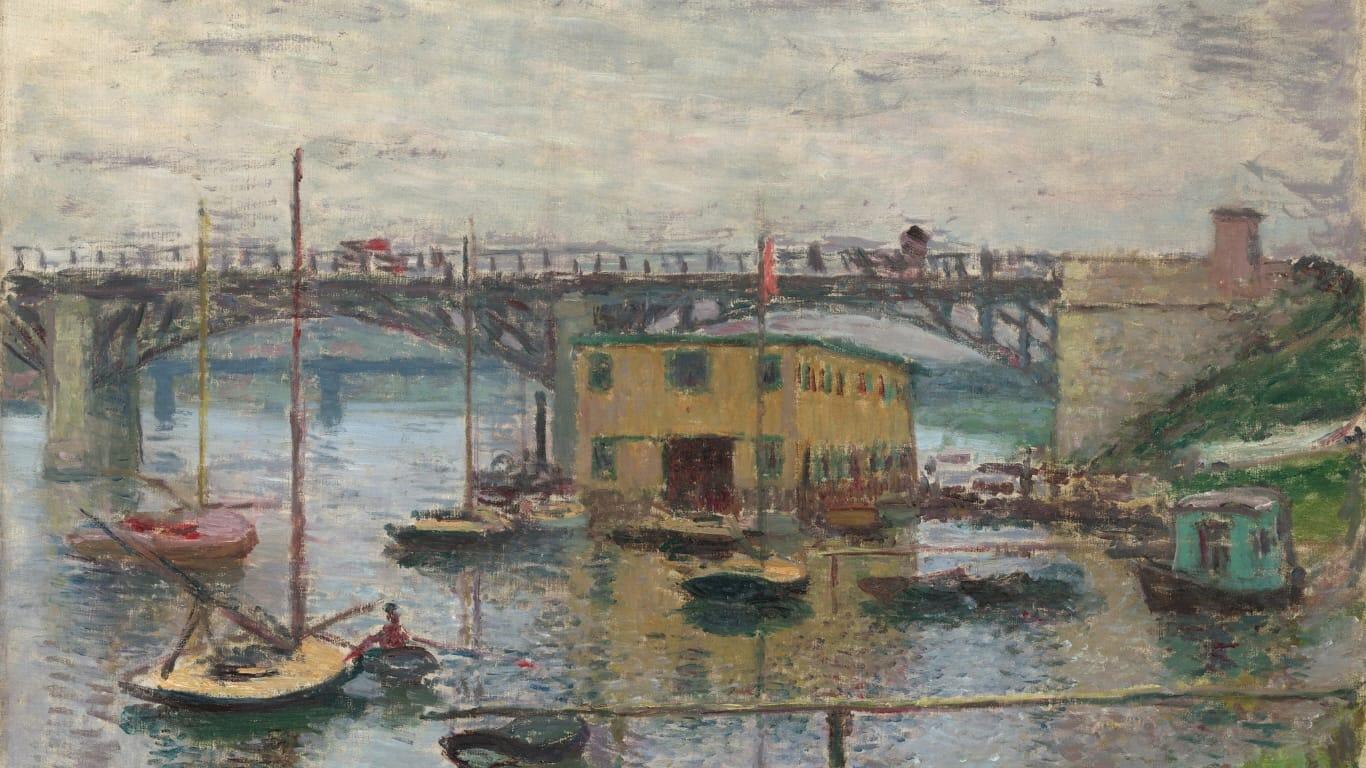
Monet is the deepest and most active Impressionist market. His career produced an unusually large body of canonical work, and the supply has refreshed at auction more consistently than that of any other Impressionist over the past twenty years.
The headline figures frame the position. "Meules" from the Haystacks series made $110. 7 million at Sotheby's New York in May 2019. "Le Bassin aux nymphéas" made $84. 7 million at Christie's New York in May 2008.
The Water Lilies series and the late Giverny works have made eight figures consistently through the past decade.
The 2024 UBS/Art Basel Global Art Market Report flagged Monet specifically as one of the most consistent performers in the Impressionist and Modern segment through the soft cycle. The pattern continued through 2025 and into early 2026 evening sales, with strong Monet lots placing at or above estimate even when the broader top end was selective.
Camille Pissarro is the quiet strong segment
Pissarro has been one of the most consistent secondary-tier Impressionist markets through the past five years. His career produced significant variation (the Pontoise period, the pointillist phase, the late Paris and Rouen city views), and serious collectors have used that variation to build deep, focused collections.
His strongest works (the Pontoise and Éragny landscapes, the urban city-view paintings, the major prepared works for exhibition) have priced into the high seven and low eight figures at major-house evening sale through the past several years. The Pissarro market lacks the trophy moments of Monet, but the depth and consistency at the mid-to-upper tier has been notable.
Pissarro also carries an unusual institutional position. His work appears across nearly every major Impressionist museum collection, and the catalogue raisonné scholarship (managed by Joachim Pissarro and the family) is exceptionally well-developed. That scholarly depth supports market discipline.
Berthe Morisot has revalued meaningfully
Morisot, long underweighted in the Impressionist market relative to her institutional position, has revalued meaningfully through the past several years. Major retrospectives at the Musée d'Orsay (2019) and the Barnes Foundation, alongside renewed attention from scholars and museum collections, have repositioned her market.
Her strongest works now price into the high six and seven figures consistently. The Morisot family material that has come to market through the past decade has carried unusually deep provenance, with documentation going back to the artist's lifetime.
Morisot is part of a broader pattern of revaluation across the female Impressionist tier (Mary Cassatt has seen similar institutional and market attention through the same period). The pattern suggests the canon is being read more thoroughly than it was a generation ago, and the market is following.
Edgar Degas remains an active mid-tier market
Degas occupies a slightly unusual position in the Impressionist canon. He often resisted the Impressionist label during his lifetime, and his work spans painting, pastel, sculpture (the wax models cast in bronze posthumously), and works on paper.
The Degas market reflects that diversity. The pastels and the Little Dancer bronze series have been the most active segments through the past decade. Strong major pastels (the ballet rehearsal scenes, the bathers) have priced in the high seven and eight figures consistently.
The bronzes, with edition documentation back to the original casting, trade at consistent tiers.
The Degas oil paintings appear less frequently at auction (most are in museum collections), but the works that do circulate have held their evening-sale estimates through soft cycles.
Renoir has had a more selective cycle
The Renoir market has been more selective through the past five years. His large body of work and his uneven critical reputation (the late nudes have divided scholarship for decades) have produced a market where top-tier autograph work continues to price strongly, but the broader mid-market has softened.
The strongest Renoir works (the early Impressionist landscapes from the 1870s and 1880s, the Argenteuil and Pont-Neuf scenes, the major portraits from the same period) have placed at major-house evening sales consistently. The late period has been more cycle-sensitive.
For collectors approaching the Renoir market, the discipline favors the strongest periods over breadth. Top examples from his canonical decade hold; broader examples follow cycle sentiment more closely.
Cézanne sits at the bridge between Impressionism and modernism
Cézanne's relationship to Impressionism is complicated. He exhibited with the group in the 1870s and through the 1880s, but his mature work (the late Mont Sainte-Victoire series, the late bathers, the apple still lifes) sits structurally closer to twentieth-century modern painting than to canonical Impressionism. He is treated as foundational to both traditions.
The Cézanne market is among the deepest in the broader Impressionist and Modern category. The Mont Sainte-Victoire series and the major still lifes have made into the eight figures consistently through the past two decades. Phillips placed a Cézanne in the eight-figure range in recent sale cycles; Christie's and Sotheby's both maintain active Cézanne specialist coverage.
Cézanne is also one of the most academically active Impressionist markets. Catalogue raisonné scholarship continues to develop, and technical analysis has become standard for any major lot.
The institutional record that supports the segment
The institutional depth around Impressionism is exceptional.
The Musée d'Orsay in Paris, the Musée de l'Orangerie (with the Water Lilies cycle), the National Gallery in London, the Courtauld in London, the National Gallery in Washington, the Met, MoMA's modern collection, the Art Institute of Chicago, the Pushkin and the Hermitage (with the Shchukin and Morozov material), the Norton Simon, the Phillips Collection, the Barnes Foundation, the Musée Marmottan, and the Musée du Petit Palais all hold canonical material.
Major retrospectives have continued throughout the past decade. The 2019 Morisot retrospective. The Pissarro retrospective at the Marmottan and the Ashmolean.
The continuing Cézanne and Monet programmes at the Orangerie, the Orsay, and the Royal Academy. These shows shape the institutional position of each artist and feed directly into market behavior.
What this means for collectors
The Impressionist market in 2026 remains the most credible long-cycle category in the modern art conversation. The closed canon, the deep institutional record, the global buyer pool, and the consistent supply pipeline at evening sale all support a market that prices on fundamentals rather than on cycle sentiment. For broader context on which artists are anchoring the contemporary auction-tier conversation, see The Blue-Chip Artists Defining 2026.
For collectors approaching the segment, the practical starting points are the works-on-paper and prints markets, which offer serious entry below the painting tier. Engagement with the named modern-art dealer network and with the major-house Impressionist and Modern specialists is the standard discipline.
What we'll watch next
The May and November Impressionist and Modern evening sales at Christie's and Sotheby's in New York remain the public market signals. We expect the Monet and Cézanne markets to continue setting the tone at the top, with selective trophy moments and consistent demand at the upper-tier mid-market.
The continued revaluation of the female Impressionist tier (Morisot, Cassatt, and the broader 1870s-1880s circle) is the most interesting structural trend in the segment, and we expect that pattern to continue through this cycle.
We last reviewed this analysis in May 2026.