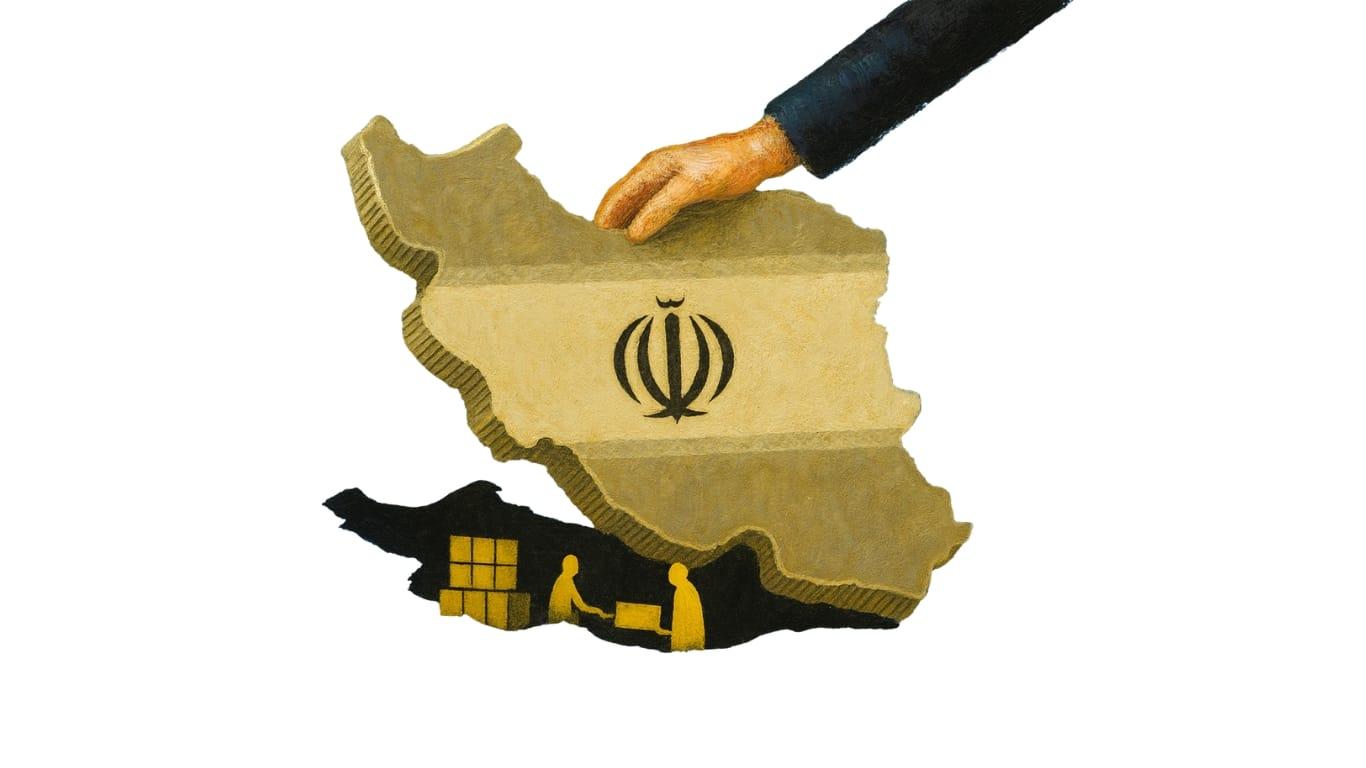
Iran's contemporary art market is one of the quietest serious segments in the global field, and the trade has been tracking its structural depth for two decades. Christie's Dubai and Sotheby's Doha sales of Iranian modern and contemporary material, the Tehran Auction's domestic activity, and the rising institutional interest from the Pompidou, the Tate, and the Met have collectively built a segment that operates outside the usual headline calendar but with measurable depth.
The structural context matters. Iran has produced one of the most continuously active modern and contemporary art scenes in the broader Middle East, with a domestic gallery network in Tehran, a museum infrastructure that includes the Tehran Museum of Contemporary Art, and a diaspora cohort active in London, Paris, Dubai, Los Angeles, and New York. The market segment that has emerged across the past two decades reflects that institutional depth.
- Iran’s contemporary art market is one of the quietest serious segments in the global field, with measurable depth across two decades of activity.
- Christie’s Dubai and Sotheby’s Doha have built the international auction record for Iranian modern and contemporary material across the past two decades.
- The Tehran Museum of Contemporary Art holds one of the most significant collections of post-war Western contemporary art outside the United States and Western Europe.
- The collection includes works by Jackson Pollock, Mark Rothko, Willem de Kooning, Andy Warhol, Francis Bacon and Picasso, assembled under Queen Farah Pahlavi from 1958 through 1979.
- The Saqqakhaneh movement of the 1960s, including Parviz Tanavoli, Hossein Zenderoudi, Faramarz Pilaram and Mansour Ghandriz, anchors the historical depth of the segment.
- Tanavoli’s sculptural practice, particularly the Heech series and the Poet series, has been the most actively traded segment at the major Dubai-anchored auctions.
- Who is this for?
- Collectors, advisors and curators interested in Iran’s contemporary and modern art market as one of the quietest yet most institutionally serious segments of the broader Middle Eastern field.
- What is happening?
- An editorial read on Iran’s quietly rising art market, covering the Tehran Museum collection, the Saqqakhaneh movement, the Dubai axis and the contemporary cohort.
- When did this emerge?
- Most relevant around the Christie’s Dubai and Sotheby’s Doha sales of Iranian modern and contemporary material and around major Pompidou, Tate and Met loan programmes on the region.
- Where is this happening?
- Centred on the Tehran gallery and museum network, the Dubai auction-house infrastructure and the diaspora cohort active across London, Paris, Los Angeles and New York.
- Why does it matter?
- Understanding the Iranian segment is essential context for serious Middle Eastern collecting, because the depth of institutional and historical material is genuinely larger than the headline traffic suggests.
The Tehran Museum and its collection
The Tehran Museum of Contemporary Art (TMCA) holds one of the most significant collections of post-war Western contemporary art outside the United States and Western Europe. The collection, assembled under Queen Farah Pahlavi from 1958 through 1979, includes works by Jackson Pollock, Mark Rothko, Willem de Kooning, Andy Warhol, Francis Bacon, Picasso, and the broader post-war canon.
The collection is largely held in storage and rarely exhibited in full, but its existence and condition are well-documented within the international curatorial community. Periodic exhibitions of selected works have produced significant scholarly attention, and the collection remains a structural feature of the global modernist landscape that the trade is aware of.
The TMCA's parallel collection of Iranian modern and contemporary art is the institutional anchor for the domestic segment. The Saqqakhaneh movement, the abstract expressionist generation that emerged in the 1960s, and the post-revolutionary cohort all have meaningful representation.
The Saqqakhaneh anchor
The Saqqakhaneh movement, the 1960s cohort that synthesised Iranian visual traditions with modernist abstraction, anchors the historical depth of the segment. Parviz Tanavoli, Hossein Zenderoudi, Faramarz Pilaram, Mansour Ghandriz, Massoud Arabshahi, Sadegh Tabrizi, and Nasser Ovissi are the canonical figures.
Tanavoli's sculptural practice, particularly the Heech series and the Poet series, has been the most actively traded segment at the major-house auctions. Christie's Dubai sales across the past two decades have consistently included Tanavoli material with depth, and the artist's secondary-market position is the most institutionally validated in the cohort.
Zenderoudi's mature painting practice has rerated steadily across the past decade, with the Pompidou's 2018 retrospective producing measurable upward pressure on the secondary market. The cohort's broader rerating is one of the most consistent stories in the segment.
The contemporary cohort
The post-revolutionary contemporary cohort has produced internationally significant artists across multiple generations. Shirin Neshat, Farhad Moshiri, Y.Z. Kami, Reza Aramesh, Shirazeh Houshiary, and Monir Shahroudy Farmanfarmaian (1922-2019) anchor the older end of the cohort, with strong institutional representation at the Tate, MoMA, the Guggenheim, and the Pompidou.
The younger generation, Avish Khebrehzadeh, Tala Madani, Ali Banisadr, Nazgol Ansarinia, Shoja Azari, and the broader cohort working across painting, video, and installation, has built international gallery representation across the past decade. Galleries including Hauser & Wirth, Marian Goodman, Galerie Krinzinger, and Galerie Daniel Templon represent significant figures in the cohort.
For broader context on the international contemporary segment the cohort connects to, our contemporary art collectors field guide sets out the broader market.
The Dubai axis
Dubai's emergence as a regional art hub has been particularly important to the Iranian market segment. Christie's Dubai sales since 2006 have been the principal public-market venue for the cohort, and the gallery infrastructure in Alserkal Avenue and across the city has built a sustainable platform for primary-market activity.
Our coverage of Dubai's transformation into a fine art hub sets out the broader regional infrastructure that the Iranian segment operates within.
Sotheby's Doha sales, Bonhams' periodic Middle Eastern art sales in London, and the Phillips programme have all extended the public-market footprint for the segment. The cohort now has multi-house, multi-venue secondary-market depth that did not exist fifteen years ago.
The Tehran domestic market
The Tehran Auction, the principal domestic auction platform, has operated continuously since 2012 and produces the most direct read on the segment's domestic depth. The summer and autumn sale calendars consistently produce significant total hammer for Iranian modern and contemporary material, with the cohort of domestic collectors active at meaningful price points.
The domestic gallery infrastructure in Tehran is one of the densest in the broader Middle East. Galleries including the Ag Galerie, Mohsen Gallery, Etemad Gallery, Aaran Gallery, and the broader cohort sustain a primary-market segment that supports the cohort's continued production.
The structural feature distinguishing the Iranian segment from many other regional markets is the domestic depth. The cohort is not only an export market to international buyers; it is a domestically grounded segment with active local collectors, institutional infrastructure, and continuous primary-market activity.
The institutional rerating
Western institutional engagement with the Iranian cohort has expanded substantially across the past decade. The Tate's 2020 Monir Shahroudy Farmanfarmaian retrospective, the Pompidou's 2018 Zenderoudi show, the Met's permanent collection acquisitions of Iranian contemporary material, and the Whitney's continuing engagement with the diaspora cohort have collectively built institutional infrastructure that the trade reads as durable.
The cohort's place in the broader contemporary segment that our artists defining the market in 2026 coverage tracks is now structurally embedded rather than incidental.
The structural risks
The market segment carries specific structural risks the trade tracks closely. The geopolitical environment between Iran and the United States has periodically constrained the routing of works between the segments, and the sanctions infrastructure has effects on the primary and secondary markets that other regional segments do not face.
The market has nonetheless functioned with continuity across multiple geopolitical cycles. The Dubai axis, the diaspora cohort, and the European gallery network have collectively built infrastructure that operates around the constraints.
Our piece on the primary and secondary art markets sets out the broader framework that the segment fits within.
The broader regional context
The Iranian segment connects to the broader Middle Eastern art market that has built substantial institutional infrastructure across the past decade. The Sharjah Art Foundation, the Louvre Abu Dhabi, the Mathaf Arab Museum of Modern Art in Doha, the broader Gulf institutional programme, and the Saudi Misk Art Institute have collectively built a regional context that the Iranian cohort operates within.
Our coverage of trends defining 2026 traces the broader regional dynamics. The Iranian segment is structurally important to the Middle Eastern modernist canon and increasingly to the contemporary cohort the regional institutions are actively building.
What this means for collectors
The Iranian art market is one of the quietest serious segments in the global field, and it offers genuine institutional depth, mature scholarly support, and a price tier that remains more accessible than the equivalent Western mid-career cohort. The discipline is the same as in any segment with cross-border complexity: work with established dealers and houses, document provenance carefully, and treat the geopolitical environment as part of the operational landscape.
For collectors interested in building exposure, the modernist Saqqakhaneh cohort, the diaspora contemporary generation, and the senior contemporary figures together constitute a segment of measurable depth. The Tehran domestic market and the Dubai and European secondary venues provide the channels.
We last reviewed this analysis in May 2026.
Frequently Asked Questions
Who are the most collected Iranian artists?
The Saqqakhaneh cohort anchors the segment, with Parviz Tanavoli, Hossein Zenderoudi, Faramarz Pilaram, and the broader 1960s generation as the canonical names. The contemporary cohort includes Shirin Neshat, Farhad Moshiri, Y.Z. Kami, Shirazeh Houshiary, Monir Shahroudy Farmanfarmaian (1922-2019), and a younger generation that includes Ali Banisadr, Tala Madani, and Avish Khebrehzadeh.
Where is Iranian art sold at auction?
Christie's Dubai is the principal public-market venue, with Sotheby's Doha, Bonhams London, and Phillips also running periodic sales of the cohort. The Tehran Auction is the principal domestic platform and has operated continuously since 2012. The cohort now has multi-house, multi-venue secondary-market depth that did not exist fifteen years ago.
What is the Tehran Museum of Contemporary Art collection?
The TMCA holds one of the most significant collections of post-war Western contemporary art outside the United States and Western Europe, assembled under Queen Farah Pahlavi from 1958 through 1979. The collection includes works by Jackson Pollock, Mark Rothko, Willem de Kooning, Andy Warhol, Francis Bacon, and Picasso, alongside a parallel collection of Iranian modern and contemporary art.
Is the Iranian art market accessible to international collectors?
Yes, through established channels. The Dubai and European secondary-market venues, the major-house sales, and the established international gallery cohort representing Iranian artists collectively provide the infrastructure for international collectors. The sanctions and geopolitical environment introduces operational complexity that requires specialist advisory support, but the market has functioned with continuity across multiple geopolitical cycles.