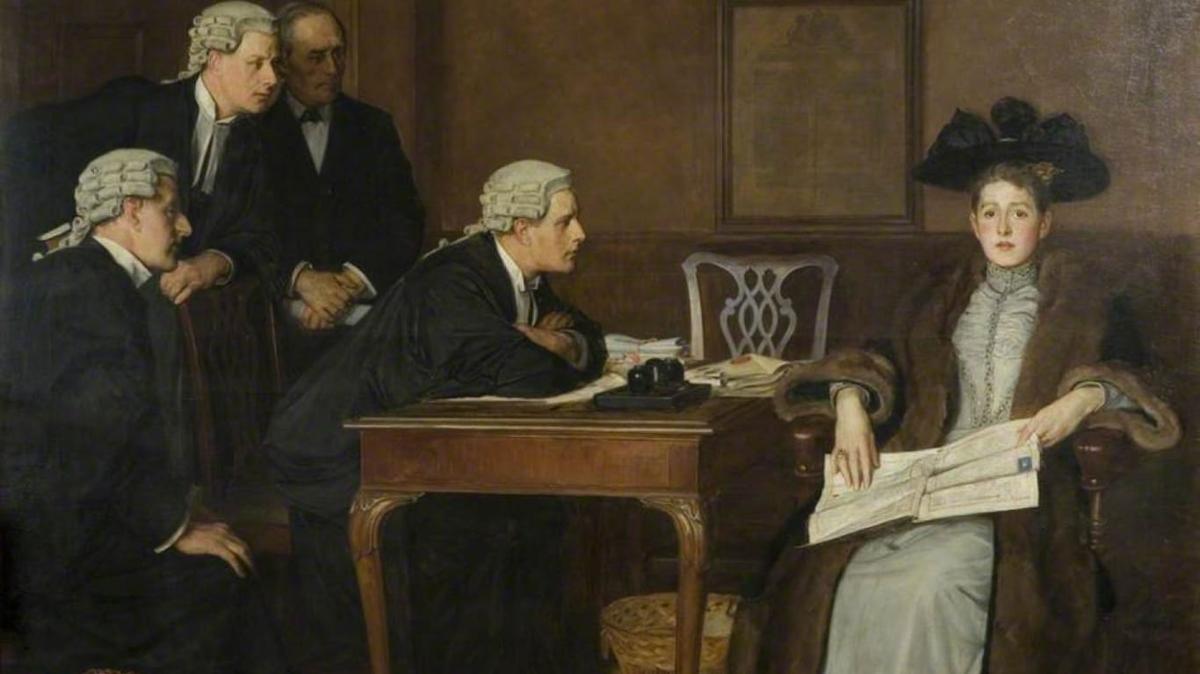

The line between modern and contemporary art looks like a date on a wall label, but the real distinction sits in how the two markets actually trade. Modern art covers roughly 1860 to the late 1970s, anchored by the Impressionists, the Cubists, the Surrealists and the post-war American schools. Contemporary art picks up after that, with a separate cast of artists, a separate auction calendar and a separate set of collectors driving prices at the top.
For collectors deciding where to focus, the difference matters. The two categories share the same evening rooms at Christie's, Sotheby's and Phillips, but the buyers, the supply, and the holding periods behave very differently. We have spent a lot of time watching both rooms, and the gap between them tells you something about how this market actually works.
- Modern art covers roughly 1860 to 1970, spanning Impressionism, Post-Impressionism, Cubism, Surrealism and Abstract Expressionism within the modernist tradition.
- Contemporary art runs from roughly 1970 onward and defines the deepest active segment of the global secondary market today.
- Modern work is anchored by canonical names including Monet, Picasso, Matisse, Pollock and Rothko, with limited supply at the very top driving consistent pricing.
- Contemporary work is led by Basquiat, Richter, Kiefer, Twombly, Doig and Hockney, with a second tier of mid-career artists moving into institutional collecting.
- Pricing structures differ, with modern relying on a small set of canonical works while contemporary involves more active gallery placement and shorter institutional cycles.
- For serious collectors, the two segments complement one another, with modern providing historical anchor and contemporary providing active engagement with current practice.
- Who is this for?
- Collectors, advisors and curators thinking through the structural difference between modern and contemporary art when building or rebalancing a serious collection.
- What is happening?
- A collector comparison of modern and contemporary art, covering periodisation, canonical names, pricing structure and the complementary roles each plays in a serious portfolio.
- When did this emerge?
- Most relevant when collectors are setting or refreshing a collecting thesis or when restructuring holdings ahead of generational transfer or major institutional engagement.
- Where is this happening?
- Both markets trade primarily in New York, London, Paris and Hong Kong, with growing institutional demand from museums and private collectors across Asia and the Middle East.
- Why does it matter?
- Understanding the periodisation and structural differences between modern and contemporary clarifies how each segment trades and supports collections coherent across multiple cycles.
Where the line between modern and contemporary actually falls
Most museums and auction houses use 1970 as the soft cutoff. Christie's pairs Impressionist and Modern Art into one evening sale calendar; Post-War and Contemporary sits on a separate cycle. Sotheby's does the same.
The Museum of Modern Art in New York structures its collection on that hinge, and Tate Modern follows a similar logic.
The line is not bureaucratic. Modern art belongs to a finite, mostly deceased cohort. Contemporary art is still being made.
That single fact changes everything downstream: supply, provenance, condition, and the role of the artist's estate in shaping value.
The modern art market: a closed canon
Modern art trades on a fixed roster. The Impressionists, the post-Impressionists, the Cubists, the Surrealists, the Bauhaus circle, the Mexican muralists, the Abstract Expressionists, the Pop generation, the Minimalists. Every major name in that list is dead.
No new Picassos, no new Rothkos, no new Pollocks will be painted.
That scarcity sets the floor. When a top Picasso comes to market, it is one of a known number of works. "Les Femmes d'Alger (Version O)" set the benchmark when it sold at Christie's New York in May 2015 for $179 million. Cézanne's "Mont Sainte-Victoire" series has anchored evening sales at both Christie's and Sotheby's for decades.
These prices reflect a market that knows exactly what supply will look like for the next century.
Catalogue raisonnés are largely closed. Authentication committees on most major artists have either disbanded or operate quietly. Provenance is well documented.
Condition is the main variable that separates a $20 million painting from a $80 million one in the same series.
The contemporary art market: an open canon, still forming
Contemporary art is the opposite picture. The canon is still being negotiated, often in real time. Neo-expressionism, the YBA generation, the Düsseldorf School photographers, the figurative-painting revival, the Black contemporary cohort that broke through in the 2010s, the Asian contemporary tier centered on Beijing, Seoul, and Tokyo: each of these tiers has its own gallery circuit and its own collector base.
Supply is open. New work enters the market every season. Primary galleries (Gagosian, David Zwirner, Hauser and Wirth, Pace, White Cube, Marian Goodman) shape the entry point.
Major-house contemporary evening sales then test those prices in public.
Volatility is higher. Basquiat's "Untitled" from 1982 made $110. 5 million at Sotheby's New York in May 2017, a market-defining figure for a contemporary work.
But the same generation has produced names whose prices doubled and halved within a single decade. The risk-reward profile is genuinely different from modern art.
How collectors actually choose between them
The honest answer is that most serious collections hold both. Modern art provides anchor pieces with deep cultural recognition and predictable supply. Contemporary art provides cultural relevance, gallery-circuit access, and the ability to engage with living artists, their studios, and the curators shaping their reputations.
Entry points differ. A meaningful work by a second-tier modern artist (a strong School of Paris painting, a small Magritte, a lesser-known German Expressionist) starts in the high six figures. A serious contemporary acquisition from a primary gallery can begin in the five figures, though access to the top of the contemporary market is gated by relationships with a small number of galleries.
Holding periods diverge too. Modern art tends to be held for decades, often passed between collections rather than flipped. Contemporary art moves faster, with shorter holding cycles and more frequent price discovery at auction.
Neither approach is right or wrong, but collectors should know which game they are playing before they start.
Where each market is heading in 2026
The 2024 UBS/Art Basel Global Art Market Report flagged a notable shift in mid-market activity, with sales between $250,000 and $1 million holding up better than the top end. That pattern has played through both modern and contemporary categories: trophy lots have softened, mid-market quality has held.
For modern art, the watch is on second-tier names within the major movements. A solid Surrealist work, a strong post-Impressionist landscape, a well-documented Bauhaus piece: these are the lots holding their evening-sale estimates while trophy works see more selective bidding.
For contemporary art, the watch is on artists who have moved from primary-market emerging into the major-house secondary market within the past decade. The Black contemporary cohort and the figurative-painting revival have both seen genuine institutional uptake (Tate, MoMA, Whitney acquisitions) that supports the market beyond speculative cycles.
What this means for collectors
Modern and contemporary are not interchangeable. They are different markets with different supply curves, different buyer pools, and different rhythms. A serious collection often holds both, but the discipline for each is distinct: condition and provenance dominate modern; gallery relationships, curatorial reputation, and primary-market access dominate contemporary.
Collectors who learn the rhythm of each market, rather than treating "art" as a single asset class, get the best results. Spend time at Frieze and Art Basel for the contemporary read. Sit through Christie's and Sotheby's Impressionist and Modern previews for the modern one.
The two conversations rarely converge, and that is the point.
We last reviewed this analysis in May 2026.