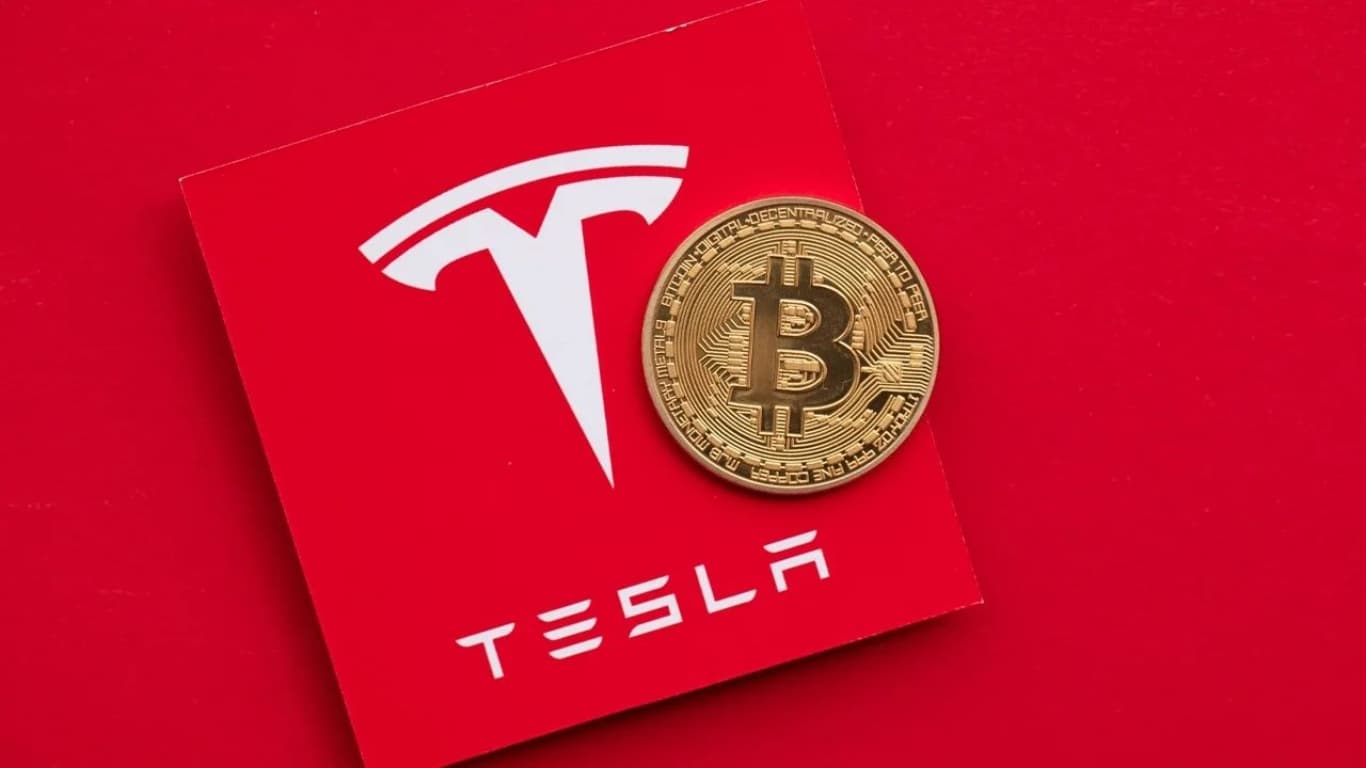
South Korea just delivered one of the most telling market signals of 2026, dumping $657 million worth of Tesla stock in August alone while simultaneously pouring billions into crypto-linked investments.
This isn’t just another trading headline. It’s a shift that reveals how retail investors are recalibrating their risk appetite and growth expectations in real time, and the speed of that recalibration should have your attention.
Korean retail investors collectively hold $21.9 billion in Tesla shares, making them one of the company’s largest foreign investor bases. Right now, they’re voting with their wallets on where they see the future of high-growth investing, and the verdict isn’t pretty for Elon Musk.
The move carries weight far beyond Seoul’s trading floors, potentially signaling a broader institutional rotation that could reshape capital flows across global markets for years to come.
The cross-border equity-to-crypto rotation story sits inside the broader retail-flow research that Bloomberg and Reuters have been tracking closely. Asian retail desks have repeatedly proven they move faster than their U.S. counterparts when sentiment shifts.
From a regulatory vantage, the SEC handles the U.S. side of the Tesla disclosures, while S&P Global credit and equity research adds the cross-asset context. Reading the flow data alongside the underlying filings is how serious allocators stay calibrated.
Key Takeaways
Navigate between overview and detailed analysisKey Takeaways
- South Korea’s massive reallocation from Tesla into crypto signals a deeper shift in investor sentiment, not just a one-off trade.
- Retail investors are increasingly treating crypto-related equities as legitimate growth assets rather than speculative sidelines.
- Tesla’s weakening fundamentals, slowing deliveries, rising competition, and delayed innovation, contrast with crypto’s perceived long-term trajectory.
- The move reflects both demographic comfort with digital assets and regulatory clarity that has legitimized crypto investing in Korea.
- Korean retail flows often serve as an early indicator for global capital trends, making this rotation especially influential for institutional investors.
The Five Ws Analysis
- Who:
- South Korean retail investors, among Tesla’s largest foreign shareholder groups.
- What:
- A large-scale reallocation of capital away from Tesla stock and into crypto-linked equities and ETFs.
- When:
- The pivot accelerated in 2025, with record sell-offs in August and sustained flows through the year.
- Where:
- Primarily on international markets like Nasdaq and global crypto exchanges, with ripple effects in Seoul, Wall Street, and beyond.
- Why:
- Declining confidence in Tesla’s growth story combined with rising belief in crypto’s potential, supported by regulation, adoption, and diversification benefits.
The Details Behind South Korea’s $657M Shift
The headline $657 million figure only tells part of the story. When you dig into the fundamentals, Cointelegraph and IndexBox data shows that August also saw $554 million in outflows from the leveraged Tesla ETF known as TSLL, according to TipRanks. Add those together and you’re looking at over $1.2 billion walking out the door in a single month.
When examined across four months, Bitcoinist.com reports the cumulative Tesla sell-off reached $1.8 billion, representing systematic rather than opportunistic selling.
The crypto allocation strategy shows sophisticated targeting across different corners of the digital asset world. MEXC and BeInCrypto tracking shows $253 million flowed into Bitmine Immersion Technologies as an Ethereum infrastructure play, while $226 million entered Circle to capture USDC growth and $183 million went to Coinbase for direct crypto exchange exposure.
The additional $282 million invested in a 2x leveraged Ethereum ETF, as reported by Cointelegraph, tells you something important. Korean investors aren’t just rotating into crypto. They’re actively seeking amplified exposure, which signals genuine conviction rather than cautious diversification.
Korean Center for International Finance data adds crucial context. Crypto-connected equities made up just 8.5% of Korean retail’s top 50 foreign stock purchases in January 2026, then surged to 36.5% by June before stabilizing at 31.4% in July.
That progression matters. The rotation happened fast, but it held at elevated levels. That’s not speculative noise.
That looks structural, and structural demand is the kind that reshapes markets over the long term.
Tesla Loses Popularity Among Korean Retail Investors
Market Reactions From Wall Street to Seoul
Tesla gave Korean investors plenty of reasons to leave. The company reported 13 to 13.5% year-over-year delivery declines in Q2 2026 alongside a 40% drop in European sales in July 2026, according to TipRanks data. Those aren’t blips.
Those are trend lines pointing in the wrong direction.
Analysis from the South China Morning Post shows Korean selling hit the largest monthly outflow in over two years, feeding broader investor anxiety about Tesla’s growth trajectory and its competitive positioning in both electric vehicles and autonomous driving.
Crypto-linked equities felt the opposite effect. Korean capital provided real liquidity support at a moment when many institutional investors were still sitting on the sidelines around digital assets. The $12 billion in year-to-date Korean inflows into crypto stocks, tracked by Cointelegraph, has helped push valuations higher while giving these companies more stable shareholder bases that aren’t rattled by every crypto price swing.
The timing hit at a moment of broader uncertainty about traditional tech valuations, which amplified the impact on both Tesla and crypto equities. Korean retail money has historically earned a reputation as “smart money” for its early adoption of growth trends. When it moves, institutional investors notice, and right now it’s moving away from legacy tech and toward digital asset infrastructure.
You can explore how automated crypto strategies are increasingly being used to capitalize on exactly these kinds of structural shifts.
Why South Korea Is Betting on Crypto Over Tesla
The demographic foundation behind this shift runs deeper than typical retail speculation. South Korea has one of the highest crypto adoption rates in the world, and that baseline familiarity changes how ordinary investors think about digital assets.
Cointelegraph and Tech in Asia data showing 20% overall digital asset ownership among South Koreans, rising to 25-27% for ages 20-50, indicates a mature crypto adoption curve that supports sustained investment flows rather than speculative bubbles.
That high baseline adoption creates natural demand for crypto-related equity investments as portfolio diversification tools. For millions of Korean retail investors, buying into a Coinbase or a Circle isn’t a leap of faith. It’s a logical extension of what they already understand.
Regulatory developments have also removed a lot of the uncertainty that used to hold Korean crypto investing back. The Virtual Asset User Protection Act passed in 2024 established consumer protections and operational standards, while the pending Digital Asset Basic Act promises even more clarity ahead.
That framework reduces the compliance risks that used to deter retail participation and kept institutional money cautious. When the rules get clearer, the capital gets more comfortable.
Tesla’s deteriorating fundamentals contrast sharply with crypto’s perceived growth path. Beyond delivery declines, Tesla faces intensifying competition from Chinese manufacturers and established automakers in electric vehicles, while its autonomous driving timeline keeps slipping without any clear sign of commercial deployment. Bloomberg’s ongoing coverage of Tesla’s competitive pressures makes for sobering reading if you’re still holding a large position.
Korean investors appear to view crypto infrastructure and services companies as offering superior growth potential with clearer monetization paths.
The leverage component tells you just how confident Korean investors feel about crypto’s upside. The $282 million allocated to 2x leveraged Ethereum ETFs isn’t a defensive move. That’s aggressive growth-seeking behavior from people who believe crypto exposure can generate returns that more than justify the added volatility and leverage risk.

Could South Korea’s Crypto Bet Change Global Investment Flows?
Korean retail investors still hold $21.9 billion in Tesla stock, and that creates an ongoing overhang that could weigh on the share price for months. Cointelegraph analysis points to continued Korean selling pressure that, combined with weakening fundamentals, may accelerate a broader institutional reassessment of Tesla’s valuation multiples and growth story.
If Korean behavior is an early indicator, and history suggests it often is, other international retail investors may follow similar rotation patterns. The question isn’t whether this trend spreads, but how fast.
The $12 billion in Korean crypto equity inflows year-to-date is providing real liquidity that’s helping establish higher valuation floors for crypto-related companies. That capital adds stability during crypto market downturns while supporting higher trading multiples that make these companies more attractive to institutional investors who previously steered clear due to volatility concerns.
For context on how retail and institutional money interact differently in these markets, understanding the difference between brokers and market makers is worth your time.
The ripple effects extend beyond individual securities to broader asset allocation trends. Korean investors putting 31.4% of their top foreign stock purchases into crypto-linked equities demonstrates a retail appetite for digital asset exposure that could spread to other markets if the returns keep justifying the risk.
European and other Asian retail investors have a track record of following Korean trends, especially in technology and growth investing. Watch those markets closely over the next two quarters.
The institutional implications reach beyond stock picking to fundamental questions about growth investing in mature versus emerging sectors.
Korean retail behavior suggests traditional high-growth tech companies may be losing their appeal relative to crypto infrastructure and services firms that offer exposure to potentially transformative shifts in both finance and technology. The Financial Times has been tracking this broader rotation from legacy tech into emerging asset classes across multiple geographies.
Central bank and sovereign wealth fund behavior may eventually follow retail trends if crypto continues gaining legitimacy and generating superior returns.
Korean pension funds and institutional investors traditionally lag retail trends, but they often adopt successful strategies once those strategies prove sustainable. If Korean crypto equity investments keep outperforming traditional tech holdings through 2026 and into 2027, larger institutional flows are almost certainly going to follow.
We last reviewed this analysis in May 2026.


Alex Tzoulis
Alex Tzoulis is Co-Owner and Markets Analyst at The Luxury Playbook, specializing in equities, crypto, forex, and global financial markets. His work focuses on analyzing macroeconomic trends, geopolitical developments, and monetary policy, translating them into actionable insights across both traditional and digital asset classes. He leads the platform's financial market coverage, providing structured analysis across stock market investing, trading strategies, and cryptocurrency markets. His expertise strengthens the publication's authority in financial markets and capital allocation, bridging traditional finance with emerging digital investment ecosystems.