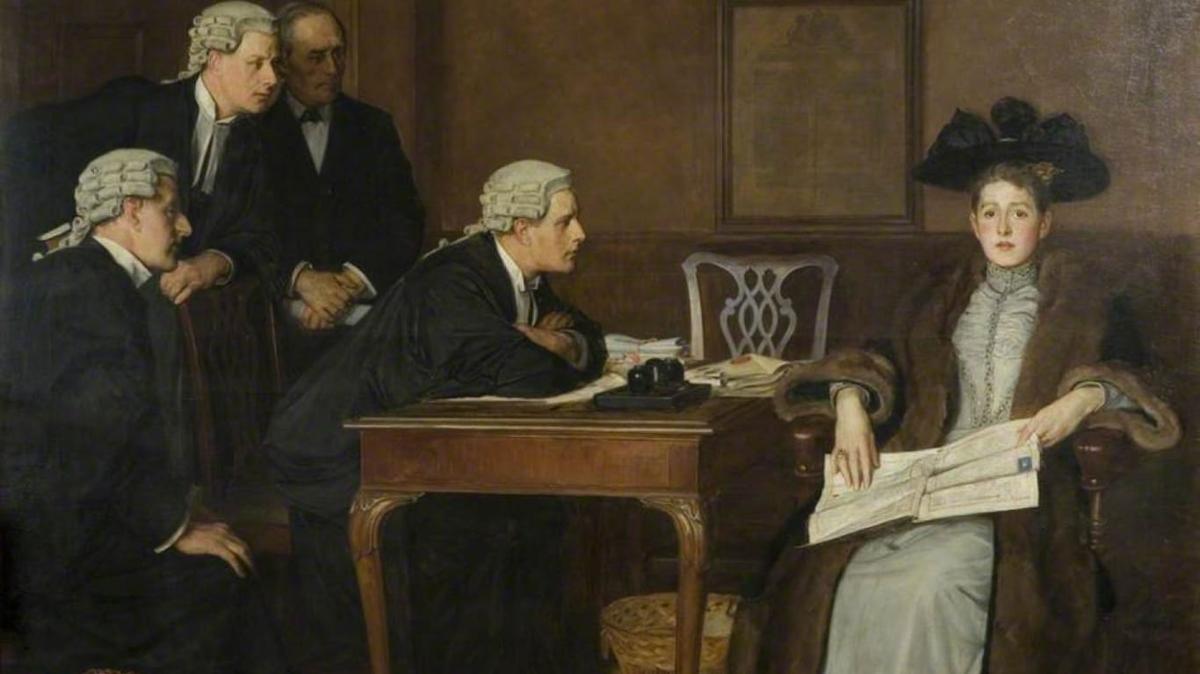

An art advisor's job is to keep a collector from making expensive mistakes. We have watched the role evolve over the past decade from a niche service used by a handful of established collectors into a structural feature of how serious people approach the category, and the reasons matter. The contemporary market is large, complex, and increasingly opaque, and the gap between what a knowledgeable advisor can see and what an unaided collector can see has widened.
The Hiscox Online Art Trade Report and the Art Basel and UBS Global Art Market Report both track the same trend. Use of advisors has grown across every collector tier, from first-time buyers building toward serious depth through high-net-worth and ultra-high-net-worth collectors managing eight and nine-figure positions. In our coverage we keep coming back to the question of what advisors actually do, because the role is genuinely misunderstood.
- A good art advisor builds and protects a collection over time, blending market intelligence, scholarly judgement and a clear read on the client’s actual goals.
- Advisors run the diligence work that private buyers rarely have time for, from condition reports and provenance checks to discreet conversations with the right specialists.
- Access matters as much as taste. Senior advisors place clients into restricted primary-gallery allocations and into the kind of private sales that never reach an open catalogue.
- Fee structures vary widely, from retainer and project models to commission on transactions, and each creates different incentives the collector should read carefully.
- A serious advisor will challenge a client on works that do not fit the collection, which is the clearest signal the relationship is built around the collector.
- The clearest test of an advisor is whether the collection looks coherent in ten years, not whether any single purchase felt clever at the moment of sale.
- Who is this for?
- Private collectors and family offices considering whether to engage a professional art advisor, alongside readers who want a clear picture of what a credible advisor actually delivers.
- What is happening?
- An editorial breakdown of what an art advisor really does, covering diligence, gallery access, private sales, fee structures and the long-term shape of a serious collection.
- When did this emerge?
- Most useful when collectors are starting out, scaling up or restructuring an existing collection after a major life event such as inheritance, divorce or generational handover.
- Where is this happening?
- Advisors operate globally, with the deepest market presence in New York, London, Paris, Hong Kong and across the Art Basel and Frieze fair circuits each year.
- Why does it matter?
- A good advisor protects collectors from expensive mistakes and quietly compounds the quality of a collection across decades, which usually justifies the fee many times over.
The core function: structural access
The most important thing an art advisor delivers is access to material that does not reach the open market. The contemporary primary market runs on relationships rather than listings. Galleries do not sell their best work to whoever walks in.
They sell to collectors whose acquisitions support the artist's career: museum donors, serious long-term holders, and collectors whose presence at the work's next exhibition or eventual auction will read as a positive.
An advisor with established relationships with the major galleries (Pace, David Zwirner, Hauser & Wirth, Gagosian, Lisson, White Cube, Sprüth Magers) can place a collector on the actual waitlists for sought-after artists. Without that relationship, the collector typically gets routed to whatever the gallery has not been able to place through its primary channels.
The same dynamic holds at the auction houses. Private sales, off-market introductions, and pre-sale access to consigned works flow through the specialist channels that established advisors maintain. Christie's, Sotheby's, and Phillips all run dedicated private sales departments now, and the volume of transactions handled through those channels has risen meaningfully over the past five years.
The screening function: separating signal from noise
The second function is screening. The contemporary art market produces a vast amount of material every year. The structural question for a serious collector is which of it will hold value, hold cultural relevance, and matter five or ten or twenty years from now.
Most contemporary work, even from named artists at named galleries, does not.
An advisor's screening work runs across several dimensions simultaneously. Artist's career trajectory: where the museum acquisitions sit, which curators are engaged, what the publication record looks like. Gallery quality: which galleries are building careers carefully versus which are accelerating prices to make short-term margins.
Specific work quality: how a particular piece compares to other examples from the same period in the same artist's output. Price discipline: whether the gallery's pricing reflects the artist's actual market position or anticipates a position the artist may not reach.
This is judgement work, and it takes years of immersion to develop. The advisors who do it well have typically come up through the galleries, auction houses, or museum world, and they bring the inside knowledge of those institutions to the collector's account.
The execution function: transactions done properly
The third function is execution. Buying a serious work involves more than a credit card and a delivery address. The full transactional infrastructure (condition reports, provenance review, attribution verification, contract negotiation, payment structuring, shipping, customs clearance, storage, insurance) is non-trivial at any tier and structurally complex above a few hundred thousand dollars.
An advisor manages this infrastructure on the collector's behalf. The condition report gets commissioned through a vetted conservator. The provenance gets checked through Art Loss Register and any other relevant databases.
The contract specifies the right warranties and the right return rights. The shipping uses the right specialist carrier with appropriate climate control and security. The insurance covers transit and arrival properly, and links into the collection's broader policy.
These details are where transactions go wrong, and a serious advisor's value shows up first in the absence of those failures.
The collection-management function
The fourth function is ongoing collection management. A serious collection is a living thing. Works need to be properly stored, properly insured, properly conserved over time, and properly placed when they are displayed or loaned.
The infrastructure required to do this well, the conservation schedule, the insurance updates, the lending agreements with museums for exhibitions, the photography for catalogue and inventory records, runs continuously rather than transactionally.
This is where the relationship with an advisor moves from project-based to ongoing. Best practices for art preservation require continuous attention rather than periodic intervention, and the advisor coordinates the conservators, insurers, registrars, and shippers who maintain the collection's physical and documentary integrity.
The sale-side function: when and how to deaccession
The fifth function shows up less frequently but matters enormously when it does. Eventually a serious collection deaccessions works. The collector's taste shifts, the family circumstances change, or specific pieces have appreciated to a point where the rational move is to sell and rotate the capital into other parts of the collection.
The choice between auction and private sale, the choice of house, the timing relative to the relevant evening sales, the structure of the consignment (reserve price, guarantees, irrevocable bids), and the marketing approach for the work all have material consequences for what the seller actually realises.
An experienced advisor on the sale side can make a meaningful difference to the outcome, and the major collections that move in retirement or settlement cycles typically move through advisor-managed processes.
How the role differs across tiers
The advisor's role looks different across collector tiers. For new collectors building toward depth, the central function is education and screening: helping the collector develop a coherent point of view about the field they are entering, ruling out the obvious mistakes, and shepherding the early acquisitions through the right channels. Building a serious art collection is multi-year work, and the early years benefit from structured guidance.
For established collectors, the central function shifts toward access and execution. The collector typically has the point of view; what the advisor adds is the ability to act on it at speed and at scale, with the relationships and infrastructure required to do so cleanly.
For ultra-high-net-worth collectors managing institutional-scale collections, the role often expands into a hybrid of advisor and curator, with the advisor effectively running the collection as a small institution. Loan programmes, scholarly catalogues, foundation structures, and eventual museum relationships all become parts of the work.
What this means for collectors
The decision about whether to work with an advisor turns on three questions. First, do you have the time to do the screening, relationship, and execution work yourself? Second, do you have the relationships in place to access the material that does not reach the open market?
Third, are you collecting at a scale and seriousness where the advisor's fee structure (typically a percentage of acquisition value or a retainer plus transaction fees) is rational relative to what you stand to gain or lose on the decisions?
For most serious collectors, the answer to at least one of these questions argues for an advisor relationship. The category is large, the information is asymmetric, and the cost of mistakes scales with collection size. Understanding how the primary and secondary markets actually work is the start of the case for the role, but the relationships and judgement that an experienced advisor brings are what actually make the difference over years.
We last reviewed this analysis in May 2026.