
A roll-up merger pulls several smaller companies together into one larger entity. It’s a strategy most at home in fragmented industries, where consolidation can unlock serious efficiency gains, tighter market control, and genuine operational synergies. Private equity firms love this playbook because it creates economies of scale, drives up company valuations, and can turn a collection of small players into a market force.
The process moves through three core phases: initial acquisition, merging procedures, and post-merger integration. When it works, the results are striking. Waste Management, Cisco Systems, and Quest Diagnostics all used roll-up mergers to build dominant positions in their industries.
But the risks are just as real. Integration headaches, clashing corporate cultures, and operational misalignments can quietly derail even the most promising consolidation story.
- A roll-up merger consolidates many small companies in a fragmented industry into a single larger group, often backed by private equity or strategic acquirers.
- The thesis usually relies on scale economies, multiple arbitrage and operational improvements such as shared procurement, technology and management functions.
- Roll-ups have appeared across sectors from veterinary clinics and dental practices to insurance brokers, software vendors and waste management companies.
- Execution risk is high. Integration failures, culture clashes and overpayment can quickly turn a strategically sound roll-up into a destructive empire-building exercise.
- For public investors, roll-up vehicles can deliver impressive growth metrics but often mask declining underlying margins or rising leverage on the balance sheet.
- Patient analysis of organic versus acquired growth, return on invested capital and integration costs reveals whether the strategy is actually creating shareholder value.
- Who is this for?
- Investors, M&A professionals and business owners who want to understand how roll-up mergers work, where they tend to succeed and the warning signs that often precede expensive failures.
- What is happening?
- A practical primer on roll-up mergers, covering the strategic logic, multiple arbitrage, sector examples and the operational risks that determine whether the strategy creates or destroys value.
- When did this emerge?
- Particularly relevant during periods of low borrowing costs and active private-equity dealmaking, when roll-up strategies are funded aggressively across both private and public markets.
- Where is this happening?
- Roll-ups are a global strategy but historically most concentrated in the US and UK, with growing activity across continental Europe and selected Asian markets in recent years.
- Why does it matter?
- Understanding roll-up mechanics matters because they can either compound shareholder wealth efficiently or quietly accumulate hidden leverage and integration debt that surfaces years later.
Understanding the Basics of a Roll-Up Merger
Roll-up mergers sit inside the broader M&A architecture documented by the U.S. Securities and Exchange Commission. Every public transaction generates filings that disclose deal economics, share counts, and pro-forma capital structures.
The strategic and financial layers get sharp coverage from the institutional desks. Goldman Sachs and Morgan Stanley M&A research teams publish regular deal-flow analysis, while Bloomberg tracks roll-up activity across private equity and public markets in real time.
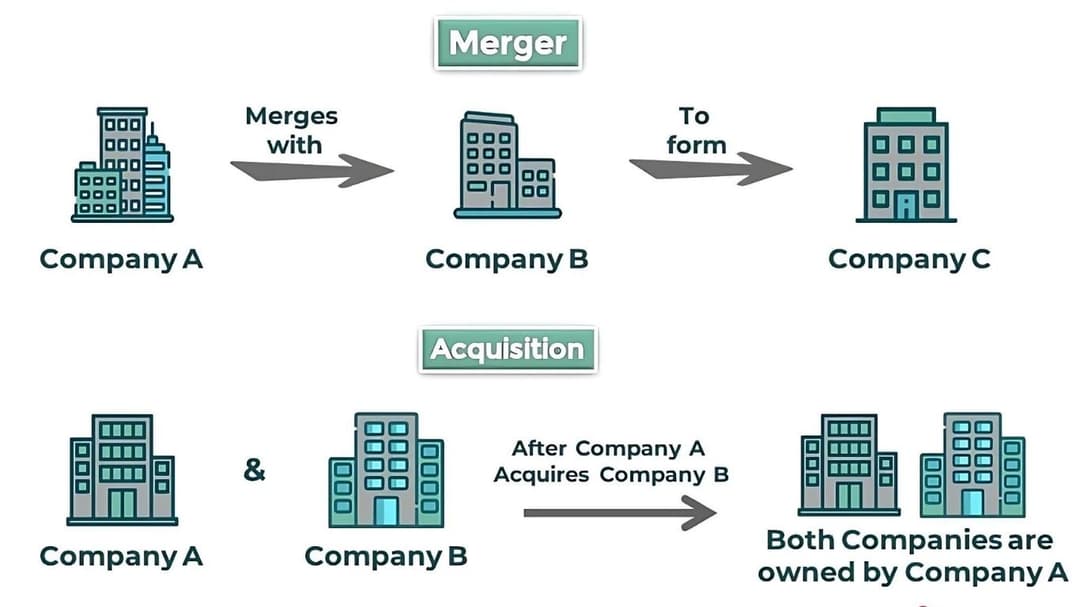
At its core, a roll-up merger takes several small firms and folds them into a single, more powerful organization. You’ll find this approach most often in fragmented sectors where no single player has taken the lead, because that’s exactly where consolidation can drive the biggest efficiency gains and the sharpest competitive edge.
What makes roll-up mergers so appealing to private equity firms is the compounding effect. As smaller businesses are absorbed into the combined entity, earnings multiples tend to expand and overall valuation rises. The classic example you’ll hear cited time and again is Waste Management, Inc., which built its way to the top of the waste disposal industry almost entirely through this strategy.
The real goal here is market dominance paired with leaner operations. Roll-up mergers integrate companies in ways that optimize how things get done, cut redundant processes, and sharpen the brand’s reach into new customer segments. They tend to work best in industries that still lack a clear leader, giving the acquirer a genuine first-mover advantage.
| Key Metrics | Pre-Roll-Up | Post-Roll-Up |
|---|---|---|
| Company Valuation Multiple | Lower | Higher |
| Operational Efficiencies | Lower | Higher |
| Market Dominance | Fragmented | Consolidated |
For the owners of the companies being acquired, the deal often comes with both cash and equity in the new combined entity. That means you walk away with immediate liquidity and a stake in something that’s actively growing. And when the synergies are properly captured, the long-term value of that equity can far outpace what the original business was worth on its own.

Roll-Up Merger Processes
For deeper context, the breakdown in how to analyse a public roll-up vehicle from a stock-picker angle is worth reading alongside this analysis.
The roll-up merger process isn’t something you improvise. It’s a multi-step operation built around one core idea: pulling smaller businesses together into something more competitive, more valuable, and more defensible. The strategy works through three distinct phases, each one building on the last, and each one carrying its own set of risks if you’re not paying close attention.
Initial Acquisition Steps
The first phase is where everything begins, and getting it right sets the tone for the entire strategy. The acquiring entity, typically a Private Equity Group, goes hunting for smaller companies that fit the broader vision. You’re looking for businesses that can be absorbed efficiently, that add something meaningful to the combined whole, and that don’t bring along hidden liabilities that will cost you later.
- Market Valuation: For example, independent Lumber and Building Material (LBM) dealers are typically valued at around a 5X multiple of their adjusted EBITDA. By acquiring several of these smaller entities, a PEG can create a more substantial entity that benefits from economies of scale, potentially increasing the valuation to an 8X or 9X multiple.
- Deal Structure: Typically, around 20% of the acquisition deal’s value in a roll-up merger comes from roll-over shares. This means that the original owners of the smaller companies contribute part of their equity into the new, combined entity.
For instance, if a PEG purchases three LBM dealers for $45 million, and the owners roll over 20% of the purchase price, they would collectively own about 28.1% of the newly formed company, with the PEG holding the remaining 71.9%.
Merging Procedures
Once the acquisitions are locked in, the real work of legally and operationally combining those businesses begins. This phase lays the groundwork for everything the roll-up is supposed to deliver. Get it wrong here, and the synergies you projected on paper start slipping away before you’ve had a chance to capture them.
- Legal Consolidation: This involves combining the acquired companies under a single holding entity, ensuring that all legal frameworks and corporate structures are aligned. It’s essential to have a clear plan for integrating various business operations and practices.
- Operational Alignment: During this stage, aligning business processes, systems, and corporate cultures is crucial. For example, integrating supply chain operations, standardizing IT systems, and unifying sales channels are pivotal in achieving operational efficiency.
The success of this phase can directly impact the overall performance and future profitability of the combined entity.
Post-Merger Integration
Post-merger integration is where the value of the whole exercise either materializes or evaporates. This final phase demands precise planning and disciplined execution. You’re not just combining org charts. You’re building a unified organization that actually functions as one, and that takes more intentional effort than most people anticipate going in.
- Cultural Integration: One of the most challenging aspects of post-merger integration is merging the cultures of the different entities. Maintaining employee morale and ensuring a smooth transition is vital for sustaining productivity during this period.
- Performance Enhancement: By effectively integrating operations, the new entity can improve performance metrics, such as cost efficiencies and revenue growth.
uccessful integration can elevate the company’s valuation significantly, with the possibility of moving from a 5X to an 8X or 9X EBITDA multiple. This increase in valuation not only benefits the PEG but also the original owners who rolled over equity into the new entity, potentially leading to substantial returns on their investment.

Benefits of a Roll-Up Merger
When a roll-up merger is executed well, the strategic and financial upside can be substantial. For businesses looking to grow quickly in a competitive field, this approach offers a faster path to scale than organic growth alone. The benefits show up across your cost structure, your market positioning, and your long-term valuation.
Economies of Scale
One of the most tangible advantages you get from a roll-up merger is the ability to negotiate from a position of real purchasing power. When you pool the buying volume of several smaller companies, suppliers take notice. In manufacturing and retail especially, that leverage can translate into meaningful cost reductions. According to McKinsey and Company, companies involved in roll-up mergers can cut procurement costs by up to 20%, depending on the industry.
That’s not marginal. That goes straight to the bottom line.
The savings don’t stop at procurement either. Merged companies can strip out duplicated efforts across marketing, distribution, and production, which pushes per-unit costs down and overall profitability up. Deloitte’s 2024 analysis found that companies pursuing roll-up mergers reported average cost savings of 15% to 25% within the first two years after closing. If you’re evaluating whether the strategy makes financial sense, those numbers are hard to argue with. Separating real returns from the hype is always the critical discipline in any consolidation play.
Synergy Realization
Synergy is one of those words that gets thrown around loosely in deal discussions, but in a well-run roll-up it’s a very real outcome. When two or more companies combine and the result is genuinely worth more than the individual parts added together, that’s synergy working as advertised. You get there by eliminating redundancies, sharing capabilities, and creating efficiencies that simply weren’t possible when each business was running independently.
- Operational Efficiency: Roll-up mergers often involve the integration of administrative tasks, such as HR, finance, and IT systems, which can lead to significant cost savings.
For example, aligning IT systems across the merged entities can cut operational costs by up to 30%, as reported by a study from the Harvard Business Review in 2024. Additionally, merging sales channels allows the company to reach a broader customer base more efficiently, leading to increased revenue opportunities.
- Productivity Boost: By reducing redundancies, the merged entity can streamline processes and improve productivity. This improvement often results in better customer service, quicker time-to-market for products, and an overall increase in operational agility.
Market Dominance
When you consolidate enough of the smaller players in a fragmented industry, something shifts. Your combined entity stops being one of many and starts being the name that buyers, suppliers, and competitors have to reckon with. That expanded market share feeds brand recognition, strengthens your negotiating position on every front, and makes it progressively harder for smaller rivals to compete.
- Enhanced Market Share: A larger market share allows the merged entity to exert greater influence over the market, potentially setting industry standards or influencing pricing strategies.
According to PwC’s 2024 report on market trends, companies that have undergone successful roll-up mergers have seen their market share increase by an average of 12% within three years of the merger.
- Broader Product and Service Offering: Merging smaller companies often results in a more extensive range of products and services. This diversification not only attracts a broader customer base but also helps mitigate risks associated with relying on a single product or service line.
In industries such as consumer goods and technology, this expanded offering can be a significant competitive advantage.
Challenges and Pitfalls in Roll-Up Mergers
The strategic case for roll-up mergers is compelling, but the execution is where most deals either prove their worth or quietly fall apart. The three areas that tend to cause the most damage are system integration, cultural friction, and operational misalignment. All three are manageable, but none of them should be underestimated.
Integration Issues
Pulling together the technology stacks, workflows, and operational protocols of multiple independent companies is genuinely hard work. Each business you acquire has its own way of doing things, and forcing those systems to talk to each other cleanly takes more time and resources than most projections account for. Waste Management, Inc. is a cautionary tale here.
When the company tried to integrate 133 acquisitions simultaneously, the operational gaps created real inefficiencies and real financial losses.
Cultural Differences
Even when the financials line up perfectly, cultural misalignment can quietly poison the deal. When employees from different companies are suddenly expected to operate as one team, and their values, habits, and leadership styles don’t mesh, morale drops and productivity follows. In healthcare especially, that kind of friction can compromise performance in ways that go well beyond the balance sheet. A 2023 PwC study found that 70% of failed mergers pointed to cultural differences as the primary cause.
That’s not a soft problem. That’s a core execution risk.
Operational Misalignments
Different business models, different processes, and different assumptions about how things should run can all collide when you’re trying to build a unified operation. Without meticulous planning upfront, the efficiency gains you projected start looking theoretical rather than real. A 2024 Deloitte analysis found that 30% of roll-up mergers fail to hit their synergy targets, most often because of inadequate planning and timelines that were optimistic to the point of being unrealistic.

Examples of Successful Roll-Up Mergers
The best way to understand what a roll-up merger can actually deliver is to look at the companies that did it right. Waste Management, Inc., under H. Wayne Huizenga, is one of the most instructive stories in the playbook.
By systematically acquiring small waste haulers across the country, Huizenga built what became the largest waste removal service in the United States, turning a fragmented, locally dominated industry into a national powerhouse through sheer acquisition discipline.
Huizenga took the same approach and applied it elsewhere with equally striking results. At Blockbuster, he used targeted acquisitions to build the dominant movie rental chain in the U.S. At AutoNation, the same roll-up logic produced the largest automotive retailer in the country. Three entirely different industries, one consistent strategy, and each time it worked.
That’s the kind of track record that makes private equity firms keep reaching for this tool.
In the technology sector, Cisco Systems and IBM both used roll-up strategies to build and protect their market positions. Cisco’s acquisition program, which spanned more than 200 companies over the years, kept it at the front of the networking hardware and software space. IBM used acquisitions to move decisively into cloud computing and artificial intelligence, buying capabilities rather than building them from scratch.
If you’re thinking about how institutional players move to consolidate market control, the Cisco and IBM models offer a useful frame of reference.
Healthcare tells a compelling version of this story too. Quest Diagnostics spun off from Corning in 1996 with revenues of $1.5 billion. By 2023, Quest Diagnostics had grown that figure to $7.5 billion, almost entirely through acquiring regional laboratories and folding them into a national network.
The roll-up strategy let Quest expand its geographic reach and deepen its service offering in ways that organic growth alone could never have matched as quickly, turning a mid-sized diagnostics company into one of the defining names in the industry.
We last reviewed this analysis in May 2026.


Alex Tzoulis
Alex Tzoulis is Co-Owner and Markets Analyst at The Luxury Playbook, specializing in equities, crypto, forex, and global financial markets. His work focuses on analyzing macroeconomic trends, geopolitical developments, and monetary policy, translating them into actionable insights across both traditional and digital asset classes. He leads the platform's financial market coverage, providing structured analysis across stock market investing, trading strategies, and cryptocurrency markets. His expertise strengthens the publication's authority in financial markets and capital allocation, bridging traditional finance with emerging digital investment ecosystems.