

A wrap account bundles brokerage and financial advice into one clean package, covered by a single annual fee. That fee typically runs between 1% and 3% of your managed assets, and it folds in everything from portfolio management to administrative costs to third-party services. The structure is designed to align your advisor’s goals with yours, and for investors who trade frequently, it can end up being a genuinely cost-effective way to operate.
To get started with a wrap account, you’re generally looking at a minimum investment somewhere between $25,000 and $50,000. That threshold brings professional management and strategic asset allocation within reach for a wider group of investors, not just the ultra-wealthy. That said, if you prefer a buy-and-hold approach and rarely make trades, a commission-based model might actually serve you better given how infrequently you’d be transacting.
- A wrap account bundles brokerage commissions, advisory fees and other portfolio costs into a single flat percentage fee charged on assets under management.
- The structure aligns advisor and client interests by removing the incentive to generate commissions through excessive trading activity in the account.
- Typical wrap fees range from roughly 1 to 3 percent of assets annually, with the level depending on portfolio size, complexity and advisor reputation.
- Wrap accounts work best for investors with moderate trading frequency, where the bundled fee is competitive against unbundled brokerage plus advisory charges.
- For very active traders or very passive buy-and-hold investors, unbundled fee structures often work out cheaper than wrap account arrangements over time.
- Investors should scrutinise total fees, underlying fund expenses and the actual services delivered to ensure the wrap structure remains good value annually.
- Who is this for?
- Wealth-management clients and investors considering wrap fee account structures as an alternative to traditional commission-based or hourly fee arrangements with their financial advisors.
- What is happening?
- A clear explanation of wrap accounts, covering the fee structure, how they differ from traditional brokerage and advisory arrangements and the situations where each model works best.
- When did this emerge?
- Most relevant when investors are reviewing existing advisor relationships, switching providers or first engaging professional wealth management as their portfolio grows beyond simple self-directed accounts.
- Where is this happening?
- Wrap account structures are common across US and UK wealth management firms, with similar bundled fee models offered by major European and Swiss private banks.
- Why does it matter?
- Understanding wrap account economics helps investors evaluate whether bundled fees represent genuine value or simply replace one form of cost drag with another that is harder to measure.
Understanding Wrap Accounts
Wrap-account structures are documented in detail by the U.S. Securities and Exchange Commission, which oversees the disclosure rules every registered advisor must follow when offering them. FINRA publishes investor alerts on wrap fees and how to evaluate them.
The custodian side covers the implementation mechanics. Schwab and Fidelity both publish detailed wrap-account guides through their advisor-services platforms, and Morningstar's research desk tracks how wrap fees compress investor returns over multi-year horizons.
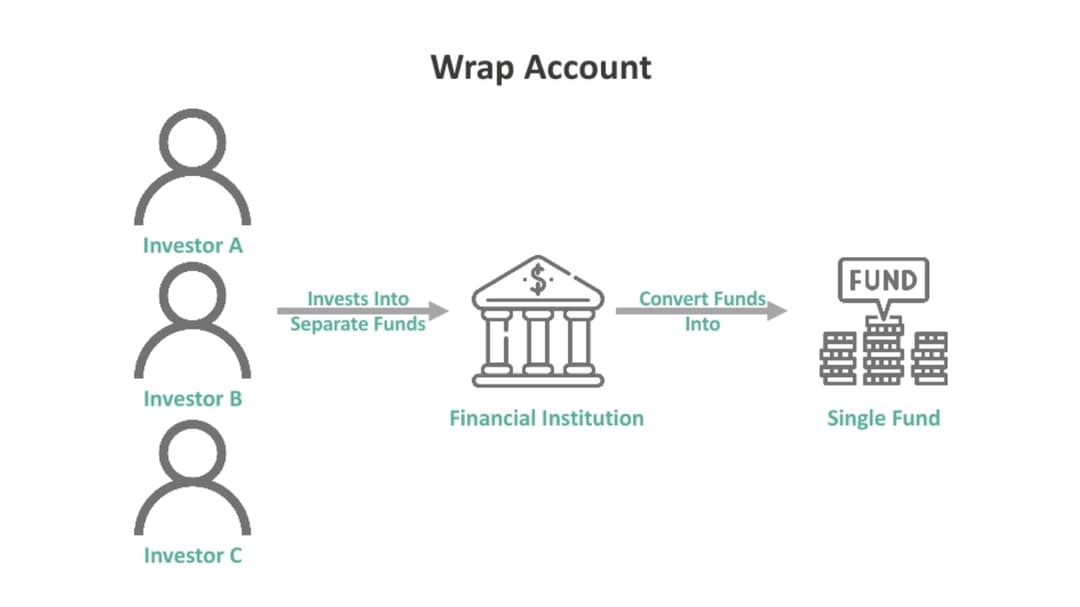
Think of a wrap account as a premium brokerage account that rolls all your costs into one transparent fee. Administrative expenses, commissions, management fees, they’re all bundled together. That fee is calculated as a percentage of your assets under management, typically sitting between 1% and 3%.
The result is a comprehensive wealth management solution that cuts through the noise and keeps things simple.
Fee Structure Overview
Rather than nickel-and-diming you with per-transaction charges, wrap accounts work on a flat fee tied to your portfolio’s total value. Because everything gets bundled into one percentage-based charge, the overall cost can actually be lower than paying for each service separately. That’s the real appeal of the bundled model.
| Feature | Wrap Account | Traditional Account |
|---|---|---|
| Fee Basis | Percentage of AUM | Per Transaction |
| Cost Predictability | High | Low |
| Service Inclusions | Comprehensive | Variable |
| Professional Management | Included | Optional/Separated |
| SEC Disclosure Requirements | Mandatory | Conditional |
Key Services Provided
Wrap accounts cover a broad range of services built around different investment needs. That’s a big part of why they’ve earned such a loyal following among serious investors. The typical package includes portfolio management, investment research, financial planning, performance reporting, and access to a dedicated advisor.
- Investment advisory services
- Brokerage costs coverage
- Comprehensive financial planning
- Performance monitoring
- Trading services
The goal is straightforward, deliver real, measurable value while keeping your portfolio aligned with your long-term financial objectives. Wrap accounts bring an organized, comprehensive approach to wealth management that keeps everything moving in the same direction.
Benefits of Wrap Accounts
For deeper context, the breakdown in how to vet the advisor offering you a wrap account is worth reading alongside this analysis.
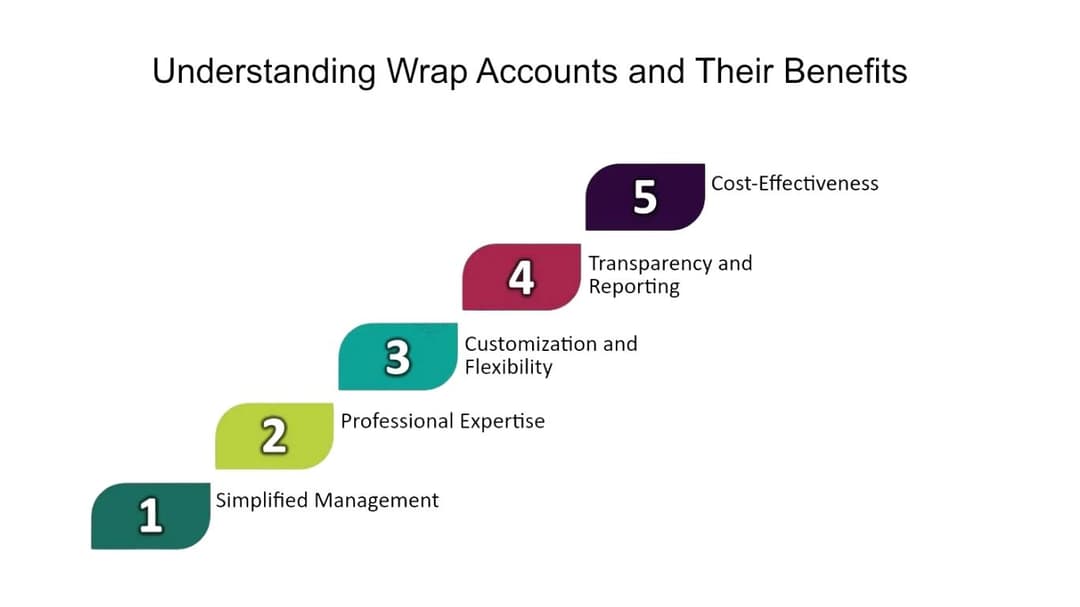
Wrap accounts have built a strong reputation among investors who want a smarter, more streamlined way to manage their money. The appeal comes down to a few core advantages: access to professional management, fee structures you can actually understand, advisors whose interests align with yours, and investment strategies you can shape to fit your life.
Professional Management
One of the biggest draws of a wrap account is putting a seasoned investment advisor in your corner. These professionals build and adjust your portfolio around your specific goals, risk tolerance, and financial picture. Understanding the difference between investing and speculating becomes much easier when you have an expert guiding those decisions. Data from the Investment Company Institute shows that professionally managed accounts consistently align with long-term financial goals in ways that are genuinely difficult to replicate on your own.
Easy-to-Understand Fees
Traditional investment accounts pile on fees from every direction, transaction costs, commissions, management charges. With a wrap account, all of that collapses into a single, all-inclusive fee. According to Morningstar research, wrap account fees typically range from 1% to 3% of assets under management, depending on the service level and portfolio size.
That consolidated structure makes your costs predictable and easy to track. No hidden fees, no surprise charges eating into your returns. So you can spend your energy focused on performance rather than playing detective with your fee statements.
Alignment of Interests
Wrap accounts tie your portfolio manager’s compensation directly to how well your portfolio performs. That alignment matters enormously. When your advisor only wins if you win, you get a very different quality of attention. Fidelity Investments has noted that this performance-based compensation model drives higher client satisfaction, because investors feel their advisor is genuinely in their corner.
By linking pay to portfolio performance, wrap accounts put both you and your manager on the same team, maximizing returns while managing risk intelligently. That shared objective builds a stronger, more collaborative working relationship over time.
Customizability
Your financial situation is unique, and wrap accounts are built to reflect that. You can tailor your portfolio around specific goals, risk preferences, and timelines, whether you’re chasing growth, building income, or looking for balance. A Schwab survey found that 68% of investors preferred the flexibility of wrap accounts because it let them adapt their strategy as their circumstances changed.
That flexibility becomes especially valuable if you have strong investment preferences, like socially responsible investing or ESG criteria. Working closely with your advisor, you can build a portfolio that meets your financial targets and reflects what you actually believe in. Value investing principles can often be woven into a wrap account strategy to add another layer of discipline to the approach.
Wrap Accounts vs. Traditional Accounts
Choosing between a wrap account and a traditional brokerage account comes down to understanding a few key differences. Fee structures, investment minimums, and the range of services on offer all play a role. Getting clear on these distinctions helps you pick the account that actually fits your goals and your financial situation.
Differences in Fee Structures
The fee structure is where wrap accounts and traditional accounts diverge most sharply. Traditional brokerage accounts charge per-trade commissions, plus separate administrative and management fees that can stack up fast, especially if you trade often. Wrap accounts simplify the whole thing by rolling every cost into one flat annual fee, typically between 1% and 3% of your assets under management.
That single wrap fee covers brokerage services, administrative expenses, commissions, personalized investment advice, and portfolio management. The transparency alone can make budgeting far easier.
Investment Minimums
The entry point is another area where these two account types diverge. Traditional brokerage accounts often have little to no minimum investment, with many discount brokers letting you open an account starting at zero. Wrap accounts set the bar higher, with minimums that generally fall between $25,000 and $50,000.
That threshold exists because of the comprehensive services bundled into the wrap structure. So if you’re working with substantial capital, a wrap account makes more sense. If you’re just starting out, a traditional account may be the more accessible entry point.
Service Coverage
The scope of what you get also varies quite a bit between the two. Wrap accounts bundle tailored financial advice, ongoing performance tracking, and administrative support into one seamless package. Traditional brokerage accounts tend to work more on an à la carte basis, where you pay separately for research tools, portfolio management, or financial advice.
Depending on how much you use those services, that can actually end up costing more in the long run.
How Wrap Accounts Prevent Churning
One of the quieter advantages of a wrap account is the protection it gives you against churning. Churning is when a broker makes excessive trades inside your account primarily to rack up commissions, with little regard for your actual investment goals. The flat-fee structure of a wrap account cuts that incentive off at the source.
What is Churning
Churning means your broker is buying and selling securities in your account at a pace that benefits their commission check, not your portfolio. All that trading generates transaction costs and can trigger unfavorable tax consequences that quietly eat away at your returns. The problem is most acute in traditional brokerage accounts where every trade puts money in the broker’s pocket, creating a built-in conflict of interest.
How Flat Fees Mitigate Churning
Wrap accounts tackle the churning problem head-on through their flat-fee model. Rather than charging you per trade, they levy a single annual fee, usually between 1% and 3% of your assets under management. That fee covers everything, regardless of how many trades are made.
Because the broker or portfolio manager doesn’t earn more by trading more, the incentive to churn simply disappears. Their compensation is tied to the growth and health of your portfolio, not the volume of transactions. That shift in incentives naturally pushes managers toward long-term strategies like smart asset allocation, risk management, and steady performance monitoring.
Beyond reducing the temptation to overtrade, the wrap fee typically bundles in a full suite of services. Investment strategy development, continuous portfolio monitoring, and periodic rebalancing all come included. By wrapping those services into one predictable cost, the focus stays exactly where it should be: on building sustainable growth for you. Exploring diversified vehicles like defense ETFs is one example of how a disciplined wrap account manager might add resilience to your portfolio without unnecessary trading.

When a Wrap Account Is the Right Choice
A wrap account works beautifully for some investors and less well for others. It really comes down to how active you are, how much management you want, and what your investment goals look like. Here’s a clear breakdown of who tends to benefit most.
For Active Investors
If you buy and sell securities frequently, a wrap account can save you real money. The annual fee, sitting between 1% and 3% of your assets under management, replaces the per-transaction charges that pile up fast in a traditional brokerage account. For active investors, that simplified cost structure can be a significant advantage.
The fixed fee also removes a common conflict of interest. Your advisor has no reason to churn your account since their pay isn’t tied to transaction volume. What matters to them is the overall performance of your portfolio, and that keeps your interests pointing in the same direction.
Wrap accounts also give you access to a diversified mix of assets including stocks, mutual funds, ETFs, and bonds. That built-in diversification can strengthen portfolio stability and growth potential, which is exactly what an active investor looking for a well-managed, balanced portfolio wants. Bloomberg Markets regularly covers the performance dynamics that make actively managed diversified accounts attractive in volatile conditions.
For Hands-off Investors
Wrap accounts also suit investors who prefer to hand the wheel to a professional. If you want comprehensive wealth management without getting into the weeds yourself, the all-in-one structure makes that easy. Your fixed annual fee covers investment research, portfolio management, and advisory services, everything handled under one roof.
That consolidated structure makes your financial life simpler. One fee, one point of contact, one integrated strategy. And because your advisor’s success is measured by the growth of your account, they’re motivated to keep working hard for you.
That kind of trust-based relationship is worth a lot.
Most wrap account programs require a minimum investment of around $25,000, and that threshold exists for good reason. With enough capital in the account, you can fully benefit from the professional management and diversified strategies that make wrap accounts worth the fee.
When It’s Not Suitable
Wrap accounts aren’t the right fit for every investor. If your style is buy-and-hold, where you purchase securities and sit on them for years with minimal activity, the annual wrap fee can feel like an unnecessary expense. In that case, a traditional brokerage account with lower ongoing costs might actually serve you better.
Think about it this way: if you rarely trade and don’t need regular advisory check-ins, you’re paying for services you’re not using. A traditional account that only charges you when you make a move will likely cost you less over time. The wrap account model works best when you’re actually using what it offers.
We last reviewed this analysis in May 2026.


Alex Tzoulis
Alex Tzoulis is Co-Owner and Markets Analyst at The Luxury Playbook, specializing in equities, crypto, forex, and global financial markets. His work focuses on analyzing macroeconomic trends, geopolitical developments, and monetary policy, translating them into actionable insights across both traditional and digital asset classes. He leads the platform's financial market coverage, providing structured analysis across stock market investing, trading strategies, and cryptocurrency markets. His expertise strengthens the publication's authority in financial markets and capital allocation, bridging traditional finance with emerging digital investment ecosystems.