

Private credit has become indispensable in any serious private market portfolio. It offers alternative funding to SMEs that don’t carry investment-grade ratings, and unlike traditional banking, it comes from non-bank lenders who can customize terms to fit the deal rather than the rulebook.
Think of this financing as a powerful diversification tool. It counteracts the high correlation you see in public equities, which means when markets get choppy, your private credit exposure doesn’t necessarily move in lockstep. With banks constrained by tightening regulations, the private credit space is full of opportunity.
Private debt strategies have become more targeted too, focusing on direct investments and periodic income. That’s a compelling combination if you want more control over your returns and a predictable yield profile.
That said, private credit isn’t without its complications. Regulatory shifts and market risks are real, and they demand thorough due diligence and a disciplined approach to risk management. Only by doing the analytical work upfront can you position yourself to maximize returns while keeping losses in check.
- Private credit refers to lending provided by non-bank investors directly to companies, typically through privately negotiated loan agreements.
- The asset class has grown rapidly as banks have stepped back from certain segments of corporate lending under post-crisis regulation.
- Direct lending, mezzanine finance, distressed debt and asset-based lending are the main subcategories, each with distinct risk-return profiles.
- Returns are typically higher than those on liquid corporate bonds, reflecting illiquidity, complexity and often weaker covenant packages.
- Default and recovery rates depend heavily on loan structure, sector and the discipline of the lender during the underwriting process.
- For investors, private credit can diversify income within a fixed-income sleeve, provided the trade-offs around liquidity and transparency are clearly understood.
- Who is this for?
- Allocators, family offices and qualified investors evaluating private credit as a source of yield alongside public-market fixed income and equity holdings.
- What is happening?
- A primer on private credit, covering its main strategies, typical return drivers, liquidity profile and the risks investors should weigh before committing capital.
- When did this emerge?
- Particularly relevant in environments where public-credit yields have compressed and investors are searching for incremental income beyond traditional bond portfolios at acceptable additional risk.
- Where is this happening?
- Most developed in the US and Western Europe, with growing pools of capital being deployed across Asian and emerging-market private-credit markets.
- Why does it matter?
- Private credit has moved from niche to mainstream allocation. Understanding it is increasingly important for any investor designing a modern income portfolio.
Understanding Private Credit
Private credit has graduated from niche to mainstream allocation across the last decade. The Federal Reserve's financial-stability reports now track the asset class explicitly, and BlackRock has built a dedicated research stream on direct lending and middle-market debt.
The mainstream financial outlets have followed the same arc. The Financial Times and Bloomberg both run dedicated private-credit coverage, with S&P Global overlaying the credit-rating discipline that helps institutional allocators size their exposure responsibly.
investors are turning to private credit to diversify and chase stronger returns than public markets are currently offering. Unlike standard bank lending, private credit flows from non-bank entities that are willing to lend to companies traditional banks often pass on due to their credit ratings. This segment has grown fast precisely because it offers flexibility and borrower-specific solutions that conventional banking simply can’t match.
If you’re exploring which alternative assets are delivering the strongest returns, private credit belongs near the top of your research list.
Private Credit vs. Traditional Bank Lending
Private credit sets itself apart from bank lending through its adaptable loan structures. After the financial crisis, banks got boxed in by strict regulations and largely walked away from higher-risk lending. Private lenders stepped into that gap.
They craft less rigid structures and enjoy wider spreads, typically between 200 and 600 basis points over public market rates. The result has been a boom in direct lending, especially to mid-size firms that don’t fit neatly into a bank’s credit box.
Regulatory Changes and Market Opportunities
Banking regulations shifted dramatically after 2008. Banks now chase safer loans, which has opened the door wide for private credit firms to build scale and influence. These firms design targeted strategies around specific sectors, moving quickly to seize openings that regulated banks can’t touch. The Financial Times has tracked private credit’s rise as one of the defining investment stories of the past decade.
The result is that private credit now sits as a pivotal source of finance, characterized by rapid growth and strategic liquidity. Senior debt funds, for example, often use fund-level leverage through structured finance vehicles to push returns even further.
Types of Private Credit Investments
For deeper context, the breakdown in how private credit fits alongside hedge-fund allocations is worth reading alongside this analysis.
The private credit market gives you several ways to play it, each with a distinct risk-return profile and investment approach. Understanding the differences lets you align each position with your financial goals and your actual tolerance for risk.
Direct Lending
Direct lending means providing loans straight to companies without a bank acting as the middleman. This approach targets mid-sized businesses most often, and it delivers a stable return profile that suits investors who want predictability. Historically, direct lending has made up a large share of private credit capital raising.
As of April 2024, direct lending funds from the 2018 and 2019 vintages reported median net Internal Rates of Return of 7.6% and 8.6% respectively. The strategy generates consistent income while managing risk through its senior position in the capital structure, meaning you’re first in line if things go wrong.
Mezzanine Financing
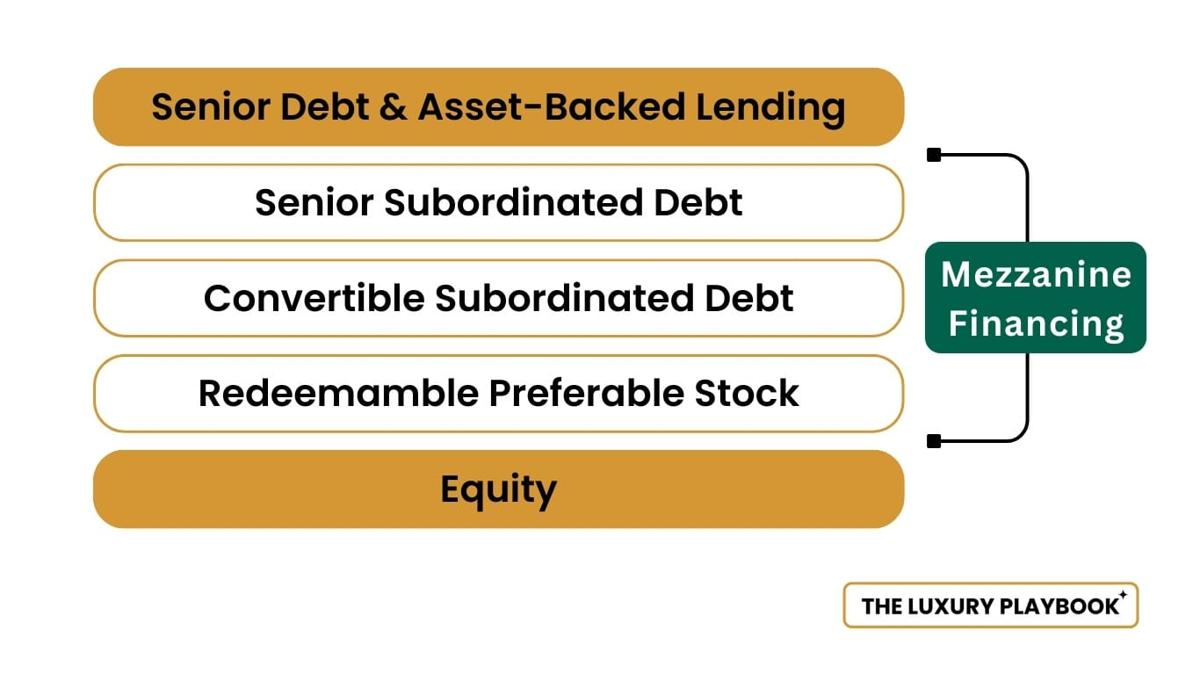
Mezzanine financing sits between senior debt and equity, which means it carries more risk than a senior loan but ranks well above common equity if a company runs into trouble. If you’re chasing higher returns and can stomach slightly elevated risk, this is worth your attention. Specialty finance funds that include mezzanine positions recorded median net IRRs of 9.6% and 11.2% for the 2018 and 2019 vintages.
These investments typically come with higher interest rates and equity-like features, making them well-suited for borrowers who sit just below investment-grade credit quality.
Distressed Debt Investing
Distressed debt investing targets the debt of financially troubled companies. The potential returns are substantial, but so is the risk. You need deep market knowledge and a genuine tolerance for volatility to play this well.
The 2008 and 2009 distressed fund vintages achieved net IRRs of 16.1% and 13.8% respectively, which shows what’s possible when you get the timing and the analysis right. Bloomberg’s credit markets coverage regularly tracks distressed cycles worth monitoring. Success here depends on understanding restructuring dynamics and knowing when a company’s debt is cheap enough to justify the recovery risk.
Middle-Market Lending
Middle-market lending targets firms that are too large for small-business loans but too small to access traditional capital markets on their own. Traditional banks have largely neglected this segment, and that neglect creates real opportunity for private credit investors. From 2018 to 2022, US sponsor-focused direct lending, a core part of middle-market lending, made up less than 20% of total fundraising.
That leaves significant room for growth. This lending type blends features from across the private credit spectrum, offering diverse risk-return profiles depending on the borrower’s creditworthiness and how the loan is structured.
| Investment Type | Typical Net IRR | Risk Profile | Target Borrower |
|---|---|---|---|
| Direct Lending | 7.6% – 8.6% | Moderate | Mid-sized Companies |
| Mezzanine Financing | 9.6% – 11.2% | Moderate to High | Below Investment Grade Borrowers |
| Distressed Debt Investing | 13.8% – 16.1% | High | Financially Distressed Companies |
| Middle-Market Lending | 7% – 15% | Varies | Mid-sized Companies |
Benefits of Private Credit for Private Credit Investors
The private credit market has expanded at a remarkable pace, growing from roughly $1 trillion in 2020 to about $1.5 trillion at the start of 2024. That trajectory tells you something important about where institutional and sophisticated individual capital is flowing, and the reasons behind that movement are worth understanding.
Yield Enhancement
Private credit investments, especially in direct lending, have consistently outpaced leveraged loans and high-yield bonds on returns. During periods of high and rising interest rates, direct lending delivered an average return of 11.6%, compared to 5% for leveraged loans and 6.8% for high-yield bonds. That kind of yield premium is a major reason why more investors are allocating here, particularly when public fixed income looks uninspiring.
Investment Diversification
Private credit typically shows low correlation with broader market indices and experiences less volatility than public assets. That combination can protect your portfolio during market swings and smooth out your overall return curve. If you’re already thinking about common investing mistakes to sidestep, over-concentrating in correlated public assets is near the top of the list.
Adding private credit as a genuine diversifier helps insulate you from the kind of turbulence that hammers equity-heavy portfolios.

Income Generation
Private loans are typically structured with periodic payment schedules, which means you’re receiving regular income throughout the life of the investment. That steady cash flow can soften the J-curve effect common in private market investing, where early capital outflows precede the gradual return of principal and gains. Getting paid along the way changes the math considerably.
Long-Term Capital Growth
The private credit market is on a strong growth trajectory. Assets under management are projected to double from $1.2 trillion in 2021 to $2.3 trillion by 2027. BlackRock projects private credit AUM will exceed $3.5 trillion by 2028. For long-term investors, that growth potential translates into meaningful capital appreciation as the asset class matures and deepens.
Inflation Hedge
A large portion of private credit investments carry floating interest rates, which makes them a natural hedge against inflation and rising rates. When rates climb, your income climbs with them. That’s a feature public fixed-income investors often envy, and it makes private credit an appealing tool for preserving purchasing power when inflation runs hot.
Comparative Performance Metrics
Here’s a comparative look at key performance metrics within private credit, drawn from data collected across recent years. The numbers paint a clear picture of where private credit stacks up against other asset classes in your portfolio.
| Investment Type | Average Return | Correlation with S&P 500 | Volatility |
|---|---|---|---|
| Direct Lending | 11.6% | 0.30 | Low |
| Leveraged Loans | 5% | 0.70 | Moderate |
| High-Yield Bonds | 6.8% | 0.75 | High |
| Private Equity | 15% | 0.60 | High |
Risk Management in Private Credit
Solid risk management is what separates good private credit returns from painful ones. The sector comes with unique challenges that require a comprehensive, proactive approach to protecting your capital. Strong due diligence and well-crafted investment agreements aren’t optional extras here.
They’re the foundation.
Enhanced Due Diligence
Enhanced due diligence is the cornerstone of risk management in private credit. Borrowers go through rigorous screening where credit managers look well beyond conventional financial metrics to assess true risk. Advanced analytical tools and artificial intelligence now play a meaningful role in sharpening these assessments.
The Federal Reserve Board’s 2023 Financial Stability Report noted that private pension funds hold a substantial share of private credit, which underscores just how critical thorough due diligence has become at scale. You can review the Fed’s Financial Stability findings directly to understand the regulatory lens on this market.
Structuring Expertise
Getting the deal structure right is one of the most powerful risk management tools available to you in private credit. Expert structuring means crafting investment agreements with protective covenants and collateralization that genuinely safeguard your interests. Covenants can tie the borrower to specific financial performance benchmarks, while collateral ensures you have a priority claim on assets if a borrower defaults.
Direct lending in private credit has outpaced many asset classes in recent years, with returns exceeding syndicated leveraged loans by 2% to 4%, and much of that outperformance comes down to disciplined deal structuring.
Protective Covenants and Collateral
Protective covenants and collateral are your safety net in private credit. Senior secured loans backed by these protections offer robust defense against capital loss. Since 2022, the average loan size in the private credit market has surged past $80 million, which makes getting these protections right even more consequential.
Focusing on strong covenants and collateral-backed positions gives managers the tools to minimize default risk and improve recovery rates when economic conditions turn against borrowers. If you’re weighing private credit alongside other alternative assets for your portfolio, understanding how this downside protection compares is worth your time.
We last reviewed this analysis in May 2026.