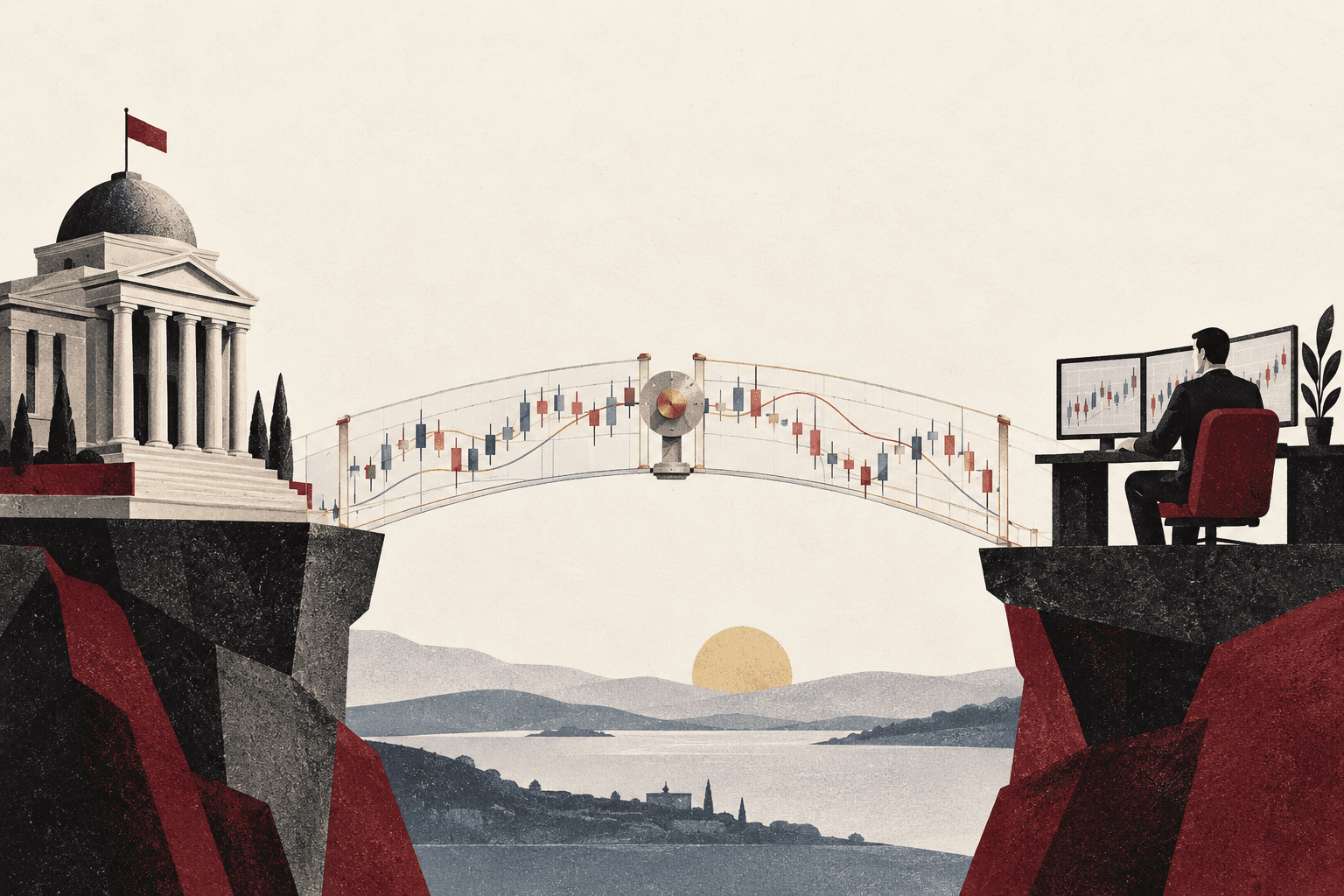

Your investment decisions are shaped by more than just data and market fundamentals. Psychological biases are quietly working in the background, nudging you toward choices that can cost real money. Here’s what those biases are, why they matter, and how you can keep them from derailing your portfolio.
- Confirmation bias keeps us inside an existing thesis even as the underlying evidence quietly shifts against the position.
- Loss aversion turns reasonable stop-loss discipline into account-threatening hope, particularly in concentrated positions.
- Anchoring on entry price prevents us from making the rational forward decision based on current fundamentals.
- Overconfidence is the single most expensive bias for active investors, often driven by a recent run of favourable outcomes.
- Recency bias compresses our investment horizon, with the last six months drowning out the previous ten years of data.
- Pre-committed written rules and structured portfolio reviews are the most reliable defence against all of these failure modes.
- Who is this for?
- Self-directed investors, advisors and family-office decision-makers who want to reduce the cost of behavioural error in their portfolios.
- What is happening?
- We are cataloguing the seven most damaging cognitive biases in investing and the playbook for keeping them out of the decision process.
- When did this emerge?
- These biases intensify around extremes, both at market peaks and during the panic phase of meaningful drawdowns.
- Where is this happening?
- The behaviours described are universal, though they are best documented in US equity markets where retail data is deepest.
- Why does it matter?
- Behavioural drag is one of the largest invisible costs in investing, and replacing instinct with process is the cheapest source of return available.
What is a Psychological Bias
The behavioral-finance literature on these biases is now mature and well integrated into institutional risk frameworks. McKinsey's wealth-management research tracks how the most disciplined HNW investors structure their decision-making to neutralise these patterns rather than fight them in real time.
The Financial Times has covered the same ground at the advisor level. FT reporting on private-wealth client behavior notes that the strongest portfolios usually belong to investors who have written down their own bias profile and built rules to counter it.
A psychological bias is an ingrained tendency that shapes the way you process information and make decisions. You might not even notice it happening. But in investing, these mental shortcuts can push you toward irrational behavior, distorted thinking, and choices that look smart in the moment but hurt you over time.
Every major investment decision you make is filtered through your perception of what’s happening in the market right now. That’s exactly why understanding your own psychological biases is so valuable. Knowing which ones are likely to influence your judgment, and what they could cost you, puts you in a far stronger position than most investors ever reach.

Types of Psychological Biases of Investors
For deeper context, the breakdown in how regret theory complements these biases is worth reading alongside this analysis.
Overconfidence Bias
Overconfidence bias kicks in when you believe your knowledge or skill is sharper than it actually is. You start assuming you can predict future performance with more certainty than the market allows. The result is a tolerance for risk that goes well beyond what’s rational, driven by a sense of optimism that the numbers simply don’t support.
The real danger with overconfidence is that it quietly convinces you to skip the things that protect your wealth. Diversification starts to feel unnecessary. Risk management feels like a constraint for less capable investors.
That mindset leads to over-trading, under-diversified portfolios, and a habit of dismissing any evidence that challenges your original thesis. Understanding liquidity risk is one of the first checks you can run against your own overconfidence.
Bandwagon Bias
Bandwagon bias, sometimes called herd mentality or groupthink, is the pull you feel to do what everyone else is doing. When markets are surging and the crowd is piling in, it feels almost irrational not to follow. But this bias is behind some of history’s biggest market bubbles and the panic-driven selloffs that follow.
When you rely on what others are doing instead of doing your own research, you’re essentially outsourcing your financial future to the crowd.
Availability Bias (Trend Chasing)
Availability bias shows up when you give too much weight to whatever information is freshest in your mind. A stock that’s been all over the financial news, a sector that’s been on a tear for three months, a trend that every outlet is covering. That flood of recent information makes certain investments feel more compelling than they actually are, which is how you end up buying at the top and selling at the bottom. The AI-driven frenzy in Asian markets is a clear recent example of this bias playing out at scale.
Loss Aversion Bias
Loss aversion is the reason losing $10,000 stings far more than gaining $10,000 feels good. That emotional asymmetry is powerful, and it distorts your decision-making in ways that are hard to notice in real time. You hold onto a losing position far longer than you should, telling yourself the market will turn, when the smarter move would have been to cut the loss and redeploy the capital somewhere with better prospects.
Confirmation Bias
Confirmation bias is the tendency to seek out information that backs up what you already believe, and quietly ignore anything that doesn’t. When you’re excited about an investment, you read the bullish takes and skim past the warnings. Over time, this creates a warped view of reality where your thesis always looks solid because you’ve filtered out every challenge to it.
The investors who fall hardest into this trap are often the most confident ones.
Regret Aversion Bias
Regret aversion bias is about fear of a very specific kind of pain, the feeling you get when you make a decision that later turns out to be wrong. To avoid that feeling, you play it safe, sometimes too safe. You pass on calculated risks that could meaningfully grow your wealth because you’d rather accept a modest, predictable return than face the possibility of regretting a bold move.
The irony is that playing it safe this way often costs you more in the long run than the risk you were trying to avoid.
FOMO (Fear of Missing Out)
FOMO drives investors to make fast, impulsive decisions based on the feeling that everyone else is getting rich and you’re being left behind. It’s the bias behind buying into speculative assets at peak valuations, chasing trends without doing the work, and abandoning a disciplined strategy because something else looks more exciting right now. Bitcoin’s volatility cycle has triggered FOMO-driven decisions in countless investors who bought in at exactly the wrong moment.
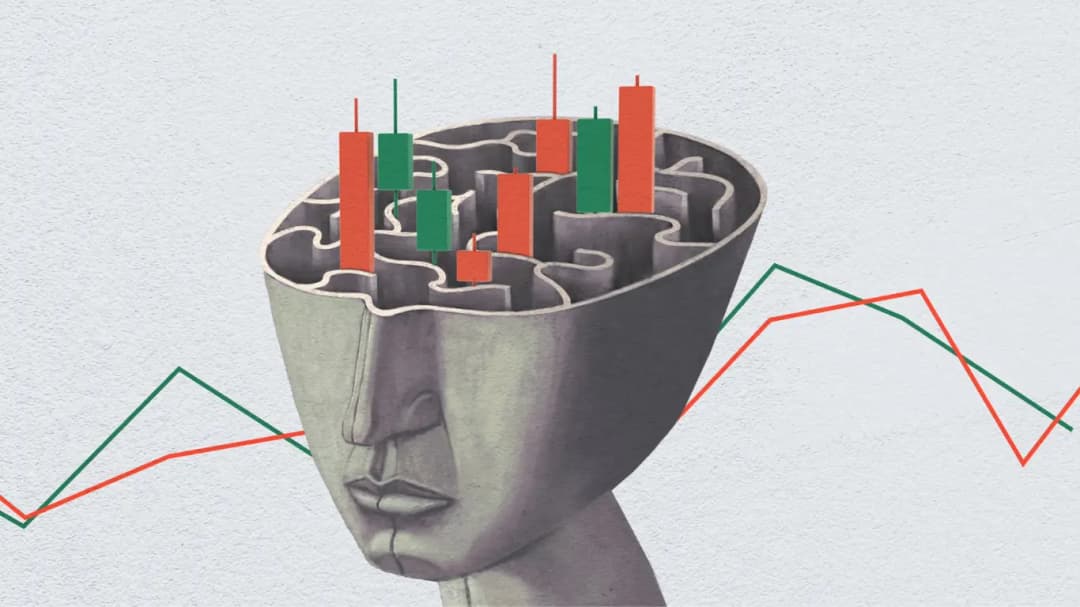
How to Avoid Overconfidence as an Investor
Overconfidence can quietly erode a portfolio that looks strong on paper. When you take on unnecessary risk because you’re certain your read of the market is correct, or when you skip diversification because you’re convinced you’ve found the winning trade, you’re setting yourself up for losses that could have been avoided with a more grounded approach.
The most effective counter to overconfidence is building a habit of consistently challenging your own assumptions. Look at your investment thesis from the other side. Seek out the case against your position as actively as you seek out support for it.
Run scenario analyses that account for things going wrong, not just right. A healthy dose of skepticism toward your own conclusions is one of the most valuable tools you can develop as an investor.
A structured, rules-based investment strategy is your other major defense. When you define your criteria in advance and commit to a process, you take emotion out of the equation. The rules do the work of keeping you disciplined when your instincts are pushing you toward an overconfident call. Choosing between value and growth strategies is a good starting point for building that kind of framework.
How to Avoid Regret Aversion as an Investor
Regret aversion makes you hesitate when you should act. You hold onto a losing investment because selling it would mean admitting the decision was wrong, and that feels worse than simply waiting and hoping the market reverses. It’s a bias that often masquerades as patience, but the two are very different things.
The way through regret aversion is shifting your focus from short-term price movements to the actual fundamentals of your investments. Ask yourself whether the underlying business or asset still justifies the position, separate from what you paid for it. Deep research and honest analysis of risk versus reward give you a firmer foundation to stand on, so your decisions feel grounded rather than guessed.
That confidence in your process makes it much easier to act decisively, even when it means accepting a loss. Bloomberg Markets is a solid resource for the kind of fundamental data that supports this approach.
What Can Investors Do to Avoid FOMO
FOMO is one of the most emotionally charged biases you’ll face as an investor. When you see others posting about gains on a hot asset, or when a particular sector is dominating headlines week after week, the anxiety of being left out can feel overwhelming. That anxiety pushes people to abandon their own strategy and chase whatever the crowd is chasing, often right before it peaks.
The most reliable defense against FOMO is a clearly defined investment strategy that you’ve committed to in advance. Your strategy should be built around your actual financial goals, your genuine risk tolerance, and the timeframe that makes sense for your situation. When you have that clarity, it’s much easier to watch a trend surge without feeling the need to pile in.
You know what you’re doing and why, and that’s enough. The Financial Times regularly covers how disciplined investors separate noise from opportunity.
Thorough research is your other FOMO antidote. Before you make any move, do the work. Look at the fundamentals.
Understand what you’re actually buying, what drives its value, and what could go wrong. When your conviction comes from your own analysis rather than from watching other people celebrate their gains, the fear of missing out loses most of its power. Forbes Investing offers strong analytical frameworks for building that kind of disciplined due diligence practice.
One more approach worth considering is building a network of investors who share your philosophy. When you can have honest conversations with people who think carefully about risk and aren’t just chasing momentum, it creates a natural counterweight to the FOMO spiral. You get perspective.
You get reassurance that staying disciplined is the right call. And you get a reality check when you’re tempted to stray from your plan for all the wrong reasons. Reuters Finance and communities around value investing are great places to find that grounding influence.
We last reviewed this analysis in May 2026.


Stefanos Moschopoulos
Stefanos Moschopoulos founded The Luxury Playbook in Athens and has spent the better part of a decade following the auction calendar, the en primeur releases, and the watchmakers, gallerists, and shipyards the magazine covers. He writes the field guides and listicles that anchor the Connoisseur section — pieces built on Phillips and Christie's results, Liv-ex movements, and conversations with collectors he has met across Geneva, Bordeaux, Basel, and Monaco. His own collecting habits sit closer to watches and wine than art, and it shows in the level of detail in the magazine's coverage of those categories. Under his direction, The Luxury Playbook now publishes long-form field guides, market-defining year-end listicles, and the Voices interview series with the founders behind the houses and the brands.