

Greece’s real estate market heading into 2025 and 2026 is set up for continued growth, with rising property values and steady demand from both local and international buyers. Transaction volumes are climbing, prices are pushing higher, and Greece keeps drawing serious attention as an investment destination. What’s driving it? A combination of demand for historically rich and eco-friendly properties, urban migration, and the kind of geographical appeal you simply can’t manufacture.
Looking ahead, the market is expected to find its footing with measured, steady growth, especially in the residential sector, which will account for the bulk of total market value in the years ahead. Favorable macroeconomic conditions, government incentives, and sustained demand for prime properties all point in the same direction. For investors with the right approach, Greece’s real estate story is far from over.
Table of contents
- Key Metrics & Statistics of the Greek Real Estate Market
- Greek Real Estate Market Forecast for 2025
- Historical Evolution of Greece’s Real Estate Market
- Key Trends Shaping Greece’s Real Estate Market in 2024
- Challenges and Risks in the Greek Real Estate Market
- Investment Opportunities in Greece’s Real Estate Market
- FAQ
Article Summary
Over the past decade, Greece’s real estate market has been through it all. The 2008 financial crisis hit hard, sending property prices down by an average of 42%. But from 2018 onward, a genuine recovery took hold, fueled by economic stabilization, government programs like the Golden Visa, and a surge in tourism-driven demand. Urban centers like Athens and Thessaloniki led the charge, with prices climbing fastest in gentrifying neighborhoods and areas popular with short-term rental investors. As you look at emerging real estate markets globally, Greece stands out as one of the more compelling turnaround stories. The pace of growth may ease from here, but foreign investment and tourism will keep the engine running. That said, economic uncertainty and regulatory shifts are real risks worth keeping on your radar.
Key Metrics and Statistics of the Greek Real Estate Market
Greece’s real estate market has expanded at a meaningful clip in recent years. Properties in popular tourist destinations and urban centers have attracted strong demand, pushing both values and transaction volumes upward. The country’s economic recovery, a favorable investment climate, and growing appetite for sustainable properties have all shaped where the market stands today.
The latest data paints a clear picture. The total value of Greece’s real estate market is on a steady upward trajectory over the next several years, and you can see this story playing out in both transaction values and average property prices.
Transaction Value Growth
Greece’s residential real estate market has posted consistent transaction value growth year after year. Back in 2017, the sector recorded $4.94 billion in total transaction value. By 2019 that number had climbed to $5.83 billion. By the end of 2024, projections put that figure at $7.94 billion, with further gains expected in the years that follow.
By 2029, forecasts suggest the Greek residential real estate market will hit approximately $9.39 billion in transaction value. That upward trajectory reflects growing investor confidence, the strong appeal of Greek properties to international buyers, and the overall durability of the country’s housing market.
Several factors are driving this positive outlook, and they tend to reinforce each other.
- Foreign Investment: The Greek real estate market has seen a surge in demand from international investors, drawn by the country’s appealing investment opportunities and relatively affordable property prices.
- Economic Stability: Greece’s economic recovery and political stability have bolstered the real estate sector, encouraging both domestic and foreign investments.
- Tourism Growth: The increase in tourism has positively impacted the real estate market, particularly in regions popular with tourists, leading to higher demand for residential properties.
Taken together, these elements make Greece’s residential real estate market one of the more compelling opportunities you’ll find in Southern Europe right now.
Total Property Value of Greece by The Luxury PlaybookValue Per Residential Real Estate Unit
Beyond transaction volumes, the average value per residential unit tells an equally important story. In 2017, the average stood at $244,800. That number has been climbing steadily ever since. As of late 2024, the average residential property is valued at $292,700, with forecasts for 2029 putting that figure at around $364,500.
This steady appreciation reflects a market where demand keeps outpacing the supply of quality homes, particularly in urban centers and sought-after tourist destinations. If you’re thinking long-term, that dynamic works in your favor.
Commercial vs. Residential
One of the clearest insights from the data is just how dominant residential real estate is within the broader Greek market. In 2024, residential properties accounted for 82.94% of total market value, while commercial real estate made up just 17.06%.
That gap is only expected to widen. By 2029, residential real estate’s share is projected to reach 85.66%, while commercial real estate’s share shrinks to around 15.64%. The shift comes down to surging demand for homes, driven by urban migration, tourism, and Greece’s enduring popularity as a second-home destination.

Annual Percentage Change in Value
When you look at the annual percentage change in real estate value over time, a few trends stand out. Between 2017 and 2024, the market went through periods of solid growth, with 2021 being a standout year. Residential real estate posted an 11.2% increase that year, driven by the post-pandemic recovery and a surge in demand for vacation homes and investment properties.
Growth has moderated since then. Projections for 2024 point to a 4.13% increase in residential real estate value. From 2026 onward, the market is expected to stabilize further, with annual growth rates settling in the range of 3.2% to 3.7% through 2029. Steady, not spectacular, but reliable.
Customer Preferences and Trends in the Greek Real Estate Market
The Greek real estate market is evolving, and so are the people buying into it. One of the clearest shifts you’ll notice is the growing demand for properties with historical character and eco-friendly credentials. Greece’s cultural heritage and its reputation as a world-class tourist destination have made properties in picturesque regions genuinely desirable for both domestic and international buyers.
Sustainability is no longer a nice-to-have. Buyers are now prioritizing eco-friendly homes and energy-efficient buildings as environmental awareness becomes part of how serious buyers think. Developers who can deliver on this front are positioning themselves well for what’s coming.
Urban living is having a real moment too, especially among younger professionals and growing families. As more people move to cities for work and access to amenities, demand for apartments and mixed-use developments is climbing. Athens and Thessaloniki are seeing a wave of new development in response, with buyers looking for properties that put them close to work, entertainment, and transport.
And it’s not just locals driving urban demand. International buyers are increasingly drawn to Greek cities as investment locations, and with property prices on a steady upward path, urban real estate looks like a solid long-term bet.
Greece’s geography is a genuine competitive advantage that you won’t find elsewhere in Europe. Coastal properties with sea views, particularly along the Mediterranean, are among the most sought-after in the country. The Greek islands, the Athens Riviera, and other coastal regions keep seeing strong demand, and that pressure on prices shows no sign of letting up. Coastal and island markets in Greece consistently rank among the top picks for international property investors for good reason.
Greece’s natural beauty and its proximity to some of Europe’s most popular tourist spots have also made it a magnet for second-home buyers and vacation rental investors. As international tourism strengthens and Greece cements its place as a top destination, that demand is only going to build.

Greek Real Estate Market Forecast for 2026
Continued Growth in Property Prices
Property prices in Greece are projected to keep rising, though the pace has eased compared to the post-pandemic surge. The Bank of Greece reported that in 2023, property prices increased by 7.9%, marking one of the strongest years of recovery since the financial crisis.
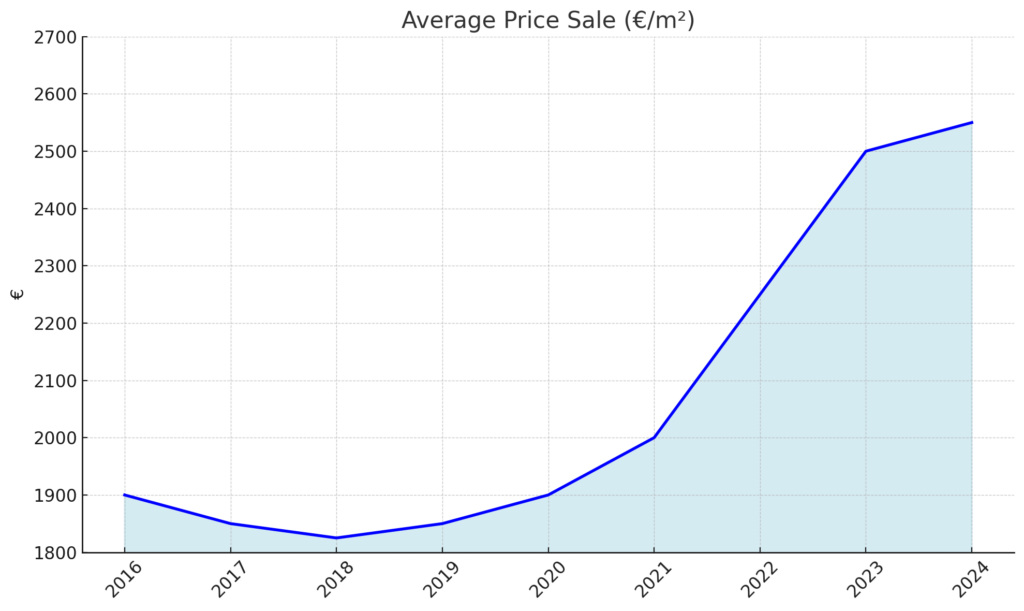
That momentum is expected to carry forward, supported by a stabilizing economy and sustained foreign investment. By the end of 2024, the average residential real estate value is expected to reach $349,900, with projections pointing to $364,500 by 2029.
Two forces are doing most of the heavy lifting here: urbanization and the enduring appetite for vacation homes.
Athens and Thessaloniki are drawing consistent interest from both local and international buyers, with urban renewal projects and improved infrastructure making these cities more livable and more valuable. And as Greece cements its status as a premier tourist destination, demand for coastal vacation properties keeps building. These homes serve a dual purpose, generating rental income during peak season while building long-term value as assets.
The Impact of Interest Rates
Interest rates are going to be a defining factor for Greece’s real estate market in 2026. As the European Central Bank continues to navigate inflation, borrowing costs are a real consideration. In 2023, the ECB pushed rates to 4%, the highest level in over a decade. Higher rates mean higher mortgage costs, which can take some first-time buyers out of the equation. That’s worth watching closely if you’re planning to use financing.
The Role of Technology and Digital Transformation
Technology is reshaping how Greece’s real estate market works, and it’s moving fast. In 2023, digital platforms saw a 20% jump in usage for property transactions, according to data from Proptech Greece. Virtual property tours and online transactions have become standard practice, giving both local and international buyers far more flexibility. Agencies are embracing digital tools across the board to speed up processes and improve the client experience. By 2026, expect even deeper integration of proptech solutions, from AI-driven property management systems to blockchain-based transaction security. For tech-forward investors, that’s an additional layer of confidence in the market.
Historical Evolution of Greece’s Real Estate Market
The Financial Crisis and Its Aftermath
The 2008 global financial crisis left a deep mark on Greek real estate. Between 2008 and 2017, property prices fell by an average of 42%, with some urban areas seeing declines of more than 50%. It was one of the steepest and most prolonged real estate downturns in modern European history.
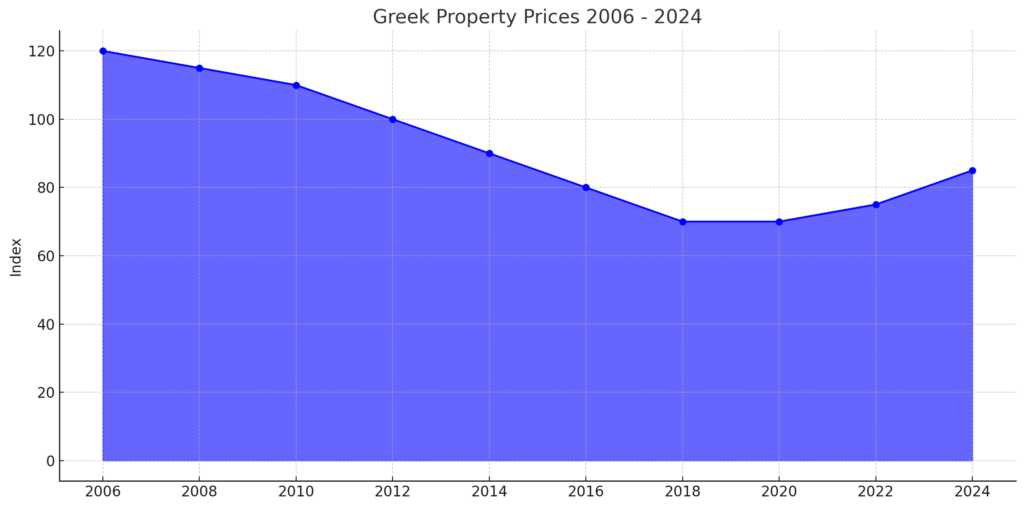
That collapse wiped out significant wealth for property owners and gutted the broader real estate sector. But it also created an opening. As prices hit historic lows, opportunistic investors and foreign buyers began circling, sensing a market that had overcorrected.
Get a personalized property consultation
Recovery and Growth from 2018 to 2023
From 2018 onward, the recovery became real. Economic stabilization after years of austerity, targeted government programs to attract investment, and a surge of foreign interest, particularly from EU countries and China, all combined to lift the market out of its slump.
According to the Bank of Greece, property prices in Athens rose by approximately 32% between 2018 and 2022. The capital led the recovery, driven by a wave of tourists and the short-term rental boom powered by platforms like Airbnb. By 2023, even with that impressive run, prices in many areas still hadn’t fully recovered to their pre-crisis peaks. That gap is a detail worth noting if you’re evaluating where value still exists.
Key Contributing Factors to Recovery
- Tourism and Short-Term Rentals: The boom in Greece’s tourism sector played a crucial role in the real estate recovery, especially in cities like Athens and popular islands. The growth of short-term rental platforms like Airbnb significantly increased demand for properties in tourist hotspots, driving up prices.
- Economic Stabilization: Greece’s economy began to stabilize after years of recession, with GDP growth returning to positive territory in the late 2010s. This economic recovery, coupled with a reduction in unemployment rates and increased consumer confidence, spurred demand in the real estate market.
- Government Incentives: The Greek government introduced several measures to boost the property market. These included tax incentives for property purchases, particularly for foreign investors, and the “Golden Visa” program, which grants residency to non-EU nationals who invest in Greek real estate.
- Foreign Investment: Greece became an attractive destination for foreign investors, drawn by the relatively low property prices and the potential for high returns. Chinese investors, in particular, have been significant players in the market, often linked to the Golden Visa program. Additionally, European buyers sought second homes or rental properties in Greece’s popular tourist destinations.
Key Trends Shaping Greece’s Real Estate Market in 2024
Urban Revival and the Rise of Athens and Thessaloniki
Athens and Thessaloniki have been at the center of Greece’s real estate revival since 2018, and that position has only strengthened. In Athens, neighborhoods like Koukaki, Exarchia, and Pangrati have become hotbeds of demand, drawing buyers with their cultural energy, proximity to landmarks, and ongoing infrastructure investment. Thessaloniki is telling a similar story, with both domestic and international buyers showing real appetite for residential and commercial properties there.
Athens has a natural advantage in its historical and cultural depth, which draws millions of tourists every year and keeps the city on the global map. Metro line extensions, public space renovations, and improving city infrastructure have made the investment case even stronger. Gentrifying districts, in particular, have seen property values appreciate at a pace that’s hard to ignore.
The numbers back this up. Data from the Bank of Greece shows residential property prices in central Athens climbed by over 35% from 2018 to 2023, with Thessaloniki tracking in a similar direction. Foreign investment flowing in alongside renewed domestic demand has been the engine behind that growth. You can also follow the broader economic picture through Greece’s stock market recovery, which reflects the same underlying momentum.
Get a personalized property consultation
The Influence of Tourism and Short-Term Rentals
Tourism is the backbone of the Greek economy, and its influence on real estate is equally powerful. Platforms like Airbnb have transformed how investors think about property in high-traffic areas like Santorini, Mykonos, and Crete. Buying a property to run as a short-term rental has become a mainstream strategy, and with good reason given the returns on offer during peak season.
In Mykonos alone, property prices rose by nearly 20% in 2023, fueled almost entirely by short-term rental demand. Greece welcomed over 33 million visitors in 2023, and that kind of volume keeps the economics of vacation rental investment firmly in positive territory. Financial Times real estate coverage has highlighted Greece as one of the standout European markets for tourism-driven property returns.
The Greek government has stepped in to regulate the short-term rental market, introducing rules designed to prevent unchecked growth from distorting local housing supply. As an investor, understanding those regulations before you buy is essential.
Foreign Investment and the Golden Visa Program
The Golden Visa program has been one of the most powerful catalysts for foreign capital flowing into Greek real estate. The thresholds have been updated to reflect demand. In the Attica Region, Thessaloniki, Mykonos, Santorini, and islands with populations above 3,100 residents, the minimum property investment is now €800,000. In the rest of the country, the threshold sits at €400,000. The program has proven especially attractive to investors from China, Russia, and the Middle East, who view Greece as a stable and well-positioned entry point into Europe.
Israeli investors have shown the strongest growth in participation, with a 70% jump year-over-year, securing 271 permits compared to 159 the previous year. British and American investors also increased their participation by 51% and 47%, respectively.
By 2024, more than 11,870 Golden Visas had been issued, pulling in over €2.9 billion in foreign direct investment to the Greek real estate sector. That capital has had a transformative effect, especially in Athens and Thessaloniki, where foreign buyer demand has pushed prices meaningfully higher.
According to Enterprise Greece, the Golden Visa program hasn’t just attracted individual investors. It’s also drawn interest from international real estate development firms looking to capitalize on Greece’s recovery. The program’s continuation is expected to sustain that momentum, with projections pointing to further increases in both property prices and the volume of foreign investment over the coming years. For a broader view on where smart money is moving globally, avoiding common real estate investing mistakes becomes especially relevant when entering a foreign market.
Challenges and Risks in the Greek Real Estate Market
Economic Uncertainty
Greece has made real progress since the financial crisis, but meaningful risks remain. The country’s public debt still ranks among the highest in the European Union, sitting at approximately 177% of GDP as of 2024, according to Eurostat.
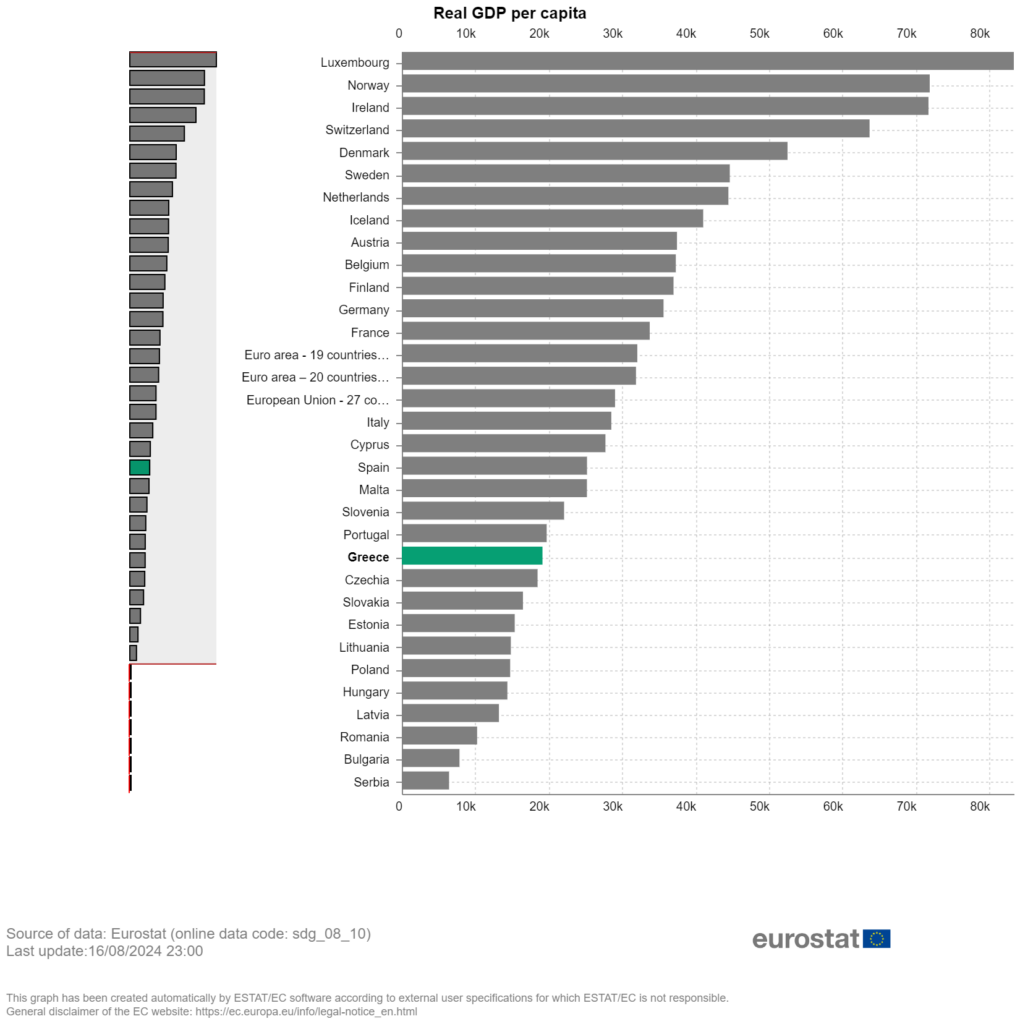
A debt load that size leaves the economy exposed to external shocks and limits the government’s room to maneuver when new pressures emerge.
Inflation is another factor to keep in mind. Rates hovered around 3.5% in early 2024, partly driven by energy costs and global supply chain pressures. For real estate investors, inflation can erode returns if rental income doesn’t keep pace with rising expenses. And if key markets like the U.S. or China slow sharply, the foreign investment that has powered Greece’s recovery could soften.
Regulatory and Taxation Considerations
The Greek government has used tax policy actively to stimulate the real estate market. Reductions in the ENFIA property tax and a suspension of VAT on new construction through 2025 have both been effective at drawing in buyers. But policy can change. A future government could revisit these incentives, and any rollback would have a direct effect on property values and investor returns. Going in with eyes open on the tax environment is non-negotiable.
Investment Opportunities in Greece’s Real Estate Market
Residential Properties in Urban Centers
If you’re looking for a straightforward entry point into Greek real estate, residential properties in Athens and Thessaloniki are hard to beat. Neighborhoods like Exarchia, Pangrati, and Koukaki in Athens are seeing strong demand for renovated apartments from both domestic buyers and international investors after long-term rental income and capital appreciation.
The numbers support the case. According to the Bank of Greece, residential property prices in Athens rose by approximately 9.4% in 2023 alone, and Thessaloniki posted growth of around 7.6% in the same period. That kind of consistent appreciation across two major cities speaks to underlying structural demand.
Both cities benefit from rich cultural heritage, improving public services, and proximity to key business districts. As Athens and Thessaloniki attract more young professionals and expatriates, the demand for quality housing is expected to hold firm. That makes urban residential investments in these cities a strong option if you’re building a portfolio focused on stable, long-term returns.
Get a personalized property consultation
Tourism-Driven Real Estate
Greece’s tourism sector is a genuine engine for real estate returns, particularly in Santorini, Mykonos, and Crete. Properties used as short-term rentals in these destinations can generate exceptional yields during peak season. In 2023, Mykonos and Santorini recorded rental yields exceeding 10%, placing them among the highest in all of Europe, according to government public data.
The catch is that tourism-driven real estate comes with its own set of complexities. Seasonality is real. The summer months can be highly lucrative, but you need to plan for off-season vacancies and ongoing maintenance costs. On top of that, local regulations on short-term rentals, including caps on annual rental days in some areas, mean you need to do your homework before you commit.
Platforms like Airbnb have lowered the barrier to entry for this type of investment, but competition is fierce. Where you win or lose often comes down to location, property quality, and how well the operation is managed day-to-day.

Commercial Real Estate and Office Spaces
Greece’s commercial real estate sector is gaining traction, particularly in Athens, as the economy stabilizes and foreign capital continues to flow in. Demand for modern office space is rising, driven by a growing tech startup scene, international companies establishing a local presence, and established businesses expanding. According to Enterprise Greece, the office vacancy rate in prime Athens locations dropped to around 7% in 2023, down from 12% in 2020. That’s a significant shift.
Central business districts like Syntagma, Kifisia, and Marousi offer real potential for commercial property investors. In 2023, average rental yields for office spaces in these areas ranged between 6% and 8%, according to data from the Hellenic Statistical Authority. Multinational corporations and fast-growing startups are both actively looking at these locations.
New commercial development and the modernization of existing stock are also adding fuel to this sector. The Ellinikon Project, one of the largest urban redevelopment initiatives in Europe, is a prime example. Its completion is expected to pull even more international businesses toward Athens and drive demand for commercial real estate in the surrounding area higher.
FAQ
Is 2025 a good year to invest in Greek real estate?
Yes, 2025 presents several attractive opportunities for investment in Greek real estate. With the market continuing to recover and grow, particularly in urban centers and tourist hotspots, investors can expect good returns. However, it’s essential to stay informed about economic conditions and potential risks.
How is the Golden Visa program affecting the real estate market?
The Golden Visa program has significantly boosted the Greek real estate market by attracting foreign investment, particularly in higher-end properties. This influx of capital has helped stabilize prices and promote growth in various regions, especially in and around major cities.
What are the best areas to invest in Greece in 2025?
Athens and Thessaloniki are top choices for urban real estate investments due to ongoing revitalization and strong demand. For those interested in short-term rentals, islands like Santorini and Mykonos offer high yields, though they come with management challenges and seasonal fluctuations.
Are property prices in Greece expected to rise in 2025?
Yes, property prices in Greece are expected to continue rising in 2025, although the rate of increase may slow compared to previous years. Urban areas and tourist destinations are likely to see the most significant price growth.