
The art market entered 2026 with three years of evidence about what the post-pandemic cycle actually looks like, and the structural picture is now clearer than it has been at any point since 2022. Total sales settled at roughly $57. 5 billion in 2024 according to the Art Basel and UBS Global Art Market Report, with continued softening from the post-pandemic peak.
But the headline number masks several structurally important shifts in where the market's activity is concentrating, and these shifts will define how the next twelve months play out.
What follows is the magazine's editorial outlook on the art market for 2026, focused on the structural trends that matter rather than the cyclical noise that dominates day-to-day reporting. We have been tracking the data continuously through the correction and into the recovery, and several themes deserve a serious collector's attention as the year develops.
- The 2026 art-market outlook is for continued selectivity at the top, with deepest demand concentrated on artists who have already cleared institutional thresholds.
- Evening sales at Christie’s, Sotheby’s and Phillips continue to set the headline tone, but private sales have grown materially as a share of total dealer volume.
- Ultra-contemporary speculation cooled through 2024 and 2025, and serious collectors are rewarding artists with sustained gallery, curatorial and museum support.
- Asian buyers, particularly out of Hong Kong and Singapore, remain decisive at the top of evening sale, with Middle Eastern museum building absorbing major institutional works.
- Online-only sales and the lower price brackets continue to broaden the collector base, even as the headline market keeps narrowing to the very top.
- The connecting theme is a quiet return to fundamentals, with provenance, condition and credible exhibition history driving sustainable valuations across most segments.
- Who is this for?
- Collectors, advisors and observers of the global art market who want a focused outlook on the structural forces shaping pricing, demand and deal flow through 2026.
- What is happening?
- An editorial outlook on the art market in 2026, covering selective evening-sale strength, private-sale growth, the cooling of ultra-contemporary speculation and shifting buyer geography.
- When did this emerge?
- Most relevant around the spring and autumn evening sales in New York, London and Hong Kong, and during the Art Basel and Frieze cycles that anchor the global calendar each year.
- Where is this happening?
- Centred on the New York, London, Paris and Hong Kong salesrooms, with growing weight in Riyadh, Abu Dhabi and the broader Asian and Middle Eastern fair circuits.
- Why does it matter?
- Reading the market outlook correctly matters more than chasing individual lots, since the forces shaping 2026 will define what holds value across the next institutional cycle.
The global market in 2026
The structural geography of the art market has shifted meaningfully through the past five years. The United States remains the largest single national market with roughly 42 per cent of global sales, but the figure has compressed from the peak years and the geographic distribution of serious activity has broadened.
China's mainland and Hong Kong activity, taken together, has held meaningful share through the cycle, with Hong Kong specifically remaining one of the most active auction centres globally.
US market dominance
The US continues to anchor the global market through three structural channels. The New York auction calendar (Christie's, Sotheby's, Phillips evening sales in November and May) remains the most important transactional infrastructure globally. The major US galleries (Pace, David Zwirner, Hauser & Wirth, Gagosian) dominate primary-market activity at the contemporary blue-chip tier.
The major US museums (MoMA, the Whitney, the Met, LACMA, the Art Institute of Chicago) anchor the institutional collector engagement.
Rise of Asian markets
The structural rise of the Asian collector base is one of the defining shifts of the past decade. China's mainland market and Hong Kong continue to anchor the regional activity, with Singapore, Tokyo, Seoul, and Taipei all expanding their gallery, fair, and institutional infrastructure. Art Basel Hong Kong in March continues to be the structurally most important Asian fair, with strong attendance and serious sales activity through the 2025 edition.
European stability
The European market has held steady through the cycle with the United Kingdom, France, Germany, Switzerland, and Italy all maintaining meaningful share. London's structural position has shifted post-Brexit but the city remains a serious auction centre. Paris has gained ground through the Art Basel Paris fair and the increasing engagement of French collectors with contemporary work, alongside the longer-standing French strength in Impressionist and Modern.
Online sales: the structural shift
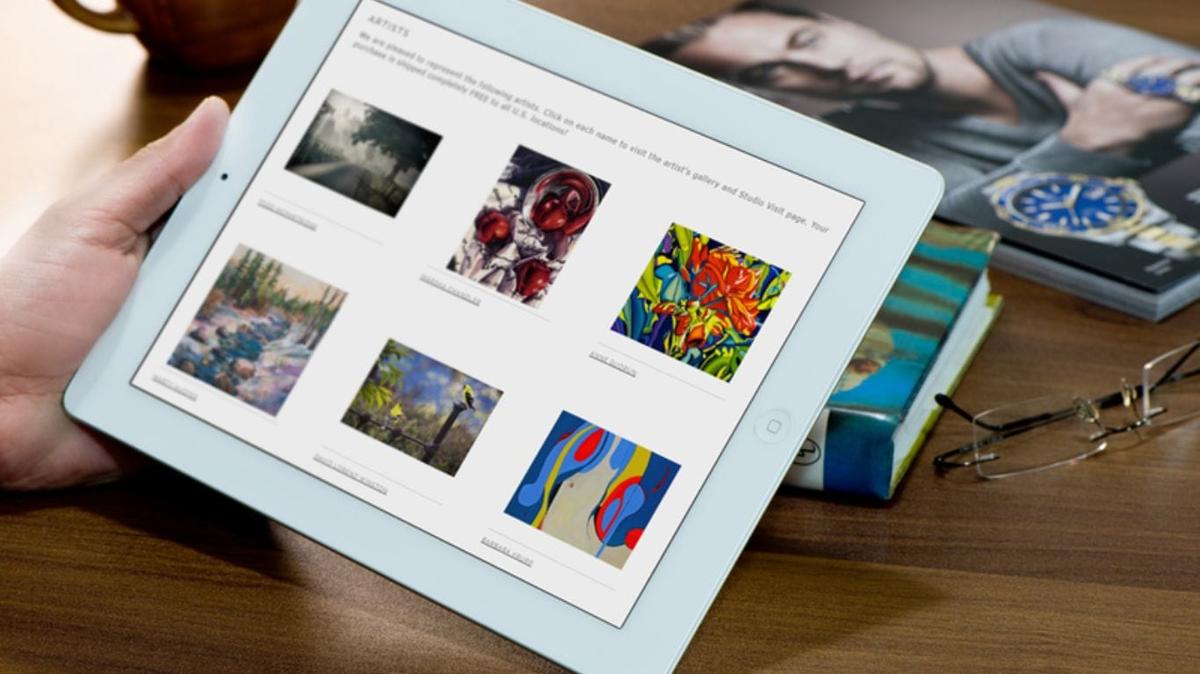
Online sales of art have grown meaningfully through the cycle and now represent a structural feature of the market rather than a pandemic-era anomaly. The Hiscox Online Art Trade Report tracks the segment continuously, and the 2025 data confirms that online sales above $11 billion are now embedded in the broader market structure.
The structural pattern within online sales is consistent. The bulk of online activity remains at price points below $100,000, with the higher tiers still moving primarily through traditional auction and dealer channels. But the share of online transactions at meaningful price points has grown, and the major auction houses have built dedicated online sale infrastructure that complements rather than substitutes for their physical sale calendars.
| Key Statistics | 2024 Data |
|---|---|
| Estimated Online Art Sales | $11.8 billion |
| Year-on-Year Increase | 7% |
| Contributors to Global Profits | 18% |
The structural implications for collectors are significant. Online channels expand access to material that previously required physical presence at the major centres, and the discipline of online buying (condition reports, provenance review, viewing in person when possible) is becoming a standard part of how serious collectors operate.
The trajectory through 2026 and beyond is for continued growth in the segment, with the structural questions being about pace and category mix rather than direction.
Auction sales and dealer activity in 2026
The auction market in 2026 reflects three years of correction working through the cycle. Christie's, Sotheby's, and Phillips combined auction volume in 2024 was meaningfully below the cycle peak, with the steepest declines concentrated at the trophy tier (lots above $10 million) while the middle of the market (lots between $100,000 and $1 million) held considerably better.
Auction sales data
The structural pattern in auction data through 2024 and into 2025 was the underperformance of the very top tier and the resilience of the middle. The major evening sales generated headline numbers below cycle peaks, but the day sales and the dedicated middle-market sessions held closer to flat. This pattern is meaningful for collectors thinking about where to engage with the market.
| Country | Market Share | Sales Value (USD Billion) | Change from Previous Year |
|---|---|---|---|
| United States | 42% | 27.2 | -10% |
| China | 19% | 12.2 | +9% |
| United Kingdom | 17% | 10.9 | -8% |
Dealer sales metrics
The dealer side of the market has shown different dynamics. The Art Basel and UBS report indicated that smaller galleries (those with under $1 million in annual sales) actually grew through 2024, while the largest galleries (above $10 million in annual sales) saw moderate declines. The structural read is that the broad collector base has continued to engage with the market even as the trophy tier softened.
Art-fair participation has shifted alongside these patterns. Smaller galleries have reduced their fair commitments to manage costs, while the major fairs (Art Basel and its sister fairs, Frieze London and New York, TEFAF, Art Basel Paris) have consolidated their position as the structurally serious events.

The economic backdrop
The macroeconomic environment matters for the art market because serious art purchases are discretionary expenditures by collectors whose broader financial circumstances are tied to economic conditions. The cycle through 2023 to 2025 reflected the combined pressures of elevated interest rates, persistent inflation, and broader uncertainty about the trajectory of the major economies.
Inflation and interest rates
Elevated interest rates compress collector discretionary expenditure across the broader market. The structural channel runs through the cost of capital for collectors who use credit lines for major acquisitions, the opportunity cost of holding capital in non-yielding assets when public-market yields are attractive, and the general wealth-effect compression that high-rate environments produce.
The categories within art respond differently. The trophy tier (above $10 million) is most exposed to the rate environment because the buyers at that tier typically engage with the broader financial markets and respond to wealth-effect signals. The historical tiers (Old Masters, 19th-century, Impressionist and Modern) tend to be more resilient because the buyer base is structurally older and less rate-sensitive.
Contemporary work at the middle tier is positioned in between.
Anticipated rate cuts
The trajectory of Federal Reserve and ECB policy through 2026 will be a structural variable for the art market. If the rate environment eases as widely expected, the wealth-effect compression that has weighed on the trophy tier should reverse, with corresponding implications for the major evening sales. The timing and magnitude of any rate-cut cycle will inform how the recovery progresses through the second half of 2026 and into 2027.
Collector behaviour and the structural shifts
The collector base for serious art has evolved structurally through the past decade. Geographic broadening has continued, with serious collectors emerging from a wider range of national wealth centres than in previous cycles. Generational change is reshaping the categories that receive attention, with younger collectors engaging more with contemporary and digital work and with non-Western art than previous generations did.
The most visible structural shift is the move toward private sales for serious material. Serious collectors moving to private sales reflects a market preference for transactional channels that avoid the public visibility of auction results, especially during cycles when public auction outcomes carry downside risk. Christie's, Sotheby's, and Phillips have all built substantial private sales departments and the volume routed through them has grown materially.

Women artists and the institutional shift
The structural recognition of women artists across the historical and contemporary categories has been one of the defining shifts of the past decade, and the trend has consolidated through 2024 and 2025. Major museum acquisitions, dedicated curatorial programmes, and the secondary-market activity around named women artists collectively confirm that this is a structural revaluation rather than a cyclical enthusiasm.
Auction record activity
The 2024 auction data showed women artists generating roughly $800 million in evening-sale activity, the highest figure ever recorded for the category. Jadé Fadojutimi at Christie's London, Lynette Yiadom-Boakye at the major auction houses, Carmen Herrera in the historical tier, and Hilma af Klint in the historical-discovery category each contributed to the structural pattern.
Historical reappraisal
The institutional reappraisal of historical women artists has been particularly important. MoMA, the Tate, the National Portrait Gallery in London, and the Centre Pompidou have all completed multi-year acquisition programmes focused on historical women artists, lending institutional weight to the secondary-market activity. The structural pattern through 2026 is for continued attention to the category from both museums and serious collectors.
What we'll watch through 2026
Several structural questions will define how the next twelve months play out. First, whether the middle-market resilience translates into top-tier recovery as the broader cycle progresses. The trophy tier has been the underperforming segment through the correction, and its eventual recovery will inform the headline reporting on the market.
Second, whether the geographic broadening of the collector base continues, particularly the further development of Asian markets beyond Hong Kong.
Third, whether the private-sales channel continues to absorb material that previously transacted publicly, with implications for how market data is read by collectors and analysts. Fourth, whether the figurative wave of the past five years continues to drive contemporary market activity, or whether the conversation begins to shift toward other categories within contemporary work.
The structural picture for 2026 is clearer than it has been in several years, and the trends identified here suggest a market that has worked through its correction and is positioning for the next phase of the cycle. Collectors who engage with these structural questions thoughtfully are positioning themselves to benefit from whatever pattern emerges as the year develops.
We last reviewed this analysis in May 2026.