Bordeaux is a region but it isn't really a single category. The Médoc, Saint-Émilion, Pomerol, Sauternes, Pessac-Léognan, and the broader Bordeaux Supérieur appellations each tell a different story about what serious Bordeaux can be. The sub-regions anchoring the most active collector buying patterns in 2026 reflect an evolution in how the global Bordeaux conversation has shifted over the past five years.
- Bordeaux is a region but it is not really a single category, with the Medoc, Saint-Emilion, Pomerol, Sauternes, and Pessac-Leognan each telling distinct stories.
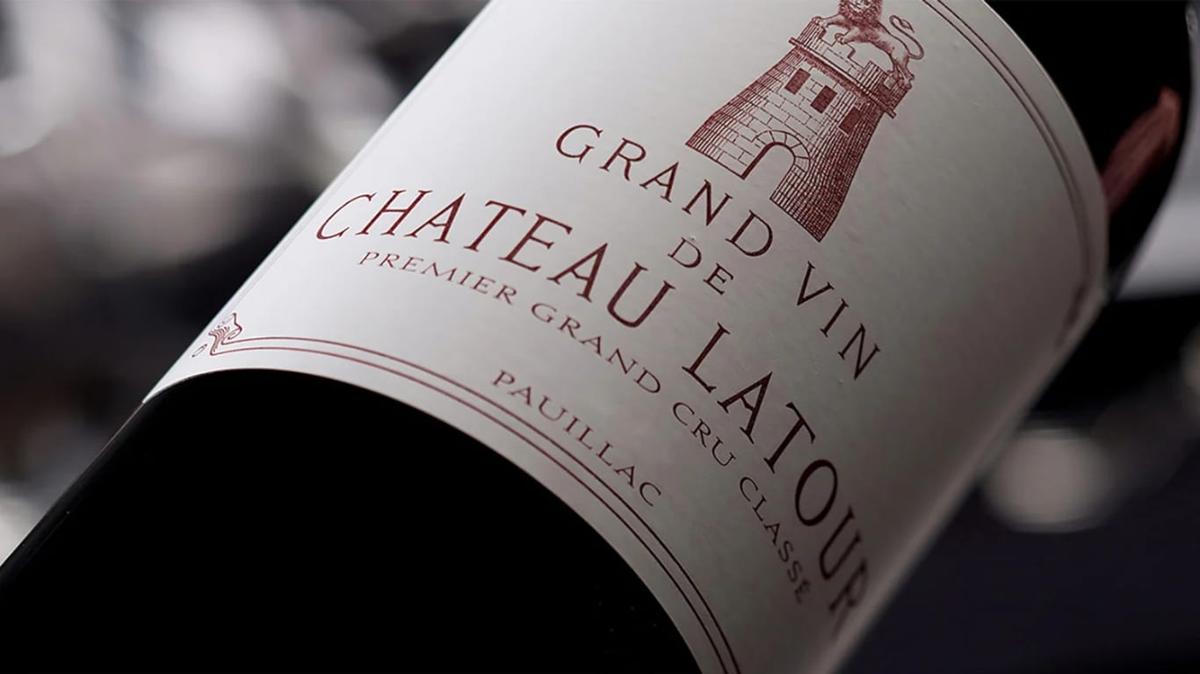
- The Medoc, particularly the First Growth communes of Pauillac, Saint-Julien, and Margaux, anchors the structural Left Bank Cabernet apex.
- Saint-Emilion's grand cru classe tier, with Cheval Blanc and Ausone as structural references, provides the broader Right Bank apex depth.
- Pomerol, with Petrus and Le Pin at the apex, defines the structural top of the Merlot-led Bordeaux category internationally.
- Sauternes and Barsac, with Yquem at the structural apex, anchor the sweet-wine Bordeaux tier and provide some of the longest-living wines in collecting.
- For collectors the sub-regional architecture matters as much as the broader Bordeaux category, with each sub-region playing a structurally distinct cellar role.
- Who is this for?
- Cellar builders working through Bordeaux architecture in depth, and serious collectors weighing structural sub-regional allocations across the apex tier.
- What is happening?
- We map the Bordeaux sub-regions that define the contemporary 2026 market, with the Medoc, Right Bank, Sauternes, and Pessac-Leognan apex tiers.
- When did this emerge?
- The piece reads the early 2026 market, with the contemporary Liv-ex Bordeaux 500 sub-regional dynamics and the recent vintage releases as live context.
- Where is this happening?
- The Medoc, Saint-Emilion, Pomerol, Sauternes and Barsac, plus Pessac-Leognan as the structural sub-regions defining the contemporary Bordeaux category.
- Why does it matter?
- Understanding the Bordeaux sub-regional architecture is foundational for serious cellar work, with each sub-region playing a structurally distinct role across the long haul.
The First Growths still anchor the top of the calendar, the Pomerol icons still command the steepest per-bottle clearing prices, but the Super-Seconds, the Saint-Émilion grand cru classés, and the broader Right Bank tier have absorbed a meaningful share of demand previously concentrated at the very top. Liv-ex's Bordeaux 500 reflects the move, with the Super-Second sub-indices firming structurally across 2024 and 2025.
This is our editorial read on the Bordeaux sub-regions defining serious collector behaviour in 2026.
Pauillac
Pauillac contains three of the five 1855 First Growths (Lafite, Latour, and Mouton) plus the Super-Seconds Pichon Baron, Pichon Lalande, Lynch-Bages, and Pontet-Canet. The commune's gravel soils and long maritime growing season produce the most structurally tannic Cabernet Sauvignon-driven wines in Bordeaux, with the longest reliable ageing windows.
The First Growths from a strong vintage age 30 to 50 years comfortably. The Super-Seconds age 20 to 35 years. Current-vintage en primeur pricing for the First Growths runs $400 to $700 per bottle, with mature library releases of strong vintages clearing $1,500 to $5,000+.
Pichon Lalande and Pichon Baron run $80 to $200 for current vintages. Lynch-Bages and Pontet-Canet run $50 to $150. Pauillac remains the structural anchor of any serious Bordeaux cellar.
Margaux
Margaux is the most aromatic of the Médoc communes. The wines lean perfumed, floral, and elegant rather than dense. Château Margaux (the First Growth) sits at the top of the commune's hierarchy.
Palmer (a Super-Second despite its formal Third Growth classification) anchors the next tier. Brane-Cantenac, Rauzan-Ségla, Issan, Giscours, and Malescot Saint-Exupéry round out the serious tier.
Current-vintage en primeur pricing for Château Margaux runs $400 to $700, Palmer $200 to $400, and the broader serious tier $50 to $150. Margaux's aromatic style produces wines with slightly earlier accessibility than Pauillac. Drink windows open at 15 to 25 years for the top names rather than 20 to 30.
Saint-Julien
Saint-Julien sits between Margaux and Pauillac geographically and stylistically. The commune produces structured wines that combine Pauillac's tannic backbone with Margaux's aromatic complexity. Léoville Las Cases (a Super-Second routinely outperforming several First Growths in critical ratings), Léoville Barton, Léoville Poyferré, Ducru-Beaucaillou, Gruaud-Larose, and Branaire-Ducru anchor the commune.
Current-vintage en primeur pricing for Léoville Las Cases runs $150 to $300, Ducru-Beaucaillou $120 to $250, and the broader serious tier $50 to $150. Saint-Julien is one of the strongest value zones in serious Bordeaux. The Léovilles in particular have built reputations that compete directly with the Pauillac First Growths at materially lower clearing prices.
Saint-Estèphe
Saint-Estèphe is the most northerly of the major Médoc communes and produces the most structurally austere, longest-ageing wines in Bordeaux from named producers. Cos d'Estournel and Montrose anchor the Super-Second tier. Calon-Ségur, Lafon-Rochet, Phélan-Ségur, and Meyney provide accessible serious depth.
The clay-influenced soils give Saint-Estèphe wines a more savoury, less fruit-forward profile than Pauillac.
Current-vintage en primeur pricing for Cos d'Estournel and Montrose runs $80 to $200 and Calon-Ségur $50 to $120. The commune offers some of the best value in serious age-worthy Bordeaux. Collectors building long-hold positions tend to overweight Saint-Estèphe relative to the higher per-bottle Pauillac names.
Pessac-Léognan
Pessac-Léognan, on the southern edge of the city of Bordeaux, produces both serious reds and serious whites. Haut-Brion (the only First Growth outside the Médoc) anchors the commune. La Mission Haut-Brion sits beside it as a structural Super-Second.
Domaine de Chevalier, Smith Haut Lafitte, Pape Clément, and Haut-Bailly round out the serious tier.
The whites from Haut-Brion (Haut-Brion Blanc), Domaine de Chevalier, and Smith Haut Lafitte are among the most age-worthy whites in Bordeaux. Current-vintage en primeur pricing for Haut-Brion runs $400 to $700, La Mission Haut-Brion $250 to $500, and Smith Haut Lafitte and Pape Clément $80 to $200.
Pessac-Léognan provides the structural diversity that serious Bordeaux cellars draw on. It is the only region in Bordeaux producing serious whites at the level of the great reds.
Saint-Émilion
Saint-Émilion sits across the Gironde estuary on the Right Bank, with clay-and-limestone soils that suit Merlot-dominant blends with Cabernet Franc. The 2022 Saint-Émilion classification reshuffled the top tier when Pavie and Angélus joined Cheval Blanc and Ausone as Premiers Grands Crus Classés A, though the underlying producer rankings have stayed consistent.
Cheval Blanc, Ausone, Pavie, Angélus, and Figeac anchor the top tier. Canon, Beauséjour Duffau-Lagarrosse, Trottevieille, Pavie-Macquin, La Gaffelière, and Belair-Monange anchor the next.
Current-vintage en primeur pricing for Cheval Blanc and Ausone runs $500 to $900, Pavie and Angélus $300 to $600, and the Premiers Grands Crus Classés B tier $80 to $200. Saint-Émilion has absorbed a meaningful share of the global Bordeaux conversation over the past decade, partly through the rise of Pavie and Angélus and partly through the broader interest in plusher Right Bank Merlot-dominant wines.
Pomerol
Pomerol is the smallest of the major Bordeaux appellations but contains some of the most-coveted properties in fine wine: Pétrus, Le Pin, Lafleur, La Conseillante, Trotanoy, Vieux Château Certan, L'Évangile, Clinet, Bon Pasteur, Hosanna. The clay plateau of Pomerol produces the most concentrated Merlot-dominant wines in Bordeaux.
Production volumes are tiny. Pétrus produces around 2,500 cases annually, Le Pin around 600, and Lafleur around 1,000. Current-vintage en primeur pricing for Pétrus runs $3,000 to $5,000+ per bottle, with Le Pin similar or higher and Lafleur $1,200 to $2,500.
La Conseillante and Trotanoy run $200 to $400, and the broader serious Pomerol tier $80 to $200. Pomerol commands the steepest per-bottle clearing prices in Bordeaux because the production volumes simply don't support broader market access.
Sauternes
Sauternes sits south of the city of Bordeaux and produces the world's reference sweet white wines from botrytis-affected Sémillon (with Sauvignon Blanc and Muscadelle in supporting roles). Château d'Yquem (the only Premier Cru Supérieur in the 1855 Sauternes classification) anchors the commune. Château Climens, Château Suduiraut, Château Rieussec, Château Coutet, Château Guiraud, and Château La Tour Blanche provide the serious tier.
Current-vintage en primeur pricing for Château d'Yquem runs $200 to $400 per half bottle, with the broader serious Sauternes tier $50 to $150 per bottle. The 1811 d'Yquem cleared £75,000 at Bonhams in 2011, one of the most-cited Sauternes auction lots in modern collecting history.
Sauternes occupies a structural position in serious cellars rather than a primary-purchase category. The wines age 50 to 100+ years from the great vintages, providing the occasion bottles that anchor long-term cellar architecture.
Where serious cellars are concentrating in 2026
The pattern in serious cellars across 2025 and 2026 has been a meaningful broadening below the First Growth tier. Collectors deepening Super-Seconds (especially the Léovilles, Pichon Lalande, Cos d'Estournel), Saint-Émilion grand cru classés (Cheval Blanc, Pavie, Angélus, Figeac), and the next tier of Pomerol (La Conseillante, Trotanoy, Vieux Château Certan) define the calendar.
The First Growths and the Pomerol icons retain their structural positions, but the broader serious tier has absorbed the share of new-acquisition activity.
The 2018 and 2019 vintages have been the most active recent purchase windows, with the 2020 vintage receiving very strong critical reception (Wine Spectator, Decanter, and Wine Advocate all rating the vintage in the 95 to 98 range across the top properties). The 2022 vintage is generating early enthusiasm as the en primeur tastings work through the wider trade calendar.
What this means for collectors
Bordeaux's sub-region story isn't a question of which commune to back. Serious Bordeaux cellars hold positions across all of them: Pauillac and Saint-Julien for structural Cabernet-driven depth, Saint-Estèphe for long-hold value, Margaux for aromatic complement, Pessac-Léognan for the white wines that no other Bordeaux commune produces at the same level, Saint-Émilion for the broader Right Bank style, Pomerol for the concentrated Merlot icons, and Sauternes for the sweet position.
The Bordeaux conversation in 2026 is broader than it was a decade ago, and the cellars that compound best are the ones treating the region as the layered, sub-region-driven category it actually is rather than a single block of First Growths and Pomerol icons.
Further reading
We last reviewed this analysis in May 2026.