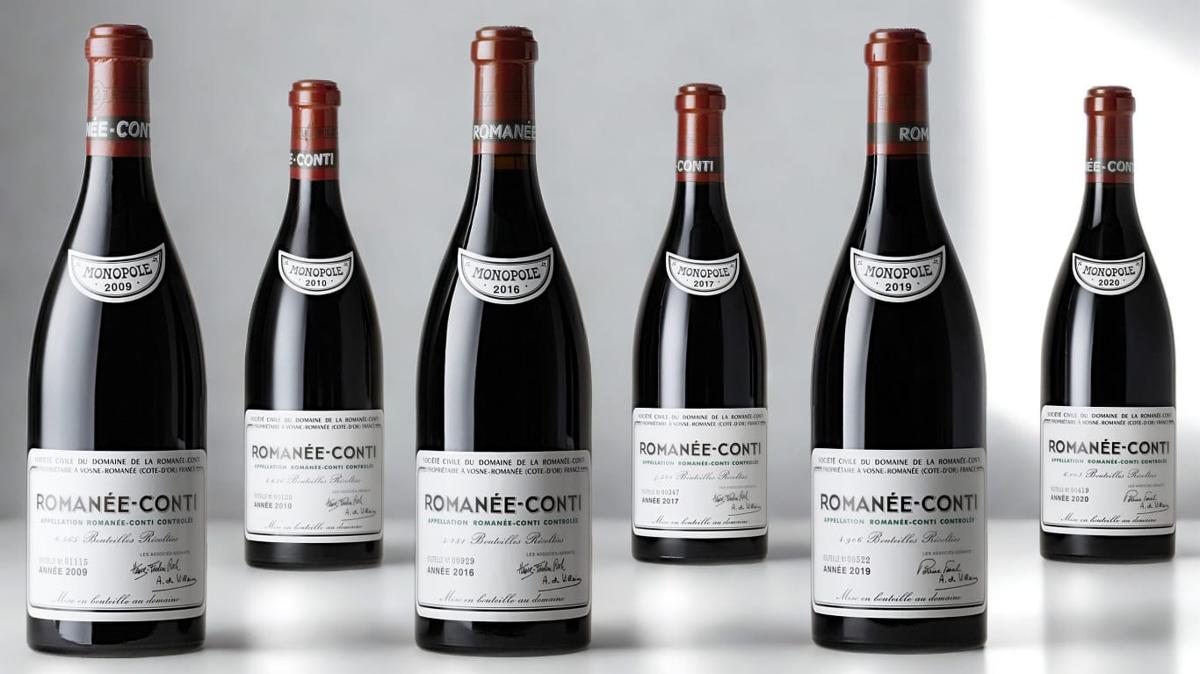

"Drink less, but better" has become the new normal in the wine market, and the structural data confirms the shift across multiple measurement lines. Global wine consumption volumes have fallen meaningfully across the post-2018 period, while premium-tier consumption (the apex tier where Burgundy Grand Cru, vintage Champagne, and Italian fine wine sit) has structurally held up or grown. The bifurcation defines the modern wine market.
- Drink less but better has become the new normal in the wine market, and the structural data confirms the shift across multiple measurement lines.
- Global wine consumption volumes have fallen meaningfully across the post-2018 period, while premium-tier consumption (the apex Burgundy, vintage Champagne, and Italian fine wine) has structurally held up or grown.
- The bifurcation defines the modern wine market, with the volume tier and the apex tier telling almost opposite structural narratives.
- Mainstream commodity wine has structurally compressed across the post-pandemic period, with younger consumer cohorts driving the shift toward premium and away from volume.
- OIV (International Organisation of Vine and Wine) data tracks the structural decline at the volume tier across multiple national markets simultaneously.
- For serious cellars the drink-less-but-better shift structurally favours the apex tier, with downstream effects across allocation, pricing, and demand architecture.
- Who is this for?
- Active collectors reading the contemporary fine-wine demand picture, and cellar builders evaluating what the structural consumption shift means for the apex tier.
- What is happening?
- We read what drink less but better actually means for the wine market, with the volume-versus-apex bifurcation and the structural consumption data as live context.
- When did this emerge?
- The piece reads the post-2018 consumption shift through the contemporary 2026 market, with the OIV data and the modern apex-tier resilience as live reference.
- Where is this happening?
- The international wine market broadly, with the structural bifurcation visible across both Old World and New World national consumption data.
- Why does it matter?
- The drink-less-but-better shift defines a structural rebalancing in how consumers engage with wine, and the apex-tier implications matter for serious-cellar architecture.
What is happening at the volume tier (where mainstream commodity wine has structurally compressed) is genuinely different from what is happening at the apex (where serious collector demand has built across multiple regional categories). The two stories belong to the same wider wine market but tell almost opposite structural narratives.
This is our editorial read on what "drink less, but better" actually means, the data behind it, and what it tells us about the modern wine collecting landscape.
Why the wine industry is facing its biggest challenge since Prohibition
The volume-tier wine market is in genuine structural challenge. The International Organisation of Vine and Wine (OIV) reports that global wine consumption fell to roughly 221 million hectolitres in 2024, down from the post-1995 peak of 250 million hectolitres in 2007-2008. The decline has been particularly steep across the volume tier in the United States, France, Italy, and the United Kingdom.
The structural reasons are layered. Younger consumers across the major Western markets are drinking less alcohol overall than the prior generation, with the trend most pronounced in the under-35 demographic. The substitution pattern has rotated toward craft beer, spirits-led cocktail culture, premium non-alcoholic alternatives, and (increasingly) cannabis-based products in markets where legalization has expanded.
Silicon Valley Bank's annual State of the U.S. Wine Industry report has flagged the structural challenge as the most serious the industry has faced in the modern era. The bank's analysis notes that the volume-tier producer model (which depends on broad consumer engagement at the entry and mid-tier pricing levels) is structurally under pressure across all major Western markets.
The Financial Times' wine industry reporting across 2024 and 2025 has tracked the same structural picture. The wider context is one of a genuinely bifurcated market where the volume tier compresses while the apex tier holds up or grows.
The premium shift: creating market winners and losers
What is structurally interesting is that the premium tier is moving in the opposite direction from the volume tier. The Liv-ex Fine Wine 1000, the Burgundy 150, and the Champagne 50 have all carried meaningful gains across the post-2020 cycle, even through periods when the broader consumer wine market has compressed.

The structural reading is that consumers who do engage seriously with wine are engaging at a higher price-and-quality tier than the comparable consumer cohort did a decade ago. The category-level demand picture has structurally rotated up the quality pyramid.
What this means in practice: the producers structurally winning are the ones operating at the apex of the quality conversation. Domaine de la Romanée-Conti, Domaine Leroy, Pétrus, Lafite Rothschild, Krug, Dom Pérignon, Sassicaia, Masseto, and the wider apex tier carry expanding waiting lists and structural pricing gains. The producers structurally losing are the volume-tier producers across all major regions, where shelf-clearing requires increasingly aggressive pricing concessions.
The same bifurcation is playing out elsewhere in the wider luxury market. The same bifurcation is playing out in fine art, where mid-market and trophy tier follow different structural trajectories, and the wider luxury collecting space is consistently showing the pattern of premium-tier resilience alongside volume-tier compression.
What "drink less, but better" means for serious collectors
The structural shift creates a meaningfully different collecting environment from the one that defined the pre-2020 era. The volume-tier compression means that the volume-tier producers have lost meaningful structural leverage in the broader market, which has consequences for distribution discipline, allocation patterns, and merchant participation.
The apex-tier expansion means that the structural-scarcity story at the top of the market has intensified rather than relaxed. The most-coveted single bottles in serious wine have built deeper waiting lists and tighter allocation discipline across the past five years.

For serious collectors, the practical implication is that engaging at the apex tier has become structurally more demanding (longer waiting lists, tighter merchant allocation, sharper critical scrutiny) but the rewards of doing so (the secondary-market depth, the category recognition, the long-aging cellar payoff) have also strengthened. The "drink less, but better" frame is the structural environment, not the marketing slogan.
The wider luxury parallel matters here. The Patek Philippe Nautilus story offers a useful blueprint for how a category can rotate up the quality pyramid as broader consumer engagement compresses. The same structural pattern is now playing out in serious wine.
What this means for the wider wine industry
The structural reading is that the wider wine industry is in a multi-year transition. The volume-tier model that defined the global wine business through the second half of the twentieth century is structurally challenged. The apex-tier model has built genuine resilience but operates at a scale that cannot, by itself, replace the volume-tier business in industry employment, distribution infrastructure, or vineyard land use.
The producers structurally adapting are the ones who have rotated their portfolios up the quality pyramid. Penfolds has done this credibly with the Bin 707 and Grange tier. Treasury Wine Estates more broadly has restructured its global portfolio toward the premium tier.
The Bordeaux Place de Bordeaux negociant network is in the middle of a similar rotation. The Italian Super Tuscan and Brunello tier has built structural pricing discipline that supports the same model.
The producers structurally challenged are those who have not yet adapted. The wider US, French, Italian, and Australian volume-tier producer base is in a structural environment that is unlikely to improve in the near term.
What this means for collectors
The straightforward read for serious collectors is that the "drink less, but better" frame has structurally consolidated the apex category. The categories with the deepest collector recognition and the most disciplined allocation patterns are likely to continue building structural advantage across the next five years.
The strategic framework for serious cellars is to weight new positions toward the apex producers in each major regional category, retain the long-aging existing positions, and approach the broader volume-tier producer landscape with disciplined attention to who is genuinely adapting and who is not.
The category that has structurally most benefited from the "drink less, but better" pattern is, in our editorial read, vintage Champagne single-vintage releases. The pattern of consumers drinking less but better has been particularly pronounced in the Champagne category, where the volume tier has compressed but the named single-vintage tier has built consistent structural gains.
What we will watch next
Two structural signals. First, whether the OIV global wine consumption figures for 2025 and 2026 confirm the volume-tier compression as a multi-year trend or whether they begin to stabilize. Second, whether the Liv-ex apex indices (Fine Wine 50, Burgundy 150, Champagne 50) continue to outperform the broader regional indices or whether the structural gains begin to broaden across more tiers.
Each signal would tell us whether the bifurcation deepens further or whether the structural pattern begins to stabilize at the 2024-2025 equilibrium.
We last reviewed this analysis in May 2026.