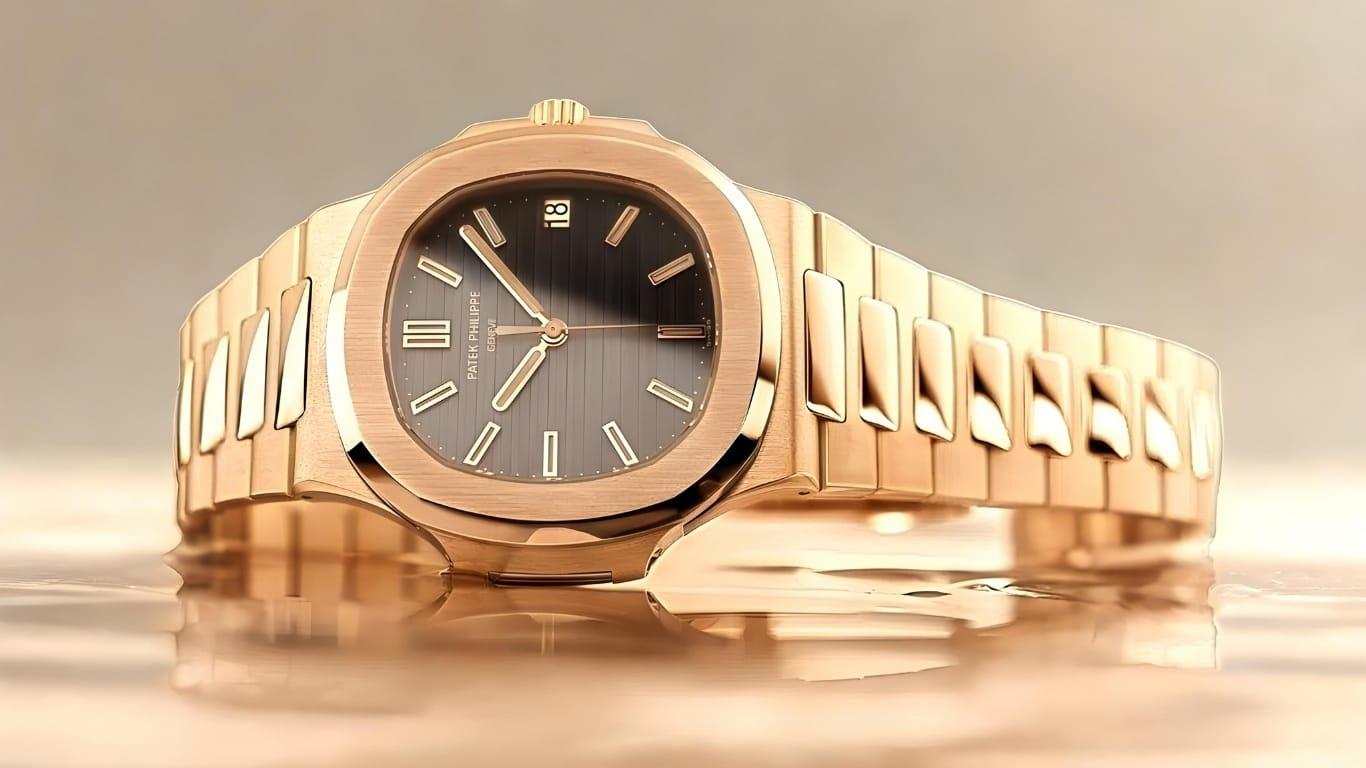
After the post-2022 cooldown, serious collectors have quietly returned to the Patek Philippe Nautilus. The conviction behind the renewed buying isn't speculative; the secondary-market depth in the discontinued reference 5711 has firmed from late 2024 onward.
- Collectors are doubling down on the Patek Philippe Nautilus, with secondary-market demand on the 5811, 5712, and 5980 references showing renewed strength through 2026.
- Reference 5811/1G in white gold has emerged as the post-5711 cornerstone, with Patek's deliberate move into precious-metal exclusivity reshaping the modern Nautilus position.
- Reference 5712/1A power reserve and Reference 5980 chronograph references continue to draw waitlist demand at authorised dealers globally, with secondary premiums holding firm.
- We see the 5811/1G as the strongest single Nautilus purchase available in 2026, with the precious-metal repositioning and Patek pedigree combined at the modern price tier.
- Vintage Nautilus 3700/1A references from the 1970s and 1980s draw growing collector competition, with original conditions and bracelet integrity driving meaningful premiums.
- Manufacturer pricing discipline has held through cycles, with Patek secondary values supported by the kind of finishing and complication work that justifies the broader Nautilus premium.
- Who is this for?
- Patek collectors at every tier, luxury sports-watch buyers, and established collectors building Nautilus depth.
- What is happening?
- A grounded read on why collectors are doubling down on the Patek Nautilus, covering the modern 5811, 5712, and 5980 references and vintage 3700/1A entries.
- When did this emerge?
- The current shift reflects the 2021 5711 discontinuation and the 2022 5811 release, with collector momentum continuing to build through 2026.
- Where is this happening?
- Authorised Patek dealers globally maintain quiet waitlists, while Phillips, Christie's, and major Chrono24 specialists handle the secondary market.
- Why does it matter?
- The Nautilus offers Patek pedigree, Genta sports-watch design DNA, and the kind of precious-metal repositioning that justifies collectors doubling down through 2026.
The Aquanaut catalogue continues to trade at structural premiums, and the broader collector recognition that the Nautilus represents one of the defining contemporary references in serious watchmaking has held through the broader market cooling. The collectors operating at this tier are reading the conditions and acting on conviction the speculative tier of 2021 didn't have.
In our coverage of the Patek boutique allocation cycle and the secondary-market data across the past eighteen months, the structural pattern has been the steady return of the genuine collector base rather than the financialised buyers that drove the 2021-2022 peak.
The 5711 and the discontinued tier
The Patek 5711/1A in the discontinued blue-dial reference (the watch the brand stopped producing in 2022) anchors the contemporary Nautilus collecting conversation. Original retail of approximately 30,000 euros; secondary market between 100,000 and 130,000 euros in clean condition with full set documentation.
The 5711/1A in the green Tiffany-Blue reference (the 2021 collaboration with Tiffany & Co., produced in just 170 examples) trades at substantially higher levels. Clean examples have cleared $3 million-plus at the major auction houses, and the most recent considered Tiffany-Blue Nautilus result at Phillips' New York sale set the upper benchmark for the variant.
The discontinued 5712 (the moonphase complication Nautilus) and the various complicated Nautilus references (the 5740 perpetual calendar, the various chronograph references) anchor the broader discontinued Nautilus collecting tier. The 5990 chronograph and the various dual-time and travel-time complications extend the line into the upper register.
The current Nautilus catalogue
Patek's contemporary Nautilus production after the 5711 discontinuation focuses on the 5811/1G (the white-gold 41mm replacement reference, retail around 78,000 euros), the various complicated Nautilus references that remained in production after the steel 5711 was retired, and the new variants Patek has introduced to extend the line into the contemporary register.
The 5811/1G has been substantially harder to acquire at boutique allocation than the 5711 ever was; the secondary market trades at structural premiums. The white-gold case is heavier on the wrist than the steel 5711 was, and the dial finishing reads as more substantive in person than the photographs suggest.
Why the collector conviction returned
Three reasons. First, the post-correction settlement clarified what the discontinued 5711 actually represents in serious collecting. The brand's discontinuation discipline produced a reference with structural production-window constraint that the rest of the contemporary Patek catalogue doesn't match.
Second, the collector-base depth held through the cooling. The 2022 to 2024 secondary-market correction took out the speculative tier, but the genuine collector demand for the reference remained constant. The pattern is visible in the auction-house results from 2023 onward: the 5711 clean examples kept clearing at retail-plus levels even at the bottom of the correction.
Third, the auction-house results across 2024 and into 2025 have demonstrated that the upper-end Nautilus market continues to function with the production-discipline conditions intact. Phillips, Christie's and Sotheby's have all handled multiple 5711 lots in the past eighteen months, and the hammer prices have been broadly stable in the 100,000-to-130,000-euro range with the Tiffany-Blue variant clearing meaningfully higher.
The Nautilus inside the Patek catalogue
Patek's annual production is capped at roughly 68,000 pieces across the entire catalogue. The Nautilus historically represented a single-digit percentage of that production; the brand has never disclosed exact production figures for the 5711 across its 1976-to-2022 run, but industry analysts consistently estimate cumulative production in the low six figures across the reference's full lifetime.
That production constraint relative to global demand is the structural reason the secondary market has held its premium. The reference is the most-recognised contemporary Patek production piece by a wide margin, and the discontinuation has produced exactly the kind of fixed-supply dynamic that anchors long-term collector value.
The Aquanaut and the broader Patek sport-luxury catalogue
The Aquanaut references continue to trade at structural premiums alongside the Nautilus. The 5167 in steel anchored the Aquanaut catalogue for two decades before its discontinuation; the contemporary 5168G (the white-gold 42. 2mm reference) extends the line.
Both references trade at substantial premiums to retail in the secondary market.
The Aquanaut and the Nautilus together anchor Patek's sport-luxury production. The brand's contemporary catalogue depth (including the various Calatrava dress references, the Complications and Grand Complications catalogues, and the new variants introduced annually) gives the Nautilus its structural place rather than carrying the line in isolation.
What collectors look for in a serious Nautilus pick
For modern Nautilus, the references that come up most consistently in serious collector conversation are the discontinued 5711/1A in the standard blue-dial configuration, the Tiffany-Blue and special-edition variants for collectors operating at the upper tier, the 5712 moonphase, the contemporary 5811/1G replacement reference, and the various complicated Nautilus references for collectors weighting complications.
Box-and-papers documentation matters substantially; service-network access through Patek's authorised facilities is the practical baseline. The Patek Extract from the Archives service supports provenance documentation for the considered references, and that documentation discipline travels with the watch on subsequent transactions.
What this means for collectors
The longer story collectors recognise is that the Nautilus occupies a particular position in contemporary serious collecting that the post-2022 settlement clarified rather than diminished. The reference's place at the structural top of contemporary integrated-bracelet sport-luxury collecting looks secure for the foreseeable horizon.
The conviction behind the renewed 2024-2025 buying is the kind of considered collector activity that the broader category rewards rather than punishes. For collectors weighing the line in 2026, the discontinued 5711/1A remains the considered acquisition, with the 5811/1G as the contemporary boutique-allocation alternative for collectors who can navigate the multi-year waitlist dynamics.
We last reviewed this analysis in May 2026.