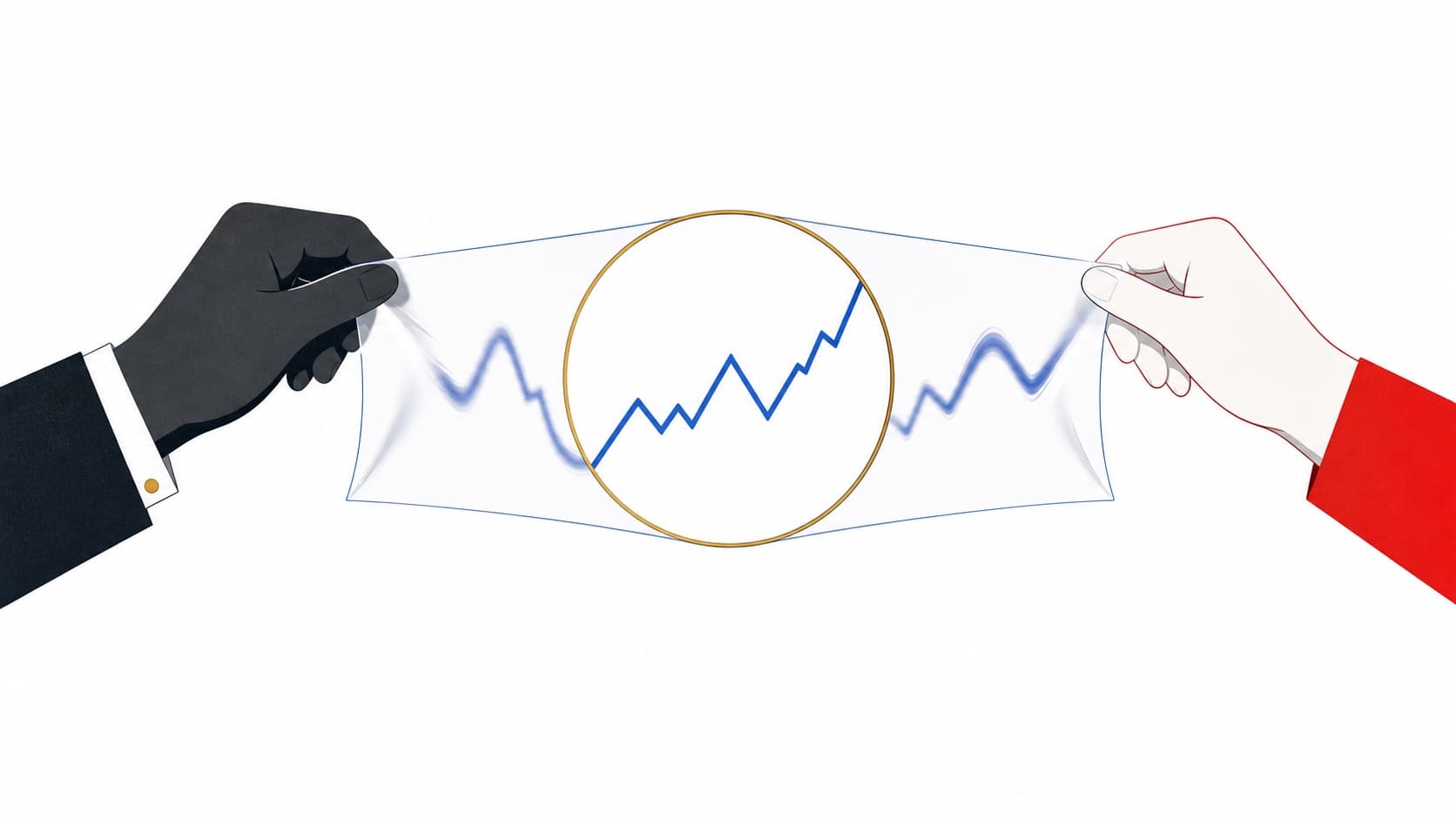

When a single stock rises or falls, you can usually point to a corporate announcement or something specific to that industry. But when major U.S. indices like the Dow Jones Industrial Average or the S&P 500 make a big move, that’s a different story. That kind of broad market shift almost always traces back to something bigger, and that’s where economic indicators come in.
These are the periodic reports that tell you what’s actually happening beneath the surface of the economy.
The U.S. tracks a wide range of economic indicators, and knowing how to read them gives you a real edge. Here’s a breakdown of the most important ones, so the next time a headline moves the market, you’ll know exactly what it means.
- A small core of economic indicators carries most of the macroeconomic information that investors actually use day to day.
- GDP, CPI, unemployment and central-bank rate decisions remain the headline numbers that move broad equity and bond markets.
- Leading indicators such as PMIs, yield-curve shape and credit spreads often turn before the headline numbers and reward closer watching.
- Sector-specific indicators including housing starts, retail sales and crude inventories matter for tactical positioning in cyclical sectors.
- Central bank communication has become an indicator in its own right, with FOMC minutes and ECB press conferences shaping rate-path expectations.
- No single indicator should drive portfolio decisions, but a coherent dashboard of a handful of them sharpens the lens on the cycle.
- Who is this for?
- Long-term investors and active allocators who want a practical, focused list of the economic indicators that genuinely move markets and influence sensible portfolio decisions.
- What is happening?
- A guide to the key economic indicators every investor should track, including GDP, inflation, employment, central-bank rates and leading cyclical signals.
- When did this emerge?
- Most useful when monitored as a regular dashboard, with extra attention paid in the weeks around major data releases and central-bank meetings.
- Where is this happening?
- Primary data is published by official sources such as the BEA, BLS and Federal Reserve in the US, plus Eurostat and the ECB in Europe.
- Why does it matter?
- Macro context shapes the backdrop for every individual investment. A small, well-chosen indicator set reduces noise and supports better decisions.
Real Gross Domestic Product (GDP)
The serious data on these indicators lives at the source. Federal Reserve Economic Data hosts the long-run series for GDP, CPI, unemployment, and the yield curve, and the Federal Reserve publishes the FOMC commentary that markets actually trade on.
From an investor angle, JP Morgan's quarterly guide-to-the-markets and Morgan Stanley's macro research desks both translate these raw indicators into actionable positioning frameworks. Reading them alongside the underlying FRED data is how most disciplined allocators stay calibrated.
Understanding Real GDP
Real Gross Domestic Product, or real GDP, measures the total value of goods and services produced in the U.S., adjusted for inflation. Nominal GDP can paint a misleading picture when prices are rising fast, but real GDP strips that distortion away and gives you a cleaner view of actual economic growth.
The Bureau of Economic Analysis, a division of the U.S. Department of Commerce, publishes both standard and real GDP figures every quarter. It releases two preliminary estimates before the final number lands.

Significance of Real GDP
Real GDP is one of the most telling signs of where the economy actually stands. It captures the total output of the U.S. economy, summing up the aggregate value of everything produced, and it’s typically expressed as a percentage growth or decline. When real GDP is climbing, businesses are producing more, earnings tend to improve, and the standard of living for Americans generally moves in the right direction.
When it falls, that’s your signal that business activity is contracting and tougher times may be ahead.
Market Response to Real GDP
The market’s reaction to real GDP data is rarely straightforward. What moves prices isn’t just whether GDP went up or down. It’s how the latest figures stack up against previous quarters, what economists had forecast, and whether any prior growth projections got revised.
That context is everything.
- Quarterly Comparisons: The market closely watches how current GDP growth aligns with past performance. Consistent growth over several quarters can boost investor confidence, while a sudden decline may trigger concerns about an impending recession.
- Economic Expectations: If the actual GDP growth exceeds economists’ expectations, it can lead to positive market movements as it suggests a stronger-than-anticipated economy. Conversely, if the GDP falls short of expectations, it may cause market downturns.
- Revisions and Forecasts: The BEA’s preliminary GDP estimates are often revised. These revisions can impact market sentiment. Positive revisions can bolster investor confidence, while negative revisions might lead to a sell-off.
Recent Trends and Data
Take 2023 as an example. U.S. real GDP growth shifted around quite a bit, shaped by supply chain pressures, changing consumer behavior, and evolving fiscal policy. According to the Bureau of Economic Analysis, real GDP grew by 2.1% in the third quarter of 2023, up from 1.7% the quarter before. That beat economists’ expectations of 1.9%, and the stock market responded positively as a result.
Nonfarm Payrolls and the Unemployment Rate
For deeper context, the breakdown in how to position equities through an inflationary regime is worth reading alongside this analysis.
Understanding Nonfarm Payrolls
Every first Friday of the month, the U.S. Department of Labor’s Bureau of Labor Statistics releases its estimate of how many jobs were added or lost in the previous month. This is the nonfarm payrolls report, and it excludes general government employees, private household workers, non-profit organization employees, and farm workers. The data gets collected from roughly 146,000 businesses and government agencies, and the result tells you the net number of positions gained or lost.
In January 2024, for instance, that figure came in at 151,000 new jobs. It’s one of the clearest real-time reads on hiring trends and the overall pulse of the economy.
Understanding the Unemployment Rate
The unemployment rate comes from a separate monthly survey of 60,000 households. It estimates the share of Americans who were out of work during the reference period and actively looking for a job. If someone isn’t looking, they don’t count as part of the labor force at all.
In December 2023, the U.S. unemployment rate sat at 4.2%, capturing that slice of the workforce that was jobless but still in the hunt.
Significance of Nonfarm Payrolls and Unemployment Rate
Both nonfarm payrolls and the unemployment rate carry serious weight in financial markets. Here’s why they matter so much to you as an investor.
- Economic Health Indicator: Nonfarm payrolls reflect the overall employment situation in the country. An increase in nonfarm payrolls indicates that businesses are hiring more workers, suggesting economic growth and increased business confidence. Conversely, a decrease can signal economic slowdown and declining business activity.
- Consumer Spending: Employment levels directly affect consumer spending, which constitutes about 70% of the U.S. GDP. More employed individuals mean higher disposable incomes, leading to increased consumer spending and boosting economic growth.
- Market Sentiment: Financial markets closely watch these figures. Positive employment data can drive stock prices up, as it implies a robust economy and higher corporate earnings. On the other hand, higher unemployment rates or lower-than-expected job gains can lead to market declines due to concerns about economic slowdown and reduced consumer spending.
- Policy Implications: The Federal Reserve uses employment data to make decisions about interest rates and monetary policy. Strong employment growth might lead to tighter monetary policy to control inflation, while weak job data could prompt more accommodative policies to stimulate the economy.
Recent Trends and Data
U.S. employment data has told an interesting story in recent years. In January 2024, nonfarm payrolls grew by 151,000 jobs, pointing to a steady recovery from pandemic-driven job losses. Still, the unemployment rate held at 4.2%, which shows that getting back to full employment isn’t a clean or quick process.
Market Reactions
Market participants watch these numbers closely and compare them against what economists expected. Say the market is bracing for 200,000 new payroll jobs but the actual number comes in well short. Stock prices can drop fast as traders start worrying about an economic slowdown.
Flip that around, and better-than-expected job growth tends to lift investor confidence and push markets higher.

Understanding the Price Indexes: CPI and PPI
Consumer Price Index (CPI)
The Consumer Price Index, or CPI, tracks the average change over time in the prices that urban consumers pay for a set basket of goods and services. That basket covers the essentials you rely on every day, from food, clothing, and shelter to fuel, transportation, medical services, and more. The Bureau of Labor Statistics publishes the CPI every month, making it one of the go-to tools for measuring inflation, which is the gradual rise in prices and the corresponding erosion of your purchasing power.
Significance of CPI
The CPI is the backbone of cost-of-living calculations. Economists and policymakers use it to adjust salaries, pensions, and social security benefits so those payments don’t get eaten alive by inflation. It also directly influences Federal Reserve policy.
When the CPI shows inflation heating up, the Fed will often raise interest rates to take some of the steam out of the economy.
Recent data from the BLS showed that the CPI for All Urban Consumers rose by 0.6% in June 2024, following a 0.4% gain in May. Over the prior 12 months, the all-items index climbed 5.4% before seasonal adjustment, a clear sign that inflation pressures were very much alive at that point.
Producer Price Index (PPI)
The Producer Price Index measures the average change over time in the selling prices that domestic producers receive for their output. Think of it as the inflation picture from the seller’s side rather than the consumer’s. The PPI covers a range of sub-indexes tracking manufacturing, agriculture, mining, services, and more.
Significance of PPI
The PPI acts as an early warning system for inflation. Because it captures price shifts at the producer level, it often signals what’s coming in consumer prices before those changes show up in the CPI. If raw material costs spike in the PPI today, there’s a good chance you’ll see that reflected in what you pay at the store tomorrow.
The PPI for final demand rose by 1.1% in June 2024, seasonally adjusted, after a 0.9% gain in May, per the BLS. Over the 12 months ending in June, the final demand index was up 8.6%, underlining just how persistent the inflationary pressures were across the economy at that time.
Comparing CPI and PPI
Both the CPI and PPI measure inflation, but they look at it from very different angles. The CPI tells you what consumers are paying. The PPI tells you what producers are receiving.
One is a lagging signal of what’s already hit your wallet. The other is a leading signal of what’s on its way.
- Scope: The CPI focuses on the price changes experienced by urban consumers and includes a wide array of consumer goods and services. In contrast, the PPI covers price changes for goods and services from the perspective of domestic producers, encompassing nearly all industries within the goods-producing sectors of the economy.
- Timing: The PPI is often the first inflation measure available each month, making it useful for predicting inflation trends before they are reflected in the CPI.
- Perspective: The CPI measures cost changes for consumers, while the PPI measures revenue changes for producers. This difference in perspective helps economists and policymakers understand inflationary pressures from both ends of the supply chain.
Impact on the Economy
Understanding both indexes puts you in a much stronger position, whether you’re investing or setting policy. For investors, rising or falling CPI and PPI figures can signal shifts in stock prices, bond yields, and other asset classes. If you’re a value investor, tracking these indexes helps you spot when the market is mispricing assets in response to inflation noise.
When CPI and PPI are trending higher, the Fed typically steps in with rate hikes to cool things down. When inflation is low or falling, rate cuts become more likely, which encourages borrowing and gets capital moving again.

Consumer Confidence and Consumer Sentiment
Consumer Confidence Index (CCI)
The Consumer Confidence Index is released by The Conference Board, a global business research organization, on the last Tuesday of every month. It’s built from a monthly survey of 5,000 U.S. households and asks people how they feel about current business conditions, the labor market, and what they expect over the next six months.
Components of the CCI
- Current Situation Index: Assesses consumers’ views on present economic conditions.
- Expectations Index: Reflects their expectations for the economy over the next six months.
The CCI is one of the best gauges of how optimistic consumers are feeling, and that matters because confidence drives spending. When people feel good about the economy, they open their wallets. That spending is what fuels business revenues and, ultimately, economic growth.
Recent Trends
As of July 2024, the Consumer Confidence Index came in at 117.9, up from 116.4 the month before. That uptick suggested consumers were growing more upbeat about the economic outlook, which pointed toward increased spending in the months ahead.
Consumer Sentiment Index (CSI)
The University of Michigan publishes the Consumer Sentiment Index twice a month. It gauges how consumers feel about their own financial situation and the broader economy, giving you a real-time pulse check on the mood of the American consumer.
Structure of the CSI
- Current Economic Conditions: Evaluates personal financial situations compared to a year ago and outlook for the next year.
- Consumer Expectations: Focuses on broader economic outlooks for the near and longer-term future.
The CSI gives analysts a timely read on consumer attitudes, which in turn helps predict shifts in economic activity before they show up in harder data.
Recent Trends
In July 2024, the preliminary CSI reading came in at 72.6, up from a final June reading of 70.8. That improvement pointed to a more positive consumer outlook and suggested potential upside for spending in the near term.
Impact on the Stock Market
Both the CCI and CSI carry real weight in financial markets. When consumer confidence and sentiment are rising, people are more likely to spend, which drives economic growth and tends to push corporate earnings higher. Investors take notice, and stock prices often follow.
But when these indexes start slipping, that’s a warning sign. Lower consumer confidence typically translates to reduced spending, softer earnings, and a market that starts pricing in weaker growth ahead.
Example
In July 2024, the gains in both the CCI and CSI lined up with a roughly 3% rise in the S&P 500 over that month. Investors read the stronger confidence numbers as a sign that corporate earnings had room to grow, and they positioned accordingly.

Understanding Retail Sales
Retail Sales Report
The retail sales report comes out monthly from the U.S. Department of Commerce’s Census Bureau, and it measures the total receipts across retail stores in the country. Consumer spending makes up about two-thirds of U.S. GDP, so this report gives you a direct window into the engine that drives the American economy. Swings in retail sales can ripple across financial markets in a hurry.
Components of the Retail Sales Report
- Core Retail Sales: Excludes automobiles, gas stations, building materials, and food services to provide a clearer picture of consumer spending trends.
- Total Retail Sales: Includes all retail categories, providing a comprehensive view of consumer spending.
Importance of Retail Sales
Strong retail sales mean consumers are spending, which lifts revenues for businesses and supports broader economic growth. When sales start declining, it’s often one of the first signs that the economy is losing momentum, and corporate earnings can soften quickly as a result.
Impact on Financial Markets
Retail sales data can move markets fast, especially in the retail sector. When the numbers beat expectations, retail stocks tend to rally as investors grow more confident in consumer demand. When the numbers disappoint, it can drag down retail stocks and pull broader indices lower with them.
Recent Trends in Retail Sales
In June 2024, U.S. retail sales rose by 0.6%, building on a 0.3% gain in May. Higher spending on motor vehicles, furniture, and electronics led the way. The data suggested that consumers were still willing to spend despite economic uncertainty, which was an encouraging sign for continued growth.
Breakdown of Retail Sales Categories
- Motor Vehicles and Parts Dealers: Sales in this category surged by 1.2% in June 2024, reflecting strong demand for new cars and vehicle parts.
- Furniture and Home Furnishings: This sector saw a 0.8% increase, indicating ongoing consumer interest in home improvements and furnishings.
- Electronics and Appliance Stores: Sales rose by 0.9%, driven by robust demand for electronic devices and home appliances.
- Food and Beverage Stores: This category experienced a modest 0.3% increase, showing steady spending on essentials.
- Clothing and Accessories: Sales in this segment grew by 0.7%, reflecting consumer willingness to spend on apparel and accessories.
Seasonal Adjustments
Retail sales figures are typically seasonally adjusted to smooth out the natural fluctuations that come from holidays, weather shifts, and other recurring patterns. That adjustment gives you a cleaner read on the true underlying trend in consumer spending.
Online Retail Sales
The growth of e-commerce has reshaped the retail sales picture in a big way. Online sales keep taking a larger share of total retail activity. In June 2024, online retail sales grew by 1.1%, reflecting the continued shift toward digital shopping that shows no signs of reversing.

Federal Reserve Interest Rate Announcements and Meeting Minutes
The Federal Reserve’s interest rate decisions and meeting minutes are among the most closely watched events on Wall Street. The Federal Open Market Committee, the Fed’s monetary policymaking body, meets eight times a year to assess the economy and set the target range for the federal funds rate, which is the rate at which banks lend reserve balances to other banks overnight. Understanding how these decisions ripple into ETF flows can sharpen how you position your portfolio around Fed announcements.
Importance of the Federal Funds Rate
The federal funds rate is essentially the price of money in the U.S. economy. When the Fed cuts rates, borrowing gets cheaper, businesses invest more, consumers spend more freely, and economic activity picks up. That’s the playbook the Fed used during the 2008 financial crisis.
When the Fed raises rates, the goal is to slow things down and cool inflation before it gets out of hand.
During the 2008 financial crisis, the Fed pushed the federal funds rate close to zero and kept it there for years. That flood of cheap money was a major tailwind for stocks, making equities far more attractive than low-yielding bonds and encouraging companies to borrow and grow.
Market Reactions to Rate Announcements
Every rate decision moves markets, and the direction is fairly intuitive once you understand the mechanism. Lower rates reduce borrowing costs, which fattens corporate margins and puts more money in consumers’ pockets. Both forces tend to lift stock prices.
Higher rates do the reverse, squeezing margins and cooling demand, which can weigh on equities.
But here’s the thing: it’s not just the actual rate change that moves markets. The language the FOMC uses in its statements and meeting minutes is equally powerful. In November 2015, for example, stocks climbed after the FOMC’s October meeting minutes signaled that most members expected conditions would warrant a rate hike by December.
The mere hint of policy direction was enough to shift market sentiment.
Detailed Analysis of FOMC Meetings
After every FOMC meeting, the committee releases a statement summarizing its economic assessment and dropping clues about where policy might head next. Traders and analysts dissect every word, looking for subtle shifts in tone that might telegraph a change in direction.
Three weeks after each meeting, the full minutes hit, and that’s when you get real depth. The minutes lay out the range of views among committee members, the economic data they were weighing, and how they’re thinking about future rate moves. That detail can be just as market-moving as the original announcement.
Example of Market Influence
The November 2015 FOMC minutes offer a textbook example of how forward guidance shapes markets. When those minutes revealed that a December rate hike was likely, stock prices moved higher. Investors interpreted it as a vote of confidence in the economic recovery, a signal that the era of near-zero rates was ending not because of crisis, but because the economy had gotten strong enough to handle higher borrowing costs.
Current Trends and Data
Through 2023, the Federal Reserve’s rate decisions stayed front and center for markets as policymakers worked to rein in inflation that had climbed to levels not seen in decades. The Fed raised rates multiple times throughout the year, each move closely tied to incoming data on prices and employment. For those holding crypto alongside traditional assets, those rate hikes added another layer of complexity to portfolio planning.
The Fed’s rate-setting process leans heavily on a handful of key indicators. The consumer price index and the personal consumption expenditures price index sit at the top of that list. The Fed targets 2% inflation, and when either of those indexes drifts too far from that mark, you can expect a policy response. You can track every FOMC decision and statement directly on the Federal Reserve’s website to stay ahead of where policy is heading.
We last reviewed this analysis in May 2026.


Alex Tzoulis
Alex Tzoulis is Co-Owner and Markets Analyst at The Luxury Playbook, specializing in equities, crypto, forex, and global financial markets. His work focuses on analyzing macroeconomic trends, geopolitical developments, and monetary policy, translating them into actionable insights across both traditional and digital asset classes. He leads the platform's financial market coverage, providing structured analysis across stock market investing, trading strategies, and cryptocurrency markets. His expertise strengthens the publication's authority in financial markets and capital allocation, bridging traditional finance with emerging digital investment ecosystems.