New York’s climb to the top of American finance was never a sure thing. Philadelphia led the way early on, housing the nation’s first bank and its stock exchange. But New York had a geographic edge that proved impossible to ignore, starting with its extraordinarily active port.
When the Erie Canal was completed in 1825, the city’s commercial momentum became unstoppable.
By 1796, New York had already surpassed Philadelphia in imports. Exports followed the very next year. That shift was the turning point.
Legislative moves like the National Banking Acts of 1863 and 1864 then locked in New York’s dominance, placing it at the core of American finance and home to what would become the world’s most powerful stock exchange and institutions like JPMorgan Chase.
- New York grew into the centre of American finance through a combination of geography, port infrastructure and the early consolidation of banking and exchanges.
- The founding of the New York Stock Exchange in 1792 anchored equity trading in Lower Manhattan well before the modern federal regulatory framework existed.
- Successive waves of immigration, industrial growth and federal financing requirements deepened the city’s role across the nineteenth century.
- The Federal Reserve Bank of New York and the concentration of major investment banks consolidated the city’s primacy in the twentieth century.
- Despite challenges from London, Singapore and Hong Kong, New York remains the dominant hub for US-listed equity trading and global capital raising.
- Understanding how New York became the centre of US finance is part of understanding why so much global capital still routes through Manhattan.
- Who is this for?
- Investors and financial-history readers who want a concise account of how New York City came to dominate American and much of global finance.
- What is happening?
- A short historical overview of the geographic, institutional and political reasons New York grew into the centre of American finance.
- When did this emerge?
- A useful backdrop for understanding modern market structure, with relevance whenever the future of global financial centres is being debated.
- Where is this happening?
- Centred on New York City, with reference to competing and complementary financial centres in London, Chicago, San Francisco and beyond.
- Why does it matter?
- History shapes market structure. Knowing how New York reached its position helps investors interpret the role of US markets in global capital flows today.
Introduction to New York’s Financial Ascent
The structural history is part of the formal record at the exchange itself. The New York Stock Exchange publishes its own history of listings and trading-floor evolution, and Nasdaq's parallel rise from the 1970s onward fills out the modern picture.
Mainstream financial coverage has documented the more recent chapters. The Financial Times and The Wall Street Journal have both traced how regulation, talent gravity, and global capital flows have kept the city central even as London, Hong Kong, and Singapore have built out competing hubs.
New York’s rise to the top of American finance is really a story about two things: boldness and timing. The city became a global magnet for capital and business by reading economic trends faster than anyone else and acting on them. Mergers and acquisitions played a huge role in that growth, giving companies the scale they needed to dominate their markets and attract even more investment.
Unlike Philadelphia, New York wasted no time exploiting its geographic position. Port access and prime trade routes turned the city into a commercial engine. Aggressive trade policies and early investment in transport infrastructure did the rest, cementing New York’s reputation as the place where deals get done.
The financial regulations that took shape here were also critical to New York’s rise as a global financial leader. Smart, business-friendly rules pulled in investors from around the world and gave companies the clarity they needed to grow fast and operate efficiently. Transparency became a core part of what made the city’s financial ecosystem so attractive to global capital.
New York State holds the most concentrated wealth of any state in the country, with just 0.4% of its population controlling $6.7 trillion in assets. That number captures both the city’s staggering wealth gap and its sheer power as a wealth-creation machine. The top 1% of earners in the state pull in over 44 times more than everyone else combined, a gap that reflects decades of strategic financial planning and relentless business innovation.
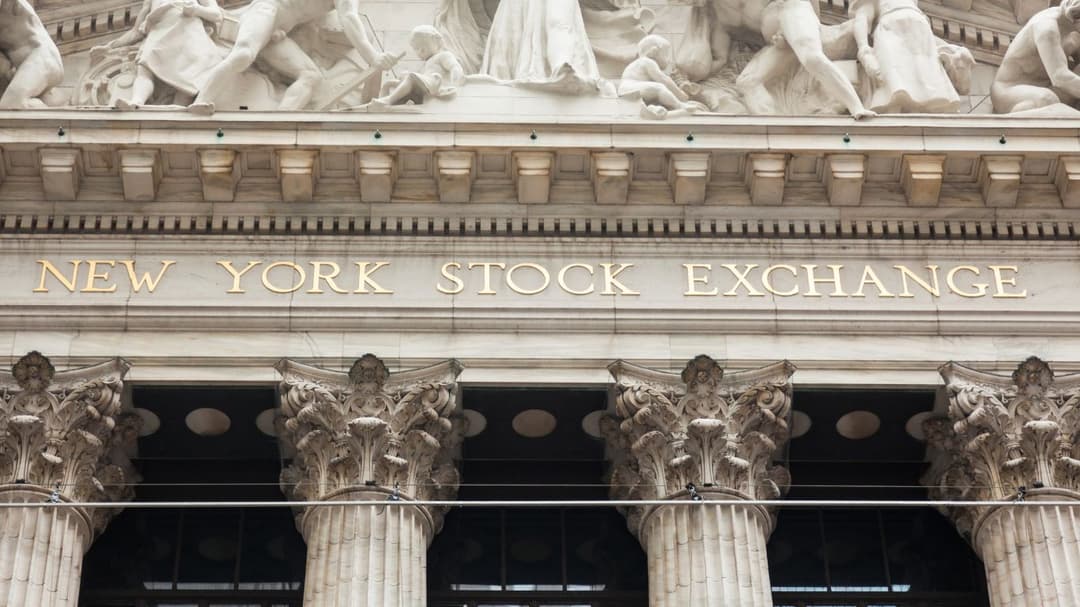
The Rise of Wall Street and the New York Stock Exchange
Wall Street did not become a global financial powerhouse by accident. From its origins as Het Cingel in old New Amsterdam to its current status as the nerve center of global capital markets, every step of its evolution was shaped by smart investment banking, bold strategic decisions, and a few genuinely pivotal moments in history.
Establishment of the New York Stock and Exchange Board
The roots of the New York Stock Exchange go all the way back to 1792, when 24 stockbrokers signed the Buttonwood Agreement at the Merchants’ Coffee House. That document laid down the basic rules of stock trading and eventually led to the creation of the New York Stock and Exchange Board in 1817. From there, the institution grew into the NYSE as we know it today, one of the most powerful financial markets on earth.
By 1829, daily trading volume had already reached 5,000 shares, a number that hinted at everything that was coming.
New York’s Strategy to Attract Investors
New York City did not wait for investors to show up. It went after them. The city actively lured capital away from rivals like Philadelphia by building a serious banking infrastructure and backing transformative projects like the Erie Canal and transatlantic shipping lines.
By the 1830s, that strategy had paid off. New York had become the central deposit hub for banks across the country.
By 1928, Wall Street was already pushing the boundaries of technology, introducing high-speed tickers capable of printing 500 characters per minute. That kind of innovation was put to the ultimate test during the peak of the 1929 bull market and the brutal crashes of Black Thursday and Black Monday. Those events were painful, but they also made one thing clear: Wall Street was already the undisputed center of global financial gravity.
If you want to understand how to read a market through its ups and downs, knowing how to analyze a stock properly is where serious investors always start.

Geographical and Economic Advantages of New York
New York City’s rise as the financial heart of the United States was not just about ambition. Geography did a lot of the heavy lifting. The city’s natural harbor iced over far less than the ports of Philadelphia or Boston, which meant trade kept moving through winter when rival cities slowed down.
That edge in coastal trade built momentum that compounded year after year.
The Erie Canal changed everything when it was completed in 1825. Connecting the Atlantic Ocean to the Great Lakes, it rewrote the map of American commerce. Transport costs dropped by 95 percent almost overnight, making it dramatically cheaper and faster to move goods across the country.
That single infrastructure project did more to vault New York to the front of the economic race than almost anything else.
Immigration
Immigration was the other force that built New York into what it became. Through the 19th and 20th centuries, the city was the primary gateway into the United States for wave after wave of new arrivals. By the 1990s, the population had surpassed eight million.
All of that human capital brought diversity, new ideas, and a workforce that never stopped grinding, fueling the city’s economy in ways that are hard to overstate.
The presence of major financial institutions has been central to New York’s economic muscle. Goldman Sachs, JPMorgan Chase, Morgan Stanley, and Citigroup all call the city home, and their footprint here sends a signal to every investor in the world. According to the New York State Department of Labor, the finance and insurance sectors employed over 465,000 people in the city in 2023 alone. That kind of concentration of talent and capital does not happen by chance.
And as US debt reaches all-time highs, the role New York plays in managing that pressure only grows more critical.
Location and Infrastructure
New York’s position and infrastructure made it uniquely effective at spreading information and driving direct collaboration across industries. Media companies, publishing houses, and advertising agencies all clustered here over time, making the city a nerve center for how ideas and intelligence flow through the business world.
Beyond information, New York City built an environment where industries of every kind could grow side by side and feed off each other. The city’s extensive public transportation network and its dense web of business districts give companies everything they need to operate and scale. The Metropolitan Transportation Authority reported daily subway ridership of roughly 5.5 million in 2023, a number that tells you just how much economic activity that infrastructure is quietly supporting every single day. Understanding why the dollar strengthens during market stress gives you an even sharper picture of why New York’s financial ecosystem holds its ground when global pressure builds.
We last reviewed this analysis in May 2026.


Alex Tzoulis
Alex Tzoulis is Co-Owner and Markets Analyst at The Luxury Playbook, specializing in equities, crypto, forex, and global financial markets. His work focuses on analyzing macroeconomic trends, geopolitical developments, and monetary policy, translating them into actionable insights across both traditional and digital asset classes. He leads the platform's financial market coverage, providing structured analysis across stock market investing, trading strategies, and cryptocurrency markets. His expertise strengthens the publication's authority in financial markets and capital allocation, bridging traditional finance with emerging digital investment ecosystems.