Becoming a real estate agent in Dubai sits within one of the most clearly structured licensing frameworks in the Middle East, and the route is more straightforward than most outsiders assume. The first move is a residency visa, since employment in Dubai requires it. From there the path runs through Dubai Real Estate Institute (DREI) certified training, the RERA Brokerage Examination, the Police Clearance Certificate, and the final license issuance through the Department of Economic Development.
Knight Frank's 2025 MENA Wealth Report flagged Dubai as the global city with the largest year-over-year increase in licensed real estate brokers, with the city's prime market drawing both first-career entrants and senior agents relocating from London, New York, and Singapore. The average monthly income for a registered Dubai agent now sits around AED 29,000, and Dubai's zero-personal-income-tax framework means that figure is net rather than gross.
The career case is unusually strong, provided the registration sequence is run correctly.
- Becoming a real estate agent in Dubai requires RERA broker certification, registration with the Dubai Land Department and ongoing compliance with the regulatory framework.
- We see the certification course covering Dubai property law, transaction procedures, ethics and the regulatory frameworks specific to the local market.
- Sponsorship by a licensed brokerage is required for the broker license, with most aspiring agents joining established firms before potentially transitioning to fully independent practice.
- Arabic and English language fluency is effectively required, with additional languages including Russian, Mandarin, French and Hindi offering genuine competitive advantage given the international buyer mix.
- Commission structures in Dubai typically run two percent of the transaction value for each side, with prime market deals supporting higher commission economics.
- For most aspiring Dubai agents we view local market specialisation, ideally in one freehold zone or asset category, as more useful than attempting broad-market coverage from the outset.
- Who is this for?
- Aspiring real estate professionals considering a Dubai licensing path, alongside the brokerages, training providers and industry bodies framing the qualification process.
- What is happening?
- A practical guide to becoming a real estate agent in Dubai, covering RERA certification, DLD registration, sponsorship, language needs and commission economics.
- When did this emerge?
- The article reflects current Dubai licensing frameworks through 2025 and 2026, including the latest RERA requirements and DLD procedures.
- Where is this happening?
- The piece focuses on Dubai, with reference to the broader UAE licensing framework across the emirates including Abu Dhabi and Sharjah.
- Why does it matter?
- Dubai property practice involves jurisdiction-specific licensing and market dynamics, which is why understanding the qualification path matters before committing to the career transition.
The Dubai market the agent will actually be working in
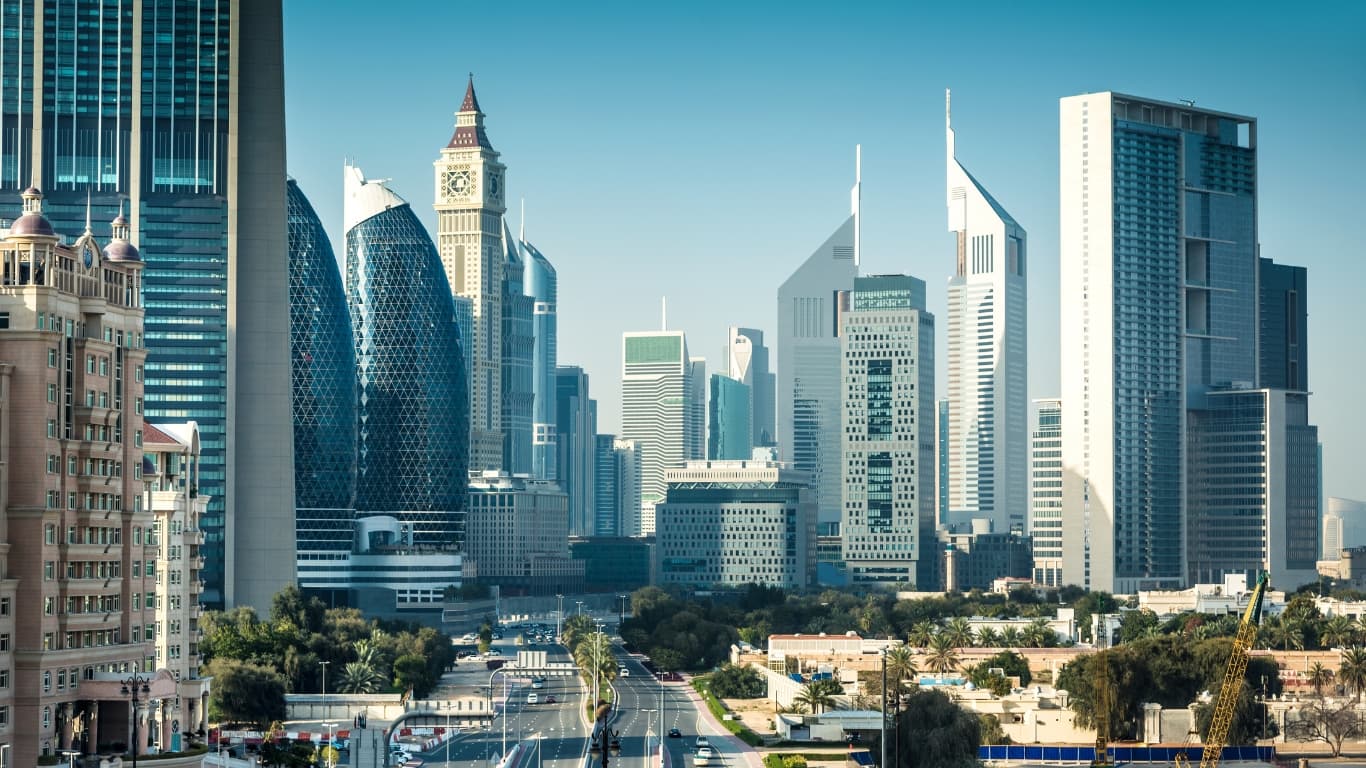
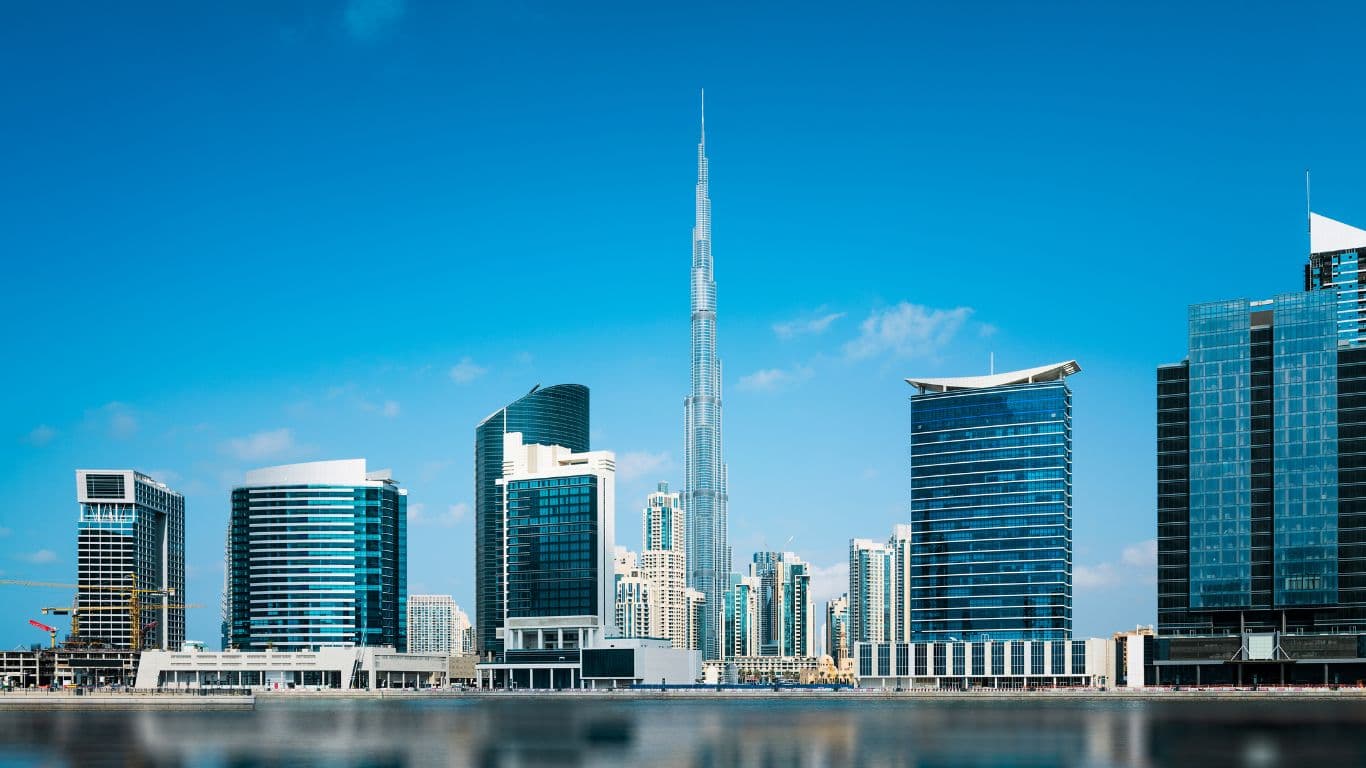
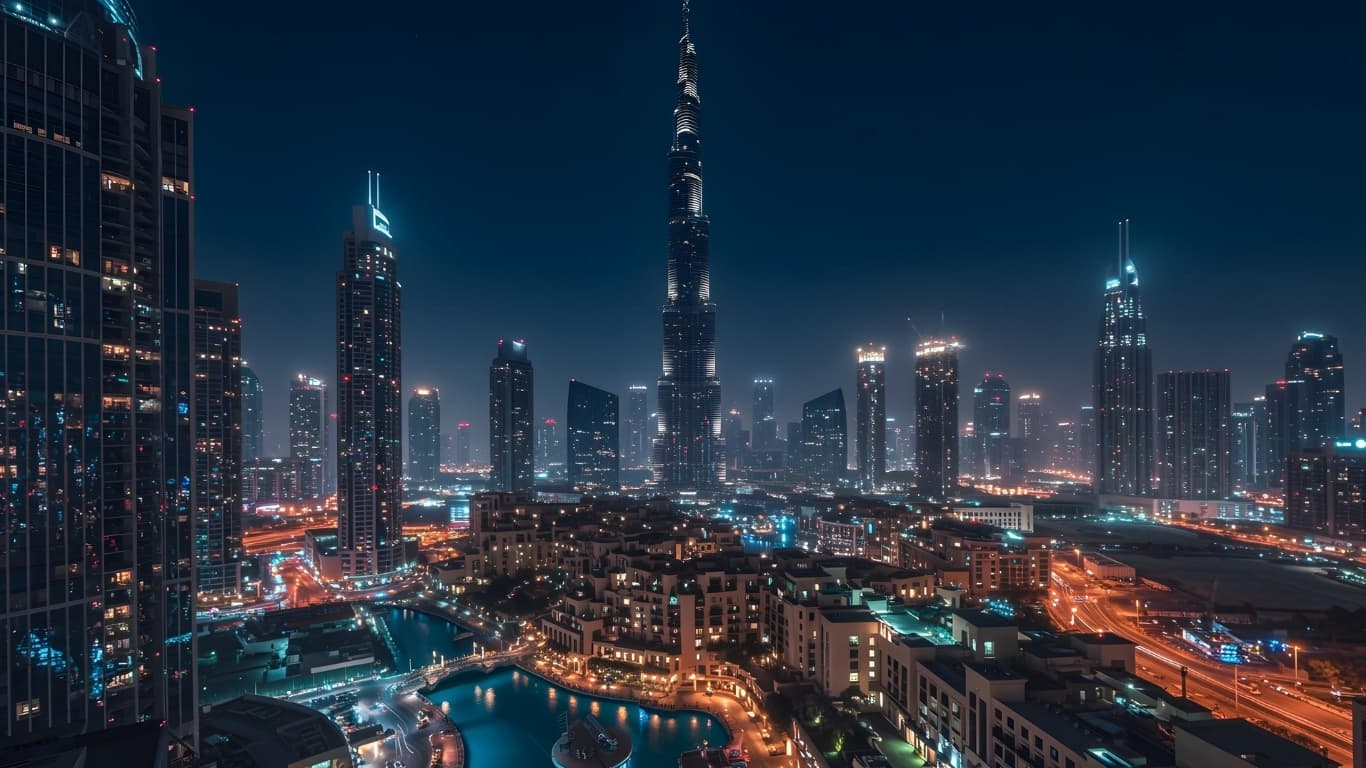
Dubai's real estate market spans roughly 4,100 square kilometers across a population that has expanded from about 4 million in 2005 to roughly 9. 5 million by 2024. The demand for skilled agents is high, and the property mix covers everything from raw land and apartments to townhouses and full commercial buildings.
Knowing how to navigate that variety is what separates a good agent from a great one.
To legally operate in this market, an agent needs the Property Broker Certification. The baseline requirements are straightforward. The applicant must be over 21, hold a valid residency visa, and carry an Emirates ID.
From there, the candidate completes training at the Dubai Real Estate Institute (DREI), which costs approximately AED 3,000 (around USD 817). If you want to understand what different property classifications look like before diving in, our guide on what real property means and its different types is a smart place to start. Mansion Global's Dubai desk treats the DREI training as the genuine professional gating mechanism in the Dubai broker market.
After training, the candidate sits the Real Estate Regulatory Agency (RERA) Brokerage Examination. Fees scale based on academic background, ranging from AED 3,200 for bachelor's degree holders up to AED 15,750 for those without higher education. A passing score yields a one-year license, with annual renewal at AED 510.

The financial case and the buyer field
The earning potential in Dubai property brokerage is genuinely competitive on a global scale. The average monthly income for a licensed agent sits around AED 29,000, with commission scaling on closed transactions and zero personal income tax retention. Compared to London, New York, or Sydney brokerage incomes after tax, Dubai's net position is materially favorable.
The buyer field is unusually diverse. Mansion Global's 2025 Dubai dispatch and Engel & Völkers' regional buyer survey both put British, Indian, Russian, German, and American purchasers in the top six nationalities by sale count last year. Sotheby's International Realty's UAE office and Christie's International Real Estate's Dubai desk also report Gulf domestic buyers (Saudi, Qatari, Kuwaiti) expanding their share of the prime-villa segment.
The market's resilience matters professionally. Dubai has absorbed several cycles (2008-2009, 2014-2015, 2020) and emerged with prime transaction volume at record levels. RERA's regulatory architecture (escrow requirements, registered brokers, the Trakheesi portal, the title-deed system) has matured to a point where the day-to-day broker workflow feels closer to London or Singapore than to a frontier market.
| Qualification | Exam Fee (AED) | Exam Fee (USD) |
|---|---|---|
| Bachelor's Degree | 3,200 | 872 |
| No Bachelor's Degree | 6,300 | 1,715 |
| No Educational Qualification | 15,750 | 4,283 |
The application sequence in practice
The licensing sequence runs through four discrete steps. First, the residency visa, typically arranged through employer sponsorship by a registered brokerage. Second, the Emirates ID issuance, which is required for DREI enrollment and government interactions.
Third, the DREI training course (AED 2,400 to AED 3,000), which covers real estate history, broker business operations, legal frameworks, sales and leasing processes, ethical standards, jointly-owned property rules, Ejari registration, lease structure, Trust Account regulations, and VAT obligations. Fourth, the RERA Brokerage Examination, with fees scaled by academic background. A Police Clearance Certificate (AED 200) and a RERA processing charge of AED 5,020 complete the cost stack.
The candidate then submits the document package to the Department of Economic Development. The DREI training completion certificate, the RERA exam pass certificate, the Police Clearance, the Emirates ID, and the residency visa. The license is issued for one year, with annual renewal at AED 510.
The RERA exam in detail
The RERA examination is the gating event for the entire process. The exam is multiple-choice and scenario-based, testing property law, sales and leasing process, brokerage ethics, escrow regulations, and property management. RERA's official regulatory framework underpins the entire exam, so getting familiar with it early is essential.
The published passing threshold for license renewal is 85%, and aiming materially above that for the initial pass is the standard preparation guideline among the established brokerages.
Practice tests and the DREI study materials are the two highest-value preparation resources, and candidates from established agency houses (Knight Frank Middle East, Sotheby's UAE, Engel & Völkers UAE, Allsopp & Allsopp) typically pass at first attempt because the agency structures the preparation cycle around the exam.

For a deeper look at how property markets perform across regulatory cycles, the impact of rising interest rates on property markets offers useful context for the macro side of the broker's brief.
The renewal and Continuing Professional Development layer
The Dubai broker's license runs on a one-year cycle, with renewal through the Trakheesi portal. The renewal sequence mirrors the initial application: confirm RERA exam standing, submit refreshed identity and education documents, settle the AED 510 renewal fee. Infinity Real Estate Agency's 2026 review offers a ground-level look at what operating in this regulated environment looks like in practice.
Continuing Professional Development (CPD) is now a mandatory layer of the renewal process. DREI's CPD curriculum spans market analytics, green-property trends, regulatory updates, and legal developments around branded residences and the Golden Visa property thresholds. JLL's MEA training arm and the Knight Frank Academy have both built CPD-eligible courses for Dubai-licensed brokers in the last twenty-four months.
| Requirement | Description | Cost (AED) |
|---|---|---|
| Certified Training | Mandatory training through Dubai Real Estate Institute | 3,000 AED (817 USD) |
| RERA Exam Fee | Exam fee, varies by education level | 3,200 AED (872 USD) bachelor's degree, 6,300 AED (1,715 USD) others |
| Police Clearance Certificate | Document verifying no criminal record | 200 |
| Passing Score | Minimum required to renew license | 85% or higher |
| License Renewal Fee | Annual renewal of broker's license | 510 AED (approximately 140 USD) |
The renewal exam combines multiple-choice questions with scenario-based inquiries. Hitting the minimum DREI passing score is essential. Re-submitting key documents (identity proof, photographs, educational certificates) completes the cycle.
| Requirement | Details |
|---|---|
| Application Portal | Trakheesi |
| CPD Courses | Mandatory |
| Exam Type | Multiple-choice, Scenario-based |
| Minimum Passing Score | Set by DREI |
| Required Documents | Proof of identity, Passport photos, Educational certificates |
What this means for buyers
For a candidate considering Dubai real estate brokerage as a career path in 2026, the practical sequence is unusually clear. Secure the residency visa through an employer sponsor at one of the established agency houses (Knight Frank, Sotheby's, Engel & Völkers, Allsopp & Allsopp, Driven, Espace). Complete DREI training.
Pass the RERA exam at the high band. File the document package with the Department of Economic Development.
The serious agents we see succeeding in Dubai treat the CPD cycle as a professional investment rather than a compliance overhead, and they specialize early. The agents who run general residential pipelines compete against thousands of peers, while the agents who develop deep expertise in one segment (branded residences, Palm Jumeirah, Dubai Hills villas, Marina off-plan) build the kind of repeat-client book that sustains a long career. If you are thinking about how property brokerage fits into a broader wealth strategy, the complementary market for indirect property exposure is worth understanding. We last reviewed this analysis in May 2026.


Savvas Agathangelou
Savvas Agathangelou co-founded The Luxury Playbook and has spent years reporting from the prime postcodes the magazine covers — Mayfair, Knightsbridge, the Athens Riviera, Dubai's Palm crescents, and the southern Mediterranean coastlines where the world's wealthy keep coming back. His background is in international hospitality, and that frame shapes how he writes about property: the developer's choices, the architect's signature, the agency's bench of named brokers, the building's service standard once the buyer moves in. He files developer spotlights, agency profiles, and the seasonal "Properties That Defined" listicles, and he hosts the magazine's founder-and-leadership interviews on the Voices side.