
Institutional investors deployed $67 billion in AI investments during 2024, targeting sectors where artificial intelligence delivers measurable productivity gains rather than speculative returns.
While retail investors chase AI stock momentum, pension funds, sovereign wealth funds, and hedge funds are focused on something different. They want companies using AI to cut costs, sharpen efficiency, and build real competitive advantages across healthcare, finance, manufacturing, energy, and defense.
This institutional approach puts adoption ahead of innovation. The smart money backs proven AI applications that generate quantifiable ROI, not experimental technologies with uncertain commercial potential.
The institutional appetite for AI exposure is now a documented allocation theme. BlackRock publishes dedicated AI-thematic research, and Morgan Stanley tracks how endowment and pension money is rotating into the AI-adjacent supply chain.
Mainstream financial coverage adds the practitioner record. The Financial Times and Reuters have both tracked how AI-related capex commitments have reshaped sector positioning across the past two years, and S&P Global maintains the index families that capture the exposure.
Why Institutional Investors Are Betting on AI
For deeper context, the breakdown in how disciplined sector rotation interacts with thematic exposure is worth reading alongside this analysis.
Institutional AI investment strategy comes down to three core drivers. Measurable long-term returns, portfolio diversification, and capturing value across entire sectors rather than betting on any single company.
BlackRock’s private equity arm put $2.5 billion into AI-enabled businesses. California Public Employees’ Retirement System committed $1.8 billion to technology funds with meaningful AI exposure. These aren’t small positions.
Those commitments follow detailed due diligence showing AI’s ability to drive operational efficiency, reduce labor costs, and build sustainable competitive advantages that compound over time.
The distinction between AI adoption and AI innovation is what separates institutional strategy from retail speculation. Pension funds and sovereign wealth funds back companies using AI to transform markets that already exist. Healthcare systems reducing diagnostic errors.
Manufacturers cutting production costs. Energy companies optimizing grid operations. Alternative asset classes are drawing similar attention from the same investors, but AI-driven sectors offer something more tangible, verifiable, repeatable cost savings.
Targeting proven use cases means AI delivers measurable ROI, which makes large capital commitments far easier to justify to investment committees managing fiduciary obligations to millions of beneficiaries.

AI in Healthcare and Biotechnology
Healthcare pulled in $15 billion in institutional AI investment during 2024, driven by AI’s ability to cut through the inefficiencies of a $4.3 trillion global market.
Traditional pharmaceutical development averages $2.6 billion per approved drug, with a 90% failure rate along the way. AI-driven drug discovery platforms can compress development timelines from 15 years down to 8 while cutting costs by 30 to 40%. That kind of efficiency is impossible to ignore if you manage a multi-billion-dollar portfolio.
For example, the Ontario Teachers’ Pension Plan invested $200 million in AI drug discovery platforms including Recursion Pharmaceuticals and BenevolentAI.
Medical diagnostics is another area of measurable value creation. Diagnostic errors cost U.S. healthcare systems roughly $100 billion every year. AI diagnostic systems analyze medical images and patient data faster than human doctors while pushing error rates down.
Sovereign wealth funds have taken a close look at this segment. The Norwegian Government Pension Fund’s investments in companies like Zebra Medical Vision and Aidoc show exactly why. These AI diagnostic tools reduce malpractice liability and improve patient outcomes with results you can actually measure.
AI in Financial Services and Banking
Financial services generated $8.5 billion in AI investments during 2024, with the capital concentrated in algorithmic trading, risk management, and fraud detection where the benefits show up immediately on a balance sheet.
Hedge funds like Bridgewater Associates have invested over $1 billion developing AI trading systems that process market data and execute trades faster than any human team could, while simultaneously analyzing economic data and market patterns for more consistent returns.
Risk management AI hits directly at regulatory capital requirements and loan loss provisions, which is exactly why institutional investors find it so attractive. JPMorgan Chase has committed $500 million to AI systems analyzing credit risk, detecting money laundering, and assessing market risk exposure. That’s not an experiment.
That’s a structural upgrade to core operations.
Goldman Sachs, Bank of America, and Wells Fargo have collectively put over $2 billion into AI risk management platforms that reduce regulatory fines, improve credit decisions, and lower operational costs across their businesses.
Credit card fraud costs the financial industry $28 billion annually, yet AI fraud detection systems achieve 99%+ accuracy rates in milliseconds. That math is compelling. The Canada Pension Plan Investment Board committed $300 million to AI fraud detection companies based on a straightforward ROI case.
Every dollar spent on AI fraud prevention saves financial institutions $4 to $6 in actual fraud losses. Understanding fundamental drivers behind these returns matters more than ever when capital allocation decisions of this scale are on the table.

AI in Manufacturing and Supply Chains
Manufacturing AI investments totaled $12 billion in 2024, targeting predictive maintenance, quality control, and supply chain optimization that reliably deliver 10 to 20% cost savings with quantifiable ROI. Sovereign wealth funds seeking stable, long-term returns in essential economic sectors have been especially active here.
General Electric’s Predix platform shows what’s possible. Using AI to monitor industrial equipment, it cuts unplanned downtime by 25% and maintenance costs by 15%. The Abu Dhabi Investment Authority has invested $400 million in industrial AI companies including GE’s digital division, betting on exactly this kind of operational leverage.
Supply chain optimization AI manages inventory levels, predicts demand, and fine-tunes shipping routes across global networks that would be impossible to run manually at scale.
The savings involved are staggering. Walmart’s AI systems manage inventory across 4,700 stores, reducing stockouts by 30% while cutting inventory carrying costs by $2 billion a year. That’s not a pilot program. That’s a structural transformation.
The Alaska Permanent Fund has invested $250 million in supply chain AI companies, recognizing that logistics optimization delivers cost savings you can verify quarter after quarter.
Factory automation pairs AI with robotics to replace human labor in repetitive manufacturing tasks. Tesla’s AI-controlled factory robots cut production costs while improving quality consistency, addressing labor shortages and rising wage costs as companies bring manufacturing back onshore.
Asian institutional investors have leaned into this trend hard. The Korea Investment Corporation committed $800 million to industrial robotics companies, betting that AI-driven automation will reshape global manufacturing economics for decades to come.
AI in Energy and Infrastructure
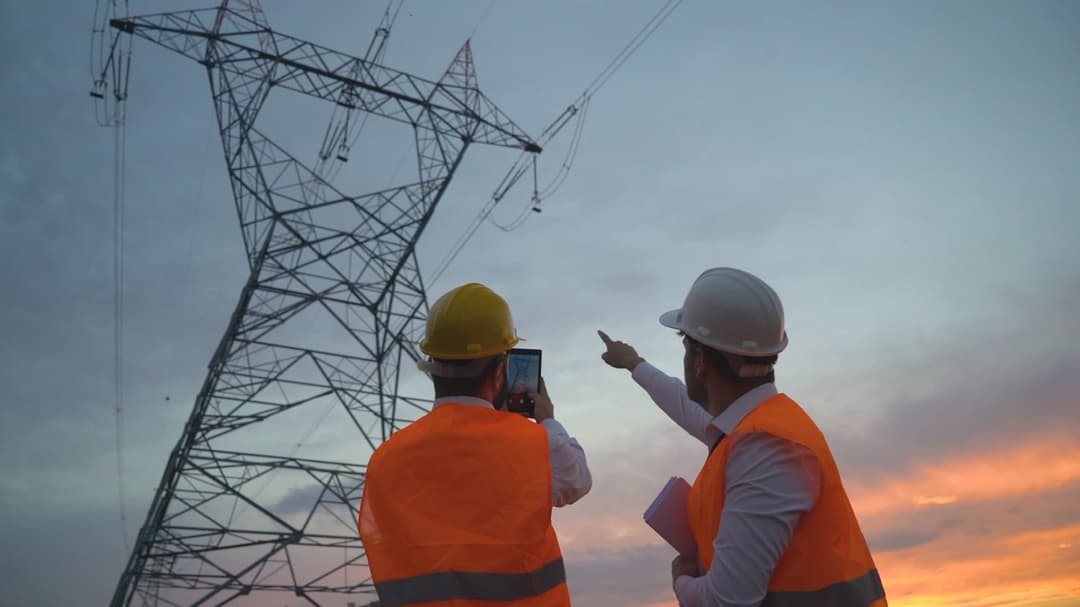
Energy sector AI investments reached $9 billion in 2024, addressing the twin pressures of renewable energy transition and grid management efficiency. Long development cycles and infrastructure-scale payback periods make this a natural home for institutional capital that thinks in decades, not quarters.
Smart grid AI balances electricity supply and demand in real time across complex power networks. Pacific Gas and Electric uses AI to predict power outages, optimize energy storage, and integrate renewable sources more efficiently than legacy systems ever could.
The California State Teachers’ Retirement System has invested $500 million in grid AI companies operating within the regulated utility model, which provides the kind of steady, predictable returns that pension funds are built around.
Google’s DeepMind has already demonstrated what renewable energy forecasting AI can do, developing systems that forecast wind power generation 36 hours in advance and increasing wind energy value by 20% through improved grid scheduling. That improvement flows straight to the bottom line of every wind energy investment.
European pension funds have been especially active here. APG, the Netherlands’ largest pension fund, put $300 million into renewable energy AI companies. Better forecasting makes wind and solar investments more profitable and more predictable.
That combination is exactly what long-horizon investors are looking for.
Oil and gas exploration AI analyzes seismic data, drilling parameters, and reservoir characteristics to find productive drilling locations more accurately than traditional geological methods. ExxonMobil’s use of AI to analyze rock samples and seismic surveys has reduced exploration costs while lifting discovery success rates.
Even funds divesting from fossil fuels have held positions in energy AI. Norway’s Government Pension Fund kept investments in energy AI companies while selling oil stocks, recognizing that AI improves both the efficiency and environmental performance of existing energy infrastructure.
AI in Defense and Security
Defense and security AI attracted $6 billion in institutional investment during 2024 through specialized funds focused on dual-use technologies with both military and civilian applications. Cybersecurity is the largest commercial opportunity within this sector. AI systems detect network intrusions, analyze malware, and respond to cyber threats far faster than any human security team.
Companies like CrowdStrike and Palo Alto Networks use AI to identify cyber attacks in real time, creating sustained demand that cuts across every economic sector. The Texas Teacher Retirement System invested $400 million in cybersecurity AI companies, recognizing that demand for protection is not cyclical.
Surveillance and reconnaissance AI analyzes satellite imagery, processes drone footage, and identifies security threats from vast sensor data streams. Defense contractors like Lockheed Martin and Raytheon integrate AI into military and homeland security systems that carry multi-decade government contract relationships.
The Australia Future Fund invested $200 million in defense AI contractors, viewing these companies as direct beneficiaries of increased defense spending across allied nations responding to evolving security challenges. It’s a thesis that has only strengthened going into 2026.
Autonomous systems AI controls drones, ground vehicles, and naval systems with minimal human supervision. Full autonomy is still years away, but AI-assisted systems already improve military equipment effectiveness while reducing risks to human operators.
Given the long development cycles and regulatory complexity involved, institutional investors approach this segment carefully. The focus stays on companies with proven government contracts and clear development milestones rather than speculative research projects burning cash with no clear path to revenue.
Risks and Challenges for AI-Driven Investments
Institutional investors approach AI with real caution, shaped by hard lessons from the dot-com crash of 2000 and the blockchain hype cycle of 2017. The risks they actively manage include regulatory uncertainty, data privacy exposure, algorithmic bias, and market overvaluation.
The European Union’s AI Act and similar global regulations could require expensive compliance measures or restrict AI applications outright, eating into investment returns. Institutional investors focus on AI companies with strong compliance programs and steer clear of applications facing likely regulatory restrictions, with facial recognition systems being an obvious example.
Data privacy creates real liability for AI companies handling personal information, especially in healthcare and financial services where breaches carry severe regulatory penalties. Institutional investors run extensive due diligence on data handling practices, cybersecurity measures, and privacy compliance programs. Portfolio companies are typically required to carry substantial cyber insurance and implement data governance frameworks meeting international privacy standards.
Market overvaluation sits at the top of most risk registers for investors who remember the inflated valuations that preceded previous technology crashes. AI companies with proven revenue streams attract steady institutional capital. But speculative AI startups with limited commercial applications face growing skepticism from the same allocators who once looked more favorably on the category.
Institutional investors apply rigorous valuation metrics and focus on companies with sustainable competitive advantages rather than those riding temporary AI enthusiasm. The goal is steady risk-adjusted performance that meets long-term obligations to pensioners, endowment beneficiaries, and sovereign stakeholders who are counting on these returns for decades to come.
We last reviewed this analysis in May 2026.


Alex Tzoulis
Alex Tzoulis is Co-Owner and Markets Analyst at The Luxury Playbook, specializing in equities, crypto, forex, and global financial markets. His work focuses on analyzing macroeconomic trends, geopolitical developments, and monetary policy, translating them into actionable insights across both traditional and digital asset classes. He leads the platform's financial market coverage, providing structured analysis across stock market investing, trading strategies, and cryptocurrency markets. His expertise strengthens the publication's authority in financial markets and capital allocation, bridging traditional finance with emerging digital investment ecosystems.