
Greece is, by any honest reading, a good place to buy property in 2026, and the answer has nothing to do with the postcard view. Prices across the country rose 8% to 10% in 2022, the Bank of Greece's residential index now reads on a sustained upward arc, and Knight Frank's 2025 Wealth Report flagged Athens among the European cities with the fastest real-price growth this decade. Forecasts from Savills and JLL point to a further 35% to 40% rise over the next three years.
The pull is reinforced by the Greek Golden Visa, the residency-by-investment programme that opens Schengen mobility to non-EU buyers from a €250,000 minimum (now €500,000 in Athens, Thessaloniki, Mykonos, and Santorini). Mansion Global's 2025 Athens dispatch and FT Property's Mediterranean briefing put Greek prime among the three best-value entry points into European prime property. The case for buying in Greece is real, but the structure matters more than the spreadsheet.
- Greece has emerged as a credible mainstream prime market in 2026, with continued residential appreciation, improving infrastructure and a deepening international buyer base.
- We see the post-crisis recovery story now firmly in the rearview mirror, with Bank of Greece data showing prices in the major markets either matching or exceeding pre-crisis benchmarks.
- Golden Visa eligibility for non-EU buyers above the tiered thresholds remains a meaningful structural advantage versus alternative Mediterranean destinations.
- Yields on well-located Greek rental stock remain attractive relative to comparable European capitals, particularly outside the highest-priced Cycladic island markets.
- Property taxes including ENFIA and the 24 percent VAT on new builds remain modest by European comparison, which supports the all-in entry economics for international buyers.
- For most considered international buyers we view Greece as offering one of the more attractive risk-adjusted entry points in the broader Mediterranean property complex.
- Who is this for?
- International buyers weighing Greece against alternative Mediterranean destinations, alongside the advisers, brokers and family office staff framing those decisions.
- What is happening?
- A practical read of whether Greece is a good place to buy property, covering market conditions, Golden Visa eligibility, yields and the comparative tax framework.
- When did this emerge?
- The article reflects 2026 market conditions through Bank of Greece, ELSTAT and Hellenic Property Federation data alongside our own observations.
- Where is this happening?
- The piece covers Greece broadly, with reference to the Athenian Riviera, Thessaloniki, the Cycladic islands and the comparison to alternative Mediterranean destinations.
- Why does it matter?
- Greek property markets have crossed an important threshold in international buyer perception, which is why understanding the current value proposition matters before committing capital.
What the Greek property market actually looks like in 2026
The Greek property market has been on a sustained recovery that started in 2018 and has compounded since. Prices climbed roughly 9% per year on a nominal basis after the 2018 inflection, with housing investment surging 18. 6% in early 2022 according to Alpha Bank's macro tracking.
The recovery is real and it is picking up speed.
Foreign investment has been a meaningful driver. Cross-border buyer volumes rose roughly 60% in 2022 to about €1. 28 billion, and Golden Visa-linked purchases alone contributed over €1 billion in the first half of 2023 per the Greek Ministry of Migration.
Athens led the country with apartment prices up 13% in 2022, Thessaloniki was close behind at 11. 1%, and Colliers' Hellenic desk now puts Athens prime in the same comparison set as Lisbon and Barcelona.
The reforms underneath the price story matter as much as the headline rate. Post-crisis legal cleanup cut bureaucratic friction, streamlined Land Registry workflows, and strengthened title-verification protocols. The market is more transparent than it was a decade ago, and that is the precondition for the foreign capital that has flowed in.
The Golden Visa, taxation, and what they actually deliver
The Golden Visa is the single legal lever that has reshaped Greek prime property over the past five years. The 2024 reforms set the threshold at €800,000 for the highest-demand zones (Athens, Thessaloniki, Mykonos, Santorini, the Cyclades, plus a select few municipalities), €400,000 elsewhere, and €250,000 for restoration projects and certain commercial conversions. The visa is renewable on a five-year cycle and extends to spouse, dependent children, and dependent parents.
The Greek non-domicile regime adds the second leg of the case. Qualifying new residents can elect a flat €100,000 annual tax on foreign-sourced income for up to fifteen years, with a separate €500,000 minimum-investment route for high-net-worth individuals from the EU. The ordinary Greek property tax regime (ENFIA) ranks among the lighter property-tax structures in Western Europe.
The combination of the two pulls a specific buyer profile. Sotheby's International Realty Athens has flagged American, Israeli, German, and UK buyers as the four largest sources of inbound capital in 2025. Porto Heli is one area drawing serious attention from these buyers, alongside the Athenian Riviera south of Vouliagmeni and the eastern Crete coast around Elounda.

Buying as a non-EU national: what the process actually requires
Americans, Britons, Israelis, and other non-EU buyers can buy property in Greece, but the procedural layer is more substantial than EU-to-EU purchases. The two preconditions are the AFM (Greek tax identification number) and the dedicated Greek bank account through which the purchase funds flow. Both are routine.
The lawyer or notary you engage will handle the filings.
The exception that catches some buyers off guard is the restricted-zone framework. Border-adjacent areas, parts of the Eastern Aegean and Dodecanese islands, and a handful of mainland zones require additional Ministry of National Defence approval for non-EU purchases. The approval is procedural rather than political in most cases, but the paperwork takes weeks rather than days, and the buyer who plans an island purchase without checking the zone status first creates avoidable delay.
The clean process looks like this. Engage a Greek property lawyer with local-zone expertise. Obtain the AFM and the Greek bank account.
Run title due diligence and confirm the Land Registry entry. Greece offers residency for property investments at the thresholds the 2024 reforms set out, and the documentation flows from there to the final notarial deed. Double-taxation treaties between Greece and most major buyer-origin countries handle the cross-border income question for owners who plan to rent.
Where buyers are actually going and what they are paying
The geography of demand in Greece divides cleanly. Athens covers the broad-based capital play, the Athenian Riviera handles the high-end second-home category, the Cyclades carry the luxury seasonal market, the Ionian islands deliver the family-villa segment, and Crete spans every tier from a €60,000 fixer-upper to a €2 million seafront estate. Kolonaki in Athens trades at around €4.
6 million for a neoclassical townhouse, with two-bedroom flats around €350,000.
The Athens suburbs of Kifisia and Ekali handle the established-money family segment, with five-bedroom homes at €450,000 and €1. 5 million respectively. The Peloponnese remains genuinely undervalued, with traditional Messinian stone homes around €200,000 and inland three-bedroom properties from €90,000.
Crete spans the widest range, with Agios Nikolaos beachfront flats from €60,000 to €80,000 at the entry tier and seafront villas pushing €500,000.
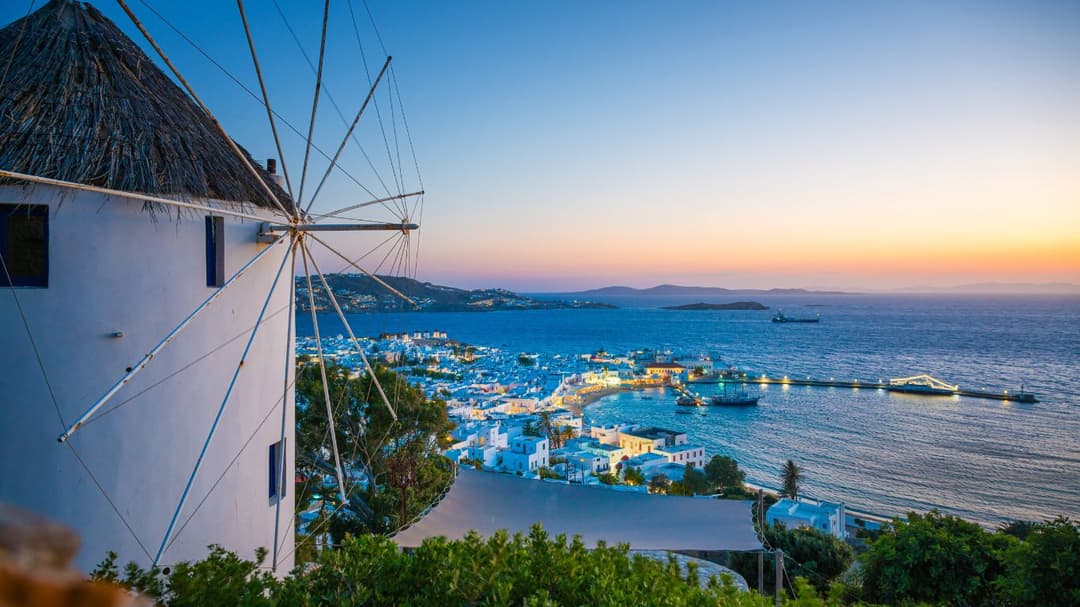
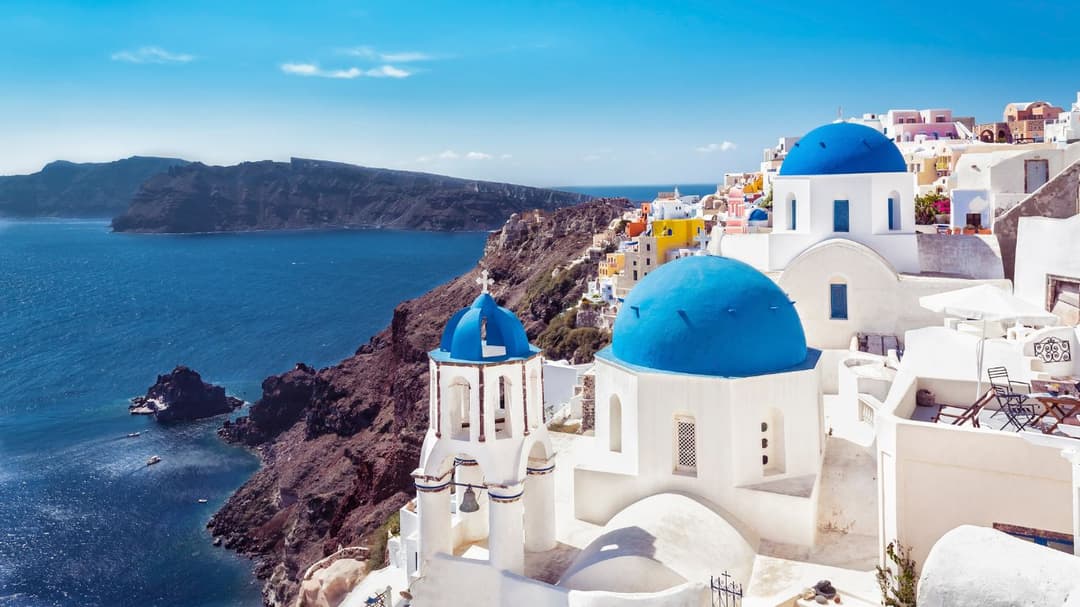
Mykonos and Santorini sit in a category of their own. A villa in Mykonos above €1 million can deliver around 8.5% gross rental yield from the high-season letting cycle. The Financial Times has highlighted Crete as one of the Mediterranean's most attractive markets for the combined lifestyle-plus-yield play, and Sotheby's International Realty's 2025 Greek desk notes Hydra and the Ionian Corfu market as the two underappreciated segments most likely to compound over the next decade.
The real costs and what holding actually involves
The purchase price is the start, not the whole picture. The transaction stack in Greece adds roughly 8% to 12% on top of the headline price, and the recurring annual cost depends on the asset class and the rental status. The table below sets out the canonical transaction costs.
| Expense Type | Details |
|---|---|
| Agent/Agency Fees | Typically 2-3% of the property price |
| Notary Fees | Approximately 0.5-1% of the property purchase price |
| Lawyer Fees | Approximately 1-2% of the property purchase price |
| Public Registration Costs | Typically 0.5-1% of the property purchase price |
| VAT | 24% (currently suspended on new builds, subject to government announcements) |
| Exchange Rate Fees | Depends on the financial institution and currency movement |
Christie's International Real Estate's Athens desk flags two recurring traps. Owners who try to self-manage island rentals from outside Greece routinely underprice the operational layer. And owners who skip the survey on heritage properties often discover undisclosed land-use restrictions or unresolved family-inheritance claims after the deed has signed.
For buyers managing a rental property from abroad, working with a professional Greek property manager pays back the fee many times over. The common pitfalls of buying property in Greece are well documented, and the benefits of working with a property manager are most pronounced on Greek seasonal rentals.
What this means for buyers
Greece is a good place to buy property in 2026, and the case is stronger for buyers who treat it as a long-hold residential play with optional rental component rather than a pure yield bet. The Golden Visa thresholds, the non-dom regime, and the post-crisis reform infrastructure form a structure that rewards the buyer who shows up with a clear lifestyle thesis and a five-to-ten-year horizon.
The buyer who shows up looking for short-term flip returns will find Greece's transaction costs and seasonal demand profile harder to align with that math.
The three questions we would ask before any Greek purchase: which zone is the property in for restricted-area purposes, who is the local lawyer with current experience in that municipality, and what does the realistic rental calendar actually look like outside July and August. Robb Report consistently ranks Santorini among the world's most sought-after real-estate destinations, and the Greek prime market has earned the seriousness with which buyers now treat it. We last reviewed this analysis in May 2026.


Savvas Agathangelou
Savvas Agathangelou co-founded The Luxury Playbook and has spent years reporting from the prime postcodes the magazine covers — Mayfair, Knightsbridge, the Athens Riviera, Dubai's Palm crescents, and the southern Mediterranean coastlines where the world's wealthy keep coming back. His background is in international hospitality, and that frame shapes how he writes about property: the developer's choices, the architect's signature, the agency's bench of named brokers, the building's service standard once the buyer moves in. He files developer spotlights, agency profiles, and the seasonal "Properties That Defined" listicles, and he hosts the magazine's founder-and-leadership interviews on the Voices side.