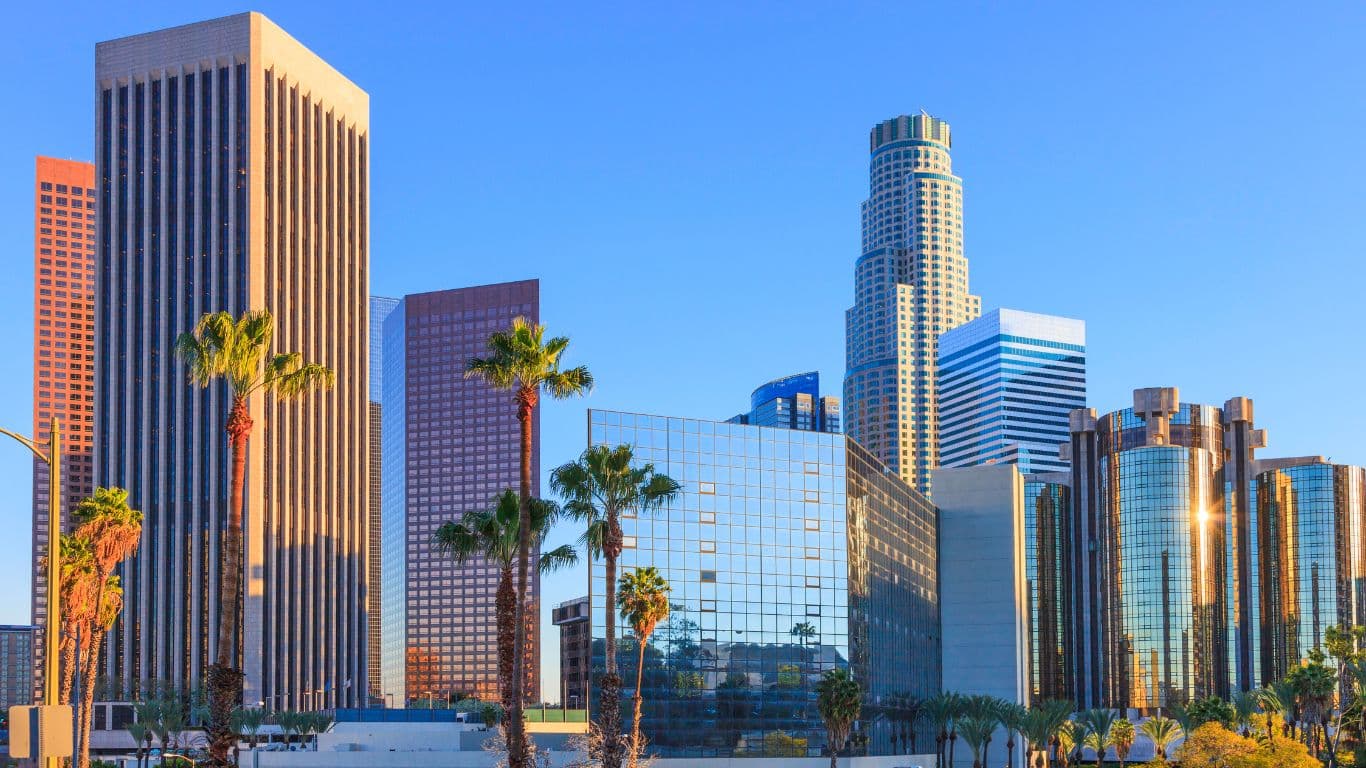
The question of whether Los Angeles still rewards a property purchase keeps landing in our inbox, and the honest reading from where we sit in 2026 is yes, with caveats most buyers underestimate. The city runs on three of the most resilient industries in the United States: entertainment, technology, and tourism, and those three keep prime LA housing demand at a level very few American markets match.
The median sale across the Los Angeles metro is now anchored around the high $800,000s, with LA County listings clearing the $1m line on a routine basis.
Knight Frank's most recent Wealth Report continues to list Los Angeles among the top US cities for ultra-high-net-worth deployment, and Mansion Global's 2025 California briefings put the city alongside New York and Miami as the third pillar of US prime property. The Financial Times has tracked how US coastal real estate continues to outperform national averages, and LA fits that pattern with unusual consistency. The headline figures matter, but the texture beneath them is what actually informs a purchase decision.
- Buying property in Los Angeles in 2026 requires explicit awareness of the Measure ULA mansion tax, which has materially reshaped transaction activity at the upper end of the market.
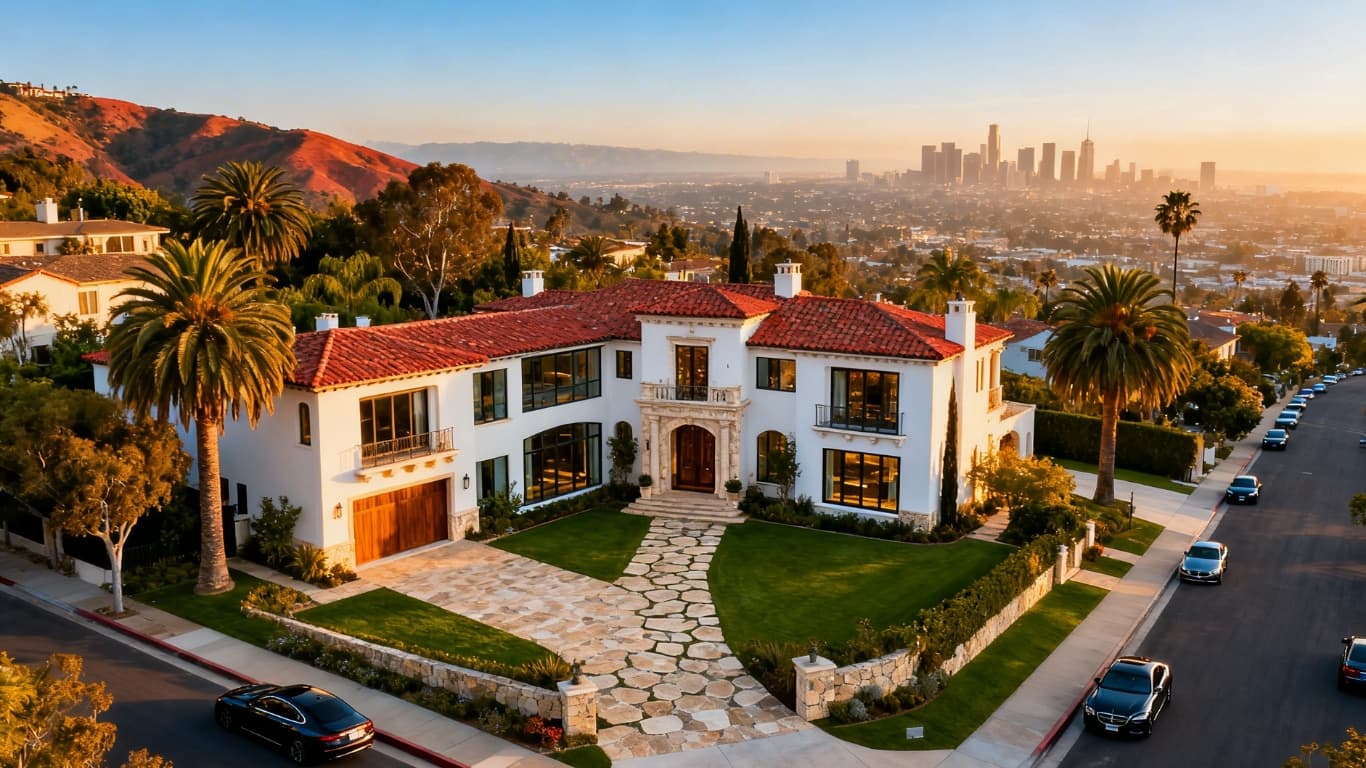
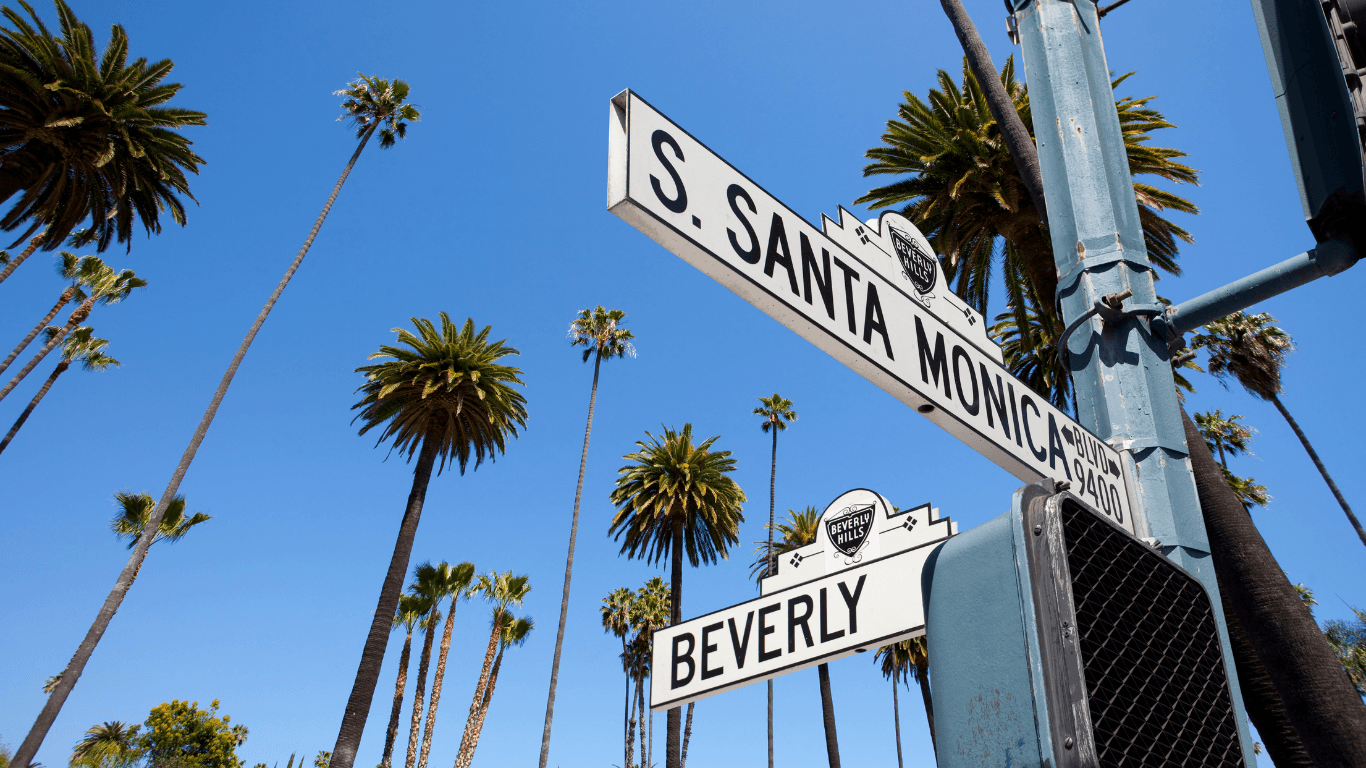
- We see prime hillside, Beverly Hills and Westside inventory retaining its position as the global luxury benchmark, with international and domestic demand continuing to support pricing.
- Inventory has improved through 2025 and 2026 as sellers have adjusted to the post-ULA reality, with months-of-supply moving toward balanced conditions in most price tiers.
- Wildfire risk, insurance availability and the broader climate diligence questions have moved from background to active considerations across the hillside neighbourhoods.
- Proposition 13 property tax structure continues to shape ownership outcomes, with significant differentials between long-tenured owners and recent purchasers across the basin.
- For most considered buyers we view Los Angeles as a market warranting structural awareness of the ULA tax, insurance landscape and Proposition 13 framework before any acquisition.
- Who is this for?
- Buyers and investors evaluating Los Angeles property, alongside relocation clients, family offices and the brokers, lawyers and tax advisers supporting LA-area transactions.
- What is happening?
- A practical read of whether buying property in Los Angeles is genuinely worthwhile, covering the Measure ULA mansion tax, insurance considerations and the prime market dynamics.
- When did this emerge?
- The article covers conditions through 2025 and 2026, with reference to the post-ULA transaction reset since 2023 and the latest insurance and wildfire developments.
- Where is this happening?
- The piece covers the Los Angeles metropolitan area, including the prime hillside, Beverly Hills, Westside and the broader basin submarket landscape.
- Why does it matter?
- Los Angeles property remains structurally attractive but with materially shifted transaction economics, which is why understanding the ULA and insurance reality matters before buying.
What the LA market actually looks like in 2026
The Los Angeles market in 2026 is firmly tilted toward sellers, with inventory hovering near 2. 6 months against the four-to-six month range that signals balance. Single-family sales prices through the metro have stayed in the $825,000-to-$840,000 band on a rolling twelve-month basis, with year-over-year growth running double digits.
The Southern California existing-home median sits closer to $880,000.
Sales velocity tells the same story. Homes in LA County close in around 39 days on average, and bidding above asking is the rule rather than the exception in the most-tracked neighborhoods. Inventory shortages are not a recent phenomenon either.
Between 1980 and 2010 the city's population grew 31. 3% while housing stock grew only 20. 6%, and slow-growth coastal policies have priced in an additional 3% to 5% premium across the region according to CBRE's California outlook. The proptech startups now working on California listings data are starting to surface this kind of structural mismatch in ways that change how serious buyers approach the search.
The structural gap is the story.
Where the money is going inside the city
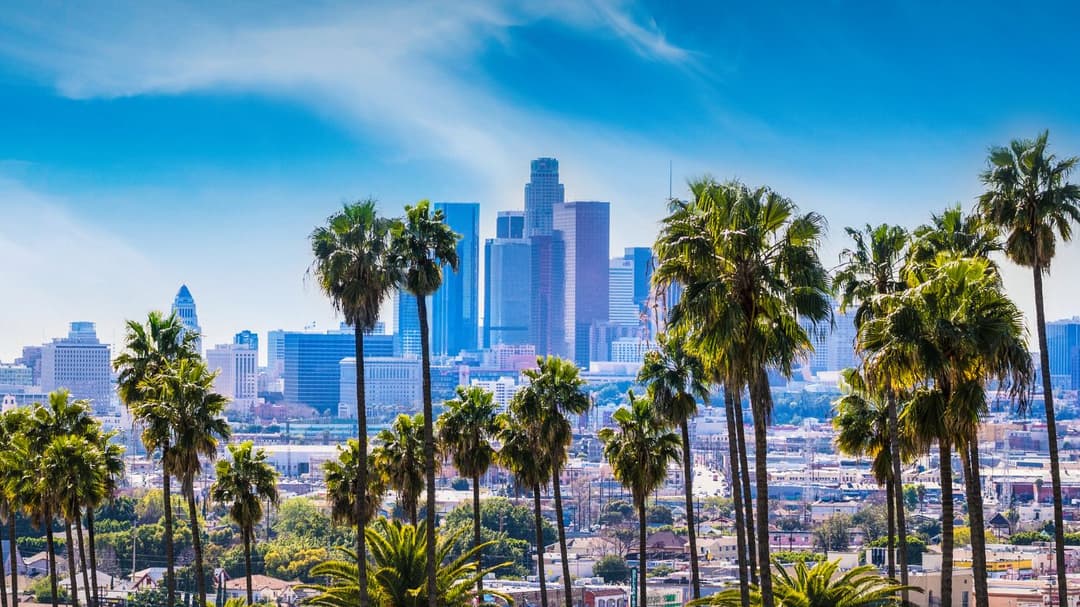
The prime conversation in Los Angeles narrows to about a dozen neighborhoods, and within those the differentiation matters more than the headline market data. Bel Air, Beverly Hills, Holmby Hills, and Hancock Park anchor the genuinely ultra-prime end, with single-family transactions routinely north of $20 million. Cushman & Wakefield's 2025 LA luxury brief flagged Beverly Hills and Bel Air as the two zip codes with the largest year-over-year appreciation at the $10m-plus tier.
Pacific Palisades and Brentwood occupy the family second tier, with median prices closer to $4 million and a clientele heavy on tech founders and entertainment principals. Manhattan Beach and Santa Monica carry the coastal premium and have absorbed a wave of returning Bay Area capital. The Hollywood Hills, with its rebuilt-modernism wave, continues to perform on resale even when broader Westside data softens.
Properties with four or more bedrooms now anchor around a $1. 9 million median across the metro, driven by the same shift toward space, privacy, and security that the JLL prime residential desk has tracked across every major US city. Customization at this tier is a baseline.
The chef kitchen, the spa-grade primary bath, the integrated home theater, and the security infrastructure are expectations, not upgrades.
The buyer pool and the competition
The competition in Los Angeles property has shifted shape in the last five years. Institutional investors moved aggressively into the California single-family-home market, accounting for roughly 29% of purchases in 2021 according to Colliers' California residential analysis, and that share has only partially softened since.
Individual buyers are now bidding against well-capitalized funds that can close without financing contingencies, and that single dynamic explains the velocity better than any rate or supply argument.
Foreign buyer interest has held up. Sotheby's International Realty's 2025 LA report flagged Canadian, British, and Hong Kong capital as the three largest non-US sources by transaction count, with a meaningful uptick in Gulf-based purchases through the second half of 2025. Cash transactions now run above 35% in the prime tiers per Engel & Völkers' Beverly Hills office.
What this means for individual purchasers is straightforward. Hesitation costs deals. The market punishes the buyer who needs an extra week to think, and it rewards the buyer who has financing, a clear neighborhood thesis, and the discipline to walk away when the math no longer makes sense.

Rentals, returns, and the realities of holding LA property
If rental income forms part of the thesis, Los Angeles delivers consistent demand and below-average vacancy compared to most US metros. Tenants compete for inventory in the same way buyers do, and the renter pool is unusually deep. But rent control is the variable that catches outside owners by surprise.
The City of LA's Rent Stabilization Ordinance covers most multi-family units built before October 1978, and statewide caps from AB 1482 apply more broadly. The compliance picture genuinely affects underwriting, and Mansion Global's California desk has flagged it as the single most common reason out-of-state purchasers misprice their LA holdings. Understanding the benefits of working with a property manager matters here more than in most cities, and we would not advise self-management on an LA rental without local counsel.
For the long-hold owner, the city's appreciation trajectory has been remarkably consistent. Sotheby's International Realty's twenty-year LA index puts single-family appreciation at roughly 7.2% compounded, ahead of the national figure but with materially more volatility through cycles. Reuters has noted that US housing affordability challenges are expected to persist well into the late 2020s, and Los Angeles sits at the sharp end of that problem on both the upside and the holding-cost side.
Where prices sit by tier, in numbers
The numbers tell the story clearly. The table below pulls the most recent reference figures from California Association of Realtors data, alongside Knight Frank and Mansion Global tracking across the LA tiers we cover most often.
| Region | Median Sales Price (Recent) | Year-over-Year |
|---|---|---|
| Los Angeles County | $998,000 | +7.3% |
| Southern California | $880,000 | +12.1% |
| Los Angeles Metro Area | $840,000 | +13.5% |
California's statewide median sits at $904,210, and LA County clears that figure with room to spare. The premium is structural, not cyclical. Robb Report's real estate coverage has consistently highlighted LA as a top market for ultra-high-end buyers, and the city's reputation among private bankers and family offices reflects that.
What this means for buyers
Buying property in Los Angeles in 2026 still makes sense, provided the purchase is anchored to a clear neighborhood thesis, a long enough holding horizon to absorb cycle risk, and underwriting that respects local rent control where rental income is part of the case. The mistakes we see most often are buyers stretching into the wrong neighborhood for the budget, underestimating Mello-Roos and Prop 13 carrying-cost dynamics, and ignoring institutional bid pressure.
Buyers who get the structure right find LA among the strongest US prime markets to hold through a decade.
The advisors who handle the most LA transactions ask three questions before recommending a purchase. Who else has bought in this block in the last twelve months. What is the resale velocity at this price point in this micro-market.
And what is the realistic operating cost over a full holding cycle. If equity exposure to US property markets is what the conversation calls for, the answer may not be a single LA home at all. We last reviewed this analysis in May 2026.


Savvas Agathangelou
Savvas Agathangelou co-founded The Luxury Playbook and has spent years reporting from the prime postcodes the magazine covers — Mayfair, Knightsbridge, the Athens Riviera, Dubai's Palm crescents, and the southern Mediterranean coastlines where the world's wealthy keep coming back. His background is in international hospitality, and that frame shapes how he writes about property: the developer's choices, the architect's signature, the agency's bench of named brokers, the building's service standard once the buyer moves in. He files developer spotlights, agency profiles, and the seasonal "Properties That Defined" listicles, and he hosts the magazine's founder-and-leadership interviews on the Voices side.