Navigating the Milwaukee housing market takes more than a quick scan of listings. You need a clear read on current trends, the economic forces at play, and where things are actually headed.

Milwaukee punches above its weight as one of the most dynamic real estate markets in the Midwest. Whether you’re buying, selling, or looking to deploy capital, this city has both real opportunity and real complexity waiting for you.

In this deep-dive analysis, we walk through the key market trends, crunch the numbers, and lay out data-driven forecasts for 2024 and 2026. If you’re planning to buy, sell, or invest, this is the guide that gives you the edge you need to move with confidence in Milwaukee’s fast-moving housing market.

Article Summary

Milwaukee’s housing market stays competitive, with an average home price around $219,000 as of August 2024, and homes moving fast due to limited supply. A strong local economy, population growth, and new construction headaches are all shaping what you see on the ground. Prices are on track to rise 4 to 5% annually, potentially reaching $270,000 by 2026, with tight inventory and interest rates settling around 6 to 6.5%.

The rental market is growing too, with rents climbing 2 to 4% per year thanks to high demand and a shortage of affordable options. Neighborhoods like Downtown, Bay View, and Wauwatosa each tell their own story, but across the board, economic uncertainty and affordability pressures are the risks you’ll need to watch.

Milwaukee’s Housing Market Overview

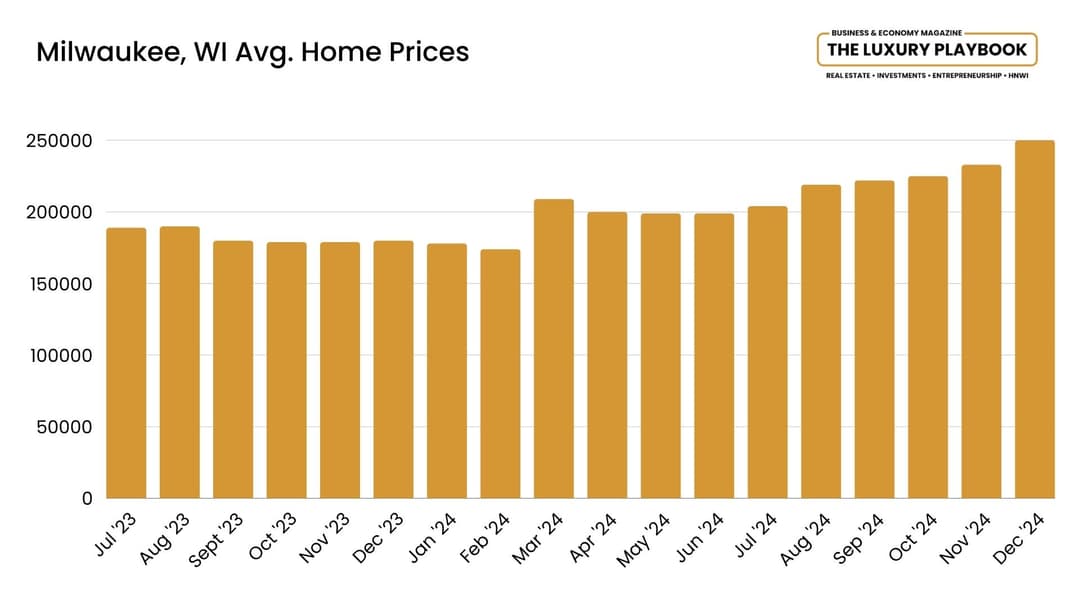
Milwaukee’s rich history and cultural energy keep drawing people in, and that steady flow of new residents fuels consistent housing demand, making it one of the more compelling places to invest in real estate across the US. Supply hasn’t always kept up, though, which is why you see price swings and fierce buyer competition. As of December 2024, the market shows robust growth, with home prices climbing and buyer interest staying strong.

  • Median Home Sale Price: Approximately $250,092, reflecting an 8.7% increase from December 2023.

  • Median Price per Square Foot: Around $180, indicating a rise in property valuations.

  • Median Listing Price: Approximately $215,000, trending up 19.7% year-over-year.

Consistent appreciation in home values, paired with relatively swift sales, tells you Milwaukee has genuine appeal for both buyers and investors. Rising median listing prices signal strong seller confidence, while the median days on market confirm that buyers are still very much in the game.

Milwaukee Avg. Home Prices

Homes in Milwaukee typically sell for about 99% of their listing price. That’s a balanced market where neither side holds a clear upper hand.

Inventory Levels and Days on Market

Inventory has been one of the defining stories of Milwaukee’s housing market in recent years. As of December 2024, both inventory levels and the time properties spend on the market have shifted in ways worth paying close attention to.

Median Days on Market currently sits at 44 days, up slightly from 41 days in December 2023. That marginal uptick points to a modest slowdown in market velocity.

The slight rise in days on market suggests the market is nudging toward better balance, giving you a little more breathing room as a buyer. But the jump in median home sale prices makes one thing clear: demand is still running strong, likely pushed by tight inventory and persistent buyer interest.

Milwaukee, WI Days On Market

Compare that to the 60 to 70 days seen just a few years ago, and the picture is striking. Homes are moving much faster now, which reflects a clear demand-supply imbalance where buyers are consistently outpacing available stock.

Luxurious villa with a pool

Find Exclusive Properties

20+ Qualified Consultants ready to help

Express Interest

Interest Rates and Affordability

Interest rates shape everything in a housing market, and Milwaukee is no different. Through 2023, mortgage rates hovered in the 6 to 7% range. That’s higher than the historic lows of the previous decade, but still workable for many buyers. Demand held up, though affordability quietly became a bigger problem. With Milwaukee’s median household income sitting around $50,000, a meaningful share of households are stretching their budgets to cover housing costs at current rates.

Milwaukee’s Rental Market Analysis

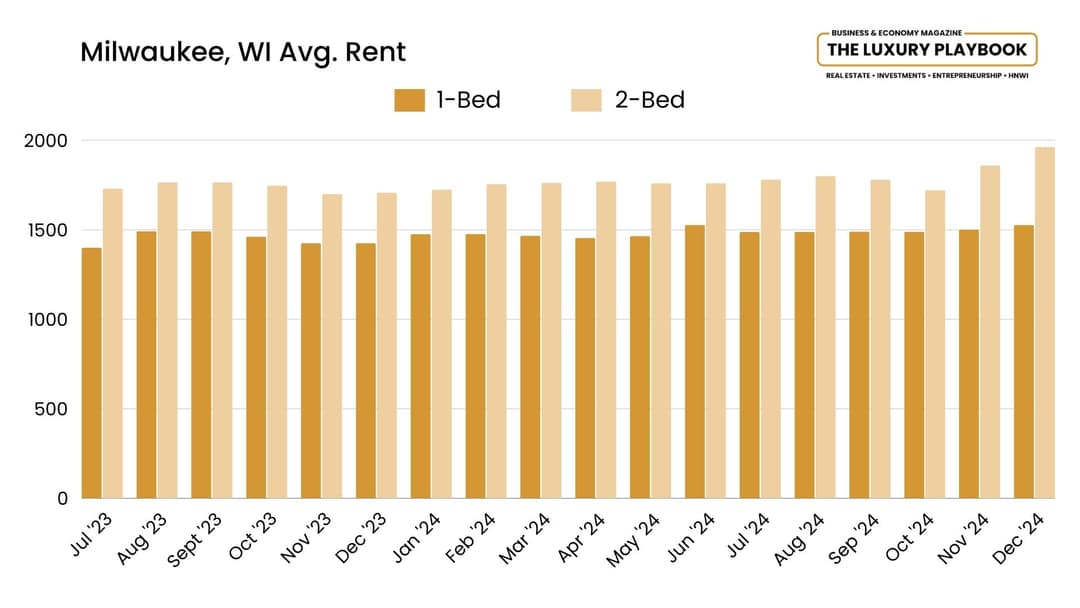
Milwaukee’s rental market has its own momentum, with prices climbing steadily over the past few years. As of December 2024, here’s what average monthly rents look like across different apartment sizes in the city.

  • Studio Apartments: Approximately $958, reflecting a 2.4% increase over the past year.

  • One-Bedroom Apartments: Around $1,547, also indicating a 2.4% increase year-over-year.

  • Two-Bedroom Apartments: Approximately $1,962, with a 2.4% increase compared to the previous year.

  • Three-Bedroom Apartments: About $2,362, marking a 2.4% rise year-over-year.

Across the board, Milwaukee’s rental market looks stable, with moderate annual increases no matter the apartment size.

Keep in mind that rental prices shift a lot by neighborhood. Historic Third Ward, for example, runs around $2,090 per month on average, while Harambee sits at the other end of the spectrum at roughly $725 per month, making it one of the more affordable pockets in the city.

Milwaukee, WI Avg. Rent

These rising prices reflect a market driven by genuine rental demand, compounded by climbing costs for property maintenance and taxes that landlords are passing along.

Factors Influencing the Milwaukee Housing Market

If you want to predict where Milwaukee’s housing market goes next, you need to understand what’s actually moving it. Several forces will continue shaping the market through 2024 and 2026.

Economic Conditions

Milwaukee’s local economy is a real driver of its housing market. The city’s unemployment rate hovered around 4% in mid-2023, pointing to a healthy job environment. Healthcare, education, and manufacturing have been the pillars of that growth. The healthcare sector alone, anchored by institutions like Aurora Health Care and Froedtert Health, employs thousands and keeps pulling skilled workers into the metro area.

But Milwaukee also wrestles with economic disparities that cut into housing demand and affordability. Income inequality is a real pressure point. The median household income sits around $50,000, well below the national median. That gap creates a split market where affluent neighborhoods see soaring prices while lower-income areas face serious affordability walls. Ongoing efforts to diversify the economy through tech investment and infrastructure spending could help close that gap, but execution matters enormously.

Inflation and interest rate swings add another layer of complexity. With mortgage rates expected to hold around 6 to 6.5% through 2026, borrowing costs will weigh on buyers, especially first-timers. That said, the local economy’s underlying strength and steady job creation should keep housing demand stable, particularly in sectors where wages are actually growing. Global uncertainty is also nudging some buyers to pause, which is worth factoring into your timing.

Milwaukee harbor with beautiful building and ships

Population Growth and Demographics

Milwaukee’s population dynamics are quietly reshaping the housing market. The city’s population sits at roughly 577,000 and has seen modest growth, mostly driven by younger professionals and families moving in. That demographic shift matters because it directly fuels demand for single-family homes and modern apartments loaded with amenities.

Growth in Milwaukee’s immigrant population has also added cultural richness to many neighborhoods while creating demand for a wider variety of housing types. Bay View and Riverwest have become magnets for younger, more diverse residents, pushing property values up and sparking new residential development in the process.

The aging baby boomer cohort is another trend reshaping demand. As more boomers hit retirement age, the appetite for downsized, low-maintenance options like condos and townhouses grows. That shift looks set to push multifamily housing prices higher and keep this segment in strong demand for years to come.

New Construction and Development

New construction in Milwaukee has been both a response to market demand and a force shaping it. In recent years, the city has seen major residential projects, especially in and around downtown, with high-rise luxury condos and mixed-use developments meeting the appetite for urban living.

But the pace of new builds hasn’t kept up with what buyers actually need, especially in the single-family segment. As of 2024, Milwaukee’s housing inventory covers only about three months of demand, well short of the six months that signals a balanced market. Rising construction costs driven by supply chain disruptions, higher material prices, and labor shortages are the main culprits. Lumber costs, which spiked during the pandemic, still haven’t fully come back down, squeezing builder margins across the board.

Regulatory headaches add to the pressure. Zoning laws in many areas restrict density, slowing the addition of much-needed housing units. In response, developers are increasingly pivoting to smaller infill projects that can sidestep some of those hurdles while still putting units into a supply-starved market.

The shortage of affordable housing development is another gap that’s hard to ignore. Initiatives to incentivize affordable unit construction exist, but progress has been slow. Most developers gravitate toward high-end projects where margins are better, leaving a meaningful void for low-to-middle-income households.

Milwaukee city center with large buildings

Government Policies and Incentives

Government policy at both the state and local level will keep shaping Milwaukee’s housing market through 2026. Recent local initiatives have aimed at expanding affordable housing, supporting first-time buyers, and cutting red tape in the permitting process.

Milwaukee’s inclusionary zoning policies, which require developers to add affordable units to new projects, have had some success. But they’ve also drawn pushback from developers who argue the requirements make projects harder to pencil out financially. The city has countered with tax incentives and subsidies, though results have been uneven.

Property taxes are another major pressure point. Milwaukee carries one of the highest property tax rates in Wisconsin, which discourages some buyers and squeezes homeowners on fixed incomes. Debate about reform is ongoing, with proposals ranging from income-based tax structures to increased state funding to ease the property tax burden.

At the state level, programs from the Wisconsin Housing and Economic Development Authority (WHEDA) offer down payment assistance and favorable loan terms for first-time buyers. Those programs have helped keep demand alive even as home prices and interest rates have climbed.

Milwaukee Housing Market Forecast (2024 to 2026)

Now that you have the full picture of where the market stands and what’s driving it, let’s look ahead. Forecasting is never an exact science, but with the right data and a clear read on the trends, you can make smart, well-grounded projections.

Home Prices Forecast

Milwaukee home prices look set to keep climbing steadily over the next two years. The median home price sat around $219,000 in mid-2024. By the end of 2026, expect that number to push toward $260,000 to $270,000, reflecting annual growth of roughly 4 to 5%. That’s a far cry from the explosive double-digit gains some markets saw in the early 2020s when post-pandemic demand was running hot, but it’s steady, durable appreciation worth paying attention to.

A few key forces are fueling that price growth. Persistent demand from younger professionals and families keeps putting pressure on available stock. Inventory shortfalls aren’t going away anytime soon. And inflationary pressure on construction costs, driven by labor, materials, and supply chain disruptions, continues to push prices upward from the supply side. Bloomberg’s housing outlook reflects similar dynamics playing out across Midwest markets.

Not every property or location will see the same trajectory. Single-family homes in sought-after spots like Bay View and Wauwatosa may outpace the city average, driven by strong family and first-time buyer demand. Areas further from downtown or still in early-stage revitalization may see more modest gains.

Milwaukee map showcasing different areas of the city

Inventory and New Construction

Inventory in Milwaukee should see slight improvement, though it will stay tight by historical standards. By the end of 2026, months of supply could edge up to around 3.5 months from the current 3 months. Still well below the 6-month level that signals a balanced market, which means Milwaukee stays a seller-friendly environment for the foreseeable future.

New construction will be central to how inventory evolves. Building permit activity has been ticking up slowly but steadily, especially in suburban areas where land is more accessible. Milwaukee issued roughly 1,500 residential building permits in 2023, a slight increase from the year prior. That momentum is expected to carry into 2024 and 2026, with suburbs like Brookfield and Waukesha leading the way in new residential activity.

Even so, new construction won’t fully close the gap. High land costs, regulatory friction, and labor shortages will keep a lid on how quickly new homes come to market. The result is that existing homes will likely move in 30 to 35 days on average, as buyers stay aggressive and competition for available stock stays high.

Interest Rates and Affordability

Interest rates will be a defining factor in Milwaukee’s housing market over the next two years. After rising sharply from historic lows in 2022 and early 2023 to around 6 to 7%, the market has largely adjusted. For 2024 and 2026, mortgage rates are expected to stabilize in the 6 to 6.5% range, though short-term moves tied to inflation data or Federal Reserve policy decisions could shift that picture.

That stabilization offers some breathing room. But affordability is still a real wall for many buyers. With Milwaukee’s median household income around $50,000, mortgage payments, property taxes, and insurance costs can stretch budgets to the breaking point. Many buyers may shift their sights to smaller homes or condos as a more realistic first step into ownership.

Programs like those offered by WHEDA remain a lifeline for first-time buyers, providing down payment assistance and favorable loan terms that help make ownership achievable for more people. If you’re entering the market for the first time, these programs deserve a close look.

Milwaukee’s Rental Market Forecast

Milwaukee’s rental market is on a steady growth path through 2026, driven by strong demand and the rising cost of homeownership pushing more people to rent. In 2024, a one-bedroom apartment runs around $1,500 per month, while a two-bedroom sits near $1,900. Expect those figures to climb 2 to 4% annually, reaching roughly $1,570 for a one-bedroom and $1,950 for a two-bedroom by the end of 2026.

Higher home prices and mortgage rates are nudging would-be buyers to stay on the sidelines longer. Younger residents especially are choosing to rent, valuing the flexibility and proximity to downtown that rental living offers.

Supply isn’t keeping up either. New rental developments, particularly downtown, skew heavily toward the luxury end of the market, leaving a gap in affordable options. That imbalance keeps upward pressure on rents across the board.

Inflation is also pushing landlords’ operating costs higher, covering maintenance, utilities, and insurance. Those increases are getting passed through to tenants in the form of higher rents.

If you’re investing in Milwaukee’s rental market, you can expect solid, steady returns, particularly in neighborhoods seeing genuine growth and revitalization. But prepare for a tighter regulatory environment as local governments weigh rent control measures and enhanced tenant protections in response to affordability pressure. Understanding whether buying to rent actually makes sense for your situation is the right starting point.

Milwaukee city in the night with tall buildings

Neighborhood-Specific Analysis

Milwaukee is really a collection of distinct neighborhoods, each with its own character and its own market story. Here’s a closer look at the key areas and what you can realistically expect through 2024 and 2026.

Downtown Milwaukee

Downtown Milwaukee has attracted serious development in recent years, with new high-rise apartments and condos drawing young professionals and empty nesters. That momentum isn’t slowing. Demand for luxury apartments and condos in the urban core will stay strong, and prices and rents downtown are expected to outpace the city average, driven by limited space for new development and a persistent appetite for city living.

Bay View

Bay View is one of Milwaukee’s hottest neighborhoods, built around a vibrant arts scene and a diverse mix of restaurants and shops. It’s pulled in younger buyers and families at a fast clip, pushing both home prices and rents higher. Expect that energy to hold. Home prices in Bay View could rise 5 to 7% annually through 2026, making it one of the city’s top-performing pockets.

Wauwatosa

Wauwatosa sits just west of Milwaukee and blends suburban calm with easy access to the city. Families love it for the schools and parks. The housing market there is expected to stay competitive, with single-family home demand holding firm and prices likely rising 4 to 6% annually through 2026.

East Side

The East Side offers a different draw, with historic homes and proximity to Lake Michigan attracting students, professionals, and retirees alike. Price growth here is expected to be more measured, around 3 to 4% annually, but the neighborhood offers a solid mix of investment angles, from student rentals to high-end lakefront properties.

NeighborhoodMedian Listing Home PriceListing $/SqFt
Bay View$329.9K$240
Lower East Side$373.5K$277
Riverwest$275K$217
Old North Milwaukee$124.9K$108
Jackson Park$245K$193
Silver Spring$114.9K$170
Franklin Heights$93K$89
Harambee$159.9K$97
Uptown$155K$111
Sherman Park$91
Tippecanoe$274.9K$224
Juneau Town$577.4K$394
Historic Third Ward$559.5K$435
St. Joseph’s$169.9K$107
Grasslyn Manor$194.9K$130
Washington Heights$269.5K$171
Morgandale$250K$183
Borchert Field$84.5K$62
Lincoln Creek$197K$127
Roosevelt Grove$149.8K$90
Neighborhood Analysis of Milwaukee

Challenges and Risks of Milwaukee’s Housing Market

No honest market analysis skips the risks. Milwaukee’s housing market has real momentum, but it also carries pitfalls you need to factor into any decision you make.

  • Economic Uncertainty: Broader economic conditions like inflation, job market fluctuations, and possible economic downturns could impact the Milwaukee housing market.

    A significant economic slowdown may decrease demand, especially for higher-priced homes, and slow down the rate of price increases.

  • Affordability Crisis: Affordability remains a major concern, particularly for first-time buyers and lower-income households. If home prices continue to rise while incomes stay stagnant, Milwaukee could face an affordability crisis.

    This scenario might increase demand for rental properties and potentially cool down the homebuying market.

  • Supply Chain Issues and Construction Costs: Ongoing supply chain disruptions and rising construction costs continue to affect new housing development. These issues, if they persist, could limit the number of new homes entering the market.

    This would worsen the inventory shortage and drive up prices further.

  • Policy Changes: Changes in government policies, such as new taxes, zoning laws, or regulations, could significantly impact the housing market.

    While some policies aim to increase affordability or encourage new construction, they could also have unintended consequences that disrupt market dynamics.

Is It Worth Buying A Property In Milwaukee?

The short answer is yes. Milwaukee offers a compelling entry point for buyers and investors looking for affordable properties with genuine upside.

Milwaukee’s housing market is set up for continued growth through 2024 and 2026, with rising prices, sustained demand, and ongoing inventory pressure. If you’re buying, come prepared for competition. Budget carefully and be ready to move decisively when the right property shows up. If you’re selling, demand is on your side, but pricing it right from the start is still critical, especially with interest rates where they are. The Wall Street Journal’s real estate coverage tracks similar buyer-seller dynamics playing out in comparable Midwest cities.

For investors, Milwaukee offers opportunity on both the rental and ownership side. But success here requires disciplined market research and a sharp focus on neighborhoods with real growth potential. Staying current on local trends and economic conditions isn’t optional. It’s the whole game. You might also want to look at how real estate investment groups structure their approach to markets like this one.

Milwaukee’s housing market mixes real challenges with real opportunity. With the right approach, 2024 and 2026 can deliver genuine wins for buyers, sellers, and investors. Whether you’re chasing your first home, looking to offload a property at the right moment, or building a portfolio in the Milwaukee metro, understanding how this market actually works is what separates a smart move from a costly one. And for broader context on where real estate markets are heading nationally, Forbes Real Estate offers a useful wider lens.

Other Market Forecasts and Overviews

Japanese Giants Spend Billions To Take Over The US Homebuilding Industry
Japanese Giants Spend Billions To Take Over The US Homebuilding IndustrySpotlight

Japanese Giants Spend Billions To Take Over The US Homebuilding Industry

America built roughly 1.4 million new homes in 2023, yet the country still faces a…
Is The US Housing Market Crashing Or Simply Correcting In 2026?

Is The US Housing Market Crashing Or Simply Correcting In 2026?

US home prices shot up more than 47 percent between 2020 and 2023, creating one…
Global Tensions In Iran in 2026 Are Forcing U.S. Home Buyers To Delay Purchases

Global Tensions In Iran in 2026 Are Forcing U.S. Home Buyers To Delay Purchases

Every major geopolitical crisis in modern history has left fingerprints on the American housing market,…