The most coveted luxury watch brands of 2026 don't lend themselves to a tidy ranking. The Swiss trinity (Patek Philippe, Audemars Piguet, Vacheron Constantin) sits at the cultural top of the conversation. Rolex anchors the broadest collector base by some distance.
- Rolex, Patek Philippe, and Audemars Piguet remain the three brands collectors most reliably covet, with waitlist depth and secondary premiums confirming the hierarchy.
- Vacheron Constantin and A. Lange & Söhne have closed the perception gap, with Overseas and Odysseus references drawing genuine collector competition.
- Independent houses including F.P. Journe, Greubel Forsey, and De Bethune now command waitlist demand that approaches and sometimes exceeds the established Swiss names.
- We see Cartier as the year's strongest crossover brand, with Crash, Cintrée, and Pebble references commanding auction prices that surprise even veteran collectors.
- Richard Mille's waitlist dynamics have softened relative to peak years, but the brand still anchors a serious slice of the high-end sports complication market.
- Tudor has entered the most-coveted conversation through Black Bay and Pelagos performance, with Master Chronometer references reshaping perception across price tiers.
- Who is this for?
- Active collectors planning acquisitions, dealers tracking brand-level demand, and investors monitoring the relative strength of luxury watch houses.
- What is happening?
- A reasoned ranking of the most-coveted luxury watch brands of 2026, anchored on waitlist depth, secondary-market premiums, and auction-room visibility.
- When did this emerge?
- The current ordering has crystallised through the last twelve months, building on post-2022 market dynamics and the rise of independent houses.
- Where is this happening?
- Geneva, New York, Hong Kong, and London auction rooms set the trend lines, with global authorised dealer networks confirming brand-level momentum.
- Why does it matter?
- Brand-level demand shapes acquisition strategy, and the 2026 hierarchy reveals where collector attention sits and where genuine opportunities still hide.
The German makers (Lange, Glashütte Original) have been steadily building serious collector recognition. The independent watchmakers (F.P. Journe, Roger Smith, Philippe Dufour, MB&F, Voutilainen) sit in their own register that growing numbers of collectors are reading as the genuinely interesting frontier.
What follows is the working list of the brands the auction houses, the specialist dealers and the most considered collectors are giving the most attention to. These are the names that consistently turn up at Phillips' Geneva sessions, in Christie's catalogues, and in the working inventories of the credible specialist dealers.
Rolex: the structural anchor of modern collecting
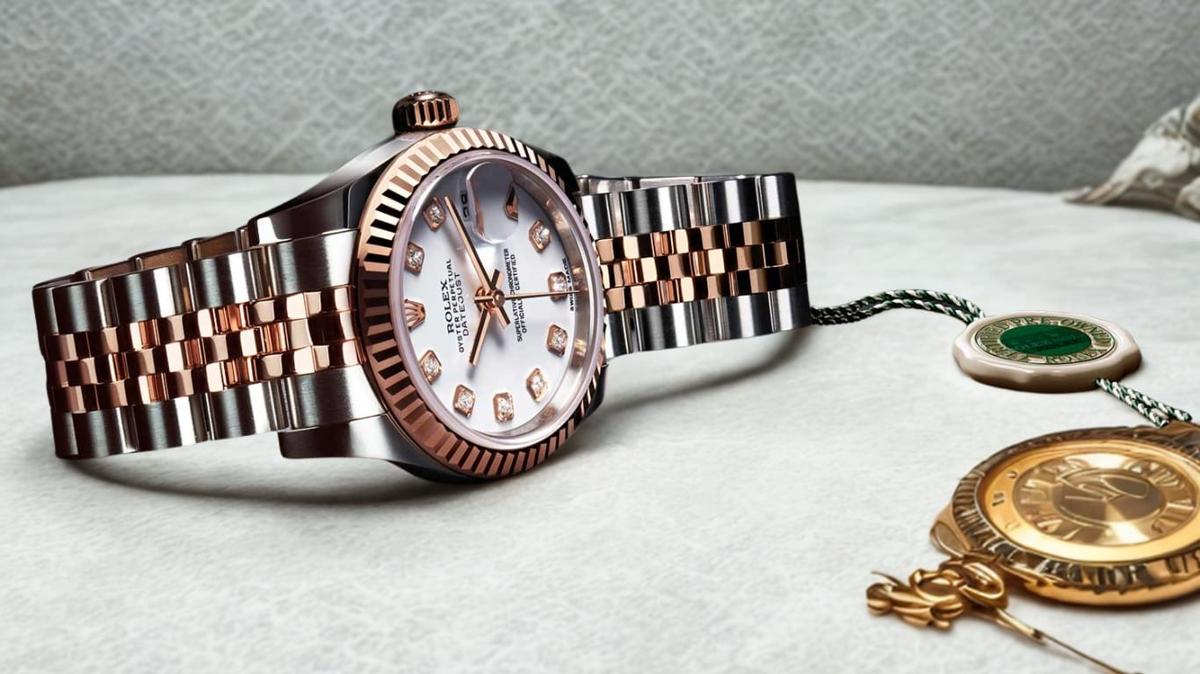
Rolex remains the structural anchor of modern watch collecting. The annual production cap (around one million watches globally), the production discipline across the catalogue, and the depth of secondary-market trading combine to make Rolex the brand most active collectors transact in most often.
The Submariner, GMT-Master II, Daytona and Datejust references make up the bulk of pre-owned watch transactions. The brand's allocation discipline at the boutique level keeps secondary-market premiums structurally elevated for the most-sought references.
That allocation discipline is what creates the structural premium on the Daytona, the steel Submariner and the steel GMT. It's also what makes Rolex the deepest-trading secondary market in modern collecting, which is part of why the brand remains the cornerstone of so many serious collections.
Patek Philippe: the prestige top of the conversation
Patek sits at the prestige top. The annual production figure of roughly 68,000 watches is the structural reason. The discontinued Nautilus reference 5711 is the headline example, trading between roughly €100,000 and €130,000 against an original €30,000 retail.
The Calatrava remains the brand's defining classical dress reference. The Aquanaut sits in the contemporary sport-luxury register. The Complications and Grand Complications lines anchor the upper end.
Phillips and Christie's both regularly clear vintage Patek complications at multiples of original retail. The 2019 Grandmaster Chime sale at $31.9 million remains the benchmark for what serious Patek can do at the upper auction tier.
Audemars Piguet: the architectural sport-luxury reference
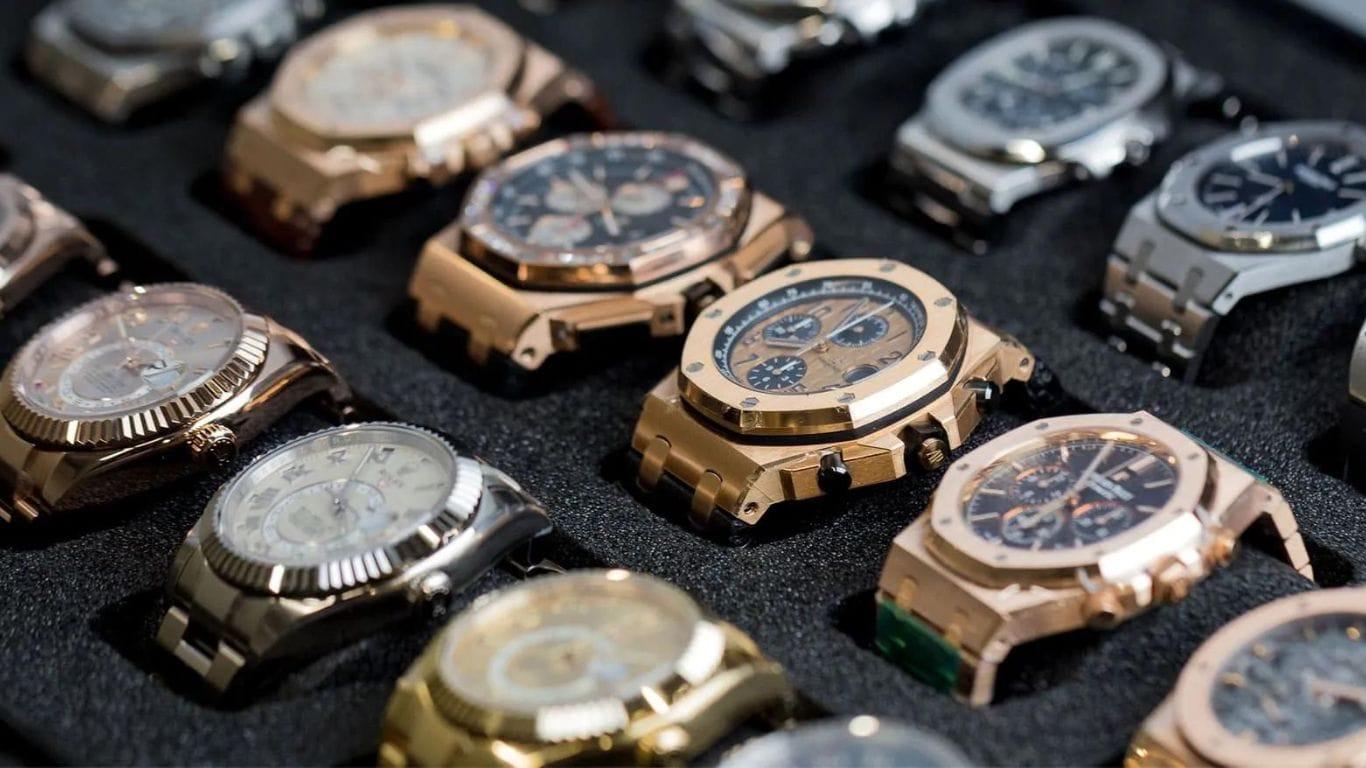
AP's modern identity is built around the Royal Oak, the architectural sport-luxury reference Gérald Genta designed in 1972 that has defined the integrated-bracelet category since. The discontinued steel "Jumbo" reference 16202 trades between €70,000 and €85,000 against a roughly €35,000 retail.
The broader Royal Oak catalogue (Royal Oak Offshore, Royal Oak Concept) extends the design language across registers. The Code 11.59 line, AP's contemporary classical reference launched in 2019, is the brand's effort to anchor a second design language.
Collector reception of Code 11.59 has been measured but is steadily building, particularly among collectors who already own a Royal Oak and want a second register from the same manufacture.
Vacheron Constantin: the trinity's third pillar
Vacheron is the trinity's third pillar, and increasingly read by collectors as the most considered choice within the trinity for buyers who don't want the cultural noise of Patek or AP. The Patrimony for classical dress, the Overseas for sport-luxury, the Traditionnelle for the most considered classical work.
The Métiers d'Art for dial-craft, Les Cabinotiers for bespoke pieces. The catalogue runs from €10,370 (FiftySix) through bespoke commissions in the multi-hundred-thousand range.
That breadth, combined with the brand's 270-year continuous operation, is part of why Vacheron has been drawing increasing attention from collectors moving up from independent watchmaking and from collectors already at the trinity tier looking for their third significant piece.
A. Lange & Söhne: the German classical standard
Lange has spent the past three decades rebuilding from the post-reunification revival of the brand into one of the most respected classical watchmakers in the world. The Datograph (the manual-wind chronograph), the Lange 1 (the asymmetric-dial signature reference), the Zeitwerk (with the jumping-numerals display), and the Saxonia line all anchor the modern catalogue.
Lange movements are widely considered to set the standard for traditional Swiss-style finishing executed at scale. Collector recognition has been building steadily across the past decade, and Phillips' German watchmaking auctions have consistently produced strong results for vintage and modern Lange.
The independents at the contemporary frontier
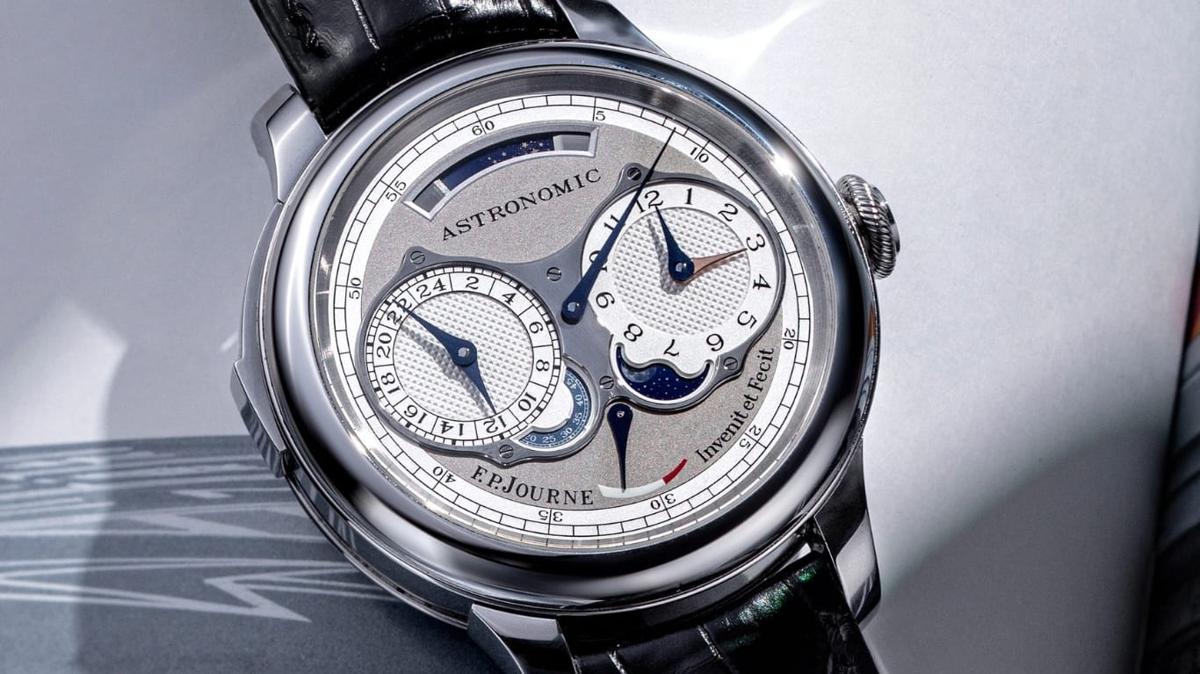
F.P. Journe's annual production of fewer than 1,000 watches keeps the secondary market for the Chronomètre Bleu and Souveraine references tight. The Chronomètre Bleu has moved from sub-€25,000 in the early 2010s to roughly €70,000 to €80,000 today.
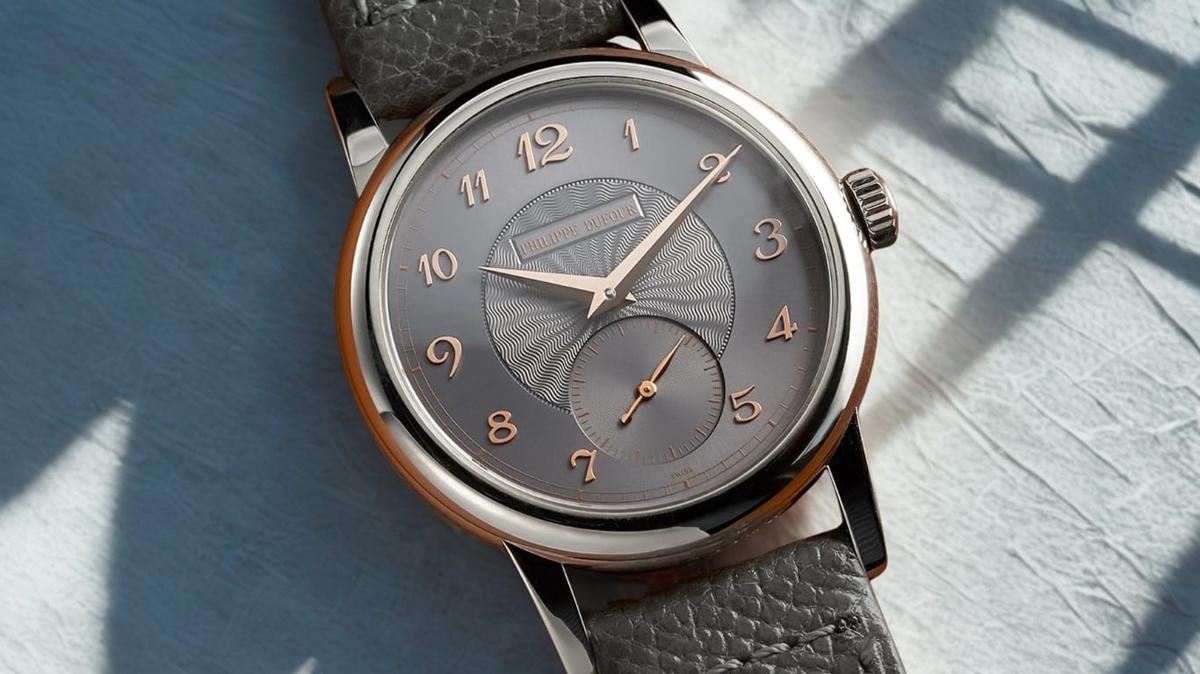
Roger Smith, operating from the Isle of Man with annual production in single digits, produces the most considered hand-finished British watchmaking on the contemporary market. Philippe Dufour, working in the Vallée de Joux, is the watchmaker the trinity's master watchmakers themselves cite as the reference standard for hand-finishing.
MB&F and Voutilainen
MB&F operates in the avant-garde register with horological "machines" rather than conventional watches. The Horological Machine series and the Legacy Machine line both anchor the modern catalogue, and the brand has built a collector following that sits distinct from the broader Swiss watch field.
Voutilainen produces some of the most considered Finnish dress watchmaking on the market. The brand's annual production is small and the waiting list is long, but the finishing quality is genuinely at the top of contemporary watchmaking.
Cartier and Jaeger-LeCoultre in the considered classical tier
Cartier sits in its own register as the dressy-but-with-genuine-watchmaking-pedigree maker. The Tank, in its various iterations from the original Tank Louis Cartier to the Tank Américaine, Tank Française and Tank Cintrée, is the brand's defining reference.
The Santos and Pasha lines extend the catalogue. Cartier vintage references, particularly the historical Tank Cintrée and the rare complicated pieces, regularly clear strong numbers at the major auction houses.
Jaeger-LeCoultre anchors the considered classical Swiss tier between Cartier and the trinity. The Reverso (designed in 1931 with the flippable case for polo players) is the brand's signature. The Master Control line provides the broader classical catalogue, and the Polaris is JLC's contemporary sport-luxury answer.
The brand also produces movements for several other Swiss makers, which gives it unusual technical depth at its price point.
Omega and Tudor below the trinity
Omega and Tudor anchor the Swiss collector conversation below the trinity. Omega's Master Chronometer programme and the historical weight of the Speedmaster Moonwatch and the Bond Seamaster make it the most credible technically-credentialed brand at its price point.
Tudor's METAS-certified upper end (Black Bay 43 MC, Pelagos Ultra) and the Snowflake-Submariner vintage heritage make it the most credible Swiss tool watchmaker below $7,000 retail. Both brands have been drawing increasing attention from collectors moving up the field, and from trinity-tier collectors looking to add accessible references to their working collections.
Richard Mille in its own register
Richard Mille operates in its own register entirely. Small annual production, technical materials (carbon, titanium, sapphire cases), and pricing that sits in the upper-six-figure range for most current production.
The RM 011 and the various tonneau-cased references anchor the modern catalogue. The brand's collector base is concentrated and highly engaged but distinctively separate from the broader Swiss watch collecting world.
What the most coveted brands actually share
The pattern across these brands is consistency over decades. The brands that hold collector attention over time are the ones that maintain production discipline, finishing quality and design coherence across generations rather than chasing momentary collector trends.
The 2026 collector conversation is, on the evidence of how Phillips, Christie's, Sotheby's and the major specialist dealers are operating, broader than it was three years ago. Independents, Lange, Vacheron and the considered-classical Swiss tier are all drawing more page space than they did at the 2022 trinity-only peak.
What this means for collectors next
So far, on the evidence, the broadening looks structural rather than momentary. The collectors who are building considered modern collections in 2026 are increasingly drawing from independents and German makers alongside the trinity, rather than treating the trinity as the only credible path.
For collectors building toward a serious modern collection, the working list above is a reasonable map. The brands that combine production discipline, finishing quality and design heritage tend to remain the names auction houses and specialist dealers continue to take seriously over decades.
We last reviewed this analysis in May 2026.