Few categories in serious art collecting carry the weight that Renaissance work does, and the secondary market keeps proving it. When Salvator Mundi cleared $450. 3 million at Christie's New York in November 2017, the figure was less a market judgement than a cultural one: even allowing for the disputed attribution, the result reset what the deepest tier of Old Masters could fetch when an institution decides it wants a name in the room.
Renaissance art is the structural anchor of Western painting, and the canon still drives the prices.
In our coverage of the Renaissance market we keep returning to the same observation. Supply is genuinely fixed, museum holdings sit on most of the great works, and meaningful new attributions are rare. That scarcity discipline shapes how the period trades today, and any collector approaching it seriously needs to understand the structural shape of the canon before chasing a lot.
- Renaissance painting is the structural anchor of the Western canon, and the secondary market still treats the period as the deepest tier of Old Masters.
- Italian Renaissance work breaks into early, high and late phases, with Florence, Venice and Rome producing distinct schools that trade and price differently.
- Northern Renaissance painters from Van Eyck to Bruegel form a parallel tradition whose oils and panels command serious institutional and private demand.
- Supply at the top is genuinely fixed, with most great works held by museums and very few major attributions newly entering circulation each decade.
- Provenance, condition reports and attribution history matter more here than in any other period, since misattribution can swing valuations by an order of magnitude.
- Salvator Mundi at four hundred and fifty million dollars in 2017 reset what the deepest Old Master tier could fetch when institutions decide they want a name.
- Who is this for?
- Serious collectors and family offices approaching Renaissance painting at the museum-quality tier, alongside curators and advisors who need a structural overview of the period.
- What is happening?
- A collector field guide to the Renaissance market, covering Italian and Northern schools, scholarly attribution, condition and provenance, and the auction tier that anchors the canon.
- When did this emerge?
- Useful before any serious Old Master purchase, around the New York and London Master Paintings sales in January and July, and whenever a major attribution returns to the auction calendar.
- Where is this happening?
- Concentrated in the New York and London salesrooms at Christie’s and Sotheby’s, with research and scholarship rooted in European institutions across Italy, the Low Countries and Germany.
- Why does it matter?
- Renaissance work sits at the structural top of the painting market, and a clear grounding in the canon protects collectors from both attribution risk and the wrong end of a bidding war.
What we mean by Renaissance art
The Renaissance runs roughly from the early 14th century through the late 16th, with Italian and Northern European traditions developing in parallel. The Italian Renaissance breaks structurally into three phases. Early (Giotto, Masaccio, Fra Angelico), High (Leonardo, Michelangelo, Raphael, Titian), and Late or Mannerist (Bronzino, Pontormo, Parmigianino).
The Northern Renaissance grew alongside but on its own visual vocabulary. Van Eyck, Memling, Bosch, Dürer, Holbein, and Bruegel the Elder built a graphic, detail-led tradition more attentive to textures of everyday life. The structural marks of the period are familiar to anyone who has spent time in the major museum collections: linear perspective, anatomical accuracy, religious and classical subjects, and a sharp rise in portraiture through the 15th and 16th centuries.
Oil paint reached the South via the Northern tradition and transformed what painters could do with light, layering, and detail. Patronage shifted from primarily ecclesiastical to a mix that included the Medici, the Sforza, the Habsburgs, and the merchant families of Bruges and Antwerp. By the late 16th century, the period's vocabulary was set and would inform European painting for the next three centuries.
The artists who anchor the canon
Leonardo da Vinci (1452 to 1519) sits at the structural top. Surviving paintings number in the low double digits, and the body of work as a whole reads more like a curated archive than a conventional catalogue. His drawings, codices, and notebooks run a parallel market of their own.
Michelangelo Buonarroti (1475 to 1564) anchors the sculptural and painted traditions in equal measure. The Pietà and David belong to the first; the Sistine Chapel ceiling and the Last Judgement to the second. Finished Michelangelo paintings rarely leave institutional collections, though his drawings surface at auction periodically.
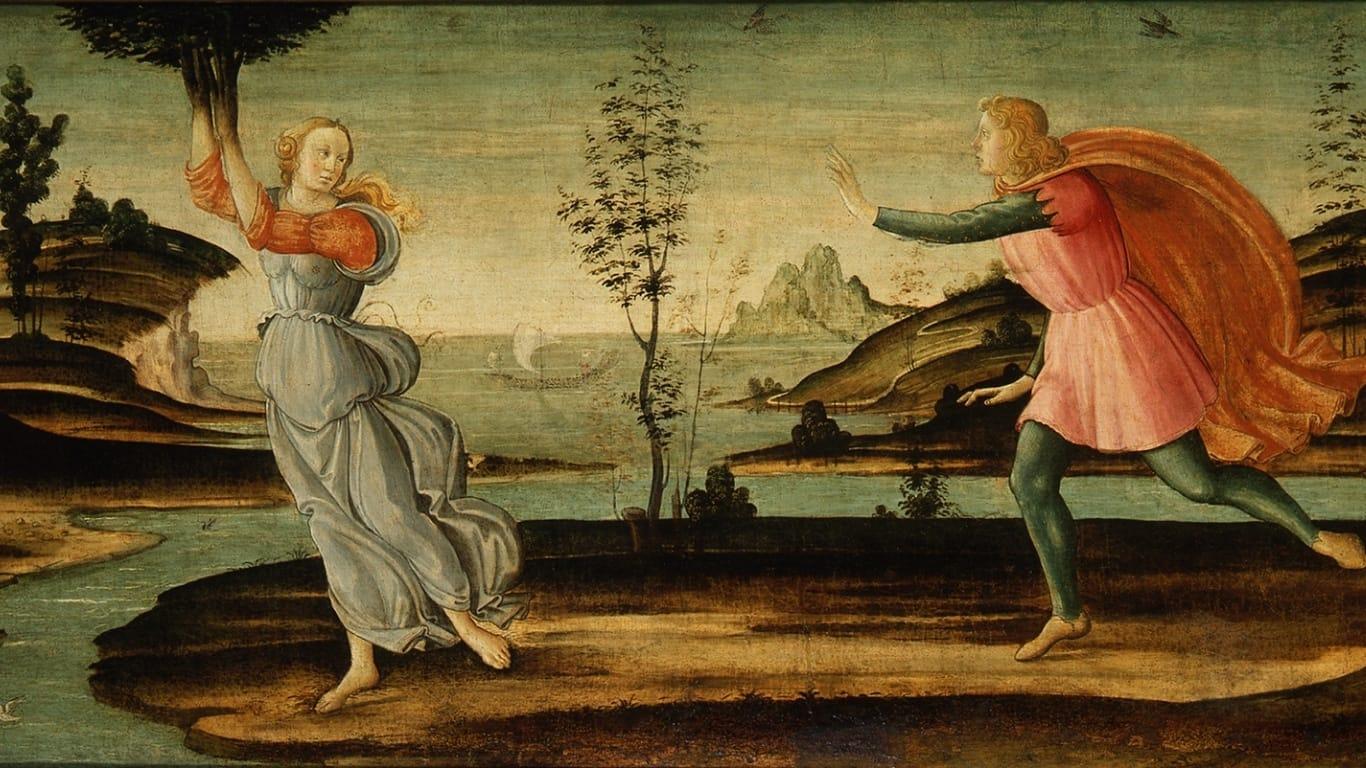
Raphael (1483 to 1520) defined the High Renaissance painting vocabulary. Sandro Botticelli (1445 to 1510) gave us the Birth of Venus and Primavera and a deeper body of devotional work that holds at the very top tier when it appears. Titian (c. 1488 to 1576) effectively defined Venetian colour painting, and major Titian portraits surface at the major houses every few seasons.
Albrecht Dürer (1471 to 1528) anchors the Northern tradition through painting and the print revolution his engravings catalysed.
The structurally important second tier rounds out the canon at meaningful auction scale. Andrea Mantegna, Giovanni Bellini, Piero della Francesca, Hans Holbein the Younger, and Pieter Bruegel the Elder all clear seven and eight figures when great examples come up.
What the secondary market actually shows
Renaissance work occupies a structurally distinct position in the broader art market. The supply is genuinely fixed, the great works sit overwhelmingly in museum and institutional collections, and when a structurally important piece comes to auction, it tends to move significant numbers. The Salvator Mundi sale at Christie's New York in November 2017, reportedly to Saudi Arabia's Department of Culture for $450.3 million including fees, remains the reference point for what the Renaissance top tier can clear at public auction.
Sotheby's sold Botticelli's Young Man Holding a Roundel for $92. 2 million in January 2021, the highest auction price ever recorded for a Botticelli. Cimabue's Christ Mocked sold at Acteon-Senlis in Paris for €24 million in October 2019, reportedly bought by the Louvre after a previously unrecognised attribution.
Each of these results reflects a structural pattern: museum-grade works with clean provenance and reliable attribution clear at meaningful multiples of conservative pre-sale estimates.
Disputed attributions trade at structurally lower premiums when they trade at all. The trade norm is clear: Old Masters with attribution questions face structural pricing discipline, regardless of the visual quality of the painting.
Northern Renaissance and Mannerism
The Northern Renaissance market sits alongside but somewhat distinct from the Italian. Jan van Eyck, Hans Memling, Hieronymus Bosch, and the Bruegel family anchor the tier, and structurally important Northern works appear less frequently at the major houses than Italian Renaissance equivalents. The Mannerist tier of Pontormo, Bronzino, Parmigianino, and El Greco trades on its own dynamics.
El Greco in particular has had a meaningful auction-record stretch through the past decade as serious Spanish-art collectors have built deeper positions. The Frick, the Prado, and a handful of significant private collections have driven the bidding.
Drawings, prints, and the structurally accessible tier
The Renaissance painting top tier is structurally inaccessible to all but a small handful of buyers. The drawings and prints market provides the accessible entry into the period. Dürer prints, both engravings and woodcuts, trade actively at Christie's, Sotheby's, and Phillips with current pricing in the low five-figure to low six-figure range depending on subject, condition, and impression quality.
Renaissance drawings clear at meaningful scale at the structurally important sales. The major houses' Old Masters drawings sessions each season include named-artist works from $30,000 to $500,000 depending on artist, subject, and provenance. For collectors who want the period without the painting-tier pricing, this is the route.
Where the category sits today
Old Masters as a broader category has had a complicated past decade in the auction market. The major houses have consolidated their Old Masters sales calendars, and the broader middle of the market has thinned somewhat as serious-collector attention has shifted toward post-war and contemporary work. That said, the Renaissance specifically retains genuine cultural and institutional pull.
Museum acquisitions remain active in the Renaissance space. Institutional collectors including the Getty, the Frick, the Kimbell, and the Louvre continuously build positions in the period. The recent attribution stories, the Cimabue sale and the ongoing Caravaggio debates at the boundary between Renaissance and Baroque, keep the period in the cultural conversation.
What this means for collectors
For collectors approaching the category, the lessons are familiar Old Masters discipline. Buy through Christie's, Sotheby's, Phillips, or vetted Old Masters dealers. Treat attribution and condition as the central concerns, because the difference between attributed-with-certainty and circle-of pricing is structurally enormous in this period.
Pay close attention to provenance documentation, particularly for works moving across borders. Storage, conservation, and insurance are non-trivial at this tier. The Renaissance remains the structural anchor of Western art-historical seriousness, and for collectors building Old Masters depth in 2026, the canonical names and the second tier continue to define what the deepest layer of Western painting actually looks like.
We last reviewed this analysis in May 2026.